Author: AR Managing Editor

  • Multilateral Institutions in the Democratic Republic of Congo: Strategies for Conflict Resolution and Peacebuilding

    Multilateral Institutions in the Democratic Republic of Congo: Strategies for Conflict Resolution and Peacebuilding

    A recent article by Lumumba, A. (2024) titled “Role of Multilateral Institutions in Managing Regional Conflicts and Crises in Democratic Republic of Congo” published in Journal of International Relations shows that multilateral institutions are vital in addressing regional conflicts and crises by implementing diverse strategies such as diplomacy, humanitarian aid, peacekeeping, and development initiatives.

    Multilateral institutions are crucial in managing regional conflicts in the Democratic Republic of Congo through diplomacy, humanitarian aid, peacekeeping, and development initiatives. – Lumumba, A. (2024)

    This study explores the role of multilateral institutions in addressing regional conflicts and crises, with a specific focus on the Democratic Republic of Congo (DRC). This study seeks to understand how multilateral institutions contribute to conflict management in the DRC. The research uses a desk-based methodology, which relies on collecting and analyzing secondary data from various existing sources, such as online academic journals, publications, and library archives. The author reveals that multilateral institutions play a critical role in managing conflicts in the DRC through a range of interventions. These interventions include diplomatic efforts aimed at conflict resolution, humanitarian assistance to meet the needs of affected populations, peacekeeping operations to maintain stability, and development programs to promote long-term recovery. Despite significant challenges, these institutions remain instrumental in promoting peace and stability in the region. The study is based on three theoretical perspectives—Realism, Constructivism, and Liberal Institutionalism. Realism views multilateral institutions as mechanisms for states to pursue their interests in an anarchic international system. Constructivism emphasizes the importance of social constructs, shared norms, and identities, suggesting that these factors influence how multilateral institutions approach conflict management. Liberal Institutionalism highlights the potential for cooperation and interdependence among states, suggesting that multilateral institutions can foster collective action and resolve conflicts through dialogue and shared governance.

    How the Study was Conducted

    The author employed a desk research methodology, also known as secondary data collection. Instead of conducting new field research, the author gathered data from existing sources, which is often more cost-effective. In addition, the author accessed a variety of previously published studies and reports through online journals and library resources, providing a rich set of data without the expense of traditional fieldwork.

    What the Authors Found

    The author found that multilateral institutions are vital in addressing regional conflicts and crises by implementing diverse strategies such as diplomacy, humanitarian aid, peacekeeping, and development initiatives. Despite encountering numerous obstacles, their ongoing involvement and cooperation are key to fostering peace, stability, and sustainable development in conflict-prone areas globally.

    Why is this Important

    Conflict Resolution: Multilateral institutions play a crucial role in conflict resolution. By engaging in diplomatic efforts, humanitarian aid, peacekeeping missions, and development projects, they contribute to stability and peace in conflict-affected regions like the Democratic Republic of Congo (DRC).
    Humanitarian Impact: The study highlights how multilateral institutions provide humanitarian assistance during crises. Their interventions can save lives, alleviate suffering, and address urgent needs such as food, shelter, and medical care.
    Policy Implications: Understanding the effectiveness of multilateral institutions informs policy decisions. Policymakers can use these insights to enhance collaboration, allocate resources, and strengthen international cooperation in conflict management.
    Global Security: The DRC is just one example; similar conflicts occur worldwide. Multilateral institutions’ ability to prevent, mitigate, and resolve conflicts contributes to global security and stability.
    Future Research: The study suggests using theoretical frameworks (realism, constructivism, and liberal institutionalism) for further research. This opens avenues for scholars to explore multilateral institutions’ roles in other contexts and refine conflict management strategies.

    What the Authors Recommend

    • The author suggests that policymakers and international organizations should prioritize collaboration among multilateral institutions. By working together, they can enhance conflict management efforts, share resources, and coordinate responses effectively.
    • Diplomacy remains a powerful tool for conflict resolution. The author suggests that multilateral institutions should continue engaging in diplomatic negotiations, mediation, and dialogue to prevent and resolve conflicts.
    • Multilateral institutions often face resource limitations. The author emphasizes that policymakers should allocate adequate funding and logistical support to ensure these organizations can carry out their peacekeeping, humanitarian, and development missions effectively.
    • To maintain legitimacy, multilateral institutions should prioritize transparency in their decision-making processes. Regular reporting, evaluation, and accountability mechanisms can enhance their effectiveness.
    • The author highlights successful interventions by multilateral institutions. Policymakers should analyze these case studies and learn from best practices to improve conflict management strategies.
    • The author recommends that multilateral efforts should involve local communities, civil society organizations, and regional actors. Their insights and participation can lead to context-specific solutions and sustainable peacebuilding.

    In conclusion, multilateral institutions play a pivotal role in managing regional conflicts and crises, particularly in complex environments like the Democratic Republic of Congo. Through a combination of diplomacy, humanitarian aid, peacekeeping, and development initiatives, these institutions contribute significantly to conflict resolution and peacebuilding efforts. Despite numerous challenges, their ongoing commitment to fostering stability and promoting sustainable development is crucial for global security. The insights provided by this study offer valuable guidance for policymakers and practitioners, emphasizing the importance of collaboration, transparency, and community engagement. By learning from successful interventions and adapting strategies to local contexts, multilateral institutions can continue to make meaningful strides toward a more peaceful world.

  • Transformational Leadership and Organizational Resilience in Times of Crisis: Insights from Sudan

    Transformational Leadership and Organizational Resilience in Times of Crisis: Insights from Sudan

    A recent study by Sharief, E. (2024) titled “Leadership Styles and Organizational Resilience in Times of Crisis in Sudan” published in American Journal of Leadership and Governance, shows that transformational leadership, which is characterized by vision, inspiration, and individualized consideration, promotes organizational resilience by fostering adaptability, innovation, and employee commitment.

    Transformational leadership significantly boosts organizational resilience during crises by fostering adaptability, innovation, and employee commitment in Sudan’s challenging context.– Sharief, E. (2024)

    The study delves into Leadership Styles and Organizational Resilience during Crises in Sudan. The research investigates various leadership styles and assesses how they influence organizational performance and adaptability when crises occur. It explores approaches like transformational leadership, which inspires and motivates employees, and servant leadership, which focuses on serving others and fostering a culture of empathy and collaboration. The study centers on how organizations in Sudan demonstrate resilience when facing crises. This resilience refers to the ability of organizations to not only withstand disruptions but also to adapt, innovate, and thrive in the face of adversity. It examines factors that contribute to resilience, such as flexibility, resourcefulness, and employee engagement. The study’s focus on Sudan is crucial, given the unique socio-political and economic environment in which these organizations operate. Sudan has faced significant challenges, including political instability, economic fluctuations, and social upheaval. Understanding the specific context helps to identify how local conditions impact leadership and organizational resilience. The research explores various strategies for managing and recovering from crises. It considers how leaders in Sudan approach crises, the processes they implement for quick recovery, and the steps taken to ensure organizational continuity. Effective crisis management involves not only immediate response tactics but also long-term planning and risk assessment. Overall, the study aims to offer valuable insights into the relationship between different leadership styles and organizational resilience in the face of adversity. Focusing on the Sudanese context provides a deeper understanding of how organizations navigate crises and what leadership traits contribute to successful outcomes.

    How the Study was Conducted

    This study utilized a desk study methodology, which is a type of research design that relies on secondary data collection. This approach involves gathering information from existing sources, such as previously published studies, reports, and academic articles. The advantage of a desk study is its cost-effectiveness compared to field research, as it leverages readily available data without requiring new data collection through fieldwork or surveys. In this study, researchers examined a range of published studies and reports, accessing them through online journals, libraries, and other digital resources. This method enabled the researchers to conduct a thorough analysis of existing literature and draw insights without the need for extensive field-based research.

    What the Authors Found

    The research on leadership styles and organizational resilience in times of crisis reveals that transformational leadership, which is characterized by vision, inspiration, and individualized consideration, promotes organizational resilience by fostering adaptability, innovation, and employee commitment. Additionally, servant leadership, with its emphasis on prioritizing the needs of others, empathy, and humility, is associated with enhanced organizational resilience by building trust, collaboration, and a sense of community. This study underscores the significant role of leadership in enabling organizations to navigate turbulent environments successfully.

    Why is this Important

    Leadership and Crisis Management: The research examines the impact of different leadership styles on organizational resilience during crises. Understanding how leadership influences an organization’s ability to withstand and adapt to challenges is crucial for its survival and success.
    Theoretical Contribution: By investigating the mechanisms through which leadership affects organizational resilience, this study contributes to existing academic knowledge. It bridges gaps in the literature and provides insights that can inform future research and theory development.
    Practical Implications: The findings have practical implications for organizations in both the public and private sectors. Organizations can use this research to develop effective leadership strategies that enhance resilience. For example, leaders can learn how to foster a culture of adaptability and preparedness.

    What the Authors Recommend

    • The author recommend that organizations should invest in leadership development programs that focus on enhancing leadership skills related to crisis management and organizational resilience. This includes training leaders to adapt to changing circumstances, communicate effectively during crises, and foster a resilient organizational culture.
    • The author posit that leaders should adopt adaptive leadership styles that allow them to respond flexibly to different situations. For instance, during a crisis, leaders may need to shift from an authoritative style to a more collaborative or participative approach.
    • In addition, the author also emphasize that organizations should engage in scenario planning and preparedness exercises. Leaders can proactively identify potential risks, develop contingency plans, and ensure that the organization is ready to handle unexpected challenges.
    • Building resilience at the team level is equally important. Leaders should encourage collaboration, trust, and open communication among team members. Teams that support each other during difficult times are more likely to bounce back from setbacks.
    • After a crisis, the author advocate that organizations should conduct thorough post-mortem analyses. Leaders can learn from both successes and failures, identifying areas for improvement and adjusting their strategies accordingly.

    The study by Sharief, E. (2024) offers a comprehensive look into how various leadership styles, particularly transformational and servant leadership, can significantly impact organizational resilience during crises in Sudan’s challenging socio-political and economic landscape. The findings underscore the importance of adaptability, innovation, and employee commitment in fostering a resilient organizational culture. As crises continue to test organizations worldwide, the insights from this study offer valuable guidance for leaders and policymakers in developing strategies that promote flexibility, collaboration, and preparedness. The emphasis on leadership development, adaptive approaches, and learning from past crises provides a solid foundation for organizations aiming to not only withstand adversity but also thrive in its wake. Ultimately, this research serves as a vital resource for enhancing organizational resilience and strengthening leadership practices in times of crisis.

  • Faith-Based Organizations as Key Players in Disaster Management: Addressing Urban Risks in Informal Accra

    Faith-Based Organizations as Key Players in Disaster Management: Addressing Urban Risks in Informal Accra

    A recent article by Okyere, et al., (2024) titled “Faith-based organizations and disaster management in informal urban Accra” published in Environmental Hazards, by Taylor & Francis shows that the rapid and unplanned urban expansion in Dome contributes to urban risks like flash floods and landslides.

    Faith-Based Organizations in Accra’s Dome community play a critical role in disaster management, providing preparation, response, and recovery services during emergencies.

    – Okyere, et al., (2024)

    The study focuses on the role of Faith-Based Organizations (FBOs) in disaster management within the informal settlement of Dome, which is part of the Ga East Municipal Assembly (GEMA) in Ghana. Dome, the largest community in GEMA, has an estimated population of nearly 50,000. It is particularly vulnerable to storm surges and flooding due to its rapid and often unplanned urban expansion. This unregulated growth has led to the development of urban riskscapes, including flash floods and landslides, posing significant hazards to the local population. FBOs play a crucial role in disaster management in this context. These organizations are not only centers of spiritual support but also serve as community hubs that can mobilize resources and coordinate response efforts in times of crisis. Their involvement spans the entire disaster management cycle, from preparation and response to recovery. In preparation for potential disasters, FBOs often raise awareness among their congregations, promoting disaster readiness and community resilience. They might conduct training sessions on emergency response, first aid, and evacuation procedures. By engaging their members in these activities, FBOs help build a sense of community and shared responsibility. During disaster response, FBOs often provide immediate relief services, such as shelter, food, and medical assistance. Their established networks and trusted presence in the community enable them to respond quickly to emergencies. FBOs also play a key role in disseminating information, ensuring that residents are aware of safety measures and resources available during a crisis. Funding for FBOs’ disaster management activities comes from a variety of sources. Congregational offerings and tithes are common, but FBOs may also receive support through Islamic practices such as ‘Zakat,’ which is a mandatory form of charity, and ‘Sadaqah,’ a voluntary charitable donation. These financial resources allow FBOs to sustain their disaster management activities and continue serving the community. The study underscores the importance of recognizing and supporting the work of FBOs in disaster management. Integrating their efforts with broader municipal and national disaster response strategies can enhance the overall effectiveness of disaster preparedness and recovery in areas like Dome.

    How the Study was Conducted

    The authors employed a qualitative case study design was chosen due to the exploratory nature of the study. It was selected to better understand the sociocultural and religious factors influencing disaster management regimes. An interview guide with open-ended questions was developed to collect data. This allowed interviewees to freely express their opinions and experiences. Community leaders were contacted to identify suitable participants, including FBOs, local government representatives, and residents affected by disasters. The interview questions were vetted by the research team and analyzed for accuracy by seven experts with over ten years of experience in disaster management.

    What the Authors Found

    The authors found that dome has an estimated population of 49,790 and is particularly vulnerable to storm surges and flooding. The authors also found that the rapid and unplanned urban expansion in Dome contributes to urban risks like flash floods and landslides. In addition, Faith-Based Organizations (FBOs) play a crucial role in disaster management, helping with preparation, response, and recovery.

    Why is this Important

    Community Resilience: By recognizing and integrating FBOs, disaster management efforts can be more effective. FBOs often have strong community ties and can mobilize resources quickly during emergencies.
    Local Knowledge and Trust: FBOs are embedded in the local context, understanding the community’s needs, culture, and vulnerabilities. Their presence builds trust among residents, making it easier to disseminate disaster preparedness information.
    Complementary Efforts: FBOs complement government and NGO efforts. While formal institutions may face bureaucratic challenges, FBOs can act swiftly and provide immediate relief.
    Holistic Approach: FBOs address not only physical needs but also emotional and spiritual well-being. This holistic approach is crucial during and after disasters.
    Sustainable Solutions: Integrating FBOs ensures long-term sustainability. They continue their work beyond immediate crises, promoting disaster risk reduction and community resilience.

    What the Authors Recommend

    • The authors recommend fostering collaboration between FBOs, local government agencies, and non-governmental organizations (NGOs). Integrating FBOs into disaster management planning and response efforts can enhance overall effectiveness.
    • The authors recommend providing training and capacity-building programs for FBOs. This includes disaster risk reduction, emergency response protocols, and community engagement strategies.
    • The authors emphasize that FBOs can play a vital role in disseminating disaster preparedness information. Encourage them to conduct awareness campaigns within their congregations and the broader community.
    • The authors also emphasize on recognizing the diversity of FBOs (e.g., Christian, Islamic, traditional) and involve them in disaster management discussions. Tailor strategies to address specific cultural and religious contexts.

    In summary, Faith-Based Organizations (FBOs) play a pivotal role in disaster management within the informal urban setting of Accra’s Dome community. Their deep-rooted connections, cultural insights, and resource mobilization capabilities are instrumental in addressing the urban risks associated with rapid, unplanned expansion. Through awareness campaigns, emergency response training, and holistic support, FBOs not only provide immediate disaster relief but also contribute to long-term community resilience. By fostering collaboration with local government and NGOs, integrating diverse religious perspectives, and promoting sustainable solutions, FBOs are helping to transform disaster-prone areas into more prepared and cohesive communities. The importance of their role in the broader disaster management landscape cannot be understated, serving as a model for integrating faith-based initiatives into urban disaster preparedness and response efforts.

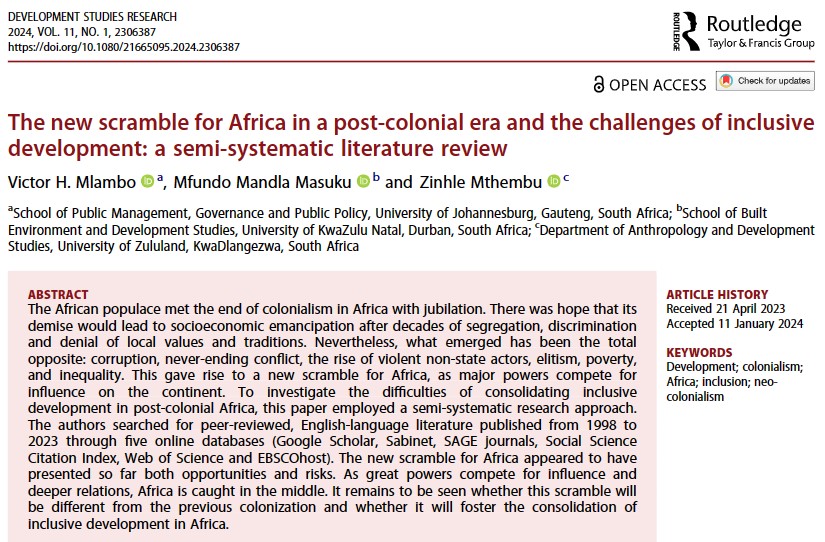
  • April 2024: Paper of the Month by Mlambo, et al., 2024 –  The New Scramble for Africa: Challenges and Opportunities for Inclusive Development in a Post-Colonial Era

    April 2024: Paper of the Month by Mlambo, et al., 2024 – The New Scramble for Africa: Challenges and Opportunities for Inclusive Development in a Post-Colonial Era

    African Researchers Award
    April 2024: Paper of the Month by Mlambo, et al., 2024 – The New Scramble for Africa in a post-colonial Era and the Challenges of Inclusive Development: A Semi-systematic Literature Review

    A recent article by Mlambo, et al., (2024) titled “The New Scramble for Africa in a post-colonial Era and the Challenges of Inclusive Development: A Semi-systematic Literature Review” published in Development Studies Research shows that post-colonial Africa faces issues such as corruption, conflict, elitism, poverty, and inequality, which hinder inclusive development.

    The Scramble for Africa is often associated with the late 19th century and early 20th century, when European powers divided the African continent among themselves. However, the modern era is witnessing a new kind of scramble, characterized by a competitive race among major global powers for economic and political influence in Africa. This contemporary scramble involves a diverse range of actors, including China, the United States, the European Union, Russia, and others, each seeking to expand their presence and secure strategic interests in the continent. This renewed competition has raised important questions about its impact on Africa’s socioeconomic development and the extent to which it fosters or hinders inclusive growth.

    Post-colonial Africa faces corruption, conflict, elitism, poverty, and inequality, while major global powers’ competition offers both risks and opportunities. -Mlambo, et al., (2024)

    Inclusive Development

    A central theme in the discussion is the concept of inclusive development. Unlike traditional growth models that focus on gross domestic product (GDP) and other macroeconomic indicators, inclusive development emphasizes equity, social justice, and broad-based prosperity. It seeks to ensure that the benefits of economic growth are shared widely across society, avoiding the pitfalls of exclusionary growth that concentrates wealth among a select few and leaves behind significant portions of the population. Inclusive development also addresses the need for fair labor markets, equitable access to education, healthcare, and other social services, and sustainable practices that support long-term growth. The study examines the challenges African countries face as they navigate this new scramble. Key concerns include the risk of exploitation, the undermining of local governance, and the erosion of sovereignty as external powers vie for control. There is also the danger that this competition will replicate the power imbalances of the colonial era, leading to uneven development and marginalization.

    However, the new scramble also presents opportunities for African nations to leverage external interest for their own benefit. If approached strategically, partnerships with global powers could result in technology transfer, infrastructure development, and increased investment, all of which could contribute to more inclusive development. The study questions whether these opportunities will be realized or if history will repeat itself, with wealth and power becoming concentrated in the hands of a few, while broader segments of the population remain excluded from the benefits of economic growth.

    How the Study was Conducted

    The authors adopted a semi-systematic review, a narrative review approach that partially follows systematic review guidelines in literature survey and selection. The authors conducted searches across five online databases, including Google Scholar, Sabinet, SAGE journals, Social Science Citation Index, and EBSCOhost, between November 2022 and April 2023. The search terms used were ‘inclusive development’ AND ‘Africa’ AND ‘colonialism’ OR ‘post-colonialism’ OR ‘neo-colonialism’, directly related to the research question. The authors initialized 1,872 articles and reduced them to 811 after removing duplicates and irrelevant studies. Following a rigorous review process, only 89 articles were selected for analysis.

    What the Authors Found

    The authors found that post-colonial Africa faces issues such as corruption, conflict, elitism, poverty, and inequality, which hinder inclusive development, and also major powers are competing for influence on the continent, presenting both opportunities and risks for Africa’s development.

    Why is this Important

    Historical Context: Understanding the historical context of colonization and its aftermath in Africa is crucial. The legacy of colonialism has shaped the continent’s political, economic, and social landscape, and recognizing this context informs current development efforts.
    Inclusive Development: The concept of inclusive development emphasizes that economic growth should benefit all segments of society, rather than a privileged few. By examining challenges to inclusive development in Africa, policymakers and researchers can identify strategies to promote equitable progress.
    Ethical Implications: The scramble for Africa during colonial times was marked by exploitation, resource extraction, and human rights abuses. The new scramble, driven by major powers, raises ethical questions about sovereignty, fair trade, and sustainable development.
    Global Power Dynamics: The competition among major powers for influence in Africa reflects broader geopolitical dynamics. Understanding these power struggles helps policymakers navigate diplomatic relations and economic partnerships.
    Policy Formulation: Insights from this study can inform policy decisions related to foreign aid, investment, and development assistance. Policymakers can learn from historical mistakes and design more effective strategies for inclusive growth.

    What the Authors Recommend

    • The authors recommend that policymakers should prioritize inclusive development policies that address poverty, inequality, and social exclusion. These policies should focus on improving living standards for all citizens, regardless of socioeconomic background.
    • Given the historical context of colonization and exploitation, ethical considerations are crucial. The authors recommend fair trade practices, responsible investment, and respect for national sovereignty in international relations.
    • The authors emphasize that African nations should collaborate with major powers and international organizations to leverage resources effectively. Strategic partnerships can facilitate sustainable development and address common challenges.

    In conclusion, the new scramble for Africa presents a complex mix of challenges and opportunities that require careful navigation. While major global powers vie for influence, African nations must prioritize inclusive development to ensure that economic growth benefits all segments of society. Ethical considerations, such as fair trade and respect for national sovereignty, are paramount in shaping a more equitable and sustainable future. By embracing strategic partnerships and learning from past mistakes, African countries can turn this new scramble into a catalyst for positive change, fostering a landscape where prosperity is widely shared and power imbalances are addressed. Ultimately, the path toward inclusive development requires a collaborative effort that honors Africa’s history while embracing innovative approaches for its future.

  • UM’s Impact in Kenya: Transforming Healthcare for Marginalized Sex Workers and Advancing Global Health Equity

    UM’s Impact in Kenya: Transforming Healthcare for Marginalized Sex Workers and Advancing Global Health Equity

    Sex workers in Africa, particularly in Kenya, face significant challenges due to criminalization and stigmatization of their work. This marginalization creates barriers to accessing healthcare, impacting their overall well-being and increasing their vulnerability to infectious diseases such as HIV/AIDS. Researchers from the University of Manitoba (UM) have been collaborating with the University of Nairobi since the 1980s, focusing on addressing these health disparities by working closely with the affected communities and fostering global health equity.

    UM’s Commitment to Health Equity in Kenya

    UM researchers, including Dr. Keith Fowke and Dr. Mario Pinto, have been instrumental in transforming the landscape of healthcare for marginalized populations in Kenya. Their work involves a collaborative approach that integrates laboratory research with social advocacy and community-based supports. This holistic strategy aims to address both the medical and social factors that contribute to health disparities.

    The researchers have established several major programs in Kenya, emphasizing the importance of patient-centered research and advocacy. By working with marginalized patient cohorts, they have gained insights into the community’s needs and tailored programs to provide meaningful and accessible healthcare services.

    Historical Context and Progress

    In the early 1980s, UM researchers, led by Dr. Allan Ronald and Dr. Francis Plummer, played a key role in addressing sexually transmitted infections (STIs) in Kenya. Their work uncovered the link between STIs and the emerging HIV/AIDS epidemic, leading to groundbreaking discoveries and prevention strategies.

    A notable achievement was the identification of a group of women with natural immunity to HIV-1, providing valuable insights into potential approaches to HIV prevention. Over the years, UM researchers, including Dr. Fowke, have studied the immune systems of these women, contributing to advances in HIV prevention and treatment.

    Community-Centric Research and Empowerment

    The patient-directed research model developed by Dr. Elizabeth Ngugi in the 1980s emphasized the importance of incorporating the voices and needs of sex workers into research initiatives. Her peer educator model has been adopted globally, providing education and support to sex workers as community leaders.

    Today, UM’s research encompasses 10 Sex Worker Outreach Program (SWOP) clinics in Nairobi, serving tens of thousands of female sex workers, men who have sex with men (MSM), and transgender individuals. These clinics provide HIV prevention and care services, despite the challenges posed by the criminalization of sex work and homosexuality in Kenya.

    Challenges and Strategies for HIV Prevention

    The criminalization of sex work and homosexuality creates significant barriers to accessing healthcare, as possession of HIV medications or condoms can provoke harassment. UM researchers are working on innovative approaches to HIV prevention, such as using anti-inflammatory drugs like aspirin to prevent immune cells from entering the vaginal mucosal environment.

    Community Empowerment and Advocacy

    UM’s collaborations in Kenya have empowered local communities to take charge of their own health initiatives. Organizations like SWOP Ambassadors and HOYMAS provide legal aid and support to sex workers, engage with police to ensure access to healthcare services, and advocate for human rights.

    By mapping hotspots where MSM congregate, UM’s Global Public Health team supports local clinicians and community organizations in establishing program catchments and generating accurate health data to guide funding and policy decisions.

    Impact and Future Directions

    UM’s work in Kenya has laid the groundwork for future research and advocacy initiatives in marginalized communities worldwide. The university’s commitment to health equity has fostered strong partnerships and global collaborations, leading to tangible improvements in the lives of marginalized populations.

    The shifting scope of Global Public Health research in Kenya reflects transformational success, as the work of dedicated researchers has empowered underserved communities. By promoting health as a human right and enabling self-advocacy, the research has paved the way for community-driven initiatives and international recognition.

    Lessons for Health Equity in Manitoba

    UM’s work in Kenya offers valuable lessons for addressing health disparities in Manitoba. By collaborating with local community organizations like Sunshine House and the Sex Workers of Winnipeg Action Coalition (SWWAC), UM researchers are facilitating an exchange of knowledge and strategies.

    The focus on de-monopolizing science and placing power in the hands of those most affected by health disparities is crucial for making meaningful change. By applying best practices from global research, Manitoba can improve its approach to HIV prevention and healthcare services for marginalized populations.

    In summary, UM’s global impacts on promoting health equity demonstrate the importance of collaborative, community-centered research and advocacy. By empowering marginalized communities and fostering international partnerships, UM continues to advance health as a human right and make significant strides toward achieving global health equity.

  • Strengthening African-Led Clinical Research and Trials: Challenges and Opportunities for Improved Healthcare

    Strengthening African-Led Clinical Research and Trials: Challenges and Opportunities for Improved Healthcare

    Africa’s healthcare landscape is facing a series of challenges and opportunities as the continent undergoes rapid population growth and economic transformation. To address these evolving healthcare needs, experts emphasize the importance of strengthening African-led clinical research and trials. The rise in both neglected tropical diseases and noncommunicable diseases (NCDs) across the continent underscores the necessity of expanding clinical research and trials.

    Current State of African Clinical Research

    Currently, Africa accounts for a small percentage (around 4%) of global clinical studies, according to Clinicaltrials.gov. While some studies are classified as “African” in scope, many randomized clinical trials are not continent-wide, with certain nations remaining unrepresented. The gap between drug discovery and actual public health needs can limit the potential for African-led health innovation and effective healthcare solutions.

    To improve this situation, the research community is advocating for the development of more equitable partnerships, effective resource allocation, and sustained funding for health research across the continent. This approach would lead to the discovery and development of tailored vaccines, diagnostics, and therapeutics.

    Increasing Africa’s Participation in Clinical Research

    Africa’s participation in vaccine development remains low, contributing only about 0.1% globally. To increase its role, several interrelated challenges must be addressed. These include unpredictable regulatory environments, duplication of efforts due to poor stakeholder coordination, and limited infrastructure and funding. Tackling these obstacles is crucial to enabling Africa to play a larger role in global health research and innovation.

    Efforts such as the Pan African Clinical Trials Registry and the Clinical Trials Community aim to provide comprehensive data and documentation to support the development of African-led clinical research.

    Capacity Building and Strengthening Local Health Research

    Sustained capacity development is crucial for Africa to effectively tackle its unique healthcare challenges. Building expertise through training, infrastructure enhancement, access to technology, and long-term funding can significantly increase participation in clinical research and trials.

    Existing strengths should be leveraged through equitable partnerships, ensuring efficient resource allocation and utilization. These partnerships can also help coordinate multisectoral and multi-stakeholder responses during health emergencies, as demonstrated during the COVID-19 pandemic.

    Initiatives such as the Partnerships for African Vaccine Manufacturing (PAVM) advance vaccine development and manufacturing through collaboration with pharmaceutical companies. Similarly, The H3D Foundation and the African Pharmaceutical Technology Foundation work to advance drug research and development in Africa.

    The Role of the Pharmaceutical Industry

    The pharmaceutical industry recognizes the need for increased collaboration and well-defined priorities in Africa and other underrepresented regions. Companies are beginning to facilitate the transfer of funds, knowledge, and technology to establish long-term local capacity in Africa.

    Africa’s pharmaceutical sector has seen substantial growth, reaching $66 billion in 2022, according to a UN report. This expansion presents opportunities for job creation and improved access to healthcare for African residents and their families.

    Moving Forward with Collaboration and Coordination

    Organizations like the Africa Centers for Disease Control and the African Medicines Agency are tasked with coordinating with industry players to create an equitable framework for the delivery of new healthcare products. Strong stakeholder cooperation, regulatory oversight, and coordination frameworks are essential for success.

    The Science for Africa Foundation has launched a new project promoting collaboration for clinical research capacity in Africa through its Clinical Research and Trials Community program. This initiative aims to foster partnerships and encourage industry involvement in clinical trials.

    In conclusion, the growth of Africa’s pharmaceutical industry and the potential for innovation and global health impact are promising. To truly prioritize uninterrupted healthcare access, pharmaceutical companies must invest in sustainable local capacity and align their efforts with Africa’s public health needs. Through collaboration and strategic partnerships, Africa can strengthen its healthcare research infrastructure and address the continent’s unique health challenges.

  • Understanding Africa’s Unique Health Landscape: Insights from Toyin Falola on Global Health Policies

    Understanding Africa’s Unique Health Landscape: Insights from Toyin Falola on Global Health Policies

    The discourse presented by Toyin Falola highlights a crucial issue: the misunderstanding of Africa’s health landscape within the global context. Falola emphasizes the need for international authorities and influencers to recognize Africa’s unique characteristics, investigate internal remedies, and treat African health emergencies with the urgency they deserve.

    One of the central points made is that Africa’s perspectives are often marginalized when addressing global health concerns. Despite Africa’s rich history of herbal medicine and potential solutions to global health challenges, initiatives are frequently implemented without considering Africa’s role as part of the solution. This oversight not only disregards Africa’s contributions but also undermines the continent’s ability to address its health issues effectively.

    Falola points out that Africa’s health status is often misrepresented and misunderstood. The continent’s diverse biological makeup, environmental interactions, and cultural beliefs all influence health outcomes. Understanding these factors is crucial for developing effective health policies and practices tailored to African communities. However, Africa’s health challenges are often overlooked until they become global crises, as evidenced by delayed responses to outbreaks such as Ebola.

    Moreover, the COVID-19 pandemic highlighted the need to consider Africa’s specific circumstances when implementing global health measures. While the pandemic affected Africa, its impact was mitigated by factors such as the continent’s young population and environmental variables. Despite this, global responses to the pandemic often failed to take Africa’s unique situation into account, leading to unnecessary measures like lockdowns that had detrimental effects on African economies and societies.

    Falola argues for a more nuanced approach to addressing Africa’s health challenges, one that prioritizes local remedies, promotes equitable relationships, and advocates for policy reform. This approach requires acknowledging Africa’s contributions to global health and respecting its autonomy in addressing its health issues.

    In conclusion, Falola’s discourse underscores the importance of recognizing Africa’s unique health characteristics and treating African health emergencies with the seriousness they deserve. By doing so, the global community can work towards more effective and equitable health outcomes for all.

  • TWAS-NCP Postdoctoral Fellowship Programme: Opportunities for Young Scientists in Physical Sciences at NCP Islamabad

    TWAS-NCP Postdoctoral Fellowship Programme: Opportunities for Young Scientists in Physical Sciences at NCP Islamabad

    The TWAS-NCP Postdoctoral Fellowship Programme is designed to offer young scientists from developing countries (excluding Pakistan) the opportunity to pursue postdoctoral research in the physical sciences at the National Centre for Physics (NCP) in Islamabad, Pakistan. This programme aims to foster international collaboration in the scientific community and promote advanced research in various scientific fields.

    Programme Overview

    • Research Opportunities: Fellows can engage in research in a wide range of scientific fields at NCP, including but not limited to Plasma Physics, High Energy Physics (both experimental and theoretical), Quantum Information, Applications of Ion Beam Techniques, Atomic Physics & Spectroscopy, and more. This diversity allows scholars to contribute to cutting-edge research and expand their scientific expertise.
    • Duration: The fellowship lasts a minimum of six months and can extend up to 12 months, providing a substantial period for scholars to immerse themselves in research projects and collaborations.
    • Support and Stipend: The NCP provides a monthly stipend to cover living costs such as food, accommodation, and health insurance. However, this stipend cannot be converted to foreign currency, indicating that it must be spent locally in Pakistan.
    • Language of Instruction: All activities within the programme are conducted in English, ensuring that scholars from various backgrounds can participate effectively.

    Eligibility Criteria

    • Residency and Nationality: Applicants must be permanent residents of a developing country, excluding Pakistan, and must not hold any temporary or permanent residency visa for Pakistan or any developed country.
    • Educational Background: Candidates should have a PhD in a natural sciences field and apply within five years of receiving their doctorate.
    • Employment and Research Commitment: Applicants must be regularly employed in their home country and hold a research position there. They must also commit to returning to their home country after completing the fellowship.
    • Health and Language Proficiency: A health certificate from a qualified doctor is required, and evidence of English proficiency must be provided if English was not the medium of prior education.
    • Acceptance Letter: Applicants must secure an acceptance letter from NCP by contacting the Director of the Collaboration & Academic Activities Directorate (CAAD) at NCP and submitting a copy of their CV and research proposal outline.

    Application Process

    • Submission and Deadlines: Applications must be submitted through the TWAS online portal. The call for applications opens on 8 April 2024, and the deadline for submission is 1 July 2024 (midnight CEST time).
    • Preliminary Acceptance: Securing an acceptance letter from NCP is essential for the application to be considered. Applicants are encouraged to obtain this letter as early as possible.
    • Online Application: The application is submitted online, and applicants can save and retrieve their application until they are ready to submit it. After submission, modifications cannot be made.

    Additional Considerations

    • Family Financial Responsibility: Fellows are responsible for any financial costs associated with accompanying family members during their stay in Pakistan.
    • Programme Participation: Applicants may only apply for one programme per calendar year within the TWAS and OWSD portfolios. If an institution head invites an external scholar under TWAS Visiting Professor programmes, the head may still apply for another programme.

    For more information on the programme, including application instructions and further details, please visit the TWAS-NCP Postdoctoral Fellowship Programme page.

  • ESG Africa Conference 2024: Shaping Africa’s Sustainable Future Through Leadership

    ESG Africa Conference 2024: Shaping Africa’s Sustainable Future Through Leadership

    The ESG Africa Conference 2024 is scheduled to take place from October 1 to October 2 at the Sandton Convention Centre in Gauteng, South Africa. This event serves as a premier gathering for industry leaders, experts, and change-makers across the continent who are invested in driving sustainable practices within their organizations.

    Theme and Focus

    The core theme of the conference, “Sustainable Future Through Leadership,” emphasizes the crucial role leaders play in aligning their organizations with ESG principles. Attendees can expect to gain insights into how to integrate environmental, social, and governance considerations into overall corporate strategy. This includes exploring how to shift organizational culture to focus on sustainability as a competitive advantage and key aspect of long-term success.

    Key Topics and Discussions

    The conference will delve into various important aspects of ESG practices, including:

    • Measurement and Reporting: Examining challenges related to data collection and management across different departments within an organization. Discussions will include methods for achieving common reporting standards.
    • Investment and Financing: Investigating trends and challenges in attracting direct investment by adopting ESG standards. Participants will learn how Africa can position itself as a leader in this area.
    • Legal Frameworks: Exploring changes in the regulatory environment and their implications for trade. The impact of ESG activism in holding organizations accountable will also be addressed.
    • Governance, Leadership, and Culture: Emphasizing the need for systemic and transformative approaches to ESG that influence business strategies and organizational cultures. This includes fostering leadership mindsets that see ESG as central to business operations rather than an additional compliance exercise.

    Event Venue

    The Sandton Convention Centre, the host venue for the conference, is a leading event space located in the financial hub of Johannesburg. It offers state-of-the-art facilities, ample parking, and proximity to hotels, shopping centers, and entertainment complexes. The venue can accommodate events of various sizes, from intimate meetings to large-scale conferences, and boasts contemporary Afro-chic décor.

    Why Attend

    The ESG Africa Conference 2024 is a must-attend event for leaders looking to be part of the movement towards sustainable practices and responsible governance. Attendees will have the opportunity to network with other visionaries and gain insights into how to navigate common challenges associated with ESG integration. The conference also provides a platform to discuss emerging trends and solutions for a sustainable future in Africa.

    Book Your Tickets

    To secure your spot at the conference and become a part of shaping Africa’s sustainable future, book your tickets now through the official website: Home – ESG Africa Conference

  • Oxford Africa Conference 2024: Charting Africa’s Path Forward for Inclusive Growth

    Oxford Africa Conference 2024: Charting Africa’s Path Forward for Inclusive Growth

    The Oxford Africa Conference 2024, titled “Charting Africa’s Path Forward: A Journey of Possibilities,” is set to take place at Rhodes House from May 24th to 25th, 2024, from 8 am to 5:30 pm. This conference aims to explore various critical aspects of Africa’s development journey, including governance, democracy, economic development, entrepreneurship, healthcare, well-being, gender equity, climate, innovation, sustainability, AI, and technology.

    The conference will feature various panels and workshops on topics such as navigating democracy dynamics in contemporary Africa, the political disintegration of the Horn of Africa, gender equity and empowerment, and AI for inclusive development in Africa, among others. Workshop topics include unleashing entrepreneurial potential, epidemic and pandemic preparedness, and climate change adaptation.

    The event also includes the Innovation Seed Fund (ISF), an integral part of the conference that invites submissions from current students at the University of Oxford and students across the African continent. The ISF aims to gauge the effectiveness of regional collaboration through partnerships with leading universities in Africa and promote broader participation in future conferences.

    A highlight of the event is the Conference Gala Dinner on May 25th at the Kassam Stadium Events Center, celebrating Africa Day. The dinner features a keynote speech from His Excellency Mr. Albertus Aochamub, Namibian Ambassador to France, Spain, Italy, and Portugal, and a special guest appearance by Miss Jolly Mutesi, former Miss Rwanda & Vice President, Miss East Africa. Guests will enjoy a cultural and fashion showcase, highlighting the richness and diversity of African cultures and identities.

    Unleashing Africa’s Potential: Innovating for Inclusive and Sustainable Growth

    The Oxford Africa Conference 2024, titled “Charting Africa’s Path Forward: A Journey of Possibilities,” is an important event for Africa for several reasons:

    1. Fostering Collaboration and Knowledge Exchange: The conference provides a platform for scholars, policymakers, entrepreneurs, and students from across the African continent and around the world to come together and share insights, research, and innovative ideas. This collaboration can lead to meaningful partnerships and joint initiatives that benefit Africa’s development journey.
    2. Addressing Critical Issues: By focusing on critical aspects of Africa’s development journey, such as governance, democracy, economic development, entrepreneurship, healthcare, gender equity, climate change, and technology, the conference provides a space for examining challenges and opportunities in these areas. Engaging in discussions and workshops allows attendees to explore solutions and strategies for addressing key issues.
    3. Empowering Future Leaders: The inclusion of students and young professionals in the conference, particularly through initiatives such as the Innovation Seed Fund (ISF), empowers future leaders to take an active role in shaping Africa’s future. It provides them with a platform to showcase their ideas, network with established professionals, and gain insights from experts.
    4. Celebrating African Culture and Diversity: The Conference Gala Dinner on May 25th serves as a celebration of Africa Day and provides a showcase of African culture and identity through performances and fashion displays. This not only highlights the richness and diversity of African cultures but also fosters a sense of pride and unity among attendees.
    5. Promoting Inclusive Development: The conference emphasizes inclusive development through panels and workshops on AI, innovation, and entrepreneurship. By exploring ways to leverage technology and innovation for sustainable and equitable growth, the conference contributes to Africa’s long-term development goals.
    6. Strengthening Regional Partnerships: Through initiatives such as the ISF and collaboration with leading universities in Africa, the conference helps strengthen regional partnerships and encourages broader participation from across the continent. This regional cooperation is vital for Africa’s progress and development.

    Overall, the Oxford Africa Conference 2024 serves as a catalyst for progress, bringing together diverse voices and perspectives to work collectively towards a brighter future for Africa. It highlights the continent’s potential and underscores the importance of inclusive and sustainable development for the benefit of all Africans.

    For more details visit: Oxford Africa Conference | AfriSoc 2024 Website (oxforduniversityafricasociety.com)