Author: AR Managing Editor

  • Parkinson’s Foundation Postdoctoral Fellowships 2025: Funding for Early-Career Scientists + Webinar on Donor Engagement

    Parkinson’s Foundation Postdoctoral Fellowships 2025: Funding for Early-Career Scientists + Webinar on Donor Engagement


    Illustrative Image: Parkinson’s Foundation Postdoctoral Fellowships 2025: Funding for Early-Career Scientists + Webinar on Donor Engagement
    Image Source & Credit: Parkinson’s Foundation
    Ownership and Usage Policy

    Deadline: 22 October 2025

    The Parkinson’s Foundation is inviting applications for its prestigious Postdoctoral Fellowship Program, designed to support the next generation of researchers who are committed to advancing the understanding and treatment of Parkinson’s disease.

    These two-year fellowships provide early-career scientists with the opportunity to build independence and develop innovative research projects under the guidance of an experienced mentor at leading research institutions. The fellowships are highly competitive and focus on projects that can directly influence both the scientific understanding of Parkinson’s disease and its clinical management.

    Fellowship Support

    The program offers two levels of support based on applicant background:

    • Basic Scientists: $140,000 over two years

      • $65,000 annual salary stipend

      • $5,000 annual research allowance

    • Clinical Neurologists: $160,000 over two years

      • $75,000 annual salary stipend

      • $5,000 annual research allowance

    The research allowance may be used for professional development, including books, training courses, travel, or equipment. Fellows may also allocate up to $2,500 annually toward out-of-pocket health insurance premiums with prior approval. Salary supplements from mentors to align with institutional or NIH NRSA levels are allowed but not required.

    Eligibility

    • Basic Scientists: Within 5 years of completing a Ph.D. by the start date

    • Clinical Neurologists: Within 3 years of completing residency by the start date

    • Formal leave (maternity/paternity/family care/military/sick leave) may extend eligibility by up to 2 years

    • Open to both U.S. and international applicants

    • Applicants must devote 80% of their effort to the fellowship project and cannot hold overlapping awards

    • Only one fellowship will be awarded per lab and institution each year

    The Foundation strongly encourages applications from individuals from historically underrepresented groups in science, including those marginalized due to race, ethnicity, gender identity, sexual orientation, physical or mental disability, or economic disadvantage.

    Application Process

    1. Letter of Intent (LOI) – reviewed internally and externally

    2. Full Proposal (by invitation only) – assessed on:

      • Scientific merit

      • Innovation and impact

      • Applicant’s qualifications

      • Alignment with the Foundation’s mission

    Final decisions will be announced in June 2026, with funding beginning August 1, 2026.

    For detailed guidelines and application instructions, please visit the Parkinson’s Foundation website.


    Upcoming Webinar: Using Video to Engage Donors 🎥

    Date & Time: Thursday, 18 September 2025 | 8:30 AM GMT

    Alongside this fellowship announcement, the Parkinson’s Foundation also highlights the importance of effective science communication and donor engagement. One way organizations can achieve this is through the strategic use of video.

    This live webinar will provide NGOs and research organizations with practical strategies to:

    • Showcase projects through compelling storytelling

    • Build trust and emotional connections with donors

    • Increase fundraising success with cost-effective video tools

    By mastering video communication, NGOs can humanize their work, attract long-term support, and strengthen donor relationships in ways that written reports or data alone cannot achieve.


    🔹 Key Takeaway: The Parkinson’s Foundation is not only investing in the future of Parkinson’s research through its fellowship program but also in the communication skills that help organizations thrive. Together, these initiatives aim to foster scientific excellence while ensuring research and community impact are effectively shared with the world.

    For more information, visit Parkinson’s Foundation.

  • Fully Funded PhD Fellowships in Renewable Energy, Community Development, and Social Justice – South Africa (2026)

    Fully Funded PhD Fellowships in Renewable Energy, Community Development, and Social Justice – South Africa (2026)


    Illustrative Image: Fully Funded PhD Fellowships in Renewable Energy, Community Development, and Social Justice – South Africa (2026)
    Image Source & Credit: Africa Union
    Ownership and Usage Policy

    About the COM-PRES Project

    The COM-PRES project (Communities and the Private Renewable Energy Sector: Distributing Social Development Benefits in South Africa) is a four-and-a-half-year collaborative research initiative funded by the Danish International Development Agency (DANIDA) and led by Professor Marianne Ulriksen of the University of Southern Denmark.

    The project is implemented in South Africa through the Centre for Social Development in Africa (UJ) and the Centre for Social Science Research (UCT). It seeks to explore how South Africa’s Renewable Energy Independent Power Producer Procurement Programme (REIPPPP) contributes to equitable social development. A particular focus is on Community Trusts (CTs) and other benefit-sharing mechanisms established by private renewable energy developers to distribute social and economic benefits to local communities.

    The research examines whether these initiatives meaningfully address inequalities, promote community participation, and enhance local development outcomes.


    Doctoral Opportunities

    We are recruiting three full-time PhD students, each aligned with a specific workstream of the COM-PRES project.

    • Two positions will be based at UJ’s CSDA, supervised by Dr Anthony Kaziboni and Prof Lauren Graham.

    • One position will be based at UCT’s CSSR, supervised by Prof Jeremy Seekings.

    PhD Fellow Benefits:

    • Integration into a multidisciplinary project team collaborating across institutions and with industry stakeholders.

    • Access to training in qualitative and participatory research methods.

    • Participation in cross-workstream workshops, writing retreats, and research dissemination activities.

    • Fieldwork experience across REIPPPP sites in South Africa.

    • Opportunities for international exchanges with the Danish research team.

    • Potential for co-authored publications and policy engagement.

    Funding includes:

    • A three-year full stipend, covering research-related travel and fieldwork costs.

    • Access to COM-PRES doctoral support structures for academic and professional development.


    Available Workstreams

    Workstream 2 – Community Perceptions and Preferences of REIPPPP Benefit Distribution

    Supervisor: Prof Jeremy Seekings | Institution: UCT

    This workstream explores community perspectives on who should benefit from renewable energy initiatives and how. It combines quantitative mini-surveys with qualitative interviews and focus groups to capture nuanced insights. The PhD student will take a leadership role in designing and conducting data collection, analyzing community perceptions, and synthesizing findings into actionable recommendations for improving benefit distribution.


    Workstream 3 – “Who Has a Say?” The Politics of Distribution

    Supervisor: Dr Anthony Kaziboni | Institution: UJ

    This research focuses on the governance and power dynamics underpinning the distribution of social benefits. It examines how negotiations and contestations among IPPs, local governments, community leaders, and civil society shape outcomes. The PhD candidate will conduct comparative case studies of Community Trusts, exploring representation, inclusion, and exclusion in decision-making processes.


    Workstream 4 – Participatory Approaches to Enhancing REIPPPP and Community Engagement

    Supervisor: Prof Lauren Graham | Institution: UJ

    This workstream evaluates community engagement strategies in renewable energy projects, testing whether participatory tools and governance approaches can improve trust, influence, and accountability. The PhD student will explore innovative methods for co-designing community engagement mechanisms and capacity-building initiatives, allowing communities to play a more active role in shaping social development benefits.


    Applicant Profile

    We welcome applications from candidates who:

    • Hold a Master’s degree in Social Sciences or a related discipline.

    • Achieved a minimum of 70% average in their Master’s studies.

    • Are able to commit full-time to doctoral studies for three years.

    • Can be based in Johannesburg or Cape Town and travel extensively for fieldwork.

    • Proficiency in South African vernacular languages (Afrikaans, Setswana, isiZulu) is highly advantageous.

    Eligibility:

    • South African and SADC-region applicants are strongly encouraged.

    • Demonstrated ability to work independently and collaboratively.

    • Strong written and verbal communication skills.


    Application Process

    Deadline: 30 September 2025
    Interviews: Shortlisted candidates will be contacted in early October 2025.

    To apply, submit the following materials to Thembeka Somtseu at thembekas@uj.ac.za:

    1. 2-page motivation letter, indicating:

      • The workstream you are applying for and why.

      • Alignment with the project’s objectives and your research interests.

      • Prior experience in:

        • Fieldwork (qualitative, quantitative, or participatory)

        • Data analysis (quantitative and qualitative)

        • Participatory or community-based research

        • Proficiency in South African vernacular languages

    2. Detailed CV

    3. Certified academic transcripts and qualifications

    4. Writing sample (e.g., MA thesis or research paper)

    5. Contact details of two academic referees


    Contact Information

    For inquiries regarding specific workstreams:


    This doctoral fellowship offers a unique opportunity to combine cutting-edge research on renewable energy policy with meaningful social impact, exploring how private sector energy initiatives can foster inclusive development in South African communities. Candidates will gain hands-on fieldwork experience, develop expertise in participatory research, and contribute to policy-relevant scholarship in a global context.

    For more details click here

  • September 2025: Paper of the Month by Lichtenberg et al -Enhancing Biodiversity in South Africa: Multi-Species Ecological Corridors Connecting Mega-Reserves for Conservation and Climate Resilience

    September 2025: Paper of the Month by Lichtenberg et al -Enhancing Biodiversity in South Africa: Multi-Species Ecological Corridors Connecting Mega-Reserves for Conservation and Climate Resilience


    Illustrative Image: Enhancing Biodiversity in South Africa: Multi-Species Ecological Corridors Connecting Mega-Reserves for Conservation and Climate Resilience
    Image Source & Credit: Biodiversity and Conservation
    Ownership and Usage Policy

    African Researchers AwardAugust 2025: Paper of the Month by Lichtenberg et al -Enhancing Biodiversity in South Africa: Multi-Species Ecological Corridors Connecting Mega-Reserves for Conservation and Climate Resilience

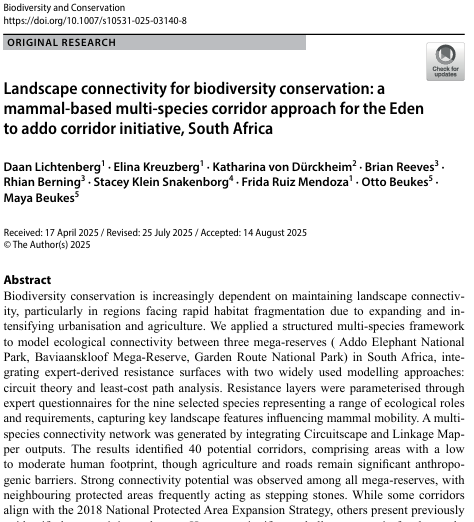
    A recent study by Lichtenberg et al. (2025) titled “Landscape connectivity for biodiversity conservation: a mammal-based multi-species corridor approach for the Eden to addo corridor initiative, South Africa” published in Biodiversity and Conservation by Springer Nature reveals that 40 multi-species corridors connect South Africa’s mega-reserves, enhancing connectivity, guiding conservation, and informing protected area expansion.

    40 multi-species ecological corridors effectively connect South Africa’s mega-reserves, enhancing biodiversity, landscape connectivity, and conservation planning.– Lichtenberg et al. 2025

    The study titled “Landscape connectivity for biodiversity conservation: a mammal-based multi-species corridor approach for the Eden to Addo Corridor Initiative, South Africa” aims to enhance biodiversity conservation by improving ecological connectivity across fragmented landscapes in South Africa. This research addresses the growing challenge of habitat fragmentation caused by urbanization and agriculture, with the goal of supporting national conservation initiatives such as the 30×30 plan and Vision 2040. To achieve this, the study models and identifies ecological corridors linking three major protected areas: Addo Elephant National Park (AENP), Baviaanskloof Mega-Reserve (BMR), and Garden Route National Park (GRNP). Using a multi-species approach, nine mammal species were selected as ecological indicators for their diverse habitat requirements and ecological roles: leopard, Cape grysbok, Cape mountain zebra, greater kudu, African elephant, bushpig, chacma baboon, bat-eared fox, and Cape clawless otter. These species represent different trophic levels and habitat preferences, offering a comprehensive perspective on ecological connectivity.

    The study identified 40 potential ecological corridors ranging from 1.5 km to 53.6 km in length, primarily situated in areas with low to moderate human impact. Major barriers to connectivity include agriculture and road networks. While some corridors align with South Africa’s National Protected Area Expansion Strategy (NPAES), others reveal new opportunities for conservation action. The findings provide a practical framework for corridor planning at regional and national scales, emphasizing the importance of landowner participation, financial feasibility, and long-term management. Ecological corridors are also highlighted as tools to mitigate climate change impacts and facilitate species migration. The study’s limitations include a focus on mammals, which may not fully reflect the needs of birds, reptiles, or plants, and reliance on expert-based resistance mapping, which could be improved with GPS tracking and camera trap data. Future research should incorporate finer-scale ecological data, social dynamics, and land-use economics to strengthen corridor planning and biodiversity conservation efforts.

    How the Study was Conducted

    The study employed a structured, multi-step approach to model ecological connectivity across a large and ecologically diverse landscape in South Africa, specifically targeting the Eastern and Western Cape provinces, covering approximately 52,100 km². The focus was on three major protected areas: Addo Elephant National Park (AENP), Baviaanskloof Mega-Reserve (BMR), and Garden Route National Park (GRNP), with a 30 km buffer around each reserve to incorporate surrounding protected areas and potential corridor zones.

    Nine mammal species were selected to represent diverse ecological roles, habitat preferences, and trophic levels. Selection criteria included ecological function (e.g., seed dispersal, predation), habitat specialization, trophic level, and expert input from regional conservationists.

    To evaluate landscape permeability, resistance surfaces were developed for each species based on multiple environmental and anthropogenic factors, including land cover (SANLC 2022), human population density (WorldPop), road and rail networks (OpenStreetMap), topography (elevation, slope, roughness from SRTM), and proximity to water sources. Experts rated the influence of each feature on species movement on a scale of 1 (low resistance) to 100 (high resistance), and the averaged scores were used to generate species-specific resistance maps.

    Connectivity modeling combined two complementary approaches. Least-Cost Path Analysis (using Linkage Mapper) identified the most efficient routes between habitat patches for each species, while Circuit Theory (using Circuitscape) simulated movement as electrical current, capturing multiple pathways and redundancy. The “all-to-one” mode was applied to model connectivity among all protected areas. Outputs from both models were rank-normalized and integrated to produce a multi-species corridor network, ultimately identifying 40 potential corridors ranging from 1.5 km to 53.6 km in length.

    Corridors were further evaluated through land cover assessments to determine habitat composition and via the Human Footprint Index, which measured anthropogenic pressures using eight variables such as roads, croplands, and light pollution. Parcel-level mapping identified priority land parcels for corridor establishment, ensuring a minimum corridor width of 2 km to reduce edge effects.

    Finally, resistance surfaces and model outputs were validated through expert review. Limitations of the study include the absence of GPS or camera-trap data, exclusion of non-mammalian taxa (birds, reptiles, and plants), and the lack of modeling of fencing impacts due to their variability across the landscape.

    What the Authors Found

    The authors found that 40 multi-species ecological corridors, varying in length and traversing largely low-to-moderate human impact landscapes, were identified to effectively connect South Africa’s three mega-reserves, revealing key areas for targeted conservation, enhancing landscape connectivity, and informing national protected area expansion.

    Why is this important

    Biodiversity Threats: Habitat fragmentation from agriculture, urbanization, and infrastructure isolates wildlife, reducing genetic diversity and increasing extinction risk.

    Connectivity for Survival: Ecological corridors enable movement, migration, and adaptation, supporting gene flow, resource access, and climate resilience for wide-ranging species.

    Strategic Conservation Planning: The study offers a replicable framework for identifying multi-species corridors, helping prioritize areas for protection and restoration.

    Support for National and Global Goals: Aligns with South Africa’s Vision 2040, the 30×30 plan, and international biodiversity frameworks, promoting conservation targets.

    Landowner and Policy Engagement: Parcel-level mapping facilitates collaboration with landowners, encouraging corridor establishment across public and private lands.

    Climate Change Adaptation: Corridors allow species to shift ranges in response to climate change, acting as ecological lifelines under environmental stress.

    Advancing Scientific Understanding: Demonstrates multi-species modeling applications in data-poor regions and highlights the value of expert-based resistance mapping.

    What the Authors Recommended

    • The authors advocate using multi-species modelling to identify connectivity hotspots, prioritize corridors, and align efforts with South Africa’s Vision 2040 and 30×30 goals.
    • The study argues to establish corridors at least 2 km wide, utilize parcel-level mapping for land stewardship, and avoid highly urbanized or heavily farmed areas.
    • The study emphasizes focusing on mammals for large-scale connectivity, including other taxa in future studies, and validating expert-based resistance mapping with GPS or camera trap data when possible.
    • The study further advocates managing fencing impacts, promoting sustainable land-use practices, and restoring degraded or marginal farmland to enhance corridor functionality.
    • In addition, collaborate with landowners and communities, address human-wildlife conflict, and explore financial incentives such as ecotourism, carbon markets, and nature credits.
    • Furthermore, incorporate fire control, invasive species management, erosion mitigation, and riverine corridor protection, while refining modeling techniques and monitoring corridor effectiveness over time.

    The study underscores that establishing multi-species ecological corridors is essential for enhancing biodiversity, supporting climate resilience, and guiding strategic conservation across South Africa’s landscapes.

  • Sustainable Construction in South Africa and Nigeria: Challenges, Opportunities, and Project Success Insights

    Sustainable Construction in South Africa and Nigeria: Challenges, Opportunities, and Project Success Insights


    Illustrative Image: Sustainable Construction in South Africa and Nigeria: Challenges, Opportunities, and Project Success Insights
    Image Source & Credit: PwC
    Ownership and Usage Policy

    A recent study by Aroge et al. (2025) titled “CONSTRUCTION MANAGEMENT AND SUSTAINABILITY: A BIBLIOMETRIC REVIEW OF PROJECT SUCCESS FACTORS, CHALLENGES AND OPPORTUNITIES IN SOUTH AFRICA AND NIGERIA,” published in Open Journal of Engineering Science (ISSN: 2734-2115), reveals that construction in South Africa and Nigeria embraces sustainability, but implementation lags due to regulations, skills, finance, and socio-political issues, despite technological opportunities.

    Sustainable construction is growing in South Africa and Nigeria, but implementation lags due to systemic challenges. – Aroge et al. 2025

    The study examines the growing intersection between sustainable practices and construction project success in two of Africa’s most dynamic economies. Using a bibliometric analysis of 137 publications spanning 1986 to 2024, the research maps key trends, identifies influential authors and journals, highlights country-level contributions and collaborations, and explores challenges and opportunities in sustainable construction while recommending future research directions. The findings reveal a knowledge gap between the theoretical advantages of sustainable construction and its practical implementation in South Africa and Nigeria. Success in modern construction projects extends beyond the traditional cost-time-quality triangle to include environmental impact, social responsibility, and economic viability. Technological innovations such as Building Information Modeling (BIM), prefabrication, and 3D laser scanning play a critical role in supporting sustainable project delivery.

    However, several challenges hinder progress, including outdated regulations, limited skilled labor, inadequate infrastructure, financial constraints, and socio-political instability. Conversely, opportunities exist through public-private partnerships, the adoption of green building standards like LEED and EDGE, and enhanced international collaboration and capacity-building initiatives.

    How the Study was Conducted

    The study employed a bibliometric review methodology to analyze patterns and trends in academic literature on construction management, sustainability, and project success in South Africa and Nigeria. Using the PRISMA guidelines, the researchers ensured a systematic and transparent approach in selecting and analyzing relevant studies. All 137 publications reviewed, spanning from 1986 to 2024, were sourced from the Scopus database, known for its extensive coverage of peer-reviewed literature, providing a long-term perspective on research developments.

    For analysis, VOSviewer software was used for science mapping, enabling the visualization of relationships between authors, keywords, and countries, while Microsoft Excel facilitated data organization and the generation of descriptive statistics such as publication counts and citation metrics. The selection focused specifically on studies related to construction management, sustainability, and project success, highlighting influential authors, key journals, major research themes, and collaboration networks across institutions and countries.

    Through techniques such as keyword co-occurrence, citation analysis, and authorship pattern evaluation, the study uncovered dominant research areas and examined country-level contributions, revealing disparities in scholarly output and collaboration between South Africa and Nigeria.

    What the Authors Found

    The authors found that while construction management in South Africa and Nigeria is increasingly embracing sustainability, actual implementation lags behind, with challenges like regulatory barriers, limited skilled labor, financial constraints, and socio-political issues hindering progress, though technological innovations, green standards, and public-private partnerships offer significant opportunities for transformation.

    Why is this important

    Sustainable Urban Development: Rapid urbanization in South Africa and Nigeria requires greener, smarter construction to reduce carbon emissions, resource depletion, and environmental impact.

    Economic and Social Benefits: Sustainable construction can drive job creation, attract investment, and improve living standards while ensuring project success.

    Research and Policy Impact: The study bridges the gap between theory and practice, guiding policymakers, educators, and developers to implement actionable, sustainability-focused strategies.

    Industry Transformation: Adoption of technologies like BIM and prefabrication enhances efficiency, reduces waste, and gives firms a competitive edge in a sustainability-driven market.

    What the Authors Recommended

    • The authors advocate strengthening regulatory frameworks and providing incentives such as tax breaks, subsidies, or fast-track approvals to promote sustainable construction practices.
    • The study emphasises investing in training professionals in sustainable design, construction technologies, and project management, while encouraging interdisciplinary collaboration across engineering, architecture, and environmental fields.
    • Furthermore, the study advocates fostering international partnerships and enhancing local academic engagement to drive innovation, knowledge sharing, and joint research between South African and Nigerian scholars.
    • In addition, promote real-world adoption of sustainability through empirical case studies and the integration of green building standards like LEED, EDGE, and BREEAM.

    The study highlights that while South Africa and Nigeria are increasingly embracing sustainable construction, significant gaps remain in implementation, requiring strengthened regulations, skilled workforce development, technological adoption, and international collaboration to fully realize environmental, social, and economic benefits in modern construction projects.

  • Rain Attenuation Prediction for Satellite Communications in Northern Nigeria: Challenges, Models, and AI-Driven Solutions

    Rain Attenuation Prediction for Satellite Communications in Northern Nigeria: Challenges, Models, and AI-Driven Solutions


    Illustrative Image: Rain Attenuation Prediction for Satellite Communications in Northern Nigeria: Challenges, Models, and AI-Driven Solutions
    Image Source & Credit: AEM
    Ownership and Usage Policy

    A study by Kolawole et al. (2025) titled “RAIN ATTENUATION PREDICTION AND MODELING FOR EARTH-SPACE LINKS IN NORTHERN NIGERIA: A REVIEW” published in Open Journal of Engineering Science (ISSN: 2734-2115), reveals that no existing rain attenuation prediction model consistently provides accurate results for Northern Nigeria’s tropical climate,

    No existing rain attenuation model reliably predicts satellite signal loss in Northern Nigeria’s tropical climate. – Kolawole et al. 2025

    The study explores the critical challenge of rain-induced signal degradation in satellite communication systems, with a focus on the tropical climate of Northern Nigeria. In satellite communications, signals often traverse distances of up to 36,000 km for geostationary satellites, and rainfall can significantly weaken these electromagnetic waves—particularly at frequencies above 10 GHz—resulting in outages and reduced Quality of Service (QoS). The review examines a range of models developed to predict this phenomenon, highlighting both their strengths and limitations in the Nigerian context. The ITU-R model, while widely used globally, often proves inaccurate in tropical environments. The Moupfouma model sometimes outperforms ITU-R but remains limited in scope. The Garcia Lopez model, rooted in temperate data, is poorly suited to Nigeria’s climate. The Synthetic Storm Technique (SST) shows promise at 12 GHz but performs less reliably at higher frequencies. Other models, such as Bryant, DAH, SAM, and Svjatogor, demonstrate varying degrees of applicability but fail to provide consistently accurate predictions across different cities in Northern Nigeria.

    The study stresses that the region’s unique climatic conditions demand location-specific solutions, as no existing model achieves uniform accuracy. To bridge this gap, the authors point toward future directions. Artificial Intelligence and Machine Learning are identified as powerful emerging tools for improving prediction accuracy, though their effectiveness is currently constrained by limited local datasets. The integration of Fade Mitigation Techniques (FMTs) with predictive models is also suggested as a way to strengthen signal reliability. Furthermore, the study calls for more comprehensive empirical data collection to refine or recalibrate models for the Nigerian environment.

    How the Study was Conducted

    The study was carried out as a comprehensive literature review, examining the performance and applicability of various rain attenuation prediction models for satellite communication systems in Northern Nigeria. Researchers assessed widely used models such as ITU-R, Moupfouma, Garcia Lopez, and SST by analyzing their theoretical foundations, assumptions, and effectiveness in tropical climates. The review placed particular emphasis on cities across Northern Nigeria, evaluating how accurately each model predicts signal degradation during rainfall, especially for high-frequency bands above 10 GHz.

    Through a comparative analysis, the study measured the models’ responsiveness to key climatic factors such as rain rate and intensity, identifying strengths and shortcomings in predicting attenuation under local conditions. The findings revealed that many existing models struggle in tropical regions, underscoring the necessity for localized calibration or the development of entirely new frameworks tailored to these environments.

    In addition, the review highlighted emerging opportunities in the use of artificial intelligence and machine learning to improve prediction accuracy. However, the authors noted that the lack of sufficient region-specific data currently limits the effectiveness of such advanced approaches. By synthesizing prior studies and simulation results, the research not only consolidates existing knowledge but also points to critical gaps and future directions for achieving more reliable satellite communication in rain-prone regions.

    What the Authors Found

    The authors found that no existing rain attenuation prediction model consistently provides accurate results for Northern Nigeria’s tropical climate, underscoring the urgent need for localized calibration, empirical data collection, and integration of advanced approaches like AI and fade mitigation techniques to ensure reliable satellite communication.

    Why is this important

    Strengthening Communication Infrastructure:Satellite systems are crucial for internet access, broadcasting, and emergency services in remote regions, but heavy tropical rainfall disrupts signals, causing outages and reduced service quality.

    Addressing Regional Challenges
    Most existing prediction models are based on temperate climates and fail to capture Nigeria’s rainfall patterns, leading to inaccurate designs, poor system performance, and wasted investments.

    Driving Scientific and Technological Innovation
    The study emphasizes the need for localized data and tailored models, while also pointing to AI and machine learning as future tools for more accurate predictions.

    Delivering Practical Benefits
    Improved prediction models will make satellite networks more resilient, ensuring reliable connectivity for critical sectors like telemedicine, education, and disaster response.

    What the Authors Recommended

    The study advocates refining existing models with local data and, when necessary, creating new ones tailored to Northern Nigeria’s tropical climate, as well as establishing long-term, multi-city datasets through collaboration between universities, meteorological agencies, and telecom providers to support accurate model validation.

    The study also emphasises leveraging AI-driven approaches for high-frequency predictions while addressing data gaps by prioritizing extensive local data acquisition.

    Furthermore, enhance reliability by combining predictive models with adaptive strategies like modulation, power control, and site diversity.

    In addition, encourage region-specific and interdisciplinary studies that unite atmospheric science, signal processing, and AI to refine solutions under real-world conditions.

    In conclusion, the study by Kolawole et al. (2025) highlights the pressing challenge of accurately predicting rain-induced signal degradation in Northern Nigeria’s tropical climate. Existing models, developed primarily for temperate regions, fall short in providing consistent results, underscoring the urgent need for localized calibration, comprehensive empirical data collection, and the integration of advanced tools such as artificial intelligence and fade mitigation techniques. By addressing these gaps, future research and technological innovation can enhance the reliability of satellite communication systems, ensuring resilient connectivity for critical sectors like education, telemedicine, emergency response, and broadcasting across rain-prone regions of Northern Nigeria.

  • Cross-Pathogenicity of Molds in Stored Irish Potatoes: Rhizopus and Aspergillus Threaten Nigeria’s Staple Crops and Food Security

    Cross-Pathogenicity of Molds in Stored Irish Potatoes: Rhizopus and Aspergillus Threaten Nigeria’s Staple Crops and Food Security


    Illustrative Image: Cross-Pathogenicity of Molds in Stored Irish Potatoes: Rhizopus and Aspergillus Threaten Nigeria’s Staple Crops and Food Security
    Image Source & Credit: iStock
    Ownership and Usage Policy

    A recent study by Tawose, F. O. (2025) titled “CROSS-PATHOGENICITY ASSAY OF SOME MOLDS ISOLATED FROM STORED Solanum tuberosum (IRISH POTATOES)” published in Open Journal of Bioscience Research (ISSN: 2734-2069) revealed that Rhizopus sp. was the most aggressive pathogen on potatoes, producing the largest rot diameter (32 mm), while A.

    Rhizopus sp. and Aspergillus flavus are highly virulent fungi capable of cross-infecting multiple staple crops, threatening storage systems and food security.
    – Tawose, F. O. 2025

    The study explores the fungal threats undermining postharvest potato storage in Nigeria and their potential to infect other staple crops. The research sought to identify the fungi responsible for potato rot, assess their virulence, and determine their ability to cross-infect crops such as yam, ginger, cocoyam, and onion. Findings revealed that Rhizopus sp. was the most aggressive pathogen on potatoes, producing the largest rot diameter (32 mm), while A. flavus caused the most severe decay in onion bulbs (33 mm). Fusarium oxysporum showed strong virulence on cocoyam, and Rhizopus sp. demonstrated high infectivity across all tested crops, confirming that these fungi pose a broad cross-infectivity risk. The implications are significant: these molds represent a serious threat not only to stored potatoes but also to other food staples, thereby endangering food security. The study emphasizes that mixed storage of crops encourages cross-contamination and amplifies spoilage risks. Consequently, improved postharvest practices—such as strict hygiene measures, better storage infrastructure, and careful crop handling—are urgently needed to mitigate losses and protect agricultural productivity. This research serves as a crucial warning for farmers, traders, and policymakers in Nigeria and similar environments, highlighting the urgent need to safeguard food systems from fungal pathogens that cut across multiple storage crops.

    How the Study was Conducted

    The study on cross-pathogenicity of molds isolated from stored Irish potatoes was designed to systematically investigate how fungal infections contribute to postharvest losses and whether these pathogens can spread to other crops. Conducted in Lokoja, Kogi State, Nigeria, the research provided a structured approach to understanding fungal behavior. Researchers collected 25 rotten Irish potato tubers from five different storage sites. Only tubers showing visible signs of rot were selected to ensure active fungal presence. The infected tissues were cultured on Potato Dextrose Agar (PDA) and incubated at room temperature for 5–7 days. Identification was based on morphological and microscopic features, following established taxonomic keys. To confirm the fungi’s ability to cause rot, healthy potato tubers were surface-sterilized, wounded, and inoculated with isolates. After incubation under controlled conditions, rot diameters were measured over 7 days to assess virulence. To evaluate cross-host infectivity, the same fungal isolates were tested on cocoyam, onion, and ginger using similar inoculation and incubation methods. Rot development on these crops was carefully monitored and measured. Data were analyzed using frequency of fungal occurrence, rot diameter (mm), and comparative virulence across host crops. This enabled the ranking of fungal isolates by their pathogenic potential and cross-infectivity.

    What the Author Found

    The study found that the fungal species isolated from rotten Irish potatoes—particularly Rhizopus sp.—are not only highly pathogenic to potatoes but also capable of cross-infecting other stored crops like onion, cocoyam, and ginger, posing a major risk of widespread postharvest spoilage in mixed storage systems.

    Why is this important

    Safeguarding Staple Crops: The study shows that fungi such as Rhizopus sp. and Aspergillus flavus can infect multiple crops, meaning one contaminated batch can spoil entire storage units, threatening food supplies.

    Reducing Economic Losses: Postharvest fungal spoilage lowers crop market value, drives up food prices, and wastes farmers’ time, labor, and resources. Identifying the main fungal culprits supports effective interventions.

    Improving Storage Practices: Mixed storage of crops increases the risk of cross-contamination. The research highlights the need for better hygiene, ventilation, and crop separation in storage facilities.

    Guiding Policy and Research: Findings provide a foundation for breeding fungal-resistant crops, improving farmer education, and shaping agricultural policies that invest in stronger postharvest systems.

    Protecting Public Health: Some fungi, such as Aspergillus flavus, produce dangerous mycotoxins. Controlling these pathogens is vital not only to prevent food losses but also to safeguard human health.

    What the Author Recommended

    • The author advocates cleaning and disinfecting storage facilities regularly, avoiding mixing infected tubers with healthy ones, maintaining cool, dry, and well-ventilated environments, and separating different crops to minimize cross-infection risks.
    • The study further emphasises introducing routine screening, training staff in fungal identification, and developing rapid diagnostic tools for aggressive fungi like Rhizopus sp. and Aspergillus flavus.
    • In addition, raise awareness about the risks of mixed storage and provide training on best practices for crop handling and storage and support studies on resistant crop varieties, biological control measures, and the toxigenic risks of fungi such as Aspergillus flavus.

    In conclusion, the study underscores the urgent need for improved storage practices, targeted interventions, and farmer awareness to curb fungal cross-infection, safeguard staple crops, and strengthen food security in Nigeria and beyond.

  • Egusi Melon Seed Oil Improves Cholesterol and Heart Health: Study on Cardioprotective Benefits and Nutritional Potential

    Egusi Melon Seed Oil Improves Cholesterol and Heart Health: Study on Cardioprotective Benefits and Nutritional Potential


    Illustrative Image: Egusi Melon Seed Oil Improves Cholesterol and Heart Health: Study on Cardioprotective Benefits and Nutritional Potential
    Image Source & Credit: Health
    Ownership and Usage Policy

    A recent study by Omozuwa et al. (2025) titled “THE EFFECT OF MELON (Citrilus colocynthis) SEED OIL ON LIPID PROFILE AND HAEMATOLOGY INDICES IN WISTAR RAT” published in Open Journal of Bioscience Research reveals that Egusi melon seed oil produced a marked reduction in harmful blood lipids.

    Egusi melon seed oil significantly reduces total cholesterol, LDL, and triglycerides, offering cardioprotective benefits without affecting hematological health.
    -Omozuwa et al. 2025

    This study explored the impact of Egusi melon (Citrilus colocynthis) seed oil, a traditional West African ingredient, on lipid metabolism and blood health in Wistar rats. The authors aimed to determine how the oil influenced lipid profile markers—total cholesterol, triglycerides, low-density lipoprotein (LDL), and high-density lipoprotein (HDL)—as well as hematological indices such as red and white blood cells, hemoglobin, and platelets. The findings revealed that Egusi melon seed oil produced a marked reduction in harmful blood lipids. Specifically, it significantly lowered total cholesterol and showed the strongest LDL-lowering effect compared to all other groups, while also reducing triglyceride levels alongside olive oil. However, HDL levels remained unchanged across treatments. In contrast, hematological parameters were largely unaffected, suggesting the oil’s primary action is on lipid metabolism rather than blood cell function. These results highlight the cardioprotective potential of Egusi melon seed oil, positioning it as a natural dietary alternative for individuals at risk of cardiovascular disease or lipid metabolism disorders. Given its widespread use in West African cuisine, particularly in soups, the study provides scientific support for the traditional consumption of Egusi while uncovering possible therapeutic benefits beyond its culinary role.

    How the Study was Conducted

    The study employed a controlled animal experiment to investigate the effects of Egusi melon (Citrilus colocynthis) seed oil on lipid profile and hematological parameters. A total of 16 healthy Wistar rats were randomly assigned into four groups (A–D), with each group comprising four rats. The experimental period lasted 28 days, during which the animals received daily treatments. Group A served as the control and was given distilled water, while Group B received Egusi melon seed oil. For comparison, Group C was treated with palm oil (Elaeis guineensis), and Group D was administered olive oil (Olea europaea). All treatments were administered orally in carefully measured doses. At the end of the 28-day period, blood samples were collected from the animals via cardiac puncture under anesthesia. The samples were analyzed using standard biochemical and hematological assays to determine lipid profile parameters—total cholesterol, triglycerides, LDL, and HDL—as well as hematological indices including hemoglobin concentration, red blood cell count, white blood cell count, and platelet levels. This structured design allowed the researchers to directly compare the physiological effects of Egusi melon seed oil with those of commonly consumed oils and a control group.

    What the Authors Found

    The study demonstrated that Egusi melon seed oil (Citrilus colocynthis) exerted notable cardioprotective effects in Wistar rats by improving lipid profiles without adversely affecting blood health. Rats treated with Egusi oil showed significantly reduced total cholesterol and LDL (“bad” cholesterol) levels, with the strongest reduction observed in LDL compared to distilled water, palm oil, or olive oil groups. Triglyceride levels were also lowered, with Egusi oil proving more effective than olive oil. Meanwhile, HDL (“good” cholesterol) remained unchanged across all groups. Importantly, hematological parameters—including red and white blood cell counts, hemoglobin, and platelets—showed no significant differences, indicating that the oil did not impair blood function.

    These findings highlight Egusi melon seed oil as a promising natural agent for cholesterol management and cardiovascular protection. Beyond its culinary role in West African diets, it may hold therapeutic potential in supporting heart health through improved lipid metabolism.

    Why is this important

    Cultural and Scientific Bridge
    Egusi melon seeds, a staple in West African cuisine, are now scientifically validated as a potential functional food, showing benefits that extend beyond their traditional culinary value.

    Cardiovascular Benefits
    Egusi oil significantly lowers LDL cholesterol and triglycerides, positioning it as a natural, accessible option for supporting heart health and reducing cardiovascular risk.

    Public Health Relevance
    As a healthier alternative to palm oil, Egusi oil could play a role in preventing or managing lipid disorders, particularly in low-resource settings where affordable dietary interventions are critical.

    Scientific Advancement
    The study contributes to research on functional foods, highlighting the need to investigate Egusi oil’s bioactive compounds and its potential applications in therapeutic nutrition and supplements.

    What the Authors Recommended

    • The authors emphasize conducting larger studies, including human trials, to confirm the lipid-lowering and cardioprotective effects of Egusi melon seed oil and clarify its underlying biochemical mechanisms.
    • The study advocates positioning egusi oil as a functional food or nutraceutical, particularly in regions with high cardiovascular disease burdens and limited access to conventional therapies.
    • In addition, compare egusi oil with other plant-based oils and explore its application in heart-healthy food products, dietary guidelines, and global wellness markets, while elevating indigenous crops.

    In conclusion, the study by Omozuwa et al. (2025) provides compelling evidence that Egusi melon seed oil offers significant cardioprotective benefits by lowering harmful blood lipids without negatively impacting hematological health. Its demonstrated ability to reduce total cholesterol, LDL, and triglycerides underscores its potential as a functional food and natural alternative for managing cardiovascular risk. Rooted in West African tradition yet supported by modern science, Egusi oil bridges cultural heritage with therapeutic promise, warranting further exploration in larger studies and human trials to unlock its full role in nutrition, wellness, and global health.

  • Call for Expressions of Interest: Transformative Capacity Development Program for CBOs, CSOs, and Coalitions in Zimbabwe 2025–2026

    Call for Expressions of Interest: Transformative Capacity Development Program for CBOs, CSOs, and Coalitions in Zimbabwe 2025–2026


    Illustrative Image: Call for Expressions of Interest: Transformative Capacity Development Program for CBOs, CSOs, and Coalitions in Zimbabwe 2025–2026
    Image Source & Credit: EEAS – European Uninon
    Ownership and Usage Policy

    Introduction

    The Zimbabwe Human Rights NGO Forum and COSPE, with financial support from the European Union, invite Expressions of Interest (EOIs) from eligible Community-Based Organizations (CBOs), Civil Society Organizations (CSOs), and CSO Coalitions across Zimbabwe to participate in a Transformative Capacity Development Program under the broader initiative CS4Zim: Civil Society Actors as Drivers of Transformative Change in Zimbabwe.

    This program is specifically designed to strengthen the role of grassroots organizations working with marginalized and vulnerable groups—such as women, youth, children, and Persons with Disabilities (PwDs)—by equipping them with the tools, governance frameworks, and leadership skills necessary to address critical developmental and human rights challenges in their communities.

    Participation in this program represents the first stage of a two-step process:

    1. Capacity Development Phase – Organizations selected will receive tailored training, mentorship, and institutional strengthening support.

    2. Financial Support Phase – Selected organizations will later become eligible to apply for Financial Support to Third Parties (FSTP) through a competitive process. Grants will range between EUR 10,000 and EUR 60,000 depending on the nature and scope of initiatives proposed.


    2. Background and Program Overview

    The CS4Zim program is founded on the principle that a vibrant civil society sector is essential for sustainable development, social justice, and human rights in Zimbabwe. Through this initiative, approximately 70 organizations will be selected:

    • 60% CBOs

    • 35% CSOs

    • 5% CSO Coalitions

    These will be drawn from all 10 provinces of Zimbabwe to ensure national representation and inclusivity.

    Special preference will be given to organizations that are:

    • Women-led, youth-led, or PwD-led;

    • Actively serving marginalized or underserved populations;

    • Demonstrating readiness to implement transformative interventions.

    The program is unique in that it moves away from the “one-size-fits-all” approach and instead applies a tailored, competency-based model. Interventions will be customized to the organizational maturity level (entry-level, mid-career, senior management, and board representation) to address specific skills gaps. This multi-level strategy promotes:

    • Continuous learning,

    • Mentorship,

    • Peer-to-peer knowledge exchange, and

    • Effective succession planning within the civil society sector.

    Core Areas of Support

    The Transformative Capacity Development Program will provide training, mentorship, and resources across the following domains:

    1. Organizational Development

      • Governance structures, compliance with PVO regulations, strategic planning, financial and human resource management.

    2. Programmatic Strengthening

      • Designing and implementing impactful projects, monitoring and evaluation systems, and reporting mechanisms.

    3. Advocacy and Communication

      • Building influence in public discourse, strengthening media relations, and improving community mobilization strategies.

    4. Resource Mobilization

      • Diversifying funding streams through proposal development, donor engagement, and fundraising strategies.

    5. Networking and Collaboration

      • Facilitating coalitions, partnerships, and cross-learning opportunities.

    6. Specialized Thematic Training

      • Topics such as digital transformation, documentation, gender equality, youth empowerment, and social inclusion.

    Delivery will combine workshops, mentorship, online resources, and peer learning, ensuring that organizations not only build knowledge but also put it into action.


    3. Eligibility Criteria

    Organizations applying must:

    • Be legally registered as a Private Voluntary Organization (PVO) in Zimbabwe, or provide evidence of active progress toward registration.

    • Demonstrate operational credibility and presence within communities.

    • Have no conflicts of interest that could undermine transparent participation.


    4. Selection Criteria

    Applications will be assessed by an independent panel of local and regional experts.

    Criteria Maximum Score
    Alignment & Justification (relevance to organizational goals, human rights, and community impact) 20%
    Capacity Assessment (clarity of gaps and strategies for addressing them) 20%
    Team Commitment (participation and application of learning) 15%
    Past Performance (quality and relevance of work) 15%
    Community Impact (evidence of positive change and collective action) 15%
    Program Priorities, Gender & Social Inclusion (commitment to equity and balanced representation) 15%
    Total 100%

    5. Benefits of Participation

    Selected organizations will gain:

    • Access to tailored, needs-driven training and mentorship.

    • Enhanced organizational effectiveness, efficiency, and sustainability.

    • Improved program design, delivery, and community impact.

    • Strengthened advocacy and fundraising capacities.

    • Opportunities for networking and future partnerships.

    • Eligibility to apply for FSTP sub-grants in 2026 to implement transformative community initiatives.


    6. Application Process

    Step 1: Intention to Submit

    • Organizations must submit an Intention to Submit Form by 23 September 2025 via: Google Form Link.

    Step 2: Submission of EOI

    • Submit a concise Expression of Interest (max 8 pages) by 1 October 2025 to: consortiumrecruit@gmail.com.

    • Subject line: “EOI – Transformative Capacity Development Program – [Organization’s Name]”.

    • For revised applications following the corrigendum, subject line: “EOI – … – [Organization’s Name] – Resubmission”.

    • Combine all documents into a single PDF.

    Required Content:

    1. Organizational Profile (legal name, registration, contact person, mission, vision, areas of work, past performance).

    2. Rationale for Interest (capacity gaps, challenges, expected contributions to organizational growth).

    3. Capacity Assessment (strengths and areas for improvement in governance, finance, programs, advocacy).

    4. Team Commitment (leadership and staff engagement in learning and application).

    5. Community Action Evidence (collective action and its impact).

    Physical submissions may be delivered to:
    Zimbabwe Human Rights NGO Forum, 18 Wanganui Road, Meyrick Park, Harare


    7. Selection Timeline

    Activity Date
    Call for EOI Published 30 July 2025
    Corrigendum Issued 1 September 2025
    Deadline for Questions 12 September 2025
    Online Q&A Session 16 September 2025
    Intention to Submit Form Deadline 23 September 2025
    EOI Submission Deadline 1 October 2025
    Application Review 2–24 October 2025
    Notification of Shortlisted Orgs 4 November 2025
    Written Feedback to All 7 November 2025
    Appeals Close 21 November 2025
    Final Selection Announced 1 December 2025
    Capacity Development Program Duration Dec 2025 – Dec 2026

    8. Contact Information

    For inquiries, contact: consortiumrecruit@gmail.com (deadline for questions: 12 September 2025).
    An online information session will be held on 16 September 2025 via Google Meet (link to be shared). Interested organizations should register their attendance via email.


    Conceptual Elaboration:
    This call is not just about providing training. It introduces a transformative model of capacity development—meaning organizations will go beyond acquiring technical skills. Instead, they will strengthen governance, leadership, financial resilience, inclusivity, and sustainability in a holistic way. The program aims to cultivate long-term institutional growth, empower marginalized voices, and reinforce civil society as a driver of democratic participation, accountability, and social justice in Zimbabwe.

  • Building Resilience in Agriculture: National Geographic & PepsiCo Grants for Climate-Smart Farming Solutions 2025

    Building Resilience in Agriculture: National Geographic & PepsiCo Grants for Climate-Smart Farming Solutions 2025


    Illustrative Image: Building Resilience in Agriculture: National Geographic & PepsiCo Grants for Climate-Smart Farming Solutions 2025
    Image Source & Credit: National Geographic Society
    Ownership and Usage Policy

    Submission Deadline: September 30, 2025, at 11:59 PM EDT

    Agriculture remains at the heart of human civilization, supporting both livelihoods and global food security. Today, nearly half of the world’s habitable land is devoted to agricultural production, and close to one-third of the global population depends directly on farming for survival and income. Yet, agriculture is also one of the most climate-vulnerable sectors. Extreme weather events, rising global temperatures, pest outbreaks, soil degradation, and shifting ecological conditions increasingly threaten farming systems worldwide. Without effective tools for adaptation and resilience, these stressors can severely disrupt livelihoods, ecosystems, cultural traditions, and the global food supply.

    Climate models consistently project that farming communities will face growing challenges in the decades ahead. The health of soils, watersheds, and biodiversity within agricultural landscapes will determine whether these systems remain productive and sustainable. Farmers, who have historically been agents of adaptation and innovation, are once again called upon to lead the way—balancing modern science with traditional and Indigenous knowledge systems that have safeguarded food production for centuries.

    While a wide range of tools and practices exist to strengthen resilience, many remain in early stages of development or are implemented only locally. There is a pressing need to expand, scale, and test these approaches on the ground in ways that are scientifically rigorous, socially inclusive, and environmentally regenerative.


    Opportunity Overview

    This funding opportunity is supported by Food for Tomorrow, a collaboration between the National Geographic Society (NGS) and PepsiCo that seeks to catalyze sustainable, real-world solutions to the agricultural challenges of our time.

    Selected projects will focus on science-driven, nature-positive solutions that directly enhance the resilience of farms, farming communities, and surrounding ecosystems. The emphasis is on applied innovation—approaches that go beyond theory to measurable field-based outcomes. Projects should integrate regenerative practices that deliver ecological, social, and economic benefits while strengthening adaptation to climate change.

    Successful proposals will demonstrate progress in at least two or more of the following priority areas:

    1. Soil Health: Building fertility and restoring soil systems above and below ground to sustain long-term productivity and ecological balance.

    2. Climate Mitigation & Adaptation: Implementing practices that reduce emissions, sequester carbon, and increase resilience to droughts, floods, and other climate extremes.

    3. Watershed Health: Improving water use efficiency, reducing runoff and pollution, and supporting water security for both farms and communities.

    4. Biodiversity: Protecting and restoring ecological diversity in farming landscapes, from soil microbes to pollinators, forests, and wildlife corridors.

    5. Improved Livelihoods: Supporting farmers through training, equitable participation in decision-making, and access to resources that foster both sustainability and economic security.

    Projects must be rooted in the field: implemented and tested directly on farms, in farming communities, or in landscapes adjacent to cultivated land. They must also involve one or more of the following food crops: corn, wheat, oats, potatoes, sugar beets, oilseeds (canola, sunflower, rice bran), rice, cocoa, oil palm, raisins, and soy.


    Approach and Priorities

    NGS and PepsiCo are particularly interested in projects that identify localized barriers to adopting regenerative and climate-smart practices. A key component of resilience-building lies not only in environmental outcomes but also in assessing cultural acceptance, social equity, and economic feasibility.

    Therefore, strong proposals will:

    • Be co-designed and/or led by local collaborators, especially farmers and farming communities with relevant expertise and contextual knowledge.

    • Align with FAIR (Findable, Accessible, Interoperable, Reusable) and CARE (Collective Benefit, Authority to Control, Responsibility, Ethics) principles, ensuring scientific integrity and ethical engagement.

    • Demonstrate potential for scaling and replication in diverse geographies, while remaining grounded in community-specific realities.


    Eligibility

    To qualify for this opportunity, applicants must meet the following requirements:

    • Project budget must not exceed $150,000.

    • Applicants must be 18 years or older.

    • Projects must be completed within two years of funding.

    • The proposal must include field-based implementation with one or more of the eligible crops.

    • Applicants must collaborate with local partners who bring farming or community expertise.

    • Applications must be submitted in English (though English need not be the PI’s first language).

    Not eligible:

    • Projects focused solely on non-food crops (e.g., cotton, jute, hemp).

    • Projects centered exclusively on livestock, feed, or animal husbandry.

    • Initiatives that are not co-created with farmers.

    • Basic research projects without applied implementation.

    • Proposals exceeding the budget limit without secured additional funding.

    • Projects requiring new land conversion—solutions must operate on existing farmland.


    Benefits of Participation

    Successful applicants will become National Geographic Explorers, gaining access to a vibrant global community of innovators and practitioners. Additional benefits include:

    • Opportunities for mentorship, training, and capacity building.

    • Participation in international events, including travel to Europe in early 2026 and to NGS headquarters in Washington, DC later that year.

    • Potential global visibility through media coverage, documentaries, photography, and communication campaigns.

    • Long-term connections with partners, peers, and funding opportunities to extend the impact of their work.


    Webinars

    To assist applicants, NGS will host three informational webinars (same content, different times):

    • Tuesday, August 5, 2025 – 9:00 PM EDT (01:00 UTC)

    • Thursday, August 7, 2025 – 11:00 AM EDT (15:00 UTC)

    • Monday, September 8, 2025 – 9:00 AM EDT (13:00 UTC)

    Recordings of the first two webinars will be available, and registration is required for the final session.


    Application Process

    • Applications must be submitted via the online application portal (not by email or post).

    • Further guidance is available in the FAQ document.

    • For questions, applicants may contact funding@ngs.org with “Building Resilience in Agriculture RfP” in the subject line.

    Apply Now


    ✨ In summary, this call invites practitioners, researchers, and communities to design and implement farm- and community-based innovations that strengthen resilience in agriculture. By blending scientific knowledge with cultural and traditional practices, this opportunity aims to ensure that farming systems remain productive, sustainable, and regenerative in the face of climate uncertainty.

  • African Think Tank Platform (ATTP) Call for Proposals 2025: Funding for Policy Research, Regional Collaboration, and Capacity Building

    African Think Tank Platform (ATTP) Call for Proposals 2025: Funding for Policy Research, Regional Collaboration, and Capacity Building


    Illustrative Image: African Think Tank Platform (ATTP) Call for Proposals 2025: Funding for Policy Research, Regional Collaboration, and Capacity Building
    Image Source & Credit: Opportunities for Youth
    Ownership and Usage Policy

    Application Form and Guidelines

    The African Think Tank Platform (ATTP) is an ambitious initiative designed to strengthen Africa’s ability to conduct high-quality policy research and foster evidence-based policymaking on urgent cross-border priorities.

    Funded by the World Bank and implemented by the African Union Commission (AUC), the ATTP serves as a long-term mechanism to support, connect, and empower African think tanks. It focuses on generating solutions for the continent’s most pressing challenges, including:

    • Economic transformation and governance

    • Climate change and environmental resilience

    • Regional trade and market integration

    • Food security and agricultural development

    • Human capital formation and social development

    • Digitalization and technological advancement

    A central feature of the platform is its commitment to inclusivity and collaboration. In particular, the ATTP emphasizes:

    • Regional cooperation, ensuring think tanks from different African subregions work together on cross-boundary issues.

    • Gender equity, by strengthening the representation and leadership of women in policy research and advocacy.

    • Institutional capacity building, helping think tanks move beyond research production to active participation in policymaking processes at both regional and continental levels.

    Through this Call for Proposals, the ATTP invites consortia of African think tanks to apply for funding and become part of this transformative initiative. Successful consortia will generate research of continental significance, build institutional resilience, and engage directly with African policymakers to shape future strategies.


    1. Eligibility Criteria

    To qualify for funding, applicants must form a consortium of 3 to 5 African think tanks that meet the following requirements:

    • Consortium Structure: One think tank must serve as the lead applicant, responsible for coordination and communication.

    • Legal Registration: All member think tanks must be officially registered and headquartered in continental Africa.

    • Policy Coverage: The consortium must collectively demonstrate research or policy engagement in at least four of the six ATTP priority themes (listed above).

    • Strategic Alignment: Proposed activities must clearly contribute to the ATTP’s mission of:

      • Advancing evidence-based regional policy development

      • Enhancing institutional capacity for sustained impact

      • Promoting cross-country collaboration

      • Strengthening gender inclusion in research and leadership


    2. Application Package

    A complete application must be submitted in PDF format through the secure ATTP online portal. The package includes the following documents:

    A. Application Form
    Captures consortium information, proposed research focus, activities, capacity-building plans, and gender strategy. (Standard form provided – must be used.)

    B. Work Plan and Budget
    Includes a detailed Gantt chart of activities and a financial plan. Annual allocations must not exceed 30% of each think tank’s operating budget. (Standard template provided.)

    C. Past Research and Engagement Experience
    Summaries of past research or policy engagement relevant to ATTP themes. (Template provided.)

    D. Audited Financial Reports
    The most recent audited accounts for each consortium member to demonstrate financial soundness.

    E. CVs of Key Personnel
    Submitted using the standard format. Must include:

    • Consortium Coordinator

    • Deputy Coordinator

    • Two lead researchers per participating think tank

    F. Consortium Commitment Letter
    Signed by all participating think tanks to confirm joint ownership of the proposal, willingness to collaborate, and commitment to implementation.


    3. Registration and Submission Process

    Before submission, all consortia must register online. Registration enables applicants to:

    • Create a consortium profile

    • Designate a lead applicant

    • Receive credentials to access the secure document portal

    • Upload the completed application package

    The submission process is entirely digital. Applicants will receive an automatic email confirming receipt of their application.


    4. Timeline

    • Submission Deadline: September 24, 2025, at 23:59 East Africa Time (EAT).

    • Late or incomplete applications will not be considered.


    5. Support for Applicants

    To help applicants prepare competitive proposals, the ATTP Secretariat provides:

    • Direct Contact Support: Queries can be addressed to attpinfo@africanunion.org.

    • Informational Webinars: Live sessions covering ATTP objectives, proposal design, budgeting, and common mistakes.

    Webinar Schedule:

    • July 24, 2025 – Launch of ATTP Call for Proposals

    • August 5, 2025 – First follow-up session

    • August 26, 2025 – Second follow-up session

    • September 8, 2025 – Third follow-up session

    • September 23, 2025 – Final support session


    6. Online Registration Form (Stage 1 – Basic Information)

    Applicants must provide the following:

    • Lead Think Tank Name

    • Country of Registration

    • Consortium Name

    • Consortium Members (list all)

    • Sub-Region (West Africa, East Africa, Central Africa, North Africa, Southern Africa)

    • Focus Areas (minimum of 4 selected from ATTP’s six thematic areas)

    • Official Contact Email of Lead Think Tank/Consortium

    • Countries Covered (select from full list of AU member states)


    Conceptual Elaboration

    The African Think Tank Platform is not merely a funding mechanism; it is envisioned as a continental knowledge ecosystem. Its purpose is to ensure that African policy debates and decisions are informed by African-generated research, contextual expertise, and regional collaboration.

    In today’s interconnected world, issues such as climate change, trade, food security, and digitalization cannot be solved within national borders alone. They require regional responses backed by strong, locally rooted evidence. The ATTP will:

    • Reduce Africa’s dependency on externally generated research by empowering African voices in global policy arenas.

    • Build networks of trust and collaboration among African think tanks, enabling them to share knowledge, avoid duplication, and amplify impact.

    • Serve as a bridge between research and policy, ensuring that evidence influences decision-making at the AU, RECs (Regional Economic Communities), and national governments.

    • Promote inclusive participation, particularly by strengthening opportunities for women researchers and leaders, who remain underrepresented in many African policy institutions.

    Ultimately, the ATTP represents a strategic investment in Africa’s intellectual infrastructure—ensuring that solutions to Africa’s challenges are designed and led by Africans themselves.

    Click here to Apply