Author: AR Managing Editor

  • Renewable Energy and Environmental Sustainability in Sub-Saharan Africa: Key Findings from a 2024 Study

    Renewable Energy and Environmental Sustainability in Sub-Saharan Africa: Key Findings from a 2024 Study

    A recent study by Bekele, et al., (2024) titled “The dynamic linkage between renewable energy consumption and environmental sustainability in Sub-Saharan African countries: Heterogeneous macro-panel data analysis” published in Cogent Economics & Finance, examines that the average renewable energy consumption rate was 67.32% of the total final energy consumption, significantly higher than the global average, indicating strong reliance on renewable sources.

    Increased renewable energy consumption significantly enhances environmental sustainability in Sub-Saharan Africa, supporting sustainable development and climate change mitigation.

    – Bekele, et al., 2024

    The article delves into the complex and evolving relationship between renewable energy consumption and environmental sustainability in Sub-Saharan African countries. Environmental sustainability is a fundamental component of sustainable development. It encompasses the ability to maintain ecological processes, biodiversity, and productivity over time. Energy consumption plays a pivotal role in this, as the sources and methods of energy production and usage directly impact the environment. In Sub-Saharan Africa, where economic development is closely linked with energy use, understanding this relationship is crucial for sustainable growth. The study focuses on the integration of renewable energy sources and their contribution to environmental sustainability across 30 Sub-Saharan African countries over a period spanning from 2000 to 2020. Renewable energy sources such as solar, wind, hydro, and biomass are becoming increasingly vital in the region’s energy mix. The research aims to evaluate how the adoption and consumption of these renewable energy sources influence overall environmental sustainability. The empirical analysis conducted in the study reveals a positive and significant long-term relationship between renewable energy consumption and environmental sustainability. This finding suggests that increased use of renewable energy sources is associated with better environmental outcomes. The data indicates that countries that have invested more in renewable energy infrastructure and have higher consumption rates of renewable energy tend to exhibit improved sustainability metrics.

    How the Study was Conducted

    The authors utilize panel data from 2000 to 2020 across 30 Sub-Saharan African countries to investigate the relationship between renewable energy consumption and environmental sustainability. The authors employ the Augmented Mean Group (AMG) Model for empirical estimation, addressing challenges related to cross-sectional dependence, heterogeneity, and serial correlation. The authors also incorporate the Granger non-causality test in panel data models to determine the direction of causality between variables and controls for the effects of key variables such as economic growth, population growth, institutional quality, and policy dummy factors.

    What the Authors Found

    The authors found that the average renewable energy consumption rate was 67.32% of the total final energy consumption, significantly higher than the global average, indicating strong reliance on renewable sources. The study also posits a positive and statistically significant long-term relationship between renewable energy consumption and environmental sustainability, suggesting that higher renewable energy use leads to better environmental outcomes. In addition, the authors found an increase in greenhouse gas emissions following the Millennium Development Goals (MDG) period, emphasizing the need for more effective environmental policies and interventions in the post-MDG era. Finally, the study found bidirectional causality between renewable energy consumption and environmental sustainability, meaning that not only does renewable energy use enhance sustainability, but improved sustainability also promotes further renewable energy adoption. This underscores the importance of policies that support environmental investments and renewable energy incentives for sustainable development.

    Why is this Important

    Sustainable Development: Environmental sustainability is a crucial aspect of sustainable development. By understanding the relationship between renewable energy consumption and sustainability, policymakers can make informed decisions to promote long-term well-being.
    Policy Implications: The positive link between renewable energy use and environmental sustainability suggests that policies supporting renewable energy adoption can contribute to achieving sustainable development goals. For instance, subsidies, tax incentives, and investment in clean energy infrastructure can play a vital role.
    Climate Change Mitigation: As the world faces climate change challenges, transitioning to renewable energy sources becomes imperative. This study reinforces the importance of renewable energy as a tool for mitigating greenhouse gas emissions and combating climate change.
    Regional Context: Focusing on Sub-Saharan African countries, the research sheds light on the specific context of energy consumption and sustainability in this region. It highlights opportunities for targeted interventions and collaborations.

    What the Authors Recommend

    • The authors recommend implementing policies that actively promote renewable energy adoption. These policies could include subsidies, tax incentives, and investment in clean energy infrastructure. By creating a favorable environment for renewable energy projects, countries can accelerate their transition toward sustainable energy sources.
    • To enhance renewable energy uptake, the study suggests focusing on capacity building and technology transfer. This involves training local professionals, sharing best practices, and facilitating the transfer of renewable energy technologies. Collaboration with international partners can play a crucial role in this process.
    • Policymakers should adopt integrated approaches that consider both energy and environmental aspects. For instance, combining renewable energy projects with reforestation efforts or sustainable land use practices can yield synergistic benefits. Holistic planning ensures a balanced approach to development.
    • Regular monitoring and evaluation of renewable energy projects are essential. By assessing their impact on environmental sustainability, policymakers can make informed adjustments and optimize resource allocation. Transparency and accountability are key in this regard.
    • Engaging local communities is vital. The study recommends involving communities in decision-making processes related to renewable energy projects. Community buy-in, awareness, and participation contribute to successful implementation and long-term sustainability.

    In conclusion, the study by Bekele et al. highlights the critical role of renewable energy in fostering environmental sustainability in Sub-Saharan Africa. With a significant reliance on renewable sources, the region showcases the potential for sustainable development through clean energy adoption. The positive relationship between renewable energy consumption and environmental sustainability underscores the need for policies that support renewable energy infrastructure, capacity building, and technology transfer. As Sub-Saharan Africa continues to develop, prioritizing renewable energy can lead to better environmental outcomes, mitigate climate change, and ensure long-term ecological balance. Engaging local communities and integrating energy policies with environmental strategies will be key to achieving these goals and promoting sustainable growth across the region.
  • Critical Neurosurgical Shortage in Africa: Addressing Workforce, Infrastructure, and Cultural Challenges

    Critical Neurosurgical Shortage in Africa: Addressing Workforce, Infrastructure, and Cultural Challenges

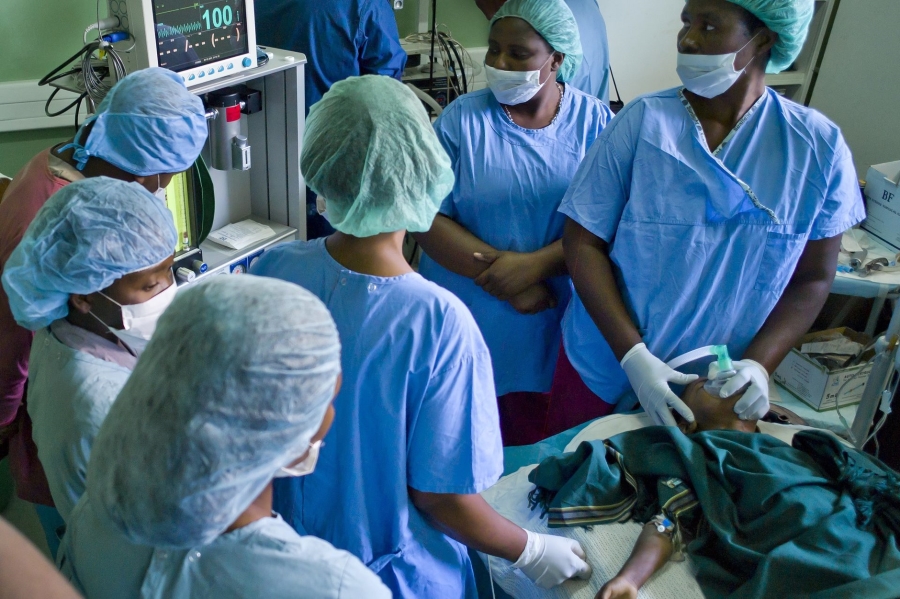
    A recent study by Ahmed, et al., (2024) titled “The availability, access, challenges, and advancements in neurosurgical care in Africa: A mini-review” published in Annals of Medicine and Surgery shows a critical shortage of neurosurgeons in Africa, less than 1% available to address 15% of the global neurosurgical disease burden.

    Despite significant advancements in medical science, Africa continues to grapple with a substantial neurosurgical disease burden. The continent faces numerous challenges, primarily revolving around limited access to neurosurgical care and a severe shortage of neurosurgeons. The disparity in healthcare infrastructure across different regions exacerbates these issues, resulting in many patients not receiving the timely and specialized care they need. Conditions such as traumatic brain injuries, congenital anomalies, and spinal disorders remain inadequately addressed, leading to high morbidity and mortality rates.

    There is severe neurosurgeon shortage, with less than 1% available to address 15% of global neurosurgical disease burden– Ahmed, et al., 2024

    Efforts to bolster the neurosurgical workforce in Africa have seen some success, notably through initiatives like the World Federation of Neurosurgical Societies (WFNS) Rabat Training Center. This center plays a crucial role in enhancing local capacity by providing specialized training to neurosurgeons within the continent. However, the distribution of trained neurosurgeons remains highly uneven. Urban areas tend to have a higher concentration of specialists, leaving rural regions critically underserved. This imbalance underscores the need for more comprehensive strategies to ensure equitable distribution of neurosurgical expertise across all regions.

    A significant impediment to effective neurosurgical care in Africa is the widespread lack of adequate facilities and equipment. Many hospitals and medical centers are not equipped with the necessary tools and technology to perform complex neurosurgical procedures. This infrastructure gap impacts the quality of care, often forcing patients to travel long distances to access the necessary services or, in many cases, forego treatment altogether. Addressing these deficiencies requires substantial investment in healthcare infrastructure, including the provision of state-of-the-art surgical equipment and the establishment of well-equipped neurosurgical units.

    The delivery of neurosurgical care in Africa is also influenced by a range of socio-cultural factors. Geopolitical instability in certain regions poses significant challenges, disrupting healthcare services and displacing medical personnel. Additionally, cultural beliefs and practices can affect patients’ acceptance and understanding of neurosurgical interventions. For instance, in some communities, traditional healing practices may be preferred over modern medical treatments, or there may be stigma associated with certain neurological conditions. These cultural dynamics necessitate a culturally sensitive approach to healthcare delivery, with efforts to educate communities and integrate traditional practices with modern medical care where appropriate.

    How the Study was Conducted

    The authors employed a narrative review to provide an overview of the current state of neurosurgery on the continent. It identifies and analyzes the persisting challenges in neurosurgical care, such as workforce shortages and infrastructural deficits. The study synthesizes the recent advancements in surgical training, technology adoption, and international collaboration efforts across Africa.

    What the Authors Found

    The authors of the article on neurosurgical care in Africa found a critical shortage of neurosurgeons in Africa, with less than 1% available to address 15% of the global neurosurgical disease burden. The authors also found that many regions lack adequate neurosurgical facilities and resources, impacting the quality of care. Cultural beliefs and geopolitical instability affect the delivery and effectiveness of neurosurgical care.

    Why is this Important

    Public Health Impact: Neurosurgical diseases significantly affect public health, and understanding the challenges allows policymakers and healthcare providers to allocate resources effectively.
    Addressing Disparities: By identifying workforce shortages and infrastructure gaps, interventions can be targeted to regions with the greatest need.
    Improving Patient Outcomes: Enhancing neurosurgical care can lead to better patient outcomes, reduced disability, and improved quality of life.
    Global Collaboration: The study emphasizes international collaboration and knowledge sharing to address common challenges in neurosurgery.

    What the Authors Recommend

    • The authors emphasize the urgent need to address the critical shortage of neurosurgeons in Africa. To achieve this, they recommend substantial investment in training programs, scholarships, and incentives aimed at attracting and retaining skilled professionals.
    • To overcome the infrastructure gaps that hinder the quality of neurosurgical care, the authors recommend a focused allocation of resources to build and upgrade neurosurgical facilities
    • The authors advocate for fostering international partnerships and creating networks to facilitate knowledge exchange and mentorship. These collaborations can significantly enhance the quality of neurosurgical care by sharing expertise and best practices.
    • Recognizing the influence of socio-cultural factors on healthcare delivery, the authors recommend designing healthcare interventions that are culturally sensitive.

    In conclusion, the study by Ahmed et al. highlights the pressing need to address the severe shortage of neurosurgeons and the significant infrastructural deficits in Africa. By investing in specialized training programs, enhancing healthcare facilities, and fostering international collaborations, there is potential to significantly improve neurosurgical care on the continent. Additionally, culturally sensitive approaches are crucial to overcoming socio-cultural barriers and ensuring that all communities benefit from advancements in medical science. Addressing these challenges is not only vital for improving patient outcomes and quality of life but also for reducing the substantial public health burden posed by neurosurgical diseases in Africa.

  • Challenges and Solutions for Postpartum HIV Care Transitions in South Africa: Insights from Recent Study

    Challenges and Solutions for Postpartum HIV Care Transitions in South Africa: Insights from Recent Study

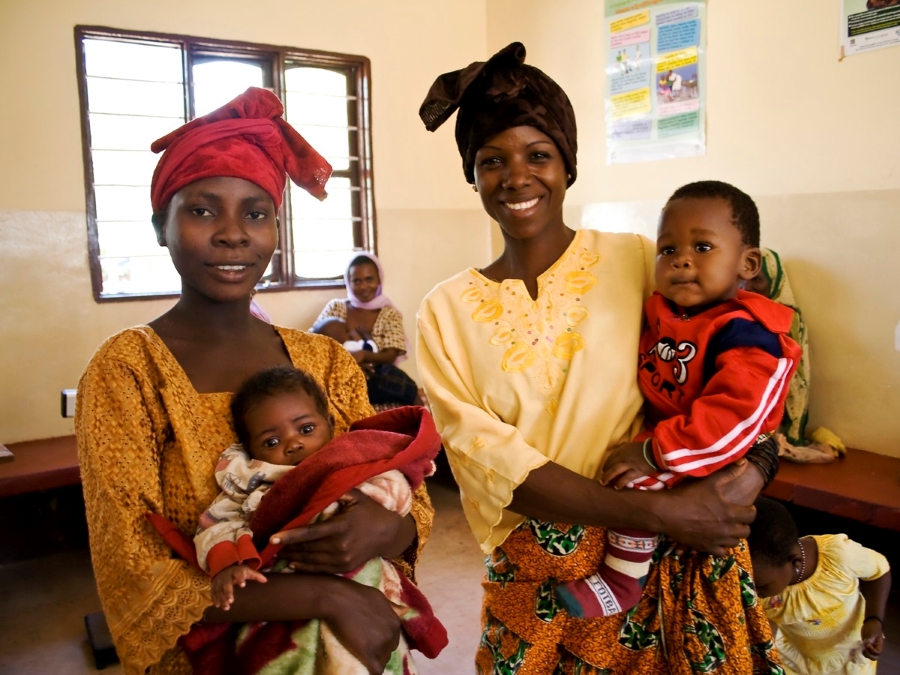
    A recent study by Odayar, et al., (2024) titled “Experiences of transfer of care among postpartum women living with HIV attending primary healthcare services in South Africa” published in Global Public Health by Taylor & Francis Group examines postpartum women face difficulties when transferring from integrated antenatal/HIV care to general HIV services, often due to a lack of information and continuity mechanisms.

    Postpartum women with HIV in South Africa face significant barriers during care transitions, including silent transfers, stigma, and continuity issues. – Odayar, et al., 2024

    The study explores the transition of postpartum women living with HIV in South Africa from integrated antenatal/HIV care to general HIV services. It identifies several critical challenges and provides recommendations to improve care continuity. Postpartum women living with HIV encounter significant barriers when moving from specialized antenatal and HIV care to broader, general HIV services. This transition period is marked by a high risk of disengagement from care due to various systemic and personal obstacles. A notable issue is the phenomenon of “silent transfers,” where women change healthcare facilities without notifying the original providers. This often results from strained relationships with healthcare workers, which can stem from perceived or actual mistreatment, judgmental attitudes, or lack of empathy. Consequently, silent transfers lead to gaps and inconsistencies in the management of their HIV care, as the new facility may lack complete medical histories or continuity of treatment plans. Fear of stigma and disclosure within their communities drives many women to seek care at distant facilities, where they are less likely to encounter people they know. This can severely impact their access to consistent and timely healthcare, as traveling long distances may be logistically and financially burdensome, potentially leading to missed appointments and interruptions in treatment. The study emphasizes the necessity for a more adaptable health system that can cater to the unique needs of postpartum women living with HIV. This includes providing comprehensive information about long-term care options, offering ongoing counseling to support mental and emotional health, and ensuring robust social support networks. Additionally, enhancing the flexibility of health services can help accommodate the diverse circumstances of these women, making it easier for them to maintain continuous care.

    How the Study was Conducted

    The research was conducted as part of the Postpartum Adherence Clubs for Antiretroviral Therapy (PACART) study, a randomized controlled trial located at a prominent public sector primary healthcare facility in Cape Town, South Africa. The study involved recruiting postpartum women who were on antiretroviral therapy (ART) from the midwife obstetric unit (MOU) within the facility, which offers integrated HIV care services. Participants were randomly assigned to one of two groups: either referral to adherence clubs (ACs) or a primary healthcare (PHC) ART facility for their ongoing HIV care. The authors employed in-depth interviews with 28 participants over two years following delivery. These interviews aimed to explore the barriers faced by postpartum women living with HIV in the transfer of care. The collected data were analyzed thematically using both inductive and deductive approaches to identify key themes and patterns.

    What the Authors Found

    The authors found that postpartum women face difficulties when transferring from integrated antenatal/HIV care to general HIV services, often due to a lack of information and continuity mechanisms. The authors also found that many women transfer silently without informing facilities or obtaining referral letters, influenced by poor relationships with healthcare workers and fear of stigma Geographic mobility and community stigma lead to transfers away from local primary healthcare facilities, impacting accessibility and engagement in care.

    Why is this Important

    Healthcare System Improvement: Understanding the challenges faced by postpartum women living with HIV during care transitions can inform health system improvements. By addressing barriers to transfer, healthcare facilities can enhance continuity of care and patient outcomes.
    Patient-Centered Care: Recognizing the impact of stigma, mobility, and relationships with healthcare workers highlights the need for patient-centered approaches. Providing ongoing counseling, social support, and tailored information can empower women to make informed decisions about their care.
    Public Health Impact: Effective postpartum care is essential for managing HIV and preventing transmission. Ensuring that women remain engaged in care after childbirth contributes to overall public health efforts in managing the epidemic.

    What the Authors Recommend

    • The authors advocate strengthen communication between healthcare facilities during care transitions. This includes ensuring that referral letters are provided and that patients are informed about the transfer process.
    • The authors suggest that the healthcare system should address stigma associated with HIV by promoting community awareness and education. Encourage healthcare workers to create a supportive and non-judgmental environment for patients.
    • In addition, the authors posit that the healthcare system should provide comprehensive information to postpartum women about their ongoing care options. This includes details about adherence clubs (ACs) and primary healthcare (PHC) facilities.
    • Furthermore, the healthcare system should offer social support networks for women during the postpartum period. Peer support groups, counseling, and community-based programs can help reduce feelings of isolation and improve engagement in care.

    The study by Odayar et al. underscores the pressing need to address the multifaceted challenges faced by postpartum women living with HIV in South Africa as they transition from integrated antenatal/HIV care to general HIV services. By highlighting critical issues such as silent transfers, stigma, and lack of continuity, the research calls for a more flexible and supportive healthcare system. Implementing the authors’ recommendations, which include improving communication between facilities, addressing stigma, and providing comprehensive information and social support, is essential for enhancing care continuity and patient outcomes. Ultimately, these improvements are vital for maintaining the health and well-being of postpartum women living with HIV, ensuring they receive the consistent, compassionate care they need to thrive.

  • Addressing Africa’s Healthcare Paradox: Unveiling the Surplus of Underemployed Health Workers and Bridging Workforce Gaps

    Addressing Africa’s Healthcare Paradox: Unveiling the Surplus of Underemployed Health Workers and Bridging Workforce Gaps

    A recent study by Hutchinson, et al., (2024) titled “The paradoxical surplus of health workers in Africa: the need for research and policy engagement” published in The International Journal of Health Planning and Management shows that many trained health workers are un- or underemployed, while there’s a shortage of staff in formal health systems

    Africa has surplus underemployed health workers alongside shortages in formal healthcare systems, demanding attention.– Hutchinson, et al., 2024

    Africa faces a perplexing dilemma in its healthcare sector: while there is a widely recognized shortage of staff in formal health systems, there is simultaneously a surplus of underemployed or unemployed health workers. This paradoxical situation arises from various structural, economic, and policy-related issues that prevent the effective integration of available health professionals into the workforce. The disparity between the availability of trained health workers and their actual employment in the health sector needs urgent attention.The phenomenon of surplus health workers remains significantly understudied. There is a dearth of comprehensive research aimed at understanding the full scope, underlying dynamics, and broader consequences of this surplus. This lack of research impedes the development of effective strategies to address the issue. Consequently, policymakers are often left without the necessary data to make informed decisions, resulting in missed opportunities to optimize the healthcare workforce.

    To address this issue, there is a critical need for enhanced research efforts that include both quantitative and qualitative approaches. Such research would provide a clearer picture of the surplus health workforce, enabling policymakers to develop strategies that align with national, regional, and global health goals. Effective policy engagement, informed by robust research, is essential to create a cohesive framework that can harness the potential of these underutilized health professionals. A thorough understanding of the economic, political, and social factors contributing to the surplus of health workers is imperative. Factors such as inadequate funding, inefficient workforce planning, and limited career opportunities play significant roles in this paradox. By identifying and addressing these factors, it is possible to develop solutions that not only mitigate the surplus but also leverage the expertise of these health workers to strengthen the health system. Integrating these professionals effectively can improve healthcare delivery, stimulate economic growth, and enhance social well-being.

    What the Authors Found

    The authors found that many trained health workers are un- or underemployed, while there’s a shortage of staff in formal health systems as well as a lack of detailed research on the circumstances and potential of these surplus health workers.

    Why is this Important

    Healthcare Access: Despite the surplus, many communities still lack access to quality healthcare due to shortages in formal health systems. Understanding this paradox can help address disparities in healthcare provision.
    Resource Utilization: Efficiently utilizing the expertise of health workers is crucial. The surplus represents untapped potential that could be harnessed to improve health outcomes.
    Policy Implications: Policymakers need evidence-based insights to create effective policies. Research on this topic can inform decisions related to workforce planning, training, and deployment.
    Global Health Equity: Addressing the surplus can contribute to equitable distribution of healthcare resources, benefiting both health workers and patients.

    What the Authors Recommend

    • The authors advocate conducting comprehensive research and detailed studies to understand the scale, dynamics, and consequences of the surplus. This includes both qualitative and quantitative research.
    • The authors also emphasize on using research findings to inform policy decisions at national, regional, and global levels. Policies should aim to improve employment rates and effectively utilize the expertise of health workers.
    • Focus on equitable distribution of health workers. Address shortages in underserved areas while ensuring that surplus health workers are utilized efficiently.
    • In addition, the authors recommend leveraging the surplus workforce to enhance healthcare provision, especially in areas with shortages. Consider innovative deployment models and training programs.

    In conclusion, addressing the paradoxical surplus of underemployed health workers in Africa requires concerted efforts from researchers, policymakers, and stakeholders across the healthcare sector. By conducting comprehensive research, informing evidence-based policies, and focusing on equitable distribution and innovative deployment strategies, Africa can harness the untapped potential of its health workforce to improve healthcare access, resource utilization, and global health equity. It’s imperative to act decisively to bridge the gap between the availability and effective utilization of health workers, ultimately enhancing healthcare provision and societal well-being.

  • June 2024: Paper of the Month by Bello, et al., 2024 – Impact of Alcohol and Tobacco Use on Labor Market Outcomes in South Africa: A Comprehensive Study

    June 2024: Paper of the Month by Bello, et al., 2024 – Impact of Alcohol and Tobacco Use on Labor Market Outcomes in South Africa: A Comprehensive Study

    African Researchers Award
    June 2024: Paper of the Month by Bello, et al 2024 – Impact of Alcohol and Tobacco Use on Labor Market Outcomes in South Africa: A Comprehensive Study

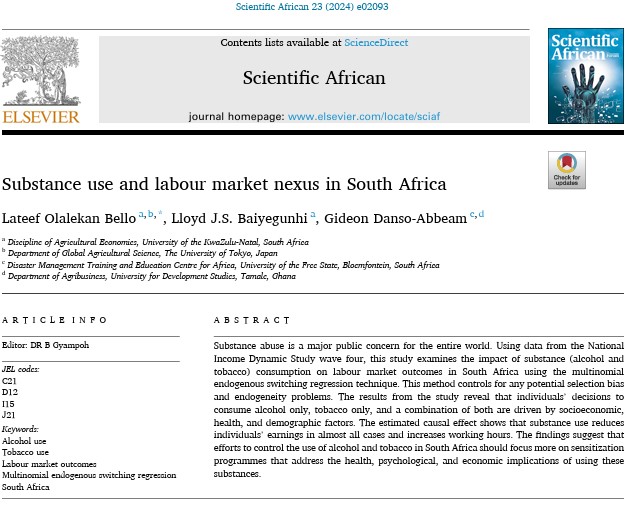
    A recent study by Bello,et al., (2024) titled “Substance use and labor market nexus in South Africa” published in Scientific African shows that substance use, specifically alcohol and tobacco, negatively affects labor market outcomes in South Africa.

    Alcohol and tobacco use in South Africa negatively impact labor market outcomes, notably reducing earnings – Bello,et al., 2024

    The article presents a scholarly examination of the relationship between substance use and labor market outcomes in South Africa, focusing on key aspects such as the impact on earnings and working hours, influential socioeconomic factors, and policy implications. The study explores how the consumption of alcohol and tobacco affects labor market outcomes, specifically earnings and working hours. To analyze this relationship, the researchers employ a sophisticated statistical method known as the multinomial endogenous switching regression technique. This approach allows for a nuanced understanding of how substance use may influence different categories of labor market engagement and economic productivity.
    The study identifies a range of socioeconomic, health, and demographic factors that influence individuals’ decisions to consume substances like alcohol and tobacco. These factors may include income levels, education, age, gender, and health status. By examining these variables, the research provides insights into the underlying causes and patterns of substance use within different segments of the population. The findings of the study have significant policy implications, suggesting that effective control of substance use in South Africa requires comprehensive sensitization programs. These programs should address the health, psychological, and economic consequences of substance use. The research advocates for integrated strategies that combine public health initiatives, education campaigns, and economic support to reduce substance use and mitigate its negative effects on labor market outcomes. The study addresses a critical research gap by providing empirical evidence on the impact of alcohol and tobacco use on labor market outcomes in South Africa. Previous research may have overlooked or inadequately examined this relationship, making this study a valuable contribution to the literature. By highlighting the economic ramifications of substance use, the research underscores the importance of addressing this issue to promote better labor market performance and overall economic well-being.

    How the Study was Conducted

    The study employed the Multinomial Logit Model to assess the choices individuals make regarding substance use. This model takes into account various socioeconomic, health, and location characteristics that influence an individual’s decision to consume substances like alcohol and tobacco. The research employs a two-stage technique known as the Multinomial Endogenous Switching Regression to evaluate the impact of substance use on labor market outcomes. The MNL model is used to determine the substance use decisions of individuals based on their socioeconomic, health, and location characteristics.
    Second Stage: Labor market outcomes, such as earnings and working hours, are analyzed using Ordinary Least Squares (OLS) regression. This stage includes selectivity correction to account for potential biases arising from the non-random selection of substance users and non-users. Religion serves as an instrumental variable in the MNL model. It is assumed that religious beliefs may influence an individual’s decision to consume substances. However, religion is excluded from the labor market outcome equation to ensure that its influence is isolated to the decision-making process regarding substance use, without directly affecting labor market outcomes. Within the MESR framework, the Average Treatment Effect is estimated by comparing the expected values of labor market outcomes for substance users (treated) and non-users (untreated). This comparison is conducted under both actual and counterfactual scenarios to determine the differential impact of substance use on labor market outcomes.

    What the Authors Found

    The authors found that substance use, specifically alcohol and tobacco, negatively affects labor market outcomes in South Africa. The authors also found that the consumption of these substances is associated with reduced earnings and increased working hours. Decisions to consume alcohol and tobacco are influenced by socioeconomic, health, and demographic factors.

    Why is this Important

    Policy Implications: By examining the impact of substance use on labor market outcomes, policymakers can design targeted interventions to address health and economic challenges associated with substance consumption.
    Public Health: Substance use affects individuals’ well-being, productivity, and overall health. Insights from studies help public health agencies create awareness campaigns and preventive measures.
    Economic Productivity: Labor market outcomes directly impact economic productivity. Identifying factors like substance use allows for informed decisions to enhance workforce efficiency.
    Social Welfare: Substance use can exacerbate social inequalities. Research informs strategies to reduce disparities and promote social welfare.

    What the Authors Recommend

    • The authors emphasize that government should focus on programs that address the health, psychological, and economic implications of substance use.
    • The authors also advocate increased government spending on education to include substance use topics in the curriculum and use electronic media for public awareness.
    • In addition, the authors advocate encouraging marriage as a means to improve control of substance use.  These recommendations aim to address the negative impacts of alcohol and tobacco consumption in South Africa

    In conclusion, this study underscores the intricate relationship between substance use and labor market outcomes in South Africa. Through meticulous analysis and empirical evidence, it reveals the detrimental impact of alcohol and tobacco consumption on earnings and working hours, while highlighting the influence of socioeconomic, health, and demographic factors. These findings emphasize the urgent need for targeted interventions and comprehensive policy measures to address substance use, promote public health, enhance economic productivity, and foster social welfare in South Africa. By heeding these recommendations, policymakers can strive towards a healthier, more prosperous future for all.

  • June 2024: Dr. Pumla Gobodo-Madikizela – African Female Researcher of the Month

    June 2024: Dr. Pumla Gobodo-Madikizela – African Female Researcher of the Month

    African Researchers AwardJune 2024: Dr. Pumla Gobodo-Madikizela – African Female Researcher of the Month

    Dr. Pumla Gobodo-Madikizela, an esteemed psychologist and professor, has been honored with the 2024 Templeton Prize. She holds the position of South African National Research Foundation’s Chair in Violent Histories and Transgenerational Trauma and serves as the Director of the Centre for the Study of the Afterlife of Violence and the Reparative Quest at Stellenbosch University. Her pioneering work on trauma and forgiveness in post-apartheid South Africa has significantly contributed to the global understanding of social healing after conflict.

    Heather Templeton Dill, president of the John Templeton Foundation, praised Dr. Gobodo-Madikizela’s profound impact on societal healing, emphasizing her role in promoting hope, compassion, and reconciliation. Gobodo-Madikizela’s notable contributions include her involvement in South Africa’s Truth and Reconciliation Commission, where she worked to address apartheid’s injustices, and her influential book “A Human Being Died That Night,” which explores the complexities of forgiveness.

    Dr. Gobodo-Madikizela expressed gratitude for the recognition, highlighting the opportunity to further her research on human transformation and the preservation of human dignity. Her concept of “the reparative quest” underscores her lifelong commitment to healing the psychological scars of apartheid and other traumas.

    Born in 1955 in Langa, South Africa, Gobodo-Madikizela’s early experiences under apartheid deeply influenced her work. She pursued her education in psychology, earning degrees from the University of Fort Hare, Rhodes University, and the University of Cape Town. Her career includes prestigious roles and numerous awards, reflecting her dedication to addressing historical trauma and promoting justice and reconciliation.

    The Templeton Prize, established in 1972, recognizes individuals whose work advances the understanding of human purpose and the universe. Dr. Gobodo-Madikizela joins past laureates such as Desmond Tutu and Jane Goodall, continuing the tradition of celebrating exceptional contributions to human flourishing.

    For more details on Dr. Gobodo-Madikizela’s work and achievements, please visit the Templeton Prize website.

  • June 2024: Professor Abdon Atangana – African Male Researcher of the Month

    June 2024: Professor Abdon Atangana – African Male Researcher of the Month

    African Researchers AwardJune 2024: Professor Abdon Atangana – African Male Researcher of the Month

    South African Professor Abdon Atangana, a distinguished figure in applied mathematics at the University of the Free State (UFS), has achieved the remarkable title of the world’s number one mathematician. His exceptional contributions span across applied mathematics, mathematical physics, and statistics, securing him a top position globally. In the broader fields of science, technology, and engineering, he ranks 260th according to the Stanford University World’s Top 2% Scientists list.

    This prestigious recognition marks the second consecutive year that Professor Atangana has been acknowledged as the leading scientist from UFS, reinforcing his influence and contribution to the global scientific community. The Stanford University list is a revered compilation that identifies the top 2% of researchers worldwide based on their significant and impactful research outputs.

    Impact on African Scientific Community

    Professor Atangana’s recognition is not just a personal accolade but a significant milestone for African science. “The ranking provides us with the impact of our outputs, and it shows that Africans can contribute to the development of science, technology, engineering, and mathematics while still in Africa,” Atangana emphasized. This achievement challenges the traditional notion that global scientific excellence is predominantly anchored in the institutions of the global North.

    Atangana’s work demonstrates that African universities can reach the same level of prestige and academic rigor as their northern counterparts. He hopes to inspire the next generation of African scientists to strive for excellence and contribute to global knowledge from within the continent. “We must work hard to make our African universities reach the same level as those from the global North, such that a student from the global North will wish to enroll in our universities,” he added.

    Pioneering Contributions in Mathematics

    At just 39, Professor Atangana has made groundbreaking contributions to various mathematical disciplines. He is the originator of the Atangana-Baleanu fractional derivatives and integrals, a novel form of calculus based on the general Mittag-Leffler kernels. Since its introduction in 2016, this new form of fractional calculus has found applications across numerous fields including science, technology, and engineering.

    In addition to his work on fractional derivatives, Atangana has introduced several other significant mathematical concepts. These include new methodologies in epidemiological modeling, numerical analysis, and integral transformations. He is also the pioneer of fractal-fractional calculus, a tool now widely used in applied sciences. More recently, he has developed innovative ideas such as piecewise differentiation and integration.

    Recognition and Future Aspirations

    In 2020, Atangana was recognized as one of the top 1% of scientists globally on the Clarivate Web of Science list. His ongoing work continues to address real-world problems through advanced mathematical models and theories, especially in the realms of engineering, science, and technology.

    Professor Atangana’s influence extends beyond his personal achievements. He serves as a beacon of excellence and a source of inspiration for African scientists, demonstrating that impactful research can be conducted within Africa’s borders. His story is a testament to the potential for global impact and scientific leadership originating from the African continent.

    Other UFS Scholars on the Stanford List

    The University of the Free State boasts several other distinguished scholars who have made it to the Stanford list. These include Prof. Hendrik Swart, Prof. Melanie Walker, and Prof. Maryke Labuschagne, among others, highlighting the diverse expertise and research excellence within the institution.

    The recognition of these scholars underscores the university’s commitment to advancing global knowledge and innovation across various scientific fields. As Prof. Vasu Reddy, UFS Deputy Vice-Chancellor: Research and Internationalisation, noted, “The representation of our researchers from a variety of disciplinary domains in this prestigious ranking is confirmation of their excellence, impact, and the global esteem they hold.”

    Conclusion

    Professor Abdon Atangana’s achievements underscore the immense potential and capabilities of African scientists. His groundbreaking work in mathematics not only elevates the status of UFS but also sets a high standard for researchers worldwide. His journey serves as an inspiration, encouraging young scientists in Africa to pursue excellence and make significant contributions to global scientific progress.

  • UJ Press Retracts Kgothatso Shai’s Book Amid Controversial Feud with Shepherd Mpofu

    UJ Press Retracts Kgothatso Shai’s Book Amid Controversial Feud with Shepherd Mpofu


    Illustrative Image: UJ Press Retracts Kgothatso Shai’s Book Amid Controversial Feud with Shepherd Mpofu
    Image Source & Credit: UJ Press
    Ownership and Usage Policy

    UJ Press Retracts Kgothatso Shai’s Book Amid Controversial Feud with Shepherd Mpofu

    The retraction of Kgothatso Shai’s book by UJ Press is the latest development in a long-standing and publicized academic feud between Shai, a political scientist at the University of Limpopo, and Shepherd Mpofu, a media studies professor at the University of South Africa. The controversy began after the book, “An Afrocentric Idea on Contested Knowledge: Selected Cases,” was criticized for lacking scholarly rigor and containing personal grievances rather than legitimate academic discourse.

    Shai’s book included critiques of Mpofu’s Facebook posts, which Shai claimed misrepresented his character and scholarship. Mpofu, in response, has called Shai a “toxic scholar” and argues that Shai misused his social media posts for academic purposes without ethical consideration. The conflict has seen both scholars publish articles attacking each other’s credibility and work.

    The retraction followed complaints from Mpofu and another academic, who alleged the book contained libel, xenophobia, and self-plagiarism. Despite these allegations, UJ Press stated that the primary reason for the retraction was the lack of evidence supporting the book’s broad claims about systemic bias and discrimination.

    The feud, initially stemming from personal and professional disagreements, has highlighted broader issues regarding the conduct and ethics of scholarly discourse in South African academia. The incident has also prompted UJ Press to scrutinize ethical issues in future peer reviews more closely.

    For more information visit retraction watch

  • Global Tech Africa (GTA) Conference 2024: Transforming Africa’s Tech Ecosystem with Global Collaborations in Lagos

    Global Tech Africa (GTA) Conference 2024: Transforming Africa’s Tech Ecosystem with Global Collaborations in Lagos

    The Global Tech Africa (GTA) Conference is set to return for its second year, bringing together leading tech stakeholders under the theme: Global Collaborations, Local Transformations. The event, in partnership with Techeconomy as the media sponsor, will be held from July 24th to 26th, 2024, at the Landmark Event Centre in Victoria Island, Lagos.

    About GTA

    The Global Tech Africa (GTA) Conference is a platform designed to bring together African and international stakeholders in technology to unlock growth opportunities and build the tech ecosystem in Africa. It is an initiative of the Future Map Foundation, designed and implemented by Ascend Studios Foundation, in partnership with the National Information Technology Development Agency (NITDA), the U.S. Consulate, Venture Garden Group, Business Sweden, and RivExcel Health.

    A Premier Platform for Tech Collaboration

    GTA stands as the foremost platform fostering collaboration between African and international tech stakeholders. The conference aims to create connections, initiate dialogues, and form partnerships that will drive the growth and transformation of Africa’s tech ecosystem.

    Organizers and Partners

    The event is an initiative of the Future Map Foundation, executed by Ascend Studios Foundation. It is organized in partnership with several key organizations, including:

    • National Information Technology Development Agency (NITDA)
    • United States Consulate
    • Venture Garden Group
    • IHS Towers
    • American Business Council
    • Business Sweden

    Who Will Be There?

    GTA is not just another tech conference. It is a convergence point for a diverse range of participants, including:

    • Government Representatives
    • Investors
    • Founders
    • Policymakers
    • Development Partners
    • Academia
    • Inventors
    • Tech Enthusiasts

    2023 Recap and 2024 Expectations

    The inaugural edition in 2023 saw over 3,500 participants, 51 speakers, and 12 international delegates. The 2024 edition is poised to be even larger, with expectations to host 10,000 participants and delegates from across Nigeria, Africa, Europe, and North America.

    What to Expect at GTA 2024

    This year’s conference will feature a larger venue with three distinct stages:

    1. The Epicenter (Main Stage): Hosting VVIP guests, international delegates, and keynote speakers.
    2. Start-up Stage: Showcasing leading African start-ups across various tech sectors including Edtech, Healthtech, AgricTech, and FinTech.
    3. Tech Naija Club: A new stage dedicated to the future of Africa’s tech landscape, officially launching at GTA.

    Special Features

    • GTA Deal Room: Powered by One Africa, this platform will unlock investment opportunities, giving investors and international companies access to some of Africa’s most promising start-ups and potential partners.
    • Regional Delegations: Including tech entrepreneurs and government representatives from South Africa, Egypt, Kenya, Rwanda, and Uganda.
    • International Partners and Delegates: From Germany, Sweden, the United Kingdom, and the United States.

    Event Highlights

    • Keynote Addresses and Insights: Leading thought leaders and visionaries will provide insights into the evolving global tech landscape.
    • Interactive Workshops: Hands-on sessions aimed at transforming ideas into actionable results.
    • Fireside Chats with Industry Titans: Candid discussions with top tech industry figures about the challenges and opportunities within Africa’s tech ecosystem.
    • Roundtable Discussions: In-depth explorations of key tech themes shaping Africa’s future.
    • Networking Opportunities: Opportunities to build meaningful connections and explore collaborations.
    • Showcase of Cutting-Edge Innovations: Presentation of groundbreaking technologies and disruptive solutions emerging from Africa.

    Africa is set to play a crucial role in the global tech ecosystem, offering innovations, talent, and new market opportunities in mobile technology, e-commerce, fintech, and the digital economy.

    The GTA conference provides a vital platform for stakeholders to engage in discussions and explore collaborative opportunities to shape the future of Africa’s tech landscape.

    Join Us at GTA 2024

    The Global Tech Africa (GTA) Conference is the nexus for policymakers, thought leaders, entrepreneurs, and visionaries. It is an unparalleled opportunity to discuss, collaborate, and influence the future of Africa’s tech ecosystem.

    Stay tuned for updates, speaker announcements, and registration details. Together, let’s push the frontiers of Africa’s tech future.

    For more information, visit [here].

    Conference Details:

    • Theme: Global Collaborations, Local Transformations
    • Dates: July 24th – 26th, 2024
    • Venue: The Landmark Event Centre, Water Corporation Road, Victoria Island, Lagos

    For media inquiries and sponsorship opportunities, contact: Email: yd@yettyd.com

  • Apply for PIRA Grants: Funding for Innovative Research Partnerships in Africa

    Apply for PIRA Grants: Funding for Innovative Research Partnerships in Africa

    The Alliance for African Partnership (AAP) is inviting proposals for its Partnerships for Innovative Research in Africa (PIRA) strategic funding program. AAP is a consortium comprising ten leading African universities, a distinguished research network for African research institutes, and Michigan State University. PIRA is designed to foster and support multidirectional, collaborative research partnerships at various stages of development, whether they are new initiatives or scaling existing relationships.

    Key Features of PIRA Grants

    One of the unique aspects of PIRA grants is the emphasis on establishing and maintaining fair and equitable partnerships from the project’s conception to its completion. Organizations are expected to involve local stakeholders throughout the project, respecting their knowledge and expertise and adapting to the local context. Proposals should clearly outline the processes to establish such partnerships, ensuring that fair and equitable partnerships are also maintained among consortium members if multiple organizations are involved.

    Scope of Proposals

    Proposals may include a range of activities such as cooperative research, capacity-building initiatives, and outreach, aligning with AAP’s pillars: building bridges, transforming institutions, and transforming lives. They must address at least one of AAP’s priority areas:

    • Agri-food systems
    • Water, energy, and environment
    • Culture and society
    • Youth empowerment
    • Education
    • Health and nutrition
    • Science, technology, and innovation

    Eligibility Criteria

    The lead investigators must be from Michigan State University (MSU) and at least one African AAP member university. Proposals may also include partners from other global institutions, and teams are encouraged to include participants from the private sector, governments, civil society organizations, and pan-African/global institutions. However, individuals who were principal investigators or co-principal investigators on grants from the previous PIRA round or AAP’s strategic partnership grants are not eligible to lead new proposals but may participate as team members. Additionally, MSU International Studies and Programs (ISP) staff are not eligible to lead proposals.

    Funding Tiers

    The tiered funding structure supports partnerships at different maturity stages to strengthen relationships among institutions and act as a catalyst for securing long-term external funding.

    • Planning Grants (up to $50,000): For inception and early-stage partnership activities, including travel for joint proposal development, short-term capacity-building training, network development, and research symposia.
    • Scaling Grants (up to $100,000): For ongoing partnerships with the potential to significantly scale research, capacity-building, or outreach activities and broader institutional linkages.

    Proposal Requirements

    Proposals must include:

    1. Cover Sheet: Project title, names, institutional affiliations, titles of all principal investigators, and a brief project summary (about 100 words).
    2. Proposal Narrative (up to 5,000 words): Including:
      • A description of the partnership with capacity statements from each partner institution, outlining their strengths and responsibilities.
      • A brief description of past or ongoing partnerships, if applicable.
      • The rationale for the partnership and evidence of equitable, sustainable, and mutually beneficial partnerships.
      • A problem statement identifying shared challenges, the theory of change, and relevance to AAP’s themes and pillars.
      • Clearly defined objectives and a logical framework connecting activities with intended outputs and outcomes.
      • A timeline of activities.
      • A monitoring, evaluating, and learning (MEL) plan outlining proposed indicators and collection methods.
      • Identification of potential additional funding sources.
    3. Budget and Budget Narrative: Using the provided template, detailing the overall budget and equitable distribution of funds among institutions.
    4. Letters of Support: From each partner’s department or organization, and a CV or resume (1-page max) for each principal investigator.
    5. Dean’s or Department Head’s Letter of Support: For each PI, indicating institutional buy-in.

    Selection Criteria

    Proposals will be evaluated based on:

    • Evidence of collaborative and equitable partnerships.
    • Alignment with AAP’s pillars and priority areas.
    • Potential contribution to academic, technical, or technological fields.
    • Innovative models of community engagement and development.
    • Potential to attract additional external funding.
    • A thorough MEL plan linking activities to intended outcomes.
    • Integration of gender, equity, and inclusion principles.

    Budget Considerations

    • Communication and Engagement: At least 10% of the total requested funds must be allocated for communication and engagement efforts.
    • Cost Share: At least 10% of the total requested funds must be matched by contributions (monetary or in-kind) from all partners.
    • Ineligible Expenses: Regular salaries of MSU faculty (summer salary is allowable), indirect costs, equipment over $5,000, and construction-related costs. Total project salary and fringe benefits cannot exceed 30% of the total combined project budget.

    Submission and Timeline

    Full proposal packages must be submitted via the application portal by Wednesday, August 14 at 11:59 PM EST. Awards will be announced by early October, with the plan and budget finalized by November 20, 2024. Programs must begin by January 22, 2025, and all activities must be completed within 18 months. Regular progress reports will be required.

    For more information or to find a potential partner across the AAP consortium, complete the interest form and explore AAP Bridge.

    APPLICATION PORTAL

    If you are interested in finding a potential partner across the AAP consortium, please complete an interest form

    Conclusion

    The PIRA strategic funding program represents an opportunity to advance innovative research in Africa through equitable and collaborative partnerships. By aligning with AAP’s strategic pillars and priority areas, these grants aim to make a significant impact on African institutions and communities.