Author: AR Managing Editor

  • Cambridge-Africa ALBORADA Research Fund 2024: Grants, Application Process, and Eligibility for Collaborative Research Between Cambridge and African Institutions

    Cambridge-Africa ALBORADA Research Fund 2024: Grants, Application Process, and Eligibility for Collaborative Research Between Cambridge and African Institutions

    The Cambridge-Africa ALBORADA Research Fund, established in 2012 with generous support from The ALBORADA Trust, aims to foster research collaborations between researchers based at the University of Cambridge (including affiliated institutions such as the Wellcome Trust Sanger Institute, NIAB, and the British Antarctic Survey) and their counterparts in African institutions. This initiative supports pairs of researchers (post-doctoral level and above) to initiate or enhance joint research projects across various disciplines. To date, 332 awards have been granted, leading to significant funding successes for several projects, including Royal Society and Leverhulme Awards, and contributions to the Global Challenges Research Fund.

    Funding Details

    The Cambridge-Africa ALBORADA Research Fund provides competitive grants ranging from £1,000 to £20,000 to cover:

    • Research Costs: This includes expenditures on reagents, fieldwork, and equipment.
    • Research-Related Travel: Funding for travel between Cambridge and Africa is available.
    • Research Training Activities: Support for conducting research training courses or workshops in Africa.

    Applicants are encouraged to read the Terms & Conditions thoroughly to understand eligibility and the nature of the support provided. Notably, the fund does not cover overheads, PI salaries, administrative costs, bench fees, or conference attendance.

    Application Process

    How to Apply:

    1. Cambridge-Based Applicant Registration: The Cambridge-based researcher must register on the Cambridge-Africa ALBORADA Research Fund application portal. Only those with email addresses from @cam.ac.uk, @sanger.ac.uk, @babraham.ac.uk, @bas.ac.uk, or @niab.com domains are eligible to register.
    2. Invitation for African Applicant: After registering, the Cambridge-based applicant should invite the African-based researcher to collaborate on the application.
    3. Submission: Complete the online application form, which requires:
      • A detailed case for support and a lay summary.
      • An itemized budget (using the provided template).
      • Letters of support from both the Cambridge and African PIs’ respective departments.
      • CVs (maximum of 2 pages) for both principal investigators.
      • Details of two referees without conflicts of interest.

    Important Dates

    • Application Opens: 20th June 2024
    • Application Deadline: 12th September 2024
    • Referee Contact: September-October 2024
    • Outcome Notification: End of October 2024

    Eligibility and Priorities

    Eligibility Criteria:

    • Both applicants must be at post-doctoral level or above.
    • The Cambridge applicant must be affiliated with the University of Cambridge or a related institute.
    • The African applicant must be based in an African research institution or university.
    • The application must demonstrate a genuine collaborative effort and not merely provide services.

    Priority Areas

    • New or expanded partnerships with potential for long-term collaboration.
    • Projects that strengthen research capacity in the African institution.
    • Demonstrated potential for leveraging initial funding into larger research opportunities.

    Award Types and Limits

    Funding Categories:

    1. Travel Awards: Up to £5,000 for travel between Cambridge and Africa.
    2. Workshop/Training Support: Up to £10,000 for organizing research training courses or workshops in Africa.
    3. Equipment: Up to £20,000 for purchasing equipment, which must remain in Africa after the project ends.
    4. Research Projects: Up to £20,000 for comprehensive research activities including travel and equipment costs.

    Note: The fund does not cover salaries, overheads, administrative costs, or conference fees.

    Reporting and Administration

    Post-Award Requirements:

    • End-of-Grant Report: Submit within 45 days of the award end date, detailing achievements, collaboration details, project outputs, and financial statements.
    • Extensions: Requests for no-cost extensions (up to 6 months) should be made before the original end date.

    Research Conduct

    • Ensure compliance with national laws, institutional policies, and import/export regulations. For health-related research, adhere to additional ethical guidelines.

    Contact Information

    For queries and further information, please contact:

    This fund is designed to act as a catalyst for new research initiatives, enabling collaborations that enhance research capacities and foster long-term partnerships between Cambridge and African institutions.
    Click here to apply 

  • Study Reveals Key Genetic Insights and Treatment Responses for MADD in South African Cohort

    Study Reveals Key Genetic Insights and Treatment Responses for MADD in South African Cohort

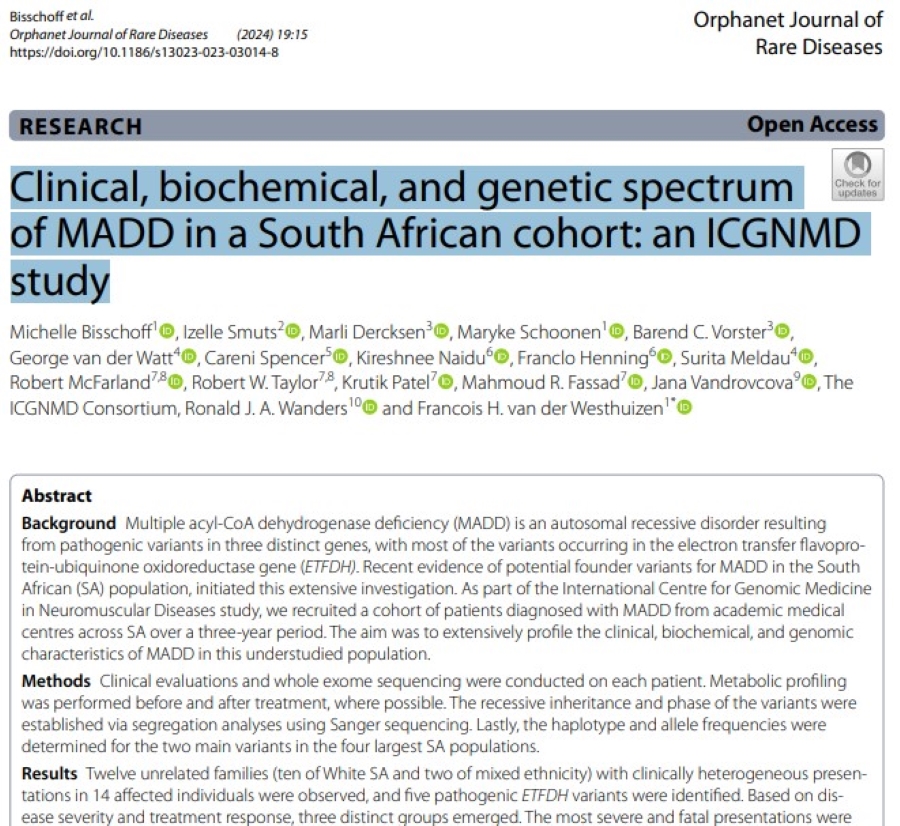
    A recent study by Bisschoff, et al (2024) titled “Clinical, biochemical, and genetic spectrum of MADD in a South African cohort: an ICGNMD Study” published in Orphanet Journal of Rare Diseases shows that Riboflavin and L-carnitine treatments improved or normalized urinary metabolic markers in most cases, except for the most severe types.

    Patients exhibited a range of symptoms, from severe neonatal-onset to milder, later-onset forms, depending on the genotype. – Bisschoff, et al 2024

    The current study explores Multiple Acyl-CoA Dehydrogenase Deficiency (MADD) within a South African cohort. MADD is a rare autosomal recessive metabolic disorder caused by pathogenic variants in three specific genes, most commonly ETFDH. This research aims to identify potential founder variants unique to the South African population. To achieve this, the study employs a comprehensive approach, including clinical evaluations, whole exome sequencing, and metabolic profiling of affected patients. Additionally, segregation analyses and haplotype determination are utilized to understand the genetic inheritance and population-specific characteristics of the disorder. The study’s findings are significant: Five pathogenic variants in the ETFDH gene were identified among 14 individuals from 12 different families. These individuals were categorized into three distinct groups based on the severity of their disease and their response to treatment. This research represents the first extensive genotype-phenotype characterization of MADD in the South African population. The insights gained from this study are crucial for improving early screening processes, offering precise genetic counseling, and tailoring patient-specific treatments. By understanding the genetic underpinnings and clinical manifestations of MADD in this population, healthcare providers can enhance patient care and outcomes.

    How the study was conducted

    Patients diagnosed with MADD were recruited from academic medical centers across South Africa over a three-year period. Each patient underwent clinical evaluations and whole exome sequencing. Metabolic profiling was performed before and after treatment where possible. Segregation analyses using Sanger sequencing were employed to establish the recessive inheritance and phase of the variants. The haplotype and allele frequencies for the two main variants were determined in the four largest South African populations.

    What the authors found

    Five pathogenic ETFDH variants were identified in the South African cohort, with the most severe cases linked to the homozygous c.[1067G>A] and compound heterozygous c.[976G>C];c.[1067G>A] genotypes. The authors also found that patients exhibited a range of symptoms, from severe neonatal-onset to milder, later-onset forms, depending on the genotype. Also, Riboflavin and L-carnitine treatments improved or normalized urinary metabolic markers in most cases, except for the most severe types.

    Why is this important

    Population-Specific Insights: By focusing on a South African population, the study provides valuable information about the prevalence, genetic variants, and clinical presentations of MADD in this specific group. This knowledge can guide early screening, genetic counseling, and personalized treatment approaches.
    Founder Variants: The identification of potential founder variants sheds light on the historical origins of MADD in South Africa. Understanding these variants can help trace the disease’s ancestry and inform future research.
    Clinical Implications: The study’s findings impact patient care. Knowing which variants are associated with severe neonatal-onset forms versus milder, later-onset forms allows clinicians to tailor treatment strategies accordingly.
    Riboflavin and L-Carnitine Treatment: The positive response to riboflavin and L-carnitine treatments in most cases highlights potential therapeutic options. However, the study also underscores that these treatments may not be effective for the most severe types of MADD.

    What the authors recommended

    • The authors advocate that given the population-specific variants identified; genetic counseling services should be available to affected families. Early screening for MADD in high-risk populations can help identify carriers and affected individuals.
    • The authors suggest that clinicians should consider riboflavin and L-carnitine supplementation for patients with MADD. However, they should be cautious when treating the most severe forms, as these treatments may not yield significant improvements.
    • Regular follow-up evaluations are crucial to monitor treatment response, disease progression, and potential complications. Long-term management plans should be individualized based on genotype and clinical severity.
    • The author recommends that raising awareness about MADD within the South African medical community and among affected families is essential. This includes educating healthcare providers about the clinical spectrum, diagnostic approaches, and available treatments.

    In conclusion, this comprehensive study offers significant insights into Multiple Acyl-CoA Dehydrogenase Deficiency (MADD) within the South African population, highlighting critical genetic variants and their impact on disease severity and treatment outcomes. By identifying key ETFDH gene variants and demonstrating the effectiveness of riboflavin and L-carnitine treatments for most patients, the research paves the way for improved early screening, personalized genetic counseling, and tailored therapeutic strategies. The study’s findings not only advance our understanding of MADD but also underscore the importance of population-specific research in optimizing patient care and outcomes. Moving forward, increased awareness and targeted interventions based on these insights will be crucial in enhancing the management and treatment of MADD in South Africa and potentially in similar populations globally.

  • July 2024: Paper of the Month by Bisschoff, et al., 2024-Study Uncovers Genetic Insights and Treatment Efficacy of MADD in South African Patients

    July 2024: Paper of the Month by Bisschoff, et al., 2024-Study Uncovers Genetic Insights and Treatment Efficacy of MADD in South African Patients

    African Researchers Award
    July 2024: Paper of the Month by Bisschoff, et al 2024 – Study Uncovers Genetic Insights and Treatment Efficacy of MADD in South African Patients

    A recent study by Bisschoff, et al (2024) titled “Clinical, biochemical, and genetic spectrum of MADD in a South African cohort: an ICGNMD Study” published in Orphanet Journal of Rare Diseases shows that Riboflavin and L-carnitine treatments improved or normalized urinary metabolic markers in most cases, except for the most severe types.

    Patients exhibited a range of symptoms, from severe neonatal-onset to milder, later-onset forms, depending on the genotype. – Bisschoff, et al 2024

    The current study explores Multiple Acyl-CoA Dehydrogenase Deficiency (MADD) within a South African cohort. MADD is a rare autosomal recessive metabolic disorder caused by pathogenic variants in three specific genes, most commonly ETFDH. This research aims to identify potential founder variants unique to the South African population. To achieve this, the study employs a comprehensive approach, including clinical evaluations, whole exome sequencing, and metabolic profiling of affected patients. Additionally, segregation analyses and haplotype determination are utilized to understand the genetic inheritance and population-specific characteristics of the disorder. The study’s findings are significant: Five pathogenic variants in the ETFDH gene were identified among 14 individuals from 12 different families. These individuals were categorized into three distinct groups based on the severity of their disease and their response to treatment. This research represents the first extensive genotype-phenotype characterization of MADD in the South African population. The insights gained from this study are crucial for improving early screening processes, offering precise genetic counseling, and tailoring patient-specific treatments. By understanding the genetic underpinnings and clinical manifestations of MADD in this population, healthcare providers can enhance patient care and outcomes.

    How the study was conducted

    Patients diagnosed with MADD were recruited from academic medical centers across South Africa over a three-year period. Each patient underwent clinical evaluations and whole exome sequencing. Metabolic profiling was performed before and after treatment, where possible. Segregation analyses using Sanger sequencing were employed to establish the recessive inheritance and phase of the variants. The haplotype and allele frequencies for the two main variants were determined in the four largest South African populations.

    What the authors found

    Five pathogenic ETFDH variants were identified in the South African cohort, with the most severe cases linked to the homozygous c.[1067G>A] and compound heterozygous c.[976G>C];c.[1067G>A] genotypes.
    The authors also found that patients exhibited a range of symptoms, from severe neonatal-onset to milder, later-onset forms, depending on the genotype. Also, Riboflavin and L-carnitine treatments improved or normalized urinary metabolic markers in most cases, except for the most severe types.

    Why is this important

    Population-Specific Insights: By focusing on a South African population, the study provides valuable information about the prevalence, genetic variants, and clinical presentations of MADD in this specific group. This knowledge can guide early screening, genetic counseling, and personalized treatment approaches.
    Founder Variants: The identification of potential founder variants sheds light on the historical origins of MADD in South Africa. Understanding these variants can help trace the disease’s ancestry and inform future research.
    Clinical Implications: The study’s findings impact patient care. Knowing which variants are associated with severe neonatal-onset forms versus milder, later-onset forms allows clinicians to tailor treatment strategies accordingly.
    Riboflavin and L-Carnitine Treatment: The positive response to riboflavin and L-carnitine treatments in most cases highlights potential therapeutic options. However, the study also underscores that these treatments may not be effective for the most severe types of MADD.

    What the authors recommended

    • The authors advocate that, given the population-specific variants identified; genetic counseling services should be available to affected families. Early screening for MADD in high-risk populations can help identify carriers and affected individuals.
    • The authors suggest that clinicians should consider riboflavin and L-carnitine supplementation for patients with MADD. However, they should be cautious when treating the most severe forms, as these treatments may not yield significant improvements.
    • Regular follow-up evaluations are crucial to monitor treatment response, disease progression, and potential complications. Long-term management plans should be individualized based on genotype and clinical severity.
    • The author recommends that raising awareness about MADD within the South African medical community and among affected families is essential. This includes educating healthcare providers about the clinical spectrum, diagnostic approaches, and available treatments.

    In conclusion, the study by Bisschoff et al. represents a significant advance in understanding Multiple Acyl-CoA Dehydrogenase Deficiency (MADD) within the South African population. By identifying five pathogenic variants in the ETFDH gene and categorizing patients based on disease severity and treatment response, the research offers crucial insights into the genetic underpinnings and clinical manifestations of MADD. These findings underscore the importance of early screening, genetic counseling, and personalized treatment approaches, particularly the use of riboflavin and L-carnitine. The study highlights the need for ongoing education and awareness among healthcare providers and affected families to enhance patient care and outcomes.

  • Comprehensive Study Reveals Prevalence and Distribution of Amphistomes in African Wild Ruminants

    Comprehensive Study Reveals Prevalence and Distribution of Amphistomes in African Wild Ruminants

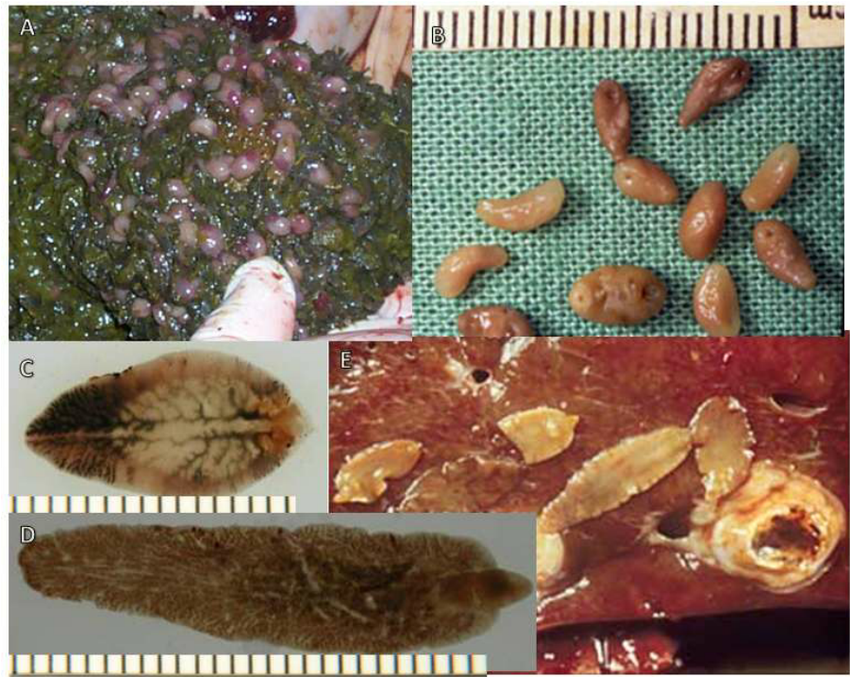
    A recent study by Sibula et al (2024) titled “Prevalence and geographical distribution of amphistomes of African wild ruminants: A scoping review” published in the International Journal for Parasitology: Parasites and Wildlife, shows that amphistome infections in wild ruminants were reported in 23 out of 54 African countries, with 38 amphistome species identified across 39 wild ruminant species.

    Amphistome infections in wild ruminants are prevalent in 23 African countries, with 38 species identified, primarily involving the Carmyerius and Calicophoron genera.– Sibula, et al 2024

    The article examines the prevalence and geographical distribution of amphistomes, commonly known as rumen flukes, in wild ruminants across Africa. It highlights that infections have been reported in 23 of the 54 African countries. A comprehensive survey identified 38 amphistome species from 11 different genera. Among these, the genus Carmyerius boasts the highest number of species, while species from the genus Calicophoron are noted for their extensive distribution across the continent. The study emphasizes the critical role of freshwater snails as intermediate hosts in the lifecycle of amphistomes. Specifically, snail species from the family Planorbidae are identified as the predominant hosts facilitating the transmission of these parasites. This relationship underscores the importance of understanding the ecology and distribution of these snail species to manage and control amphistome infections effectively. The authors advocate for more in-depth studies to accurately identify the intermediate snail hosts and amphistome species. They suggest employing both morphological and molecular techniques for precise identification. Additionally, they call for an assessment of the impact of amphistomosis (infection by amphistomes) on wildlife and mixed farming systems in Africa. This would provide valuable insights into the burden of the disease, informing better management and control strategies to mitigate its effects on livestock and wildlife health.

    How the study was conducted

    The article aimed to answer specific questions regarding the prevalence and distribution of amphistomes in wild ruminants across Africa, following the methodological framework established by Arkey and O’Malley. The research involved comprehensive searches of electronic databases, including PubMed, JSTOR, and Google Scholar, utilizing Boolean operators and specific search terms. Additionally, reference lists of relevant publications were examined to identify further pertinent studies. The inclusion criteria for the articles were as follows: field or case studies reporting on amphistomes in wild ruminants in Africa, published between 1900 and 2022, and available in English, French, or Afrikaans. From the selected articles, data were extracted and tabulated, encompassing information about the authors, geographic regions, host species, prevalence rates, and predilection sites of the amphistomes..

    What the authors found

    The authors found that amphistome infections in wild ruminants were reported in 23 out of 54 African countries, with 38 amphistome species identified across 39 wild ruminant species. The genus Carmyerius had the highest number of species, while Calicophoron species were the most widely distributed. The authors also found that the common mixed infections were between amphistomes of the same or different genera, and co-infections with other trematodes like Fasciola gigantica were noted.

    Why does this matter?

    Ecological Impact: Amphistomes can have significant ecological impacts on wild ruminants. By identifying the prevalence and distribution of these parasites, researchers can better understand their effects on host health, population dynamics, and ecosystem balance.
    Livestock Health: Amphistomes can also infect domestic livestock, affecting their productivity and well-being. Insights from this study can inform livestock management practices and disease control strategies.
    Conservation: Wildlife conservation efforts rely on accurate data about parasite prevalence. Knowing which species are affected and where they occur helps conservationists make informed decisions to protect vulnerable populations.
    One Health Approach: Understanding amphistome infections in both wild and domestic animals contributes to the One Health approach, which recognizes the interconnectedness of human, animal, and environmental health.

    What the authors recommended

    • The authors recommend conducting additional studies to confirm the identity of snail intermediate hosts and amphistome species. This can be achieved through both morphological and molecular techniques.
    • There is a need to assess the burden of amphistomosis in wildlife and mixed farming systems across Africa. Understanding the prevalence and impact of these parasites is essential for effective disease management.
    • The authors suggest that researchers should adopt a holistic approach that considers both wild ruminants and domestic livestock. By studying amphistomes in various contexts, we can develop comprehensive strategies for parasite control.

    In conclusion, the study by Sibula et al. sheds light on the significant prevalence and geographical distribution of amphistome infections in African wild ruminants, revealing the intricate relationship between these parasites and their intermediate snail hosts. By highlighting the need for precise identification techniques and further research into the impact of amphistomosis on both wildlife and livestock, the authors underscore the importance of a comprehensive approach to parasite management. This research not only contributes to the understanding of ecological and health impacts but also supports the development of effective conservation and livestock management strategies, ultimately promoting a balanced and healthy ecosystem.

  • AGNES Intra-Africa Mobility Grants 2024: Funding Opportunities for Junior Researchers in Sub-Saharan Africa

    AGNES Intra-Africa Mobility Grants 2024: Funding Opportunities for Junior Researchers in Sub-Saharan Africa

    The AGNES Intra-Africa Mobility Grants for Junior Researchers, funded by the German Ministry for Economic Cooperation and Development (BMZ) and supported by the Alexander von Humboldt Foundation (AvH), are now accepting applications for 2024.

    Types of Grants

    1. General AGNES Intra-Africa Mobility Grants for Junior Researchers
    2. Special AGNES Intra-Africa Mobility Grants for Junior Researchers (for female candidates only)

    Female candidates can apply for either or both grants, while male candidates can only apply for the General Grant. Applications are welcome from all research fields, including Sciences, Humanities, Law, and Social Sciences.

    Eligibility Criteria

    • Must be officially registered for a doctoral degree at a university in sub-Sahara Africa.
    • Must be a national of a sub-Saharan African country.
    • Must have at least one published article from their thesis work in a non-predatory journal indexed by SCOPUS or Web of Science.
    • Must demonstrate the relevance of their work to the development of sub-Saharan African countries.
    • Must have an identified scientific host and a mutually agreed-upon research proposal.

    Application Requirements

    1. Research proposal (max. 5 pages in English) including a work schedule.
    2. Curriculum Vitae (using the AGNES CV template).
    3. Proof of registration for the doctoral degree.
    4. Academic transcripts for undergraduate and postgraduate studies.
    5. List of Published Articles (including e-copy or screenshot of the Title/Author page).
    6. Travel costs (two quotes for the journey).
    7. Estimated cost of living at the host institute.
    8. Letter of Invitation from the scientific host in English, confirming availability and requesting a research cost allowance.

    Funding

    • 1 Month: Up to EUR 2,300
    • 1.5 Months: Up to EUR 2,650
    • 2 Months: Up to EUR 3,000

    The grant covers travel, subsistence, and research allowances.

    Application Deadline:

    • September 15th, 2024, at 00:00 GMT

    Application Submission:

    Contacts for Further Information:

    Selected candidates will be notified after the selection meeting in October 2024. Research stays should commence between December 15th, 2024, and May 30th, 2025.

    for more information, click here

  • TWAS-ICCBS Postdoctoral Fellowship 2024: Opportunities for Developing Country Scientists in Organic Chemistry, Biochemistry, Biotechnology, and More

    TWAS-ICCBS Postdoctoral Fellowship 2024: Opportunities for Developing Country Scientists in Organic Chemistry, Biochemistry, Biotechnology, and More

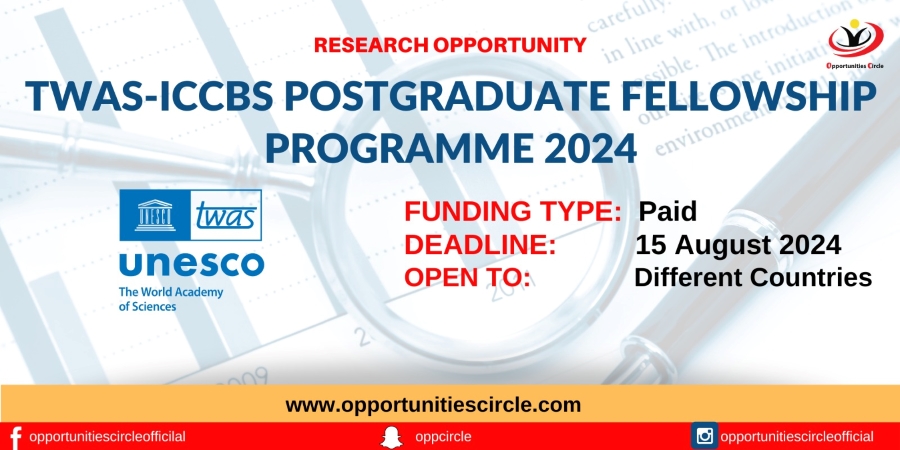
    The TWAS-ICCBS Postdoctoral Fellowship Programme offers an excellent opportunity for young scientists from developing countries (excluding Pakistan) to pursue postdoctoral research at the International Centre for Chemical and Biological Sciences (ICCBS) in Karachi, Pakistan. The programme is specifically aimed at researchers in organic chemistry, biochemistry, biotechnology, molecular medicine, pharmacology, and physical chemistry.

    Important Dates

    Opening Date: 17 April 2024
    Extended Deadline: 15, August 2024 (midnight CEST time)

    Partner Organizations

    Host Organization: International Center for Chemical and Biological Sciences, Pakistan
    Eligible Nationalities: Nationals of developing countries in the South
    Host Country: Pakistan

    Fellowship Details

    Level: Postdoctoral
    Minimum Degree Required: PhD in a field of natural sciences
    Duration: 6 to 12 months

    Field of Study: Organic Chemistry, Biochemistry, Biotechnology, Molecular Medicine, Pharmacology, Physical Chemistry.

    Stipend and Living Costs

    The ICCBS will provide a monthly stipend to cover living costs such as food, accommodation, local transportation, and minor incidental illnesses. Note that this stipend is not convertible into foreign currency.

    Language of Instruction
    The programme’s language of instruction is English.

    Eligibility Criteria

    To be eligible for the TWAS-ICCBS Postdoctoral Fellowship, applicants must meet the following requirements:

    1. Age Limit: Applicants must be 45 years old or younger as of 31 December of the application year.
    2. Nationality: Must be a national of a developing country (excluding Pakistan).
    3. Education: Must hold a PhD degree in a field of natural sciences.
    4. Residency: Should not hold any visa for temporary or permanent residency in Pakistan or any developed country.
    5. Employment: Must be regularly employed in a developing country (excluding Pakistan) and hold a research assignment there.
    6. Health: Provide a certificate of good health from a qualified medical doctor.
    7. Preliminary Acceptance Letter: Applicants must obtain a preliminary acceptance letter from ICCBS. This involves contacting Prof. Dr. Farzana Shaheen and providing a CV, research proposal outline, and two recommendation letters.
    8. English Proficiency: Applicants must provide evidence of proficiency in English if it was not the medium of education.
    9. Return Commitment: Must provide evidence of their intent to return to their home country upon completing the fellowship.
    10. Exclusive Commitment: Must not undertake other assignments during the fellowship period.
    11. Family Financial Responsibility: Must be financially responsible for any accompanying family members.
      Application Process
    12. Preliminary Acceptance: Applicants must secure an official preliminary acceptance letter from ICCBS by contacting Prof. Dr. Farzana Shaheen. This should include a CV, research proposal outline, and two recommendation letters.
    13. Application Submission: Applications must be submitted via the online portal by the extended deadline of August 15, 2024 (midnight CEST time).
    14. Reference Letters: These must be on letter-headed paper, signed, and include the subject line “ICCBS/PDoc” and the candidate’s surname.
      Additional Information
    15. Applicants may only apply for one programme per calendar year within the TWAS and OWSD portfolio.

    The head of an institution inviting an external scholar under the TWAS Visiting Professor programmes may still apply for another programme.

    For further details and to start your application, please click the “apply now” button on the programme’s webpage once the call is open.

    Click here to apply

  • Postdoctoral Research Fellowship Opportunity: Exploring Climate, Health, and Vulnerability in African and Asian Cities

    Postdoctoral Research Fellowship Opportunity: Exploring Climate, Health, and Vulnerability in African and Asian Cities

    The African Centre for Cities (ACC) is seeking applications for a three-year Postdoctoral Research Fellowship as part of the project “If Cities Could Speak: Vulnerability, Climate, and Health in the City,” led by the Indian Institute of Human Settlements (IIHS). This fellowship opportunity, funded by the Wellcome Trust, aims to explore the intersection of climate-related hazards and public health in vulnerable urban areas across Africa and Asia.

    About the African Centre for Cities (ACC)

    Established in 2007 at the University of Cape Town, ACC is an interdisciplinary urban research institute within the School of Architecture, Planning, and Geomatics. The center focuses on fostering critical urban research and policy discourses to promote vibrant, democratic, and sustainable urban development in the global south.

    Project Overview

    The project spans from April 2024 to April 2027, collaborating with partners in South Africa (ACC), Kenya (KDI), Sierra Leone (SLURC), and India (IIHS). It addresses:

    1. Impact of Climate Hazards on Health: Investigating how climate hazards affect public health in vulnerable areas, considering the complexity of health and climate risks.
    2. Methodological Approach: Utilizing mixed methodologies such as GIS mapping and health ethnography to advance understanding in public health and urban studies.
    3. Knowledge Translation: Creating non-academic outputs to communicate findings effectively to diverse audiences, including communities and policymakers.

    Role of the Postdoctoral Fellow

    The successful candidate will join an interdisciplinary team at ACC, focusing on vulnerable settlements within cities. Key responsibilities include:

    • Methodology Development: Collaborating on city-wide risk mapping and providing qualitative inputs.
    • Field Research: Conducting health history interviews and participant observations in selected settlements.
    • Output Development: Contributing to academic and non-academic outputs, including visual materials and short films.

    Eligibility Criteria Applicants must have

    • Recently completed a doctoral degree (or submitted PhD under review) in fields related to urban studies, public health, or related disciplines.
    • Demonstrated experience in research within informal settlements or vulnerable urban areas.
    • Ability to translate research findings for diverse audiences and willingness to engage with mixed research methodologies.

    Conditions and Application Process

    The fellowship is valued at R 420,000 per annum, renewable up to three years, contingent on performance and funding availability. Applicants must submit a proposal, CV, academic transcripts, and contact details of referees by July 29, 2024, to faranaaz.bennett@uct.ac.za.

    Selection Process

    Shortlisted candidates will undergo interviews in early August, conducted by a panel comprising ACC staff and project members. For more information, contact Dr. Liza Cirolia at liza.cirolia@uct.ac.za.

  • GEF SGP Grants in Kenya: Empowering Communities for Sustainable Development and Biodiversity Conservation

    GEF SGP Grants in Kenya: Empowering Communities for Sustainable Development and Biodiversity Conservation

    The Global Environment Facility Small Grants Programme (GEF SGP), implemented by UNDP, is offering competitive grants to civil society organizations in Kenya. These grants support community-driven projects focused on biodiversity conservation, sustainable land management, and capacity development, aiming to address environmental challenges while promoting poverty reduction and local empowerment.

    In the context of Kenya, the program targets areas such as the Kenya Lakes System in the Great Rift Valley, southern Kenya’s marine ecosystems in Kwale County, and the arid rangelands in northern Kenya. These regions face significant environmental degradation due to human activities, climate change, and land degradation. The GEF SGP’s seventh operational phase seeks to enhance socio-ecological resilience through participatory landscape planning and management approaches.

    Key objectives include strengthening adaptive management capabilities, enhancing technical expertise, and fostering innovation among local communities. This initiative aims to empower vulnerable groups, such as women, youth, and indigenous communities, by supporting sustainable initiatives and promoting their participation in local development efforts.

    The program is structured into two components

    1. Resilient Rural Landscapes for Sustainable Development: Enhancing ecosystem services and biodiversity through integrated land-use systems and promoting sustainable agricultural practices.
    2. Landscape Governance and Adaptive Management: Strengthening governance frameworks and facilitating adaptive management approaches to scale up successful local initiatives.

    Applicants, including non-profit organizations registered in Kenya with experience in environmental conservation or sustainable development, are encouraged to submit proposals aligned with these outcomes. Projects should demonstrate clear linkages to county development plans and contribute to long-term ecological, social, and economic resilience within their respective landscapes.

    For further details and application guidelines, interested parties should refer to the GEF SGP proposal guidelines and submit their proposals by the deadline of July 26, 2024, to sgpinfo.kenya@undp.org.

  • IDRC Research Awards 2025: Opportunities in Climate-Resilient Food Systems, Governance, and Global Development

    IDRC Research Awards 2025: Opportunities in Climate-Resilient Food Systems, Governance, and Global Development

    IDRC Research Awards 2025

    Open Call for Applications Deadline: Sunday, September 22, 2024, 23:59 ET

    Overview: IDRC is pleased to announce its 2025 Research Awards program, offering opportunities in key development areas across Ottawa, Nairobi, and New Delhi. This year’s themes include:

    • Climate-Resilient Food Systems (based in Nairobi)
    • Democratic and Inclusive Governance (based in New Delhi)
    • Education and Science
    • Ethics in Development Research
    • Global Health
    • Policy and Evaluation
    • Sustainable Inclusive Economies

    Program Details: The awards provide emerging researchers with a platform to address global development challenges through innovative research. Successful applicants will conduct research aligned with IDRC’s mission, focusing on impactful outcomes in developing countries as per OECD DAC criteria.

    Benefits: Award recipients will join IDRC as Research Award Recipients for a 12-month term starting January 2025. They will gain valuable experience in research, program management, and knowledge dissemination on an international scale. Salaries and benefits vary by location:

    • Ottawa: CAD 47,301 – 54,756 per year, with full-time employment benefits.
    • Nairobi: 2,036,836 – 3,396,801 KES per year, under local employment terms.
    • New Delhi: 628,638 – 1,148,048 INR per year, under local employment terms.

    Travel and research expenses are covered according to IDRC policies.

    Eligibility

    • Canadian citizens, permanent residents, temporary foreign workers in Canada, or students from low- or middle-income countries enrolled in Canadian universities are eligible for Ottawa-based awards.
    • Applicants for Nairobi and New Delhi awards must hold citizenship in Kenya or India, respectively.
    • Candidates should have completed a master’s program within the last three years, with preference given to master’s degree holders.

    Application Requirements: Applicants must submit a detailed research proposal focusing on one of the specified themes, demonstrate relevance to development goals, and address ethical considerations and gender dimensions. Specific documentation, including academic transcripts and permits, is required, as outlined in the application guidelines.

    Selection Criteria: Proposals will be evaluated based on their alignment with IDRC’s mandate, clarity, quality, and the applicant’s capacity to execute the proposed research. Shortlisted candidates will undergo further assessment.

    Additional Information: For more details, including FAQs and application procedures, visit IDRC’s website. Interested candidates are encouraged to subscribe for updates and alerts on future opportunities.

    Contact: For inquiries, contact careers@idrc.ca.

    To learn more about the awards, please visit our website.


  • Discover Abyssinia Journal of Business and Social Sciences: Open-Access Excellence in Global Research

    Discover Abyssinia Journal of Business and Social Sciences: Open-Access Excellence in Global Research

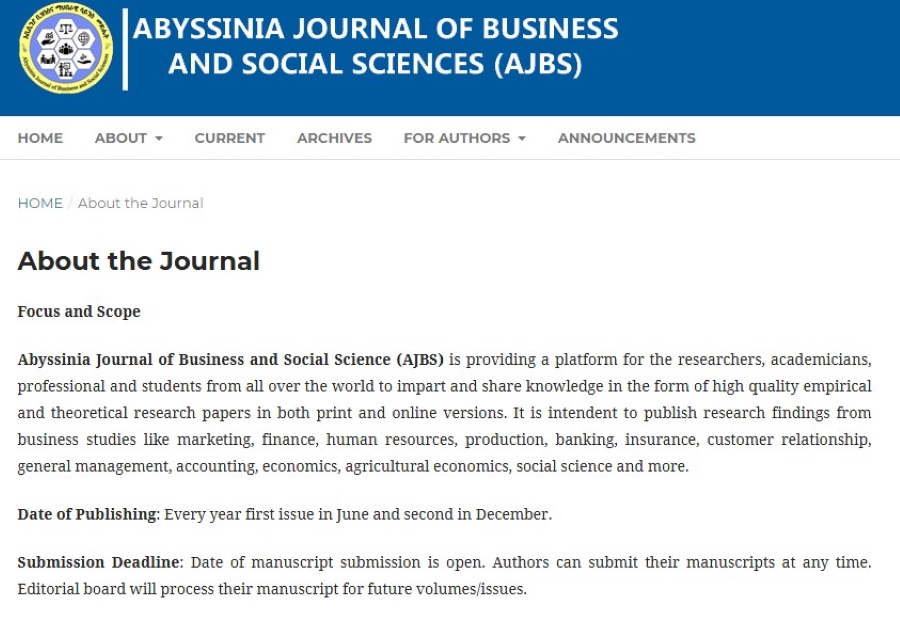
    In the dynamic landscape of academic publishing, the Abyssinia Journal of Business and Social Sciences (AJBS) stands out as a beacon of scholarly excellence. Established by Wollo University, Ethiopia, in 2016, AJBS has been making significant strides in providing an open-access platform for researchers, practitioners, and scholars from across the globe to share their knowledge and engage in critical debates on various cross-cutting issues in Africa and beyond.

    A Commitment to Quality and Accessibility

    AJBS is a peer-reviewed journal that prides itself on publishing high-quality articles twice a year. It welcomes original research articles, short communications, and review articles across a broad spectrum of disciplines, including Business, Economics, Social Sciences, Law, Behavioral Sciences, Humanities, and Language Studies. The journal’s dedication to quality is reflected in its rigorous editorial process, which includes initial editor screening, peer review, and double-blind reviews, ensuring that each paper meets the highest standards of academic rigor.

    No Financial Barriers to Publication

    One of the most commendable aspects of AJBS is its commitment to removing financial barriers for authors. Unlike many academic journals, AJBS does not charge submission or publication fees, making it accessible to researchers from all backgrounds. This inclusive approach fosters a diverse and vibrant academic community, encouraging contributions from both seasoned scholars and emerging researchers.

    Open Access for Global Knowledge Exchange

    AJBS adheres to an open-access policy, providing immediate free access to its content. This aligns with the journal’s belief that making research freely available supports a greater global exchange of knowledge. Articles published in AJBS are licensed under the Creative Commons Attribution 4.0 International License, which allows others to use, distribute, and reproduce the work, provided the original authorship is properly cited. This policy not only enhances the visibility and impact of the research but also promotes wider dissemination and application of knowledge.

    Extensive Review Process

    The journal maintains a thorough review process, typically involving 3-5 months per article and 3-4 review rounds. This extensive process ensures that the published research is robust, credible, and contributes significantly to the existing body of knowledge.

    Broad Scope and Diverse Disciplines

    AJBS publishes research findings from a wide array of disciplines within the social sciences and humanities. Topics covered include, but are not limited to, marketing, finance, human resources, production, banking, insurance, customer relationships, general management, accounting, economics, and agricultural economics. This broad scope makes the journal a valuable resource for a wide range of academic and professional audiences.

    Editorial Leadership

    Under the stewardship of Dr. Alemayehu Erkihun Engida (Journal Editor) and Mr. Wondosen Mekonnen (Managing Editor), AJBS has consistently upheld its mission of disseminating high-quality research and fostering an inclusive academic dialogue.

    Conclusion

    As the Abyssinia Journal of Business and Social Sciences continues to grow, it remains dedicated to its founding principles of accessibility, quality, and global knowledge exchange. For researchers looking to publish their work in a reputable and open-access journal, AJBS represents an excellent opportunity to reach a broad audience and contribute to the ongoing scholarly discourse in their fields.

    For more information, visit the Abyssinia Journal of Business and Social Sciences AR index