Author: AR Managing Editor

  • Maternal Mental Health and Child Development: Impact on Nutrition, Growth, and Well-Being in Kenya

    Maternal Mental Health and Child Development: Impact on Nutrition, Growth, and Well-Being in Kenya

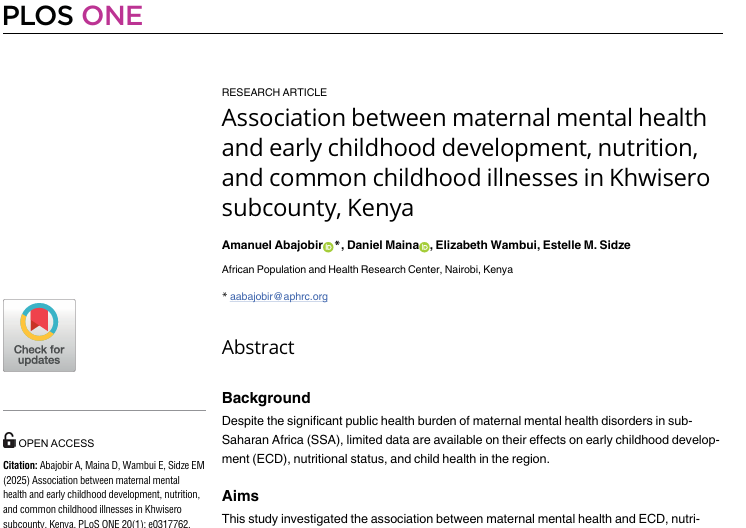
    A recent study by Abajobir et al. (2025) titled “Association between maternal mental health and early childhood development, nutrition, and common childhood illnesses in Khwisero subcounty, Kenya,” published in PloS One, reveals that poor maternal mental health and its impact on children can perpetuate cycles of poverty, ill-health, and underdevelopment.

    This study explores the connection between maternal mental health and early childhood development (ECD), nutritional outcomes, and common illnesses among children in Khwisero sub-county, Kenya. Maternal mental health disorders pose a significant public health challenge in sub-Saharan Africa, affecting children’s growth, health, and overall well-being.

    Poor maternal mental health negatively affects children’s nutrition and development, with socioeconomic factors playing a crucial role in child well-being and growth. – Abajobir et al. 2025

    Surveying mothers from socioeconomically disadvantaged households, the research assessed maternal mental health using a standardized depression scale while evaluating children’s developmental milestones, nutritional status, and health records. Findings revealed that children of mothers with poor mental health were more likely to experience suboptimal developmental and nutritional outcomes. Although maternal mental health had a measurable impact on ECD, its statistical significance was limited. Socioeconomic factors, particularly household wealth, emerged as key determinants of children’s health and development.

    The study underscores the need to improve maternal mental health and socioeconomic conditions to enhance children’s development, nutrition, and overall well-being. It advocates for longitudinal studies to further explore these associations and strengthen evidence for targeted interventions.

    How the Study was Conducted

    This study employed a cross-sectional analysis in Khwisero sub-county, Kenya, focusing on low-income households to examine the relationship between maternal mental health and early childhood development (ECD), nutritional outcomes, and child health. Conducted as part of a broader program evaluation of the Innovative Partnership for Universal and Sustainable Healthcare (i-PUSH), the research utilized endline survey data from a cluster randomized controlled trial.

    Participants were selected through a multi-stage process. From a pool of 239 villages near two health facilities, 24 villages were randomly chosen. A household census identified eligible families, and 10 households per village were randomly selected, focusing on women of childbearing age with children under five years old. Data collection involved assessing maternal mental health using the Center for Epidemiological Studies Depression Scale (CES-D), evaluating ECD through validated tools measuring cognitive and socio-emotional development in children aged 8–60 months, and determining nutritional status using anthropometric indicators like height, weight, and mid-upper arm circumference. Additionally, child health data was gathered through caregiver-reported illnesses experienced in the past two weeks.

    The study applied both univariate and multivariate logistic regression models to analyze associations while considering household and socioeconomic factors. Ethical approval was granted by Amref Health Africa’s Ethical and Scientific Review Committee, and informed consent was obtained from all participants. The findings contribute to understanding how maternal mental health impacts children’s development, nutrition, and well-being, emphasizing the importance of addressing socioeconomic challenges to improve child health outcomes.

    What the Authors Found

    The authors found that mothers with poor mental health (high CES-D scores) had children who showed reduced early childhood development (ECD) outcomes across various domains like cognitive, language, and socio-emotional development. However, these associations were not statistically significant after adjusting for other factors. The authors also posit that maternal mental health was negatively associated with children’s nutritional outcomes (e.g., stunting, underweight, and wasting). These associations were significant, suggesting that poor maternal mental health could impact children’s growth.

    Why is this important?

    Impact on Early Childhood Development (ECD): Early childhood is a critical period for physical, cognitive, and emotional development. Poor maternal mental health can negatively influence a child’s ability to thrive, highlighting the need for interventions that address both maternal and child well-being.

    Nutritional and Health Outcomes: The study found a connection between maternal mental health and children’s nutritional status. Addressing maternal mental health could help combat stunting, wasting, and other forms of malnutrition, which are major public health challenges in low-income settings.

    Breaking the Cycle of Poverty and Poor Health: Poor maternal mental health and its impact on children can perpetuate cycles of poverty, ill-health, and underdevelopment. Targeted interventions could help improve maternal well-being and, in turn, give children a better chance at healthier, more prosperous lives.

    Policy and Program Design: The findings emphasize the need for holistic healthcare programs that integrate maternal mental health services into child healthcare and nutrition programs. These insights can guide policymakers and organizations in designing more effective, evidence-based interventions.

    Advancing Research: The study underscores the importance of further longitudinal research to explore the dynamics between maternal mental health and child development. This can help build a stronger evidence base to inform future healthcare practices.

    What the Authors Recommended

    • The authors advocate developing targeted mental health interventions and integrating them into existing maternal and child healthcare programs in low-resource settings.
    • Promoting routine mental health screenings for women, especially those of childbearing age, to identify and address mental health disorders early.
    • The study emphasizes implementing policies and programs aimed at reducing poverty and improving the socioeconomic conditions of low-income households. This includes providing financial support, enhancing access to education, and creating employment opportunities for women.
    • The study also emphasizes strengthening public health campaigns to educate caregivers on proper child nutrition, healthcare practices, and early developmental milestones.
    • Enhancing access to quality healthcare facilities and services for children to ensure timely interventions for health and nutritional issues.
    • In addition, the authors recommend conducting future longitudinal studies to better understand the long-term effects of maternal mental health on child development, nutrition, and health outcomes.
    • Furthermore, explore additional risk and protective factors that influence maternal mental health and child well-being.

    In conclusion, the study by Abajobir et al. (2025) highlights the critical link between maternal mental health and early childhood development, nutrition, and overall child well-being. While the direct impact of maternal mental health on developmental milestones showed limited statistical significance, its influence on child nutrition was notable. The findings emphasize the urgent need for integrated maternal and child healthcare programs, routine mental health screenings, and socioeconomic interventions to break cycles of poverty and poor health. By addressing maternal mental health, policymakers and healthcare providers can significantly improve children’s long-term health outcomes, fostering a healthier and more prosperous future for vulnerable communities.
  • March 2025: Paper of the month by Abajobir et al. 2025 – Maternal Mental Health and Child Development: Impact on Nutrition, Growth, and Well-Being in Kenya


    March 2025: Paper of the month by Abajobir et al. 2025 – Maternal Mental Health and Child Development: Impact on Nutrition, Growth, and Well-Being in Kenya

    African Researchers AwardMarch 2025: Paper of the Month by Abajobir et al. 2025 – Maternal Mental Health and Child Development: Impact on Nutrition, Growth, and Well-Being in Kenya
    A recent study by Abajobir et al. (2025) titled “Association between maternal mental health and early childhood development, nutrition, and common childhood illnesses in Khwisero subcounty, Kenya,” published in PloS One, reveals that poor maternal mental health and its impact on children can perpetuate cycles of poverty, ill-health, and underdevelopment.

    This study explores the connection between maternal mental health and early childhood development (ECD), nutritional outcomes, and common illnesses among children in Khwisero sub-county, Kenya. Maternal mental health disorders pose a significant public health challenge in sub-Saharan Africa, affecting children’s growth, health, and overall well-being.

    Poor maternal mental health negatively affects children’s nutrition and development, with socioeconomic factors playing a crucial role in child well-being and growth. – Abajobir et al. 2025

    Surveying mothers from socioeconomically disadvantaged households, the research assessed maternal mental health using a standardized depression scale while evaluating children’s developmental milestones, nutritional status, and health records. Findings revealed that children of mothers with poor mental health were more likely to experience suboptimal developmental and nutritional outcomes. Although maternal mental health had a measurable impact on ECD, its statistical significance was limited. Socioeconomic factors, particularly household wealth, emerged as key determinants of children’s health and development.

    The study underscores the need to improve maternal mental health and socioeconomic conditions to enhance children’s development, nutrition, and overall well-being. It advocates for longitudinal studies to further explore these associations and strengthen evidence for targeted interventions.

    How the Study was Conducted

    This study employed a cross-sectional analysis in Khwisero sub-county, Kenya, focusing on low-income households to examine the relationship between maternal mental health and early childhood development (ECD), nutritional outcomes, and child health. Conducted as part of a broader program evaluation of the Innovative Partnership for Universal and Sustainable Healthcare (i-PUSH), the research utilized endline survey data from a cluster randomized controlled trial.

    Participants were selected through a multi-stage process. From a pool of 239 villages near two health facilities, 24 villages were randomly chosen. A household census identified eligible families, and 10 households per village were randomly selected, focusing on women of childbearing age with children under five years old. Data collection involved assessing maternal mental health using the Center for Epidemiological Studies Depression Scale (CES-D), evaluating ECD through validated tools measuring cognitive and socio-emotional development in children aged 8–60 months, and determining nutritional status using anthropometric indicators like height, weight, and mid-upper arm circumference. Additionally, child health data was gathered through caregiver-reported illnesses experienced in the past two weeks.

    The study applied both univariate and multivariate logistic regression models to analyze associations while considering household and socioeconomic factors. Ethical approval was granted by Amref Health Africa’s Ethical and Scientific Review Committee, and informed consent was obtained from all participants. The findings contribute to understanding how maternal mental health impacts children’s development, nutrition, and well-being, emphasizing the importance of addressing socioeconomic challenges to improve child health outcomes.

    What the Authors Found

    The authors found that mothers with poor mental health (high CES-D scores) had children who showed reduced early childhood development (ECD) outcomes across various domains like cognitive, language, and socio-emotional development. However, these associations were not statistically significant after adjusting for other factors. The authors also posit that maternal mental health was negatively associated with children’s nutritional outcomes (e.g., stunting, underweight, and wasting). These associations were significant, suggesting that poor maternal mental health could impact children’s growth.

    Why is this important?

    Impact on Early Childhood Development (ECD): Early childhood is a critical period for physical, cognitive, and emotional development. Poor maternal mental health can negatively influence a child’s ability to thrive, highlighting the need for interventions that address both maternal and child well-being.

    Nutritional and Health Outcomes: The study found a connection between maternal mental health and children’s nutritional status. Addressing maternal mental health could help combat stunting, wasting, and other forms of malnutrition, which are major public health challenges in low-income settings.

    Breaking the Cycle of Poverty and Poor Health: Poor maternal mental health and its impact on children can perpetuate cycles of poverty, ill-health, and underdevelopment. Targeted interventions could help improve maternal well-being and, in turn, give children a better chance at healthier, more prosperous lives.

    Policy and Program Design: The findings emphasize the need for holistic healthcare programs that integrate maternal mental health services into child healthcare and nutrition programs. These insights can guide policymakers and organizations in designing more effective, evidence-based interventions.

    Advancing Research: The study underscores the importance of further longitudinal research to explore the dynamics between maternal mental health and child development. This can help build a stronger evidence base to inform future healthcare practices.

    What the Authors Recommended

    • The authors advocate developing targeted mental health interventions and integrating them into existing maternal and child healthcare programs in low-resource settings.
    • Promoting routine mental health screenings for women, especially those of childbearing age, to identify and address mental health disorders early.
    • The study emphasizes implementing policies and programs aimed at reducing poverty and improving the socioeconomic conditions of low-income households. This includes providing financial support, enhancing access to education, and creating employment opportunities for women.
    • The study also emphasizes strengthening public health campaigns to educate caregivers on proper child nutrition, healthcare practices, and early developmental milestones.
    • Enhancing access to quality healthcare facilities and services for children to ensure timely interventions for health and nutritional issues.
    • In addition, the authors recommend conducting future longitudinal studies to better understand the long-term effects of maternal mental health on child development, nutrition, and health outcomes.
    • Furthermore, explore additional risk and protective factors that influence maternal mental health and child well-being.

    In conclusion, the study by Abajobir et al. (2025) highlights the critical link between maternal mental health and early childhood development, nutrition, and overall child well-being. While the direct impact of maternal mental health on developmental milestones showed limited statistical significance, its influence on child nutrition was notable. The findings emphasize the urgent need for integrated maternal and child healthcare programs, routine mental health screenings, and socioeconomic interventions to break cycles of poverty and poor health. By addressing maternal mental health, policymakers and healthcare providers can significantly improve children’s long-term health outcomes, fostering a healthier and more prosperous future for vulnerable communities.

  • Call for Abstracts: 2nd Africa in Transition Conference 2025 | Submit by March 30

    Call for Abstracts: 2nd Africa in Transition Conference 2025 | Submit by March 30

    Conference Dates: October 8–11, 2025
    Venue: Accra, Ghana
    Submission Deadline: March 30, 2025

    Theme for 2025: Centring Thought and Action of Global Africa and Beyond

    The 2nd Africa in Transition (AIT) Conference 2025 seeks to explore and amplify the transformative role of intellectual thought, policy initiatives, and actionable strategies within the evolving socio-economic and political landscape of Africa. This interdisciplinary forum will bring together scholars, policymakers, entrepreneurs, activists, and thought leaders to examine how Global Africa—comprising the continent and its diaspora—shapes, and is shaped by, worldwide developments.

    With a focus on fostering collaboration, knowledge exchange, and practical solutions, the conference will explore the impact of African-led intellectual movements, governance reforms, economic policies, and advocacy efforts that drive the continent’s transition in an increasingly interconnected world.

    Call for Papers

    We invite submissions that critically engage with the conference theme by addressing the intellectual, social, political, and economic shifts occurring across Africa and its diaspora. Abstracts should offer fresh perspectives on Africa’s transition and development, grounded in research, case studies, or policy analysis.

    Conference Panels

    Authors are encouraged to align their submissions with one or more of the following thematic panels:

    • Education and Training: The role of education in Africa’s transformation; innovative pedagogies and skills development for the future workforce.
    • Pan-Africanism in Action: The revival and evolution of Pan-African ideologies; fostering unity and collaboration across borders.
    • Leadership and Governance: Innovations in governance; challenges and solutions in policymaking; role of African leadership in global politics.
    • Youth and Development: The impact of youth-led initiatives on Africa’s socio-economic progress.
    • Entrepreneurship, Trade, and Manufacturing: Africa’s industrialization efforts; intra-continental trade (e.g., AfCFTA) and global market integration.
    • Economic Development Thought, Policy, and Action: Examining policies that promote economic resilience, financial inclusion, and sustainable growth.
    • Technology and Innovation: The role of AI, digital transformation, and emerging technologies in Africa’s development.
    • Environmental Sustainability and Development: Climate action, conservation strategies, and Africa’s role in global sustainability efforts.
    • Travel and Tourism: The evolving African tourism industry; cultural heritage preservation and economic benefits.
    • Health and Wellness: Public health policies, traditional medicine, and emerging health challenges in Africa.
    • Arts, Culture, and the Creative Industries: The role of music, film, literature, and visual arts in shaping African narratives.
    • Sports and Development: How sports contribute to economic growth, social cohesion, and youth empowerment.
    • Media and Communication: The power of media in shaping African identities, narratives, and political discourse.

    Submission Guidelines

    • Abstracts must be no more than 250 words and should clearly articulate the research question, methodology, and relevance to the conference theme.
    • If a submission includes multiple authors, please specify the corresponding author.
    • Authors must indicate their preferred panel in their submission.

    📩 Submit your abstract to: Conference Chair at africaribbeancentre@gmail.com
    🗓 Submission Deadline: March 30, 2025

    For further details, visit the conference website:
    Conference Agenda & Details

  • Apply for the 2026 Global Africa Translation Fellowship – $5,000 Grant for Scholars & Translators

    Apply for the 2026 Global Africa Translation Fellowship – $5,000 Grant for Scholars & Translators

    Application Deadline: April 17, 2025

    The Africa Institute invites applications for the 2026 Global Africa Translation Fellowship, an esteemed initiative under its African Languages and Translation Program. Now in its fifth year, this fellowship provides an opportunity for scholars, translators, and researchers from the Global South to contribute to the accessibility and preservation of African and African Diaspora literature by translating significant works into English or Arabic. Other languages may also be considered depending on the project’s relevance and scope.

    About the Fellowship

    The Global Africa Translation Fellowship is a non-residential program, allowing scholars the flexibility to undertake translation projects outside the physical premises of The Africa Institute, Sharjah, UAE. This fellowship aims to bridge linguistic and cultural gaps by making important African and African Diaspora texts more widely available to a global audience. By doing so, it enriches academic discourse, supports the dissemination of African literary and scholarly contributions, and fosters intercultural engagement.

    Grant Details

    The fellowship provides funding ranging from $1,000 to $5,000, depending on the scope, quality, and significance of the proposed translation project. The selection committee will assess the feasibility and impact of the project before determining the final grant amount.

    Eligible projects may include:

    • New translations of previously untranslated works.
    • Retranslations of classic or historically significant texts to reflect contemporary linguistic or cultural interpretations.
    • Translations of poetry, prose, novels, or critical theoretical works that contribute to the fields of African and African Diaspora studies.
    • Works-in-progress or entirely new projects that can be completed within the grant’s timeframe.

    Eligibility and Application Process

    All applications will be evaluated by The Africa Institute’s faculty and research fellows based on the quality of the proposal and the applicant’s demonstrated capacity to complete the project successfully. The monetary award will be disbursed in two installments: the first half at the commencement of the project and the second half upon successful completion.

    Application Requirements

    To apply, interested candidates must submit the following:

    1. A two-page Curriculum Vitae (CV) including institutional affiliation, academic qualifications (highest degree received), and key publications or previous translation work.
    2. A two-page project proposal (single-spaced, 12-point font) detailing:
      • The text chosen for translation.
      • The importance of the work within African and African Diaspora studies.
      • Justification for translation or retranslation.
      • Proposed completion timeline.
    3. A sample of the original text and translation (4-5 pages, double-spaced, 12-point font).
    4. Copyright status documentation:
      • If the text is not in the public domain, the applicant must provide a copy of the copyright notice from the original work.
      • A letter from the copyright holder confirming that the English or Arabic translation rights are available.

    Key Benefits of the Fellowship

    • Financial support to facilitate scholarly translation work.
    • Contribution to African scholarship by making essential texts available to a broader audience.
    • Flexible working arrangement as a non-residential program.
    • Archival inclusion: A copy of the completed translation will be retained in The Africa Institute’s archives for documentation and scholarly purposes.

    The translated work will remain the property of the translator and can be published independently unless an additional agreement is made with The Africa Institute.

    Application Deadline

    All applications must be submitted by Thursday, April 17, 2025.

    Further Information

    To learn more about eligibility criteria, submission guidelines, and previous recipients, visit the official webpage of the Africa Institute Global Africa Translation Fellowship.

    This fellowship represents a unique opportunity to advance scholarship in African and African Diaspora studies while contributing to the cultural and intellectual heritage of the continent and its diaspora. Scholars, translators, and literary enthusiasts are encouraged to apply and be part of this vital initiative to enhance the accessibility of African knowledge and literature across linguistic boundaries.

  • YARA Fellowship 2025: Fully Funded Research Opportunity for STEM Students in Ghana

    YARA Fellowship 2025: Fully Funded Research Opportunity for STEM Students in Ghana

    Fellowship Overview

    The Young Africans Research Academy (YARA) Fellowship Program is now accepting applications for its 2025 cohort! This prestigious, fully-funded, one-year research mentorship initiative aims to bridge Africa’s research capacity gap by equipping young African scholars with essential technical expertise, exposure, and guidance.

    The program seeks to nurture the next generation of indigenous researchers dedicated to addressing Africa’s most pressing challenges through high-quality, ethical, and impactful research.

    For the inaugural cohort, YARA is selecting 10 highly motivated undergraduate students from Ghana who demonstrate a strong passion for research and aspire to pursue careers in academia, scientific inquiry, or related fields. If you are a third-year undergraduate student in STEM disciplines, eager to engage in meaningful research and contribute to transformative advancements, this is an opportunity tailored for you!

    Research Focus Areas

    The YARA Fellowship provides research opportunities across multiple critical disciplines, ensuring that fellows contribute to innovative solutions for Africa’s socio-economic and technological challenges. The primary focus areas include:

    • Mathematics & Applied Mathematics: Development of open-source, data-driven optimization models and post-quantum cryptography for robust digital security.
    • Artificial Intelligence (AI) & Machine Learning (ML): Design of ethical, explainable AI frameworks and edge computing solutions for real-time decision-making.
    • Bioinformatics & Genomics: Integration of multi-omics data with advanced algorithms to predict protein structures and enhance precision medicine.
    • Sustainable Building Technologies: Implementation of digital twins and smart materials to revolutionize urban planning and resilient infrastructure.
    • Renewable Energy: Optimization of hybrid renewable systems and grid performance modeling to support Africa’s sustainable energy transition.
    • Public Health Innovation: Development of real-time epidemic models and digital health solutions to enhance public health responses.
    • AgriTech & Food Security: Engineering of precision agriculture systems using AI-driven sensors to improve crop productivity and resource efficiency.
    • Robotics & Automation: Simulation and development of swarm robotics and human-robot collaboration platforms for industrial applications.
    • Education Technology (EdTech): Creation of AI-driven adaptive tutoring systems and immersive learning environments for personalized education.
    • Climate Science: High-resolution regional climate impact assessments to inform sustainable policy-making and adaptation strategies.

    Program Benefits

    Selected fellows will receive a comprehensive support package, which includes:

    ✔ One-on-one mentorship with top-tier researchers and academic professionals.

    ✔ Hands-on training in advanced research methodologies, ethical considerations, and critical thinking.

    ✔ Participation in summer research programs and networking events for professional development.

    ✔ Collaboration opportunities with a vibrant community of like-minded African researchers and experts.

    ✔ Career guidance and graduate school preparation for students aspiring to pursue Master’s or PhD studies in research-intensive fields.


    Eligibility Criteria

    To be considered for the YARA Fellowship, applicants must meet the following criteria:

    • Be a third-year undergraduate student enrolled in a STEM-related discipline at a Ghanaian university.
    • Have strong academic credentials and a demonstrated interest in research.
    • Show commitment to completing the one-year fellowship, including online training sessions and intensive research boot camps.
    • Possess a clear aspiration to pursue postgraduate studies (Master’s/PhD) in research-related fields.
    • Reside in Africa and be eager to contribute to the continent’s research landscape.

    Application Process

    The application process is designed to ensure the selection of the most passionate and capable students. Interested applicants must:

    1. Complete the online application form via the official YARA Fellowship portal.
    2. Upload required documents, including academic transcripts, CV, and a statement of research interest.
    3. Undergo a selection process, which may include an interview and submission of a research proposal.
    4. Receive confirmation of selection and onboarding details, upon successful admission into the program.

    After submission, the YARA selection committee will evaluate applications based on academic merit, research potential, and motivation. Shortlisted candidates will be contacted via email for the next phase of evaluation, which may include additional assessments, interviews, or a research proposal review.

    Important Dates & Application Deadline

    Application Deadline: April 6, 2025 (20 Days Remaining) Fellowship Duration: 1 year Location: Africa (Ghana-based students)


    How to Apply?

    Don’t miss out on this life-changing opportunity! Submit your application today by visiting the official YARA Fellowship page.

    🔗 Apply Now: Official YARA Fellowship Application

    Join the Young Africans Research Academy Fellowship 2025 and become part of the next wave of African researchers dedicated to solving the continent’s most pressing challenges through cutting-edge research and innovation!

  • Nigerian Scientist Revolutionizes Energy with CO₂ Conversion Technology for a Sustainable Future

    Nigerian Scientist Revolutionizes Energy with CO₂ Conversion Technology for a Sustainable Future

    In an era where energy demand is skyrocketing, Nigerian researcher Dr. Joshua Orege is pioneering groundbreaking solutions to address global energy challenges. His cutting-edge research on CO₂ hydrogenation technology presents a transformative approach to energy production, promising a more sustainable and efficient future.

    A New Frontier in Energy Innovation

    As global energy consumption is expected to increase by 50% by 2050 due to rapid industrialization and population growth, scientists are tirelessly working to develop alternative solutions that integrate renewable sources while optimizing fossil fuel use. Dr. Orege, a leading expert in catalytic processes, is at the forefront of this scientific revolution, focusing on the conversion of carbon dioxide into high-value chemicals and fuels. His work aims to reduce carbon emissions while ensuring energy availability, creating a much-needed balance between environmental sustainability and industrial development.

    At the core of his research is the development of highly efficient catalysts that enable the selective transformation of CO₂ into linear alpha-olefins (LAOs), compounds that serve as critical precursors in the manufacture of plastics, detergents, and synthetic lubricants. Traditionally, LAOs are derived from petroleum-based processes that require vast amounts of energy and emit significant greenhouse gases. Dr. Orege’s novel method offers a sustainable and scalable alternative that can be seamlessly integrated into existing industrial frameworks.

    Catalysis: The Heart of CO₂ Hydrogenation

    Catalysts play a crucial role in chemical reactions, influencing reaction rates and selectivity. Dr. Orege’s research in catalysis focuses on engineering microenvironments that enhance efficiency and product yield. He has developed barium-doped iron catalysts with alkali metal promoters, significantly improving selectivity in CO₂ hydrogenation. This innovation not only reduces carbon emissions but also creates a viable pathway for the conversion of waste carbon into valuable products, reinforcing the circular economy in the energy sector.

    “One of the main challenges in CO₂ hydrogenation has been achieving high selectivity. Through precise catalyst engineering, we have developed a system that efficiently converts carbon dioxide into useful chemical feedstocks,” Dr. Orege explained. “This research opens new opportunities for sustainable energy production, working alongside conventional energy sources rather than replacing them.”

    Bridging Research and Industry

    Dr. Orege is not only a prolific researcher, with over 20 peer-reviewed papers and 750 citations in top-tier journals, but also an innovator working to bridge the gap between fundamental research and industrial application. His expertise has led to two patent applications and a significant contribution to industrial catalysis literature. His goal is to develop scalable technologies that can be implemented in real-world scenarios, ensuring energy security while mitigating environmental impact.

    “My research is driven by the need for energy availability, sustainability, and prosperity,” he stated. “We must find ways to integrate scientific advancements into practical energy solutions that support both existing and emerging industries.”

    One of the most remarkable achievements in his career has been his involvement in the world’s first pilot project to successfully convert CO₂ into gasoline. This pioneering initiative demonstrated the potential of CO₂ conversion technologies to complement existing energy infrastructures. By transforming carbon emissions into fuel, the process offers a dual benefit: reducing atmospheric CO₂ levels and providing an alternative energy source that supports the transition to cleaner energy solutions.

    The Future of Sustainable Energy

    Currently, Dr. Orege is a postdoctoral research fellow at Oak Ridge National Laboratory in Tennessee, where he continues to explore ways to repurpose carbon-rich resources into liquid fuels such as alcohol and gasoline. His work is paving the way for cleaner energy solutions that align with global efforts to achieve net-zero emissions while ensuring economic viability.

    Looking ahead, Dr. Orege remains committed to advancing catalytic technologies for sustainable energy. “The future of energy lies in innovation. We must continue to explore new materials, optimize reaction processes, and integrate renewable feedstocks to create a more sustainable world,” he asserted. He emphasizes that rather than viewing renewable energy as a direct replacement for fossil fuels, the focus should be on hybrid approaches that leverage the strengths of both systems.

    A Vision for a Greener Tomorrow

    Dr. Orege’s contributions to energy research have earned him several prestigious accolades, including the Excellent International Graduate Award from the University of Chinese Academy of Sciences in Beijing. His work is a testament to the potential of scientific innovation in addressing global energy challenges, and he envisions a future where sustainable technologies are seamlessly integrated into industrial processes without disrupting economic growth.

    His research is a reminder that achieving energy sustainability requires a multifaceted approach. By developing advanced catalytic processes, promoting carbon recycling, and fostering collaboration between scientific research and industry, Dr. Orege is laying the foundation for a cleaner, more resilient energy future.

    As nations worldwide seek to balance economic development with environmental conservation, the work of researchers like Dr. Orege is instrumental in shaping policies and technological advancements that will define the future of energy. With continued investment in research and collaboration, the vision of a carbon-neutral world powered by innovative energy solutions is within reach.

  • Nigeria Embraces Circular Economy: AWAMN Leads Sustainable Waste Management Revolution

    Nigeria Embraces Circular Economy: AWAMN Leads Sustainable Waste Management Revolution

    The Association of Waste Managers of Nigeria (AWAMN) has called upon stakeholders across the waste management value chain to embrace the principles of the circular economy as a pathway to achieving sustainability and economic growth. This appeal was made by the National President of AWAMN, Mr. Olugbenga Adebola, during the association’s 2025 International Conference, Exhibition, Awards, and Gala Night, held in Lagos. The theme of the conference, “Redefining Integrated Waste Management in Nigeria Through Circular Economy,” underscores the critical need to rethink waste management strategies for a greener and more prosperous future.

    A Transformative Vision for Nigeria’s Waste Sector

    Speaking at the event, Mr. Adebola emphasized that the conference serves as a pivotal moment in Nigeria’s sustainability journey.

    “Today, we stand at the threshold of transformation—a moment where ideas, collaborations, and commitments will redefine integrated waste management through the circular economy for a cleaner, greener, and more prosperous Nigeria,” he stated.

    The AWAMN President highlighted that the association is not merely a group of industry professionals but a movement dedicated to capacity development, innovation, and sustainable economic transformation. The gathering of policymakers, waste management experts, and international partners signifies a collective effort to change the perception of waste—transforming it from an environmental burden into an opportunity for wealth creation, resource efficiency, and economic advancement.

    The Role of AWAMN in Driving Sustainability

    Adebola noted that AWAMN has steadily expanded its influence and impact in shaping Nigeria’s sustainability agenda. Over the years, the association has provided training, support, and empowerment to thousands of waste managers, ensuring the viability of their businesses while promoting environmental conservation. The conference serves as a testament to AWAMN’s leadership in waste management and its commitment to fostering partnerships that will solidify Nigeria’s position as a sustainability-driven nation.

    “This conference is not just about discussions but about actionable solutions to the challenges facing the waste management industry,” he said. “As we engage in thought-provoking conversations, showcase cutting-edge innovations, and celebrate sustainability champions, we must commit to working together, investing in solutions, and taking decisive actions that will redefine Nigeria’s waste management sector.”

    Understanding the Circular Economy and Its Relevance to Waste Management

    Adebola elaborated on the broader implications of the circular economy, explaining that it is not limited to waste management alone but is an overarching economic system designed to optimize resource use, minimize environmental impact, and create sustainable business models.

    “The circular economy is an economic system of exchange and production that spans all stages of a product’s lifecycle—ranging from design and manufacturing to consumption and disposal—aimed at increasing efficiency in resource use while reducing environmental degradation,” he explained.

    He identified seven key operational fields within the circular economy:

    • Eco-design: designing products with sustainability and longevity in mind.
    • Industrial and territorial ecology: encouraging businesses and communities to collaborate on resource sharing and waste reduction.
    • Functional Economy: Prioritizing access over ownership, such as rental models, over outright purchases.
    • Sustainable Consumption: Promoting responsible purchasing habits and reducing waste.
    • Extension in the Length of Product Use: Encouraging reuse, repair, and refurbishment.
    • Recycling: recovering valuable materials to be reintroduced into the production cycle.
    • Sustainable Supply: Sourcing raw materials responsibly to reduce ecological footprints.

    Nigeria’s Transition from a Linear to a Circular Economy

    Adebola described Nigeria’s transition from a linear economy, where waste was simply collected and dumped, to a recycling economy, where valuable materials are recovered and repurposed. The ultimate goal, he emphasized, is to establish a full circular economy where waste is viewed as a valuable resource that can be reintegrated into production cycles.

    “Our gathering here today is part of a much bigger mission—the sustainable transformation of the Nigerian economy. We are transitioning from a linear economy, where waste was simply collected and dumped, causing pollution and environmental degradation. We evolved into a recycling economy, where valuable materials were recovered and repurposed, reducing our environmental footprint. Now, Nigeria is moving towards a full circular economy, where waste is no longer waste, but a resource that can be reintegrated into production cycles, creating jobs, stimulating innovation, and driving sustainable economic growth,” he said.

    He further noted that this transition represents not just an industry shift but a national economic transformation, positioning Nigeria as a leader in circular economy practices across Africa.

    AWAMN’s Commitment to a Sustainable Future

    As a key industry player, AWAMN is committed to supporting this national transformation through advocacy, investment, and capacity development. Adebola reaffirmed his dedication to ensuring that the association, alongside other ecosystem players, remains at the forefront of this shift.

    “My role, as President of AWAMN, is to ensure that our association, together with other ecosystem players, remains at the forefront of this transition. Over the years, I have been privileged to be actively involved in policy dialogues, investment facilitation, and knowledge-sharing initiatives that align with this sustainability mission. This conference is a direct fulfillment of one of my administration’s core campaign promises—capacity development,” he stated.

    Adebola emphasized that the conference represents a turning point for AWAMN, proving that it is not just an industry body but a collective of thought leaders, policymakers, and sustainability champions.

    “For the waste management sector, this conference presents opportunities to access green funding for sustainability projects, learn about cutting-edge waste management technologies and strategies, build relationships with international experts and investors, and enhance collaboration between government, private sector, and communities,” he explained. Through this platform, AWAMN aims to lay the groundwork for Nigeria to become a continental leader in circular economy practices, transforming waste into wealth and unlocking new opportunities for economic growth.

    Recognizing Champions of Sustainability

    Adebola expressed deep appreciation for Nigeria’s First Lady, Oluremi Tinubu, for her unwavering dedication to environmental sustainability and social development. Her commitment to waste management reform, community engagement, and resource efficiency has earned her the title of Grand Patron of AWAMN, a historic investiture recognizing her invaluable contributions to Nigeria’s sustainability journey.

    “Her passion for waste management reform, community engagement, and resource efficiency has made her a heroine of the environment, and tonight, we honor her with a historic investiture as the Grand Patron of AWAMN,” Adebola said.

    Conclusion

    The AWAMN 2025 conference underscores the urgent need for a circular economy in Nigeria’s waste management sector. By rethinking waste as a resource, embracing sustainability principles, and fostering collaborations between key stakeholders, Nigeria is positioning itself for a future where economic prosperity and environmental stewardship go hand in hand. With AWAMN leading the charge, the nation stands at the cusp of a revolutionary shift towards a cleaner, more efficient, and more sustainable economy.

  • ODI Fellowship Scheme 2025–2027: Apply Now for a £32,600 Per Year Global Policy Role

    ODI Fellowship Scheme 2025–2027: Apply Now for a £32,600 Per Year Global Policy Role

    Application Deadline: March 31, 2025

    The Overseas Development Institute (ODI) Fellowship Scheme is now accepting applications for the 2025–2027 cycle. Established in 1963, this prestigious program provides early-career economists and statisticians with a unique opportunity to gain hands-on experience by working within government institutions in low- and middle-income countries. The scheme is designed to foster knowledge exchange and capacity building while enabling fellows to contribute directly to policy-making and public sector reform.

    Overview of the Fellowship Scheme

    The ODI Fellowship Scheme places highly qualified early-career professionals in public sector institutions, where they work on two-year contracts as civil servants. Fellows are embedded in a range of government ministries, central banks, statistical offices, and regulatory bodies, allowing them to engage in key areas of economic policy, financial management, statistical analysis, and development planning.

    Who Should Apply?

    The program is open to candidates from all nationalities who have completed a postgraduate degree (master’s or PhD) in economics, statistics, or a related field. Applicants with specializations in the following areas are particularly encouraged to apply:

    • Agricultural economics
    • Environmental economics
    • International economics
    • Health economics
    • Development economics
    • Econometrics and statistics

    For those currently pursuing a postgraduate degree, selection for the fellowship will be conditional upon successful completion of their studies before the program begins.

    Key Qualifications and Attributes

    The ideal candidates for the ODI Fellowship Scheme should demonstrate:

    • A strong academic background in economics, statistics, or a related discipline
    • A keen interest in public policy and economic development
    • Relevant work or voluntary experience, particularly in policy-oriented environments
    • Strong analytical and quantitative skills
    • Fluency in English (proficiency in French is an advantage)
    • Strong IT and data management skills
    • The ability to adapt to new cultural and professional settings

    Benefits of the Fellowship

    Selected ODI Fellows receive an annual salary of approximately £32,600 (net of tax) in the first year, increasing to £34,600 in the second year. The compensation package includes a housing allowance, which varies depending on the cost of living in the assigned country.

    Application Process

    Candidates are required to submit an application form detailing their qualifications, experience, and motivation for applying. Due to the high volume of applications, additional materials such as CVs and transcripts will not be considered. Applicants must also provide details of two referees; however, references will only be requested if the candidate is shortlisted for an interview.

    Why Apply for the ODI Fellowship?

    The ODI Fellowship Scheme offers an unparalleled opportunity to work at the intersection of research, policy, and governance in countries facing significant economic and development challenges. By participating in this program, fellows not only contribute to strengthening public sector institutions but also gain invaluable experience that enhances their careers in academia, international organizations, or policy advisory roles.

    For more details and to apply, visit the Official Webpage of the ODI Fellowship Scheme.

  • SeNSS Post-Doctoral Fellowship 2025: Apply Now for Funding, Mentorship & Research Support

    SeNSS Post-Doctoral Fellowship 2025: Apply Now for Funding, Mentorship & Research Support

    Are you an early-career researcher eager to carve out a distinguished academic path after completing your PhD? The Economic and Social Research Council South East Network for Social Sciences (SeNSS) is delighted to invite applications for its esteemed Post-Doctoral Fellowships, commencing in October 2025. This opportunity is a game-changer for researchers aiming to refine their expertise, expand their academic networks, and elevate their professional trajectory.

    What Does the SeNSS Post-Doctoral Fellowship Offer?

    The SeNSS Post-Doctoral Fellowship is a comprehensive program designed to nurture and empower early-career researchers. This initiative not only provides substantial financial support but also facilitates mentorship, resource access, and professional development opportunities to enable scholars to consolidate their research and gain visibility within their respective fields.

    Key Benefits of the Fellowship:

    • Flexible Funding Duration: The fellowship accommodates both full-time (up to one year) and part-time (up to two years) research schedules, ensuring alignment with your career goals and research demands.
    • Salary Support: Receive financial backing for the duration of the fellowship, allowing you to dedicate your time entirely to research without financial concerns.
    • Generous Research and Conference Funding: Secure up to £10,000 to support research activities, conference participation, and networking opportunities, significantly enhancing the impact and reach of your work.
    • University-Based Resources: Gain access to essential university facilities, including office space, IT support, and academic development services, creating an optimal environment for productivity and innovation.

    This fellowship acts as a critical launchpad for early career scholars, equipping them with the resources, exposure, and support to make meaningful contributions to their disciplines. By securing this fellowship, you can position yourself as a thought leader, develop a strong academic profile, and establish vital professional connections that will benefit your career long-term.

    Why Should You Apply?

    The SeNSS Post-Doctoral Fellowship is uniquely designed to empower researchers in the social sciences by offering opportunities that extend beyond mere financial support. It enables scholars to engage in high-impact research, collaborate with leading academics, and gain invaluable experience in project management and scholarly dissemination.

    Key Advantages of Becoming a SeNSS Fellow:

    • Strengthen Your Research Independence: Take ownership of your research trajectory and explore innovative ideas with the backing of a well-structured funding program.
    • Engage with Leading Experts: collaborate with established scholars in your field, gain mentorship, and integrate into prestigious academic circles.
    • Increase Your Research Visibility: Present your findings at major conferences, publish in high-impact journals, and expand your influence within the academic community.
    • Enhance Your Career Prospects: Boost your academic CV with a prestigious fellowship, increasing your competitiveness for future academic positions, grants, and research collaborations.

    The fellowship goes beyond funding—it fosters intellectual growth, provides a gateway to future opportunities, and equips scholars with the tools necessary to drive innovation and change in their fields.

    Application Details & Important Deadlines

    The SeNSS Post-Doctoral Fellowship is now open for applications for the October 2025 intake. This is a competitive process, and selection will be based on the quality, originality, and potential impact of the proposed research.

    Fellowship Funding Overview:

    • Funding Duration: Up to 1 year full-time or 2 years part-time
    • Salary Support: Provided throughout the fellowship period
    • Research & Conference Funding: Up to £10,000 to support research-related activities
    • Application Deadline: 4:00 PM GMT, 25 March 2025

    How to Apply?

    Early-career researchers who meet the eligibility criteria are strongly encouraged to apply as soon as possible. The application process requires a well-structured proposal detailing your research objectives, anticipated contributions to the field, and the ways in which the fellowship will facilitate your professional development.

    To assist prospective applicants, SeNSS is hosting an informative webinar on 04/12/2024 at 11:00 AM GMT. This session will provide insights into the application process, offer tips on crafting a compelling proposal, and allow participants to ask questions directly to the fellowship team.

    Take the Next Step Toward a Transformative Research Career

    The SeNSS Post-Doctoral Fellowship is more than just financial support—it is an opportunity to solidify your position as an emerging scholar, advance the frontiers of knowledge, and shape the future of social science research. With access to world-class mentorship, professional networks, and research resources, you will be well-positioned to make a lasting impact in your field.

    Don’t Miss Out! Apply by 4:00 PM GMT on 25 March 2025

    Seize this chance to elevate your academic career. For more information, detailed application guidelines, and to register for the webinar, visit the official SeNSS website today!

    Apply for the SeNSS Post-Doctoral Fellowship

  • FGMC2 Grants: Apply for £1M+ Funding to Strengthen Global Forest Governance & Climate Action

    FGMC2 Grants: Apply for £1M+ Funding to Strengthen Global Forest Governance & Climate Action

    Application Deadline: April 18, 2025

    The Forest Governance, Markets, and Climate (FGMC2) Programme is the flagship global forest governance initiative of the Foreign, Commonwealth, and Development Office (FCDO). This program aims to strengthen governance structures that regulate the use of forest resources, ensuring sustainability while improving the livelihoods of Indigenous People and Local Communities (IPLCs) who depend on these ecosystems.

    Objectives of FGMC2

    FGMC2 seeks to:

    • Curb illegal and unsustainable deforestation practices.
    • Establish robust governance frameworks that encourage sustainable forestry.
    • Foster partnerships and collaborations in forest governance across multiple regions.
    • Support policies that promote transparency, accountability, and sustainability in the forestry sector.

    Funding Details

    • Grants range from £500,001 to over £1,000,000, depending on project scope and impact potential.
    • Funding is targeted at initiatives that create practical solutions for forest governance, sustainable trade, and climate resilience.

    Geographic Scope

    FGMC2 focuses on establishing partnerships in up to 16 tropical forest nations, strengthening coalitions that advance sustainable forestry and governance. Countries prioritized in this first grant cycle include:

    • South America & the Caribbean: Guyana
    • Oceania: Papua New Guinea, Solomon Islands
    • Southeast Asia: Indonesia, Vietnam, Laos, China
    • Africa: Ghana, Liberia, Cameroon, Republic of Congo, Democratic Republic of Congo (DRC)

    Additionally, proposals aimed at influencing global policy processes on forest governance, climate resilience, and market sustainability are also welcome.

    Eligibility Criteria

    The FGMC2 accountable grants are exclusively available to independent, not-for-profit organizations, including:

    • International and national NGOs
    • Federations and membership bodies

    Ineligible Entities:

    • Government bodies at any level (national, regional, or local)
    • Individuals
    • Organizations engaged in activities that promote discrimination based on race, gender, ethnicity, or religion, or those linked to terrorism or civil unrest

    Collaboration & Consortium Applications

    • Applications are open to both UK and non-UK entities.
    • Proposals from consortia, partnerships, or networks of two or more not-for-profit organizations are encouraged.
    • Organizations working with multiple funding sources or implementation partners can also apply.
    • Each consortium must identify a lead organization, ensuring all partners meet eligibility requirements.

    This funding opportunity presents a critical chance for environmental organizations, governance advocates, and research institutions to advance sustainable forest management, combat deforestation, and contribute to climate resilience on a global scale.

    For detailed guidelines and application procedures, visit Gov.UK.