Author: AR Managing Editor

  • Decolonizing African Studies: Kwame Nkrumah and the Afroepistemic Origins of the Institute of African Studies at the University of Ghana

    Decolonizing African Studies: Kwame Nkrumah and the Afroepistemic Origins of the Institute of African Studies at the University of Ghana


    Illustrative Image: Decolonizing African Studies: Kwame Nkrumah and the Afroepistemic Origins of the Institute of African Studies at the University of Ghana
    Image Source & Credit: Jenő Pap. © MTVA.
    Ownership and Usage Policy

    A recent study by Adotey, E. (2025) titled “An Institute of Residual Studies? Nkrumah and the “Afroepistemic” Origins of the Institute of African Studies, University of Ghana” published in The Journal of African History, reveals that the development of the Institute of African Studies (IAS) at the University of Ghana was shaped by complex and evolving decolonial perspectives rather than a straightforward process.

    African Studies at the University of Ghana developed through complex decolonial phases shaped by Nkrumah’s Afroepistemic vision.– Adotey, E. 2025

    This study explores the evolution of the Institute of African Studies (IAS) at the University of Ghana, examining its decolonial roots and the pivotal influence of Kwame Nkrumah in reshaping the field of African Studies. It argues that the development of decolonial epistemology in Africa is far more layered and nuanced than often portrayed, unfolding across three critical phases.

    Phase One (1948–1950) marks the initial, yet short-lived, conceptualization of African Studies at the then University College of the Gold Coast. This period set the groundwork for later efforts but lacked sustained institutional support. Phase Two (1954–1961) was characterized by intense deliberations and ideological debates over the establishment of a formal African Studies institution. During this phase, diverse visions emerged within the university, reflecting tensions between Eurocentric academic traditions and a rising call for an African-centered intellectual framework. Phase Three (1960–1963) witnessed the official founding of the IAS, spearheaded by Nkrumah, who advocated for an “Afroepistemic” approach—an African-centered epistemology that sought to reclaim indigenous knowledge systems. His vision redefined the academic study of Africa by rooting it in African historical consciousness and lived experience.

    The study situates these developments within the broader context of global decolonial movements and draws on the intellectual legacies of African thinkers such as Edward Wilmot Blyden and J. E. Casely Hayford. It also critiques colonial influences on African studies, particularly the role of European institutions like the School of Oriental and African Studies (SOAS), which framed Africa through a Eurocentric lens while selectively preserving aspects of African culture for colonial objectives. By tracing these intersecting influences, the paper underscores Nkrumah’s instrumental role in transforming African studies into a discipline grounded in the excavation, diffusion, and application of indigenous African knowledge. Ultimately, the study highlights how the IAS became a cornerstone in the effort to decolonize knowledge and reposition Africa as the subject—rather than the object—of scholarly inquiry.

    How the Study was Conducted

    The study was conducted using a combination of archival research and historical analysis. The author examined newly discovered documents that provided insight into the debates and discussions surrounding the establishment of the Institute of African Studies (IAS) at the University of Ghana. By analyzing historical records, the study mapped out the different phases of the institute’s development and assessed the role of Kwame Nkrumah in shaping African studies from a decolonial perspective.

    The methodology involved tracing the intellectual foundations of African studies, identifying key figures and institutions that contributed to its evolution, and examining how the concept of decolonial epistemology changed over time. The study also contextualized African studies within broader colonial and postcolonial narratives, highlighting the intersection between indigenous knowledge systems and academic discourse.

    What the Author Found

    The study found that the development of the Institute of African Studies (IAS) at the University of Ghana was shaped by complex and evolving decolonial perspectives rather than a straightforward process. The study also highlighted the colonial paradigm of African studies, showing how European institutions like the School of Oriental and African Studies (SOAS) shaped perspectives on Africa, often focusing on language and culture rather than a truly African-centered intellectual framework. It traced the intellectual roots of African studies back to African thinkers like Edward Wilmot Blyden and J. E. Casely Hayford, who advocated for a university adapted to African circumstances.

    Why is this important

    This study is important because it provides a deeper understanding of the complexities surrounding decolonial epistemology and the development of African studies. It challenges the simplistic notion that decolonization was a straightforward process and instead highlights the debates, ideological shifts, and historical moments that shaped the Institute of African Studies (IAS) at the University of Ghana.

    By tracing the origins and evolution of IAS through different phases, the study sheds light on how African intellectuals and political leaders, particularly Kwame Nkrumah, redefined knowledge production about Africa. It emphasizes the significance of indigenous knowledge systems and the role of universities in reclaiming African history and culture from colonial influence.

    Additionally, the study contributes to broader discussions on education reform in Africa, showing how academic institutions can serve as spaces for decolonial thought and action. Understanding the historical struggles behind IAS helps modern scholars and policymakers recognize the ongoing challenges of truly African-centered education.

    What the Author Recommended

    • The author argues that scholars should move beyond simplistic narratives and explore the diverse intellectual traditions that contributed to the field.
    • The study emphasizes that universities should prioritize African-centered approaches that excavate, diffuse, and apply indigenous knowledge to academic discourse.
    • The study highlights the importance of understanding how different phases of African studies evolved, rather than attributing its development solely to political figures like Kwame Nkrumah.
    • The author encourages further exploration of historical documents to uncover alternative visions for African studies that existed before the formal establishment of IAS.

    In conclusion, Adotey’s study offers a profound reexamination of the Institute of African Studies’ origins, revealing that its foundation was not merely a product of political will but the culmination of layered intellectual struggles and evolving decolonial ideologies. By centering African thinkers, epistemologies, and historical contexts, the research underscores the importance of reclaiming and reimagining African knowledge systems within academic institutions. As contemporary African scholars and educators continue to confront the legacies of colonialism in education, this study serves as both a historical reflection and a call to action for a truly African-centered academic future.
  • International Conference on African Startups

    International Conference on African Startups


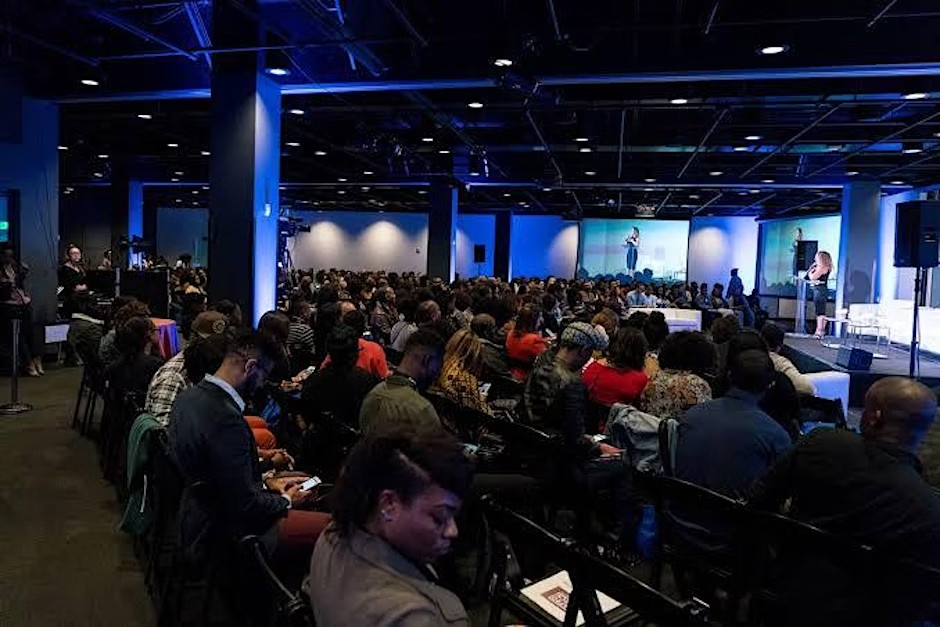
    Illustrative Image: International Conference on African Startups
    Image Source & Credit: Eventbrite
    Ownership and Usage Policy

    Date & Time:
    Monday, September 1, 2025 — Wednesday, September 3, 2025
    🕙 10:00 AM – 5:00 PM EDT (Daily)
    🌍 Equivalent to 5:00 PM – 12:00 AM (East Africa Time)

    📍 Venue:
    Toronto Grand Convention Centre
    30 Baywood Road, Toronto, ON M9V 2Z8, Canada
    [View Map]

    🔁 Refund Policy:
    Full refunds available up to 7 days before the event.

    🌟 About the Conference:

    The International Conference on African Startups is a premier global event designed to spotlight the incredible innovation and entrepreneurial spirit emerging from the African continent. Hosted in Toronto, this three-day gathering will bring together visionary entrepreneurs, influential investors, policymakers, and ecosystem builders from across the globe — all united by a common goal: empowering African startups to thrive.

    This dynamic conference offers a unique platform to:

    • Discover ground-breaking startups led by African entrepreneurs

    • Network with key stakeholders across the global startup ecosystem

    • Attend thought-provoking panels, masterclasses, and pitch sessions

    • Explore collaborative opportunities for investment, mentorship, and strategic partnerships

    Whether you’re an aspiring entrepreneur, an established founder, a venture capitalist, or simply curious about Africa’s booming tech and innovation landscape, this event will offer valuable insights and connections.

    🌍 Inclusivity and Access:

    To ensure wide participation from across the continent, the conference offers free admission to all African entrepreneurs and participants. We believe in fostering equitable access to global platforms for African talent.

    🔒 Please note: A non-refundable processing fee of $120 CAD applies only if you request an invitation letter. Otherwise, participation is completely free for eligible attendees.

    🎟 Ticket Options:

    • General Admission – CA$420
      (Open to non-African participants or organizations)

    • African Entrepreneurs – FREE
      (Includes full access to all conference sessions and networking opportunities)

    🚀 Why Attend?

    • Gain insights into emerging trends shaping Africa’s startup landscape

    • Connect with global investors seeking new markets and talent

    • Learn from successful African founders and global mentors

    • Showcase your startup or business idea to a worldwide audience

    Don’t miss this opportunity to be part of one of the most vibrant, forward-looking conversations around African entrepreneurship.

    🌐 Join us in shaping the future of innovation in Africa — from the heart of Toronto to the soul of the continent.

    Website: International Conference on African Startups 

  • PAGES African Mobility Fellowship 2025: Funding for Early-Career Researchers in Paleoscience Across Africa

    PAGES African Mobility Fellowship 2025: Funding for Early-Career Researchers in Paleoscience Across Africa


    Illustrative Image: PAGES African Mobility Fellowship 2025: Funding for Early-Career Researchers in Paleoscience Across Africa
    Image Source & Credit: Opportunity Desk
    Ownership and Usage Policy

    Application Deadline: 15 August 2025

    The Past Global Changes (PAGES) initiative invites applications for the 2025 African Mobility Fellowship Program, a unique opportunity designed to support early-career researchers from Africa who are working in the field of past global changes, also known as paleoscience. This fellowship promotes academic exchange and cross-border collaboration within Africa by funding short research stays at institutions in other African countries.

    Purpose and Vision

    This fellowship program aims to strengthen scientific cooperation and knowledge transfer across the African continent by facilitating mobility for PhD students and postdoctoral researchers. The objective is to enhance the skills and international exposure of young scientists while fostering the development of a robust pan-African paleoscience research network.

    By enabling scholars to conduct research in a host institution outside their home country, the program supports the generation of new collaborative projects, encourages the sharing of technical expertise, and contributes to long-term scientific development across Africa.

    Scope of Support

    The African Mobility Fellowship provides limited financial support to cover:

    • International travel (economy class air tickets)

    • Visa costs

    • Accommodation and living expenses during the research stay

    • Laboratory consumables (up to 10% of the total budget)

    ⚠️ Note: Insurance and personal expenses are not covered. PAGES holds no responsibility for changes or cancellations to travel arrangements.

    Fellowship Duration and Timeline

    • Fellowship stays must be between 2 and 4 weeks in duration.

    • The awarded fellowship must be utilized within 12 months of being granted.

    • Suggested timeline:

      • 15 August 2025: Application deadline

      • September – October 2025: Review and selection by PAGES Scientific Committee

      • October 2025: Applicants are notified of decisions

      • November – December 2025: Financial/logistical arrangements finalized

      • January – December 2026: Fellowship activities to take place

    Eligibility Criteria

    Applicants must meet all of the following requirements:

    1. Research Focus: Currently conducting research related to past global changes, within the scope of PAGES.

    2. Career Stage:

      • PhD candidates in the final phase of their doctoral research, or

      • Postdoctoral researchers within five years of completing their PhD (includes those not yet holding a postdoc position).

    3. Institutional Affiliation:

      • Must be enrolled or employed at an academic institution based in Africa.

    4. Citizenship:

      • Must be a citizen of an African country.

    5. Mobility:

      • Willing and able to conduct research in another African country.

    6. Host Institution:

      • Must secure a formal invitation/acceptance letter from the proposed host institution or researcher.

    7. Fellowship Period:

      • Proposed visit must last at least 2 weeks but no more than 4 weeks.

      • Fellowship must take place within 12 months of the award date.

    Application Requirements

    To apply, candidates must submit a complete application package consisting of

    1. Completed Application Form (available via PAGES website)

      • Description of the proposed research and travel plan (max. 1000 words), including how it aligns with PAGES’ scientific scope.

      • Statement on the expected impact of the fellowship on the applicant’s professional development and benefit to the home institution or country (max. 200 words).

      • Timeline and expected outcomes of the project.

      • A detailed budget breakdown (in USD).

    2. Two Letters of Recommendation:

      • One from the applicant’s current supervisor at the home institution.

      • One from the proposed host researcher/institution confirming the willingness to host the applicant.

    3. Curriculum Vitae (CV):

      • Maximum of 2 pages outlining academic background, publications, relevant research experience, and achievements.

    How to Apply

    • Applications should be submitted by email to: pages@pages.unibe.ch

    • Email subject line: “Application PAGES African Mobility Fellowship”

    • Preferred language for submission: English (French is also accepted)

    • Incomplete or late applications will not be considered.

    📥 Download the Application Form

    Post-Fellowship Requirements

    All fellows must submit a final report to PAGES upon completion of their exchange. The report must include:

    • A detailed financial report

    • A scientific summary of the research conducted

    • A 650-word article (including one figure) suitable for publication in the Past Global Changes Magazine

    Host Institutions in Africa

    The following African institutions have previously hosted fellows or expressed willingness to host new applicants:

    • Botswana: Botswana International University of Science and Technology (BIUST)

    • Cameroon: University of Dschang, Department of Plant Biology

    • Egypt: Ain Shams University, Cairo

    • Ivory Coast: Université Félix Houphouët-Boigny, UFR STRM

    • Mauritania: IMROP, Nouadhibou

    • Morocco: Caddi Ayyad University, Marrakech

    • South Africa:

      • University of Cape Town – Stable Light Isotope Laboratory

      • University of the Witwatersrand

      • Stellenbosch University – Central Analytical Facility

      • University of Mpumalanga

      • University of Johannesburg

      • University of the Free State

    Note: Institutions listed reserve the right to accept or reject fellows. PAGES does not directly facilitate placement.

    Contact for More Information

    For queries or assistance with the application process, please contact

    📧 Email: pages@pages.unibe.ch
    🌐 Website: pastglobalchanges.org

    This fellowship is a unique opportunity to gain valuable research experience, develop international collaborations, and strengthen the African paleoscience community. Apply now and help shape the scientific future of the continent.

  • Call for Nominations: Al-Sumait Prize in Food Security 2025

    Call for Nominations: Al-Sumait Prize in Food Security 2025


    Illustrative Image: Call for Nominations: Al-Sumait Prize in Food Security 2025
    Image Source & Credit: KFAS
    Ownership and Usage Policy

    The Al-Sumait Prize for African Development is now accepting nominations for its 2025 cycle, with a focus on food security. This prestigious annual award recognizes the outstanding work of individuals or institutions who have made significant contributions to sustainable development in Africa through impactful research, projects, and initiatives.

    About the Prize

    Established by the State of Kuwait and administered by the Kuwait Foundation for the Advancement of Sciences (KFAS), the Al-Sumait Prize honors the legacy of Dr. Abdulrahman Al-Sumait, a Kuwaiti humanitarian and medical doctor who dedicated his life to serving underserved communities across Africa. The prize reflects the vision of the late His Highness Sheikh Sabah Al-Ahmad Al-Jaber Al-Sabah, former Amir of Kuwait, to highlight and support initiatives that promote economic and social progress across the continent.

    Each year, the prize rotates among three thematic areas critical to African development:

    • Food Security

    • Health

    • Education

    For 2025, the spotlight is on food security, with the winner(s) receiving a monetary award of USD 1,000,000 (one million US dollars).

    Purpose and Objectives

    The Al-Sumait Prize aims to:

    • Recognize outstanding scientific research, applied projects, and pioneering initiatives.

    • Promote innovative and scalable solutions addressing urgent development challenges.

    • Support transformative work that advances the well-being, economic independence, and sustainability of African communities.

    This prize not only acknowledges achievement but also amplifies efforts that align with the United Nations Sustainable Development Goals (SDGs), especially those related to zero hunger, climate action, and gender equality.

    Eligibility and Requirements

    Nominees—either individuals or institutions—must demonstrate high-impact and innovative contributions to food security in Africa. Specific eligibility criteria include:

    • Scope and Impact: The work must have a demonstrable effect on improving food security and sustainable agriculture in African contexts, with clear benefits to vulnerable communities.

    • Scientific Merit: The work should be evidence-based and ideally published in peer-reviewed journals or internationally recognized platforms.

    • Implementation: Research outcomes or initiatives must have been implemented within African countries over the past ten years.

    • Submission Language: All entries must be in English. If the original work is in another language, a comprehensive English summary is required.

    • Nominating Entities: Submissions can be made by international and regional academic institutions, research centers, UN bodies, previous Al-Sumait laureates, and past evaluation committee members.

    Thematic Areas in Food Security (2025 Focus)

    Eligible contributions must address one or more of the following areas:

    • Development of new, climate-resilient seed, crop, or livestock varieties.

    • Enhancement of the nutritional value, caloric density, and shelf life of local foods.

    • Support for smallholder farmers through access to modern inputs, techniques, and markets.

    • Innovations to reduce food loss and waste across Africa’s agri-food systems.

    • Strengthening resilience to climate change and extreme weather events.

    • Promotion of sustainable, water-efficient agricultural systems, especially in marginal environments.

    • Digital transformation and modernization of food systems, including business strategy and marketing.

    • Implementation of creative, scalable solutions to hunger and malnutrition.

    • Integration of gender equality and women’s empowerment into food security strategies.

    • Preparedness and recovery solutions for food security during health crises and pandemics.

    How to Apply

    Interested nominators should register and complete the nomination form via the Al-Sumait Prize online portal:

    Submit your nomination here

    Deadline for submissions: June 30, 2025

    Early submission is encouraged to allow time for thorough evaluation and documentation. Ensure that all supporting materials—such as publications, impact reports, and third-party endorsements—are included in the nomination packet.

    About KFAS and the Legacy of Dr. Al-Sumait

    The Al-Sumait Prize is a cornerstone initiative of the Kuwait Foundation for the Advancement of Sciences, which champions the development of knowledge-based societies through science, research, and innovation. Dr. Al-Sumait’s decades of humanitarian work inspired this initiative, as he provided medical care, education, and development aid to underserved populations across more than 29 African countries.

    Take Part in Celebrating African Innovation

    If your organization or someone you know is driving change in food security across Africa, now is the time to gain international recognition and support. The Al-Sumait Prize not only brings financial resources to transformative projects but also elevates their visibility to a global stage, inspiring further collaboration and progress.

    Let your mission be known. Nominate now.

    For detailed information and nomination guidelines, visit: https://prizes.kfas.org.kw

  • Apply Now: Forrest Research Foundation Fellowship 2025 – Empowering Bold Thinkers to Shape the Future

    Apply Now: Forrest Research Foundation Fellowship 2025 – Empowering Bold Thinkers to Shape the Future


    Illustrative Image: Apply Now: Forrest Research Foundation Fellowship 2025 – Empowering Bold Thinkers to Shape the Future
    Image Source & Credit: Forrest Research Foundation
    Ownership and Usage Policy

    About the Fellowship

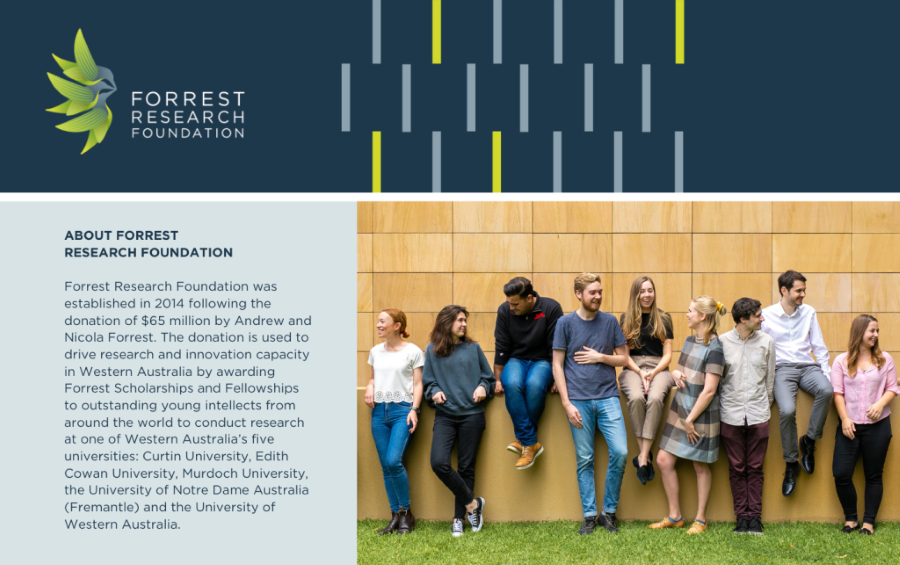
    The Forrest Research Foundation Postdoctoral Fellowship is far more than a typical funding award — it is a prestigious platform crafted to empower exceptional early-career researchers with the curiosity, courage, and creativity to reshape the world through their work.

    Founded to support academic excellence and visionary research, this Fellowship offers a unique opportunity to join a vibrant community of scholars who think differently. Forrest Fellows are united by their ambition to challenge norms, spark new ideas, and foster interdisciplinary collaboration that leads to real-world impact.

    What Makes the Fellowship Unique?

    At its core, the Forrest Fellowship supports exploratory, bold, and globally significant research. Fellows are not only researchers — they are thought leaders, mentors, and ambassadors who embody a spirit of intellectual generosity and collaborative innovation. The program encourages proposals that break disciplinary boundaries and expand the frontiers of knowledge for the benefit of society.

    Fellowship Benefits

    Fellows receive a generous and well-rounded support package, including

    Accommodation Allowance
    AUD $25,116 per annum (2025, taxable) to assist with living expenses.

    Research & Travel Allowance
    A one-time grant of AUD $12,000 to fund approved research activities, international travel, and participation in academic conferences.

    Relocation Support
    Economy airfare and a relocation allowance for Fellows moving from other regions or countries to Western Australia.

    Leadership Development
    Fellows are encouraged to take on mentorship roles, represent the Foundation at public events, and contribute to the dynamic academic community at Forrest Hall and across Western Australian universities.

    Note: Appointments at Academic Level B (lecturer equivalent) may also be considered if supported by a host institution.

    Eligibility Criteria

    To be eligible for the 2025 Forrest Fellowship, applicants must meet the following requirements:

    PhD Status

    Currently in the final year of a PhD program, or

    Have been awarded a PhD on or after 1 January 2023

    PhD Completion Deadline

    All requirements for the PhD must be fulfilled by 31 December 2025

    Academic and Research Excellence

    A strong academic track record, having ranked among the top students in undergraduate and postgraduate studies

    Demonstrated outstanding research potential and a competitive publication record

    Global Research Experience

    Prior experience studying or conducting research at diverse institutions, ideally with some international exposure

    Innovation and Impact

    Doctoral research that is already recognized within the academic field

    Ambition to evolve postdoctoral work into novel areas that connect disciplines

    A commitment to disseminating research for community and global benefit

    Willingness to Relocate

    Fellowship recipients must be prepared to relocate to Western Australia (relocation assistance is provided)

    How to Apply

    Interested applicants should prepare and submit the following materials:

    Completed Application Form

    Curriculum Vitae (CV)

    List of Publications

    Summary of Research Grants and Awards

    Contact Details for Three Referees

    At least two referees must be academic professionals

    Application Deadline: June 30, 2025

    👉 [Click here to apply]


    Why Apply?

    This Fellowship is ideal for postdoctoral researchers ready to embark on innovative, high-impact research and become part of a distinguished academic network in one of the world’s most vibrant research environments. With generous support, international visibility, and a focus on leadership and collaboration, the Forrest Fellowship offers the tools and community needed to thrive as a future research leader.

  • Western Union Foundation Fellowship Program 2025

    Western Union Foundation Fellowship Program 2025


    Illustrative Image: Western Union Foundation Fellowship Program 2025
    Image Source & Credit: IIE
    Ownership and Usage Policy

    Overview

    The Western Union Foundation Fellowship Program 2025 is a prestigious, fully funded Impact Fellowship designed for innovative individuals who come from — or actively serve — refugee, marginalized, or forcibly displaced communities around the world. This dynamic and inclusive program is aimed at social entrepreneurs who are already driving change in their communities and are looking to scale their ventures to new heights.

    Through a high-impact curriculum supported by the Watson Institute, this fellowship equips participants with cutting-edge entrepreneurial tools, mentorship from global experts, and access to a powerful network of changemakers and funders. Whether you run a non-profit or a for-profit social venture, the program offers the structure and support to amplify your mission.

    About the Western Union Foundation

    The Western Union Foundation is the philanthropic arm of the Western Union Company. Operating independently as a charitable corporation, it is backed by contributions from the company’s employees, agents, consumers, and business partners. For over 20 years, the Foundation has worked globally to empower underserved populations through economic opportunity and education.

    Headquartered in Denver, Colorado, the foundation is led by a board of directors composed of senior Western Union executives and a dedicated team of grantmakers, fundraisers, and social impact professionals.

    Goals and Benefits of the Fellowship

    The fellowship is tailored to amplify your social venture’s reach and deepen its community impact. Key benefits include

    • Full funding for all program activities

    • Live online workshops three times a week

    • Mentorship from seasoned social entrepreneurs and thought leaders

    • A Community Development Stipend to support your local Basecamp project

    • An invitation to a Virtual Summit, where you’ll pitch your venture to an audience of global funders, leaders, and change agents

    • Long-term access to a supportive global network of Fellows and mentors

    Eligibility Criteria

    Entrepreneur Profile

    Applicants must have a personal or professional connection to a marginalized, refugee, or displaced community. Ideal candidates are actively working to improve the lives of such populations through innovative and sustainable solutions.

    Venture Stage

    Your organization (non-profit or for-profit) should already have a functioning business model and be actively serving a community in need. You should be at a stage where scaling your impact is your next strategic goal.

    Geographic Focus

    Applicants must be located in — or have active projects serving — the following countries:
    Costa Rica, Argentina, Lithuania, the Philippines, the United States, Brazil, Uganda, Nigeria, the United Kingdom, India, Bangladesh, Mexico, Germany, Colombia, Japan, and Pakistan.

    Program Timeline & Format

    • Program Dates: August 25 – December 16, 2025

    • Immersive Period: Begins August 25 with a 2-week intensive online experience

    • Weekly Commitment: 8–10 hours (includes 2-hour sessions every Tuesday, Wednesday, and Thursday, 8:30–10:30 AM MT / GMT-6)

    • Immersive Commitment: 10–15 hours per week during the virtual Immersive

    • Capstone Event: Virtual Summit on December 16, 2025

    Core Components

    • Interactive Virtual Workshops: Skill-building and collaboration sessions with your global cohort

    • Basecamp Project: You’ll design and lead a 1–3 day workshop in your own community, using program-provided resources

    • Mentorship & Community: Direct engagement with mentors and a global network of social innovators

    • Virtual Summit: Showcase your progress and pitch your venture to global stakeholders

    How to Apply

    If you are ready to grow your social impact venture and meet the eligibility criteria, visit the Watson Institute application portal to submit your application:
    Apply here via Watson Institute

    For further information and program updates, visit the Western Union Foundation website.

  • Mohamed bin Zayed Species Conservation Fund Grant Program

    Mohamed bin Zayed Species Conservation Fund Grant Program


    Illustrative Image: Mohamed bin Zayed Species Conservation Fund Grant Program
    Image Source & Credit: Species Conservation
    Ownership and Usage Policy

    The Mohamed bin Zayed Species Conservation Fund (MBZ Fund) is a prestigious global initiative dedicated to supporting and advancing individual species conservation projects around the world. This Fund plays a crucial role in recognizing conservation leaders and raising awareness about the critical importance of protecting species across the plant, animal, and fungi kingdoms.

    Mission and Purpose

    The MBZ Fund’s core mission is to provide financial support to projects that focus on the conservation of threatened species. By funding grassroots conservation efforts, the Fund helps catalyze tangible outcomes that protect biodiversity, preserve ecosystems, and contribute to the global conservation dialogue.

    Whether you are a field researcher, a conservationist, a scientist, or part of an NGO, if you are directly involved in species conservation, you are eligible to apply for funding. The Fund maintains a truly global scope and does not discriminate based on geographic location or species type, ensuring broad access to support for critical conservation work worldwide.

    Grant Details and Funding Limits

    • Maximum Grant Amount: $25,000

    • Project Budgets: Your total project budget can exceed $25,000 if you have additional funding sources. However, the MBZ Fund will not award more than $25,000 per project.

    • Funding Rounds: There are three application deadlines each year—February, June, and October—with corresponding response periods. The next deadline is June 30, 2025. Applicants submitting by this date can expect a response around September.

    Eligibility Criteria

    • Open to anyone actively engaged in the conservation of species globally.

    • Applicable to conservation efforts involving plants, animals, and fungi.

    • Must focus on species that are threatened or of conservation concern.

    • Clear and accurate justification of the species’ conservation status is required.

    Important Ineligibility Notes

    • Applications requesting funding beyond the $25,000 limit will be automatically rejected.

    • Projects targeting species without threat status or applications with incorrect or unjustified conservation statuses will not be considered.

    • The Fund is highly competitive, with only approximately 12% of applications receiving grants.

    Special Focus: Conservation of Threatened Soil Species

    In 2023 and 2024, the MBZ Fund is piloting a unique grant category for threatened soil species, reflecting the growing recognition of soil biodiversity’s critical role in ecosystem health. Applicants interested in this category should select “MBZ Special Focus” under “Species Type” on the application form. This special focus complements the Fund’s traditional support for aboveground species.

    Application Process

    Applications must be submitted online through the Fund’s official portal. Before applying, it is essential to thoroughly read the eligibility and application criteria, especially regarding species conservation status. The Fund also provides a Frequently Asked Questions (FAQ) page to help applicants navigate the process.

    Once submitted, applicants will receive an automated confirmation email containing a receipt of their application and login details for tracking.

    Application Deadline: June 30, 2025

    Selection and Competition

    The Mohamed bin Zayed Species Conservation Fund is widely recognized as a highly competitive grant program due to the limited budget and high volume of excellent applications it receives annually. With only about 12% of applicants awarded funding, applicants should prepare strong, well-justified proposals highlighting the impact and feasibility of their conservation efforts.

    Grants are awarded based on strict criteria established by the Fund, emphasizing the project’s potential to contribute meaningfully to species conservation.

    Additional Support and Contact Information

    For any queries about the application process or to join the Fund’s contact database, applicants can reach out via the official email addresses:

    Applicants are encouraged to submit their proposals well before the deadline to avoid last-minute technical issues or delays.

    Summary

    The Mohamed bin Zayed Species Conservation Fund offers vital financial backing to individuals and teams working on the frontline of species conservation worldwide. By awarding grants of up to $25,000, the Fund empowers conservationists to implement projects that protect threatened species, promote biodiversity, and raise global awareness about the urgent need to conserve life on Earth. If you are dedicated to making a difference in species conservation, consider applying for this prestigious funding opportunity before the June 30, 2025 deadline.

    For further details and to submit your application, please visit the Fund’s official website.

  • Elevating Larval Source Management: A Key Strategy to Enhance Malaria Control and Combat Vector-Borne Diseases in Africa

    Elevating Larval Source Management: A Key Strategy to Enhance Malaria Control and Combat Vector-Borne Diseases in Africa


    Illustrative Image: Elevating Larval Source Management: A Key Strategy to Enhance Malaria Control and Combat Vector-Borne Diseases in Africa
    Image Source & Credit: Modern Ghana
    Ownership and Usage Policy

    A recent study by Okumu et al. (2025) titled “Elevating larval source management as a key strategy for controlling malaria and other vector-borne diseases in Africa” published in Parasites & Vectors by Springer Nature, reveals that larval source management (LSM) is a powerful yet underutilized tool for malaria control, particularly in Africa.

    Larval source management significantly reduces mosquito populations and enhances malaria control but remains underfunded and underutilized in Africa.
    -Okumu et al. 2025

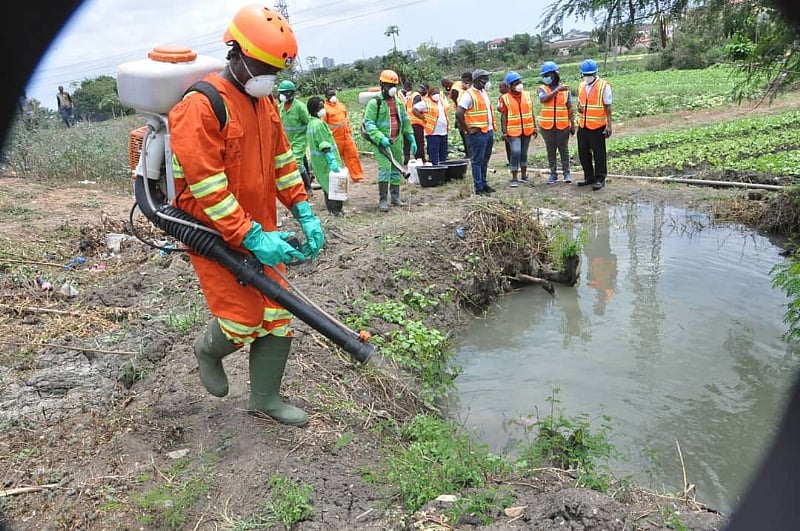
    This study advocates for the elevation of larval source management (LSM) as a critical, yet underutilized, strategy for controlling malaria and other vector-borne diseases in Africa. Although LSM has historically demonstrated success, particularly in countries that have eliminated local malaria transmission, its broader implementation remains limited—primarily due to funding constraints and operational challenges. The World Health Organization (WHO) recommends LSM as a complementary approach alongside insecticide-treated nets (ITNs) and indoor residual spraying (IRS). However, its adoption is often hindered by the transient nature of mosquito breeding sites, difficulties in locating larval habitats, and a lack of high-quality epidemiological evidence. As progress in malaria elimination stagnates, there is growing urgency to reconsider and diversify vector control strategies beyond insecticide-based interventions targeting adult mosquitoes indoors.

    This paper underscores the long-term effectiveness of LSM through expert discussions, narrative analyses of malaria-free countries, and mathematical modeling. Key findings reveal that LSM—through the application of larvicides and environmental sanitation—can significantly suppress mosquito populations. Models further demonstrate that integrating LSM with existing interventions can mitigate challenges like insecticide resistance and outdoor biting. Despite its potential, LSM receives limited large-scale funding and lacks the trained workforce needed for widespread implementation. Current funding structures tend to favor ITNs and IRS due to their ability to deliver short-term, easily measurable results, often sidelining LSM in national malaria control programs.

    How the Study was Conducted

    The study was conducted through a global, cross-disciplinary collaboration that employed a combination of expert discussions, narrative review, and mathematical modeling to evaluate the effectiveness of larval source management (LSM) in malaria control. Researchers and professionals from various fields engaged in detailed online discussions, sharing practical insights and challenges related to implementing LSM. In parallel, a narrative review was conducted, focusing on countries that have successfully eliminated local malaria transmission. This review analyzed historical mosquito control strategies and highlighted the specific role of LSM in those successes. To complement these qualitative insights, the study also utilized two different malaria transmission models to assess the potential impact of integrating LSM with existing vector control methods. The modeling estimated LSM’s effectiveness in reducing malaria incidence, managing insecticide resistance, and addressing the growing challenge of outdoor mosquito biting.

    What the Authors Found

    The authors found that larval source management (LSM) is a powerful yet underutilized tool for malaria control, particularly in Africa. Their findings highlight that LSM can significantly reduce mosquito populations, delivering widespread community benefits. However, despite its proven effectiveness, LSM remains limited in implementation due to several key barriers: insufficient large-scale funding, a lack of trained personnel, and restrictive World Health Organization (WHO) guidelines that call for high-quality epidemiological evidence—something difficult to obtain due to challenges in locating mosquito larval habitats. The study also noted that countries that have successfully eliminated malaria often relied on LSM, underscoring its potential impact. Mathematical modeling further supports LSM’s value, suggesting that when combined with existing vector control measures, it can enhance malaria prevention by reducing insecticide resistance and targeting outdoor-biting mosquitoes. Nonetheless, the global focus on commodity-based interventions like insecticide-treated nets (ITNs) and indoor residual spraying (IRS)—which are easier to quantify and monitor—has constrained the broader adoption of LSM.

    Why is this important

    This study is important because it advocates for a shift in malaria control strategies, emphasizing the underutilized potential of larval source management (LSM) in Africa. While insecticide-treated nets (ITNs) and indoor residual spraying (IRS) have been the dominant approaches, malaria elimination progress has stalled, requiring alternative solutions to address emerging challenges like insecticide resistance and outdoor mosquito biting.

    What the Authors Recommended

    • LSM requires dedicated funding, but current global malaria budgets prioritize insecticide-treated nets (ITNs) and indoor residual spraying (IRS). The authors urge reallocation of resources to expand LSM initiatives.
    • Countries need trained personnel to implement LSM effectively. This includes entomologists, field workers, and operational managers for sustained mosquito population control.
    • The World Health Organization (WHO) limits LSM adoption due to a lack of large-scale clinical trials. The authors recommend recognizing alternative forms of evidence such as historical successes and mathematical modeling.
    • LSM works best when adjusted to specific environments. The authors propose context-sensitive approaches, including urban larviciding, environmental sanitation, and habitat modification.
    • A multifaceted strategy combining LSM, ITNs, and IRS can improve malaria prevention by reducing insecticide resistance and outdoor biting mosquitoes.
    • New tools such as low-cost mapping systems, mobile data collection, and aerial spraying can enhance mosquito habitat identification and LSM effectiveness.

    In addition, malaria control frameworks should embrace LSM as a core intervention rather than treating it as a supplementary measure. Countries must actively push for policy updates and funding adjustments.

    In conclusion, this study highlights larval source management (LSM) as a vital yet underutilized tool in the fight against malaria and other vector-borne diseases in Africa. By overcoming funding limitations, training gaps, and operational challenges, and by integrating LSM with existing interventions like insecticide-treated nets and indoor residual spraying, malaria control programs can significantly enhance their effectiveness. Embracing LSM as a core component of comprehensive vector management offers a promising pathway to overcoming insecticide resistance and outdoor mosquito biting, ultimately accelerating progress toward malaria elimination across the continent.

  • Machine Learning in Renewable Energy: A Comparative Study of the USA and Sub-Saharan Africa

    Machine Learning in Renewable Energy: A Comparative Study of the USA and Sub-Saharan Africa


    Illustrative Image: Machine Learning in Renewable Energy: A Comparative Study of the USA and Sub-Saharan Africa
    Image Source & Credit: MDPI
    Ownership and Usage Policy

    A recent study by Anya, A. A. (2025), titled “HARNESSING RENEWABLE ENERGY WITH MACHINE LEARNING: A COMPARATIVE STUDY OF RENEWABLE ENERGY APPROACHES IN THE USA AND SUB-SAHARAN AFRICA” published in the Journal of Advanced Research and Multidisciplinary Studies, reveals that machine learning (ML) has significantly improved renewable energy efficiency, demand forecasting, and grid stability in the United States.

    Machine learning significantly enhances renewable energy efficiency and grid stability in the U.S., while Sub-Saharan Africa faces adoption barriers.– Anya, A. A. 2025

    The study investigates the transformative role of machine learning (ML) in advancing renewable energy systems across two contrasting regions: the United States and Sub-Saharan Africa. The research emphasizes how ML technologies significantly enhance energy efficiency, enable accurate demand forecasting, and improve the stability of energy grids. In the United States, ML has already been widely adopted to optimize grid operations, manage energy consumption, and reduce waste—thanks to its robust infrastructure, financial investment, and access to vast datasets. Conversely, sub-Saharan Africa faces significant barriers to ML integration, including limited technological infrastructure, data scarcity, financial constraints, and a shortage of skilled personnel. By conducting a comparative analysis, the study highlights both the progress and the challenges in each region. While the U.S. showcases the potential of ML-driven renewable energy systems, sub-Saharan Africa presents an urgent case for intervention and support. To bridge this gap, the study proposes targeted policy recommendations: investing in education and training to build local expertise, developing data infrastructure, fostering technological growth, and encouraging regional and international collaboration. It further advocates for global partnerships, particularly the involvement of technologically advanced countries like the U.S., to facilitate knowledge transfer, joint research initiatives, and sustainable development.

    How the Study was Conducted

    The study adopted a comparative analytical approach grounded in an extensive literature review. Data were sourced from academic journals, government publications, industry reports, and documents by international energy organizations. This approach allowed the researchers to synthesize a wide range of insights concerning ML applications in renewable energy systems across both regions. A comparative framework was used to evaluate how the United States leverages ML technologies to optimize energy grids, forecast consumption, and manage energy waste. In contrast, the analysis of SSA focused on identifying barriers to ML adoption, such as technological limitations, restricted data access, financial constraints, and a shortage of skilled professionals. Key analytical techniques included literature synthesis to consolidate findings from previous research, and cross-sectional analysis to map differences in ML adoption. These differences were assessed in terms of infrastructure readiness, investment levels, and policy frameworks supporting renewable energy initiatives.

    What the Author Found

    The author found that machine learning (ML) has significantly improved renewable energy efficiency, demand forecasting, and grid stability in the United States. The country benefits from strong technological infrastructure, investment in research and development, and widespread ML adoption in renewable energy systems. In contrast, Sub-Saharan Africa (SSA), despite having immense renewable energy potential, faces substantial barriers such as inadequate infrastructure, limited access to data, and financial constraints. These factors hinder the widespread application of ML in renewable energy across the region. However, ML presents an opportunity to address these challenges by optimizing resource use, improving grid performance, and enhancing energy access.

    Why is this important

    This study is important because it highlights the transformative role that machine learning (ML) can play in optimizing renewable energy systems. With climate change and energy security being critical global challenges, the integration of ML in renewable energy can improve efficiency, enhance grid stability, and promote sustainable energy solutions.

    For the United States, the findings reinforce how advanced AI technologies help streamline energy consumption forecasting, optimize grid operations, and reduce energy waste. This ensures the country maintains its leadership in renewable energy innovation.

    For sub-Saharan Africa (SSA), the study sheds light on the region’s immense renewable energy potential and the barriers preventing ML adoption—such as inadequate infrastructure, limited data access, and financial constraints. By addressing these challenges, SSA can leverage ML to enhance energy access, optimize resource use, and improve overall energy efficiency.

    Furthermore, the study emphasizes the need for international collaboration, where advanced economies like the U.S. can support SSA through technology transfer, research partnerships, and investment in ML-driven energy solutions. If properly implemented, these strategies could bridge the technological gap and create a more sustainable and equitable global energy landscape.

    What the Author Recommended

    • The author emphasizes establishing robust data collection and sharing mechanisms to support ML applications in renewable energy and developing programs to train professionals in ML and renewable energy technologies.
    • The study advocates encouraging partnerships between SSA and technologically advanced nations like the USA to facilitate knowledge transfer.
    • The study urges the government to implement policies that incentivize investments in ML-driven renewable energy projects.
    • In addition, the USA can support SSA by providing access to advanced ML tools and software as well as expanding access to foreign direct investments and development aid to fund renewable energy initiatives.

    In conclusion, the study by Anya (2025) underscores the transformative potential of machine learning in revolutionizing renewable energy systems, particularly by enhancing efficiency, forecasting, and grid stability. While the United States demonstrates the successful integration of ML due to its robust infrastructure and resources, Sub-Saharan Africa remains constrained by critical challenges. However, with strategic investments in education, data infrastructure, and international collaboration, the region holds immense potential to harness ML for sustainable energy development. Bridging this technological divide is not only vital for regional progress but also for achieving a more equitable and resilient global energy future.

  • Invitation to Participate in BioNCiD 2025 – International Congress on Biopharm Nonclinical Development

    Invitation to Participate in BioNCiD 2025 – International Congress on Biopharm Nonclinical Development


    Illustrative Image: Invitation to Participate in BioNCiD 2025 – International Congress on Biopharm Nonclinical Development
    Image Source & Credit: BioNCiD
    Ownership and Usage Policy

    Dear Colleagues,

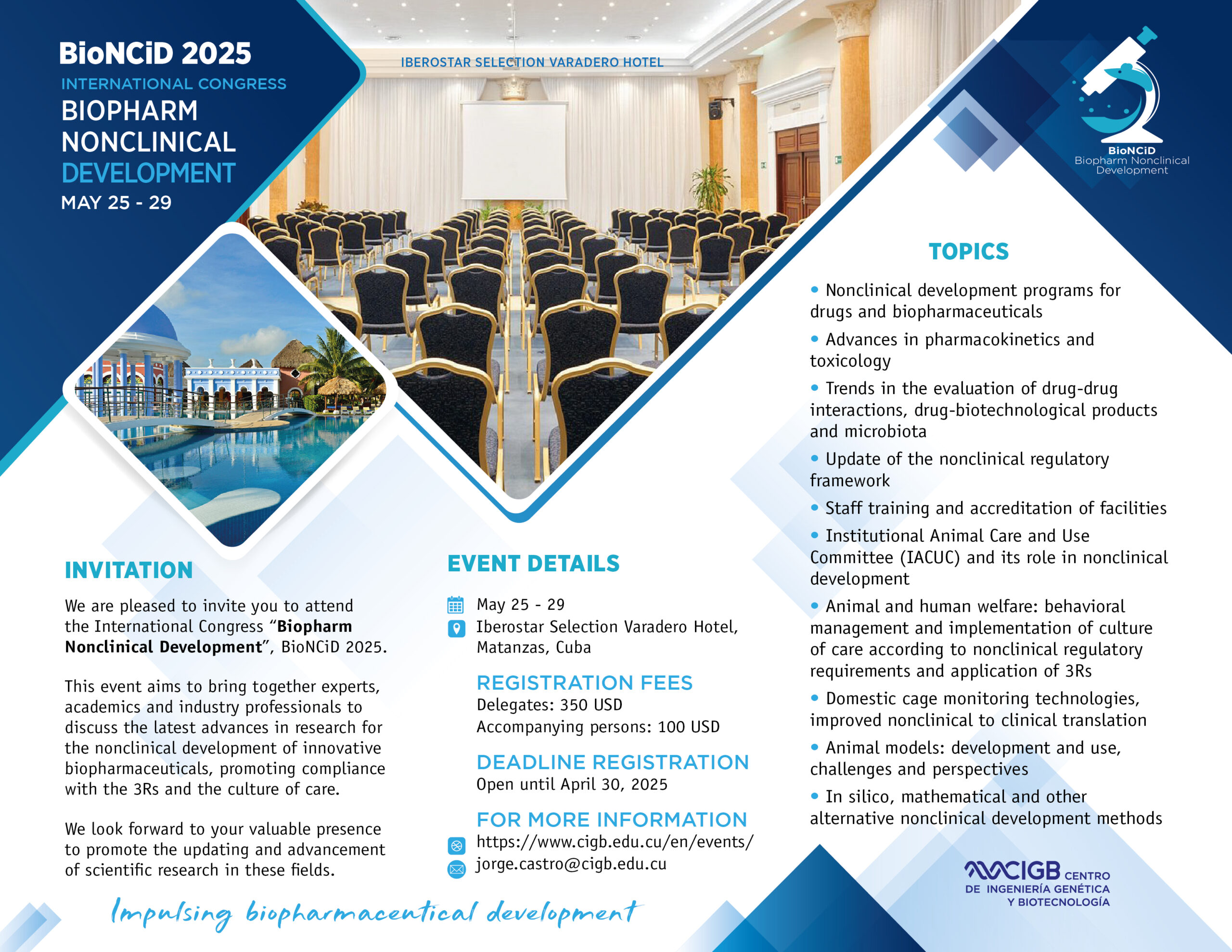
    We are pleased to extend a warm invitation to your institution/organization to participate in the upcoming International Congress “Biopharm Nonclinical Development” (BioNCiD 2025), organized by the Center for Genetic Engineering and Biotechnology (CIGB), Havana, Cuba. Your participation would be of great importance to us.

    Event Details:
    📅 Date: May 25–29, 2025
    📍 Venue: Iberostar Selection Hotel, Varadero, Cuba

    About the Congress

    Nonclinical Development is a vital phase in the process of obtaining pharmaceutical and biotechnological products. BioNCiD 2025 aims to:

    • Update the scientific community on the latest advancements in nonclinical development.

    • Promote compliance with the 3 Rs (Replacement, Reduction, and Refinement) and the Culture of Care.

    • Encourage scientific and regulatory progress in the nonclinical evaluation of biotech and pharmaceutical products.

    • Facilitate networking and exchange among leading international academic and industry experts.

    Main Topics

    1. Nonclinical Development Programs of Drug and Biotechnological Products

    • Trends in Pharmacokinetic and Toxicology Development

    • Drug-Drug Interactions: Especially between drugs/biologics and microbiota

    • Updates in the Nonclinical Regulatory Framework

    2. Animal and Personal Welfare

    • Staff Training and Facility Accreditation

    • The Role of IACUC in Nonclinical Development

    • Animal Welfare, Behavior Management, and Culture of Care in Regulatory Contexts

    • Compassion Fatigue and Human-Animal Interaction

    • Home Cage Monitoring Technologies and Improved Translational Outcomes

    3. Alternative Methods or Modeling to Animal Experimentation

    • Development and Use of Novel and Traditional Animal Models, including Genetically Engineered Animals

    • Animal Models in Emerging Diseases

    • Monitoring and Utilization of Spontaneous Animal Models

    Should you require further information, please contact:
    bioncid@cigb.edu.cu

    If you are unable to attend, we kindly ask that you forward this information to colleagues who may be interested.

    We look forward to welcoming you at BioNCiD 2025!

    Warm regards,
    The Organizing Committee
    Center for Genetic Engineering and Biotechnology (CIGB), Havana, Cuba