




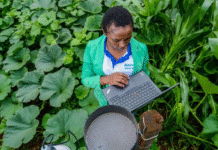
Illustrative Image: Dr. Nathaniel Bolujoko: Advancing Water Safety Through Groundbreaking Research on Organic Contaminants in Africa
Image Source & Credit: The Guardian
Ownership and Usage Policy
In an era where environmental degradation poses mounting challenges to water safety and public health, one scientist stands at the forefront of sustainable solutions: Dr. Nathaniel Bolujoko, an analytical chemist and environmental scientist whose groundbreaking work is transforming the way we detect, analyze, and address organic contaminants in water systems.
Dr. Bolujoko’s mission is both urgent and innovative—he is redefining how nations, especially in sub-Saharan Africa, can develop effective, science-based policies for sustainable water resource management. At the heart of his work lies a deep commitment to environmental protection and a future where clean water is not a luxury but a fundamental human right.
Advancing Water Safety through Analytical Innovation
Dr. Bolujoko is leading the charge in developing and validating cutting-edge analytical methods to detect trace levels of organic contaminants in surface and groundwater systems. These pollutants—which include pharmaceuticals, personal care products, antibiotics, and endocrine-disrupting compounds—are increasingly found in the environment due to expanding urbanization, agriculture, and industrial discharge.
His methods go beyond traditional approaches by offering heightened sensitivity and affordability, which is critical for developing countries where resources and technical capacities may be limited. These analytical tools are designed not only to identify the presence of contaminants but also to understand their persistence, mobility, and biological effects in ecosystems.
From Fieldwork to Policy: Building a Knowledge-Driven Future
Much of Dr. Bolujoko’s influence stems from his rigorous fieldwork across Nigeria, where he has analyzed the extent of organic pollution in both rural and urban water systems. He has also investigated the impact of nutrient recovery processes—such as those used in swine wastewater treatment—on the retention of harmful organic compounds.
This research is not conducted in a vacuum. It is designed to inform actionable policies and inspire effective regulatory frameworks. As he explains:
“We cannot control what we do not know. Our studies revealed the significant presence of organic contaminants like antibiotics and parabens in local water systems. Recognizing this is the first step toward protecting public health and guiding policy.”
His research has exposed how improperly treated industrial waste, coupled with insufficient regulatory enforcement, exacerbates environmental contamination. These revelations have become crucial in sparking dialogues among scientists, policymakers, and industries on the need for cleaner practices and tougher environmental protection laws.
Health Implications and the Need for Change
Organic contaminants, although often present at low concentrations, have profound effects on human health. Dr. Bolujoko has drawn attention to growing evidence linking these pollutants to reproductive issues, cancers, neurological dysfunctions, and other chronic health problems.
“Even trace levels of pharmaceutical compounds in water can disrupt human metabolism,” Bolujoko warns. “Their ubiquity in the environment, largely from household use, medical waste, and livestock operations, poses silent but serious health threats.”
To counteract these risks, he emphasizes the need for a two-pronged approach: strong legislative action from governments and responsible practices from industries. While enacting environmental laws is important, enforcement remains the challenge.
“Many resist change, especially when it affects business practices. But change is non-negotiable when it comes to safeguarding our health,” he asserts.
Industry Accountability and Innovation
Dr. Bolujoko calls for industries to take a proactive stance in reducing their environmental footprint by investing in cost-effective and sustainable waste treatment technologies. This includes the development of affordable adsorbents and other filtration techniques capable of capturing and neutralizing organic pollutants before they enter natural water bodies.
By collaborating with research institutions, industries can co-create solutions that are both economically viable and environmentally sound. This shift not only benefits communities but also strengthens corporate social responsibility and long-term resilience in the face of environmental regulation.
Recognitions and Scholarly Contributions
Dr. Bolujoko’s work has garnered national and international recognition. He has received several prestigious awards, including:
-
ASABE Presentation Excellence Award
-
Faculty Council for Gender Equity Student Research Award
-
OSU President’s Celebration of Leadership
-
Robberson Summer Dissertation Fellowship
-
OSU Foundation Distinguished Graduate Fellowship
His scholarly contributions are equally impressive. He has co-authored influential papers such as:
-
“The Fate of Antibiotics During Phosphate Recovery Processes”
-
“Occurrence Profiling, Risk Assessment, and Correlations of Antimicrobials in Surface and Groundwater Systems in Southwest Nigeria”
-
“Prevalence and Health Risk Evaluations of Mycotoxins in Drinking Water Sources in Nigeria”
These works offer invaluable insights into the behavior of organic contaminants and provide evidence-based solutions for their detection and mitigation.
A Leader in Environmental Stewardship
Beyond academia, Dr. Bolujoko maintains professional affiliations with key scientific organizations, including the Association of Environmental Engineering and Science Professors (AEESP), the American Society of Agricultural and Biological Engineers (ASABE), and the American Chemical Society (ACS).
Through these networks, he continues to influence the global conversation on environmental research, particularly around water pollution and pharmaceutical residue analysis.
Conclusion
Nathaniel Bolujoko embodies the intersection of science, policy, and societal impact. His work is not merely academic—it is a clarion call to action for communities, governments, and industries to take environmental stewardship seriously. By pushing the boundaries of analytical chemistry and championing sustainable water management, he is not only decoding the complex nature of organic contaminants but also laying the groundwork for a healthier, cleaner future.










 The African Research (AR) Index is a comprehensive scholarly directory and database focused explicitly on journal publishers that publish and disseminate African research.