


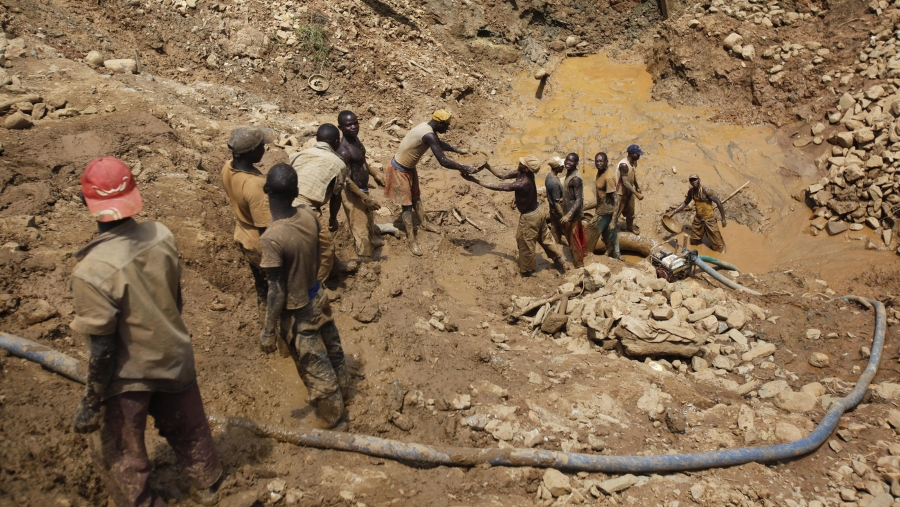
A recent study by Balyaminu, J. A. (2025) titled “The State of Cobalt Mining Laws: Implications for the Future of Democratic Republic of Congo (DRC) and Zambia Cobalt Mining Prospects“. published in Resources Policy by scienceDirect, reveals that cobalt mining laws in DRC and Zambia are biased, poorly enforced, and exclusionary, fueling inequality, exploitation, and conflict.
The study provides a critical examination of the legal, economic, and social dimensions of cobalt mining in two of Africa’s most resource-rich nations. Cobalt, a mineral essential for electric vehicle batteries and consumer electronics, has positioned the DRC and Zambia at the center of global energy transition debates. The DRC produces nearly 70% of the world’s cobalt, while Zambia contributes about 9%. Despite this mineral abundance, both countries continue to grapple with poverty, weak infrastructure, and fragile governance systems, raising urgent questions about whether cobalt can truly serve as a driver of sustainable development.
“
Cobalt mining laws in DRC and Zambia are biased, poorly enforced, exclusionary, fueling inequality, exploitation, and conflict.– Balyaminu, J. A. 2025
The study investigates how existing mining laws in these nations influence cobalt operations and how they affect key stakeholders, including governments, foreign mining companies, local communities, and artisanal miners. It highlights that current legal frameworks are fragmented, poorly understood, and often exclusionary. In practice, mining laws tend to favor state authorities and multinational corporations while sidelining citizens and small-scale miners. Limited stakeholder participation in shaping legislation fuels distrust, conflict, and social unrest, while compliance with labor and environmental protections remains inconsistent.
Tracing the legal history, the research shows how both nations’ mining laws evolved from colonial decrees to modern codes. In the DRC, mining regulations progressed from decrees of 1910, 1919, and 1937 to the adoption of the 2002 Mining Code and its 2018 revision. Zambia’s trajectory began with the 1912 Mining Proclamation, followed by the 1969 Mines and Minerals Act, and most recently, the 2024 Minerals Regulations Commission Act. However, neither country has developed cobalt-specific legislation, relying instead on broad mining laws that inadequately address the unique challenges of the cobalt sector.
The study ultimately reveals a troubling disconnect between the existing mining laws and the lived realities on the ground. By neglecting inclusive governance and failing to establish robust cobalt-focused legal frameworks, both the DRC and Zambia risk undermining the potential of this critical mineral. Rather than driving sustainable development, cobalt mining under the current conditions may deepen inequalities, exacerbate environmental degradation, and prolong social tensions unless reforms are undertaken to create transparent, participatory, and enforceable legal systems..
How the Study was Conducted
The study employed a qualitative, cross-sectional investigative approach to capture diverse perspectives on cobalt mining legislation in the Democratic Republic of Congo (DRC) and Zambia. Data collection relied primarily on semi-structured interviews, which balanced flexibility with consistency across participants, complemented by focus group discussions that encouraged dialogue and exchange among stakeholders.
In total, 43 stakeholders participated in the research, including employees from 13 foreign and 10 local mining companies, artisanal and small-scale mining (ASM) leaders, large-scale mining (LSM) leaders, government officials, university scholars, and civil society representatives. To ensure global insight, interviews were conducted not only in the DRC and Zambia but also in the United Kingdom, Canada, Belgium, the Netherlands, and the United States.
Between September and December 2022, 20 expert interviews were carried out, with each employee interview lasting between 25 and 40 minutes, averaging 35 minutes. All respondents were assured complete anonymity, and identical questions were posed to both expert and employee groups to maintain consistency. Gender representation was considered, with 11 female and 32 male participants contributing across various roles.
The selection of the DRC and Zambia was intentional: they are the only African countries with commercial cobalt mining, collectively responsible for over 70% of global cobalt production, and embody distinct colonial legacies—Francophone (DRC) and Anglophone (Zambia). Prior to data collection, a reconnaissance survey was undertaken to identify operational mining sites, ensuring that both formal and informal operations were represented.
Interview transcripts were systematically analyzed and coded using ATLAS.ti software, enabling the identification of recurring themes. Thematic areas explored included awareness of mining laws, compliance and enforcement, stakeholder inclusion in decision-making, and perceptions of the primary beneficiaries of mining regulations.
What the Author Found
The study found that a recurring theme was the limited awareness of mining laws among key stakeholders. Artisanal miners, community members, and even some company employees possessed little to no knowledge of the legal frameworks guiding their activities. While scholars and government officials demonstrated greater awareness, they too acknowledged difficulties in both interpreting and implementing the laws effectively. The author further found that existing legal frameworks are biased in favor of governments and foreign companies, often sidelining local communities and artisanal miners. Regulations are fragmented and riddled with overlapping formal and informal rules, creating confusion, legal loopholes, and opportunities for exploitation. Exclusion from decision-making was another major concern. Civil society groups and local communities are largely absent from policymaking processes. In Zambia, the government dominates legislative formulation, while in the DRC, a tripartite model involving government, companies, and select community leaders exists—but inclusivity remains limited.
The study also highlighted inconsistent compliance with mining laws. Large-scale mining companies often disregard environmental and labor protections, including those addressing child labor and pollution. Meanwhile, artisanal miners adhere to localized or informal rules, which frequently clash with national regulations. These governance weaknesses contribute to an unequal distribution of benefits. The primary beneficiaries of cobalt mining are governments, politicians, and international companies, while citizens and artisanal miners gain minimal returns. This reinforces the well-documented “resource curse,” where resource wealth fuels inequality rather than shared prosperity. The consequences extend beyond economics. Cobalt mining has intensified social and environmental problems, including child labor, environmental degradation, community-level conflicts, and political instability. Weak enforcement and poor governance amplify these issues.
Why is this important
Cobalt as the Engine of Green Tech
Cobalt powers lithium-ion batteries for electric vehicles, renewable energy storage, and electronics, placing it at the heart of the global energy transition.
DRC and Zambia as Strategic Gatekeepers
Producing over 70% of the world’s cobalt, these nations are critical to decarbonization efforts, yet poverty, corruption, and weak infrastructure limit local benefits.
Biased and Fragmented Legal Frameworks
Mining laws overwhelmingly favor governments and foreign companies, marginalizing communities and artisanal miners while enabling child labor, pollution, and social unrest.
Exclusion Fuels Conflict
Civil society, communities, and small-scale miners are largely excluded from governance, creating conditions for exploitation, inequality, and potential violence.
Urgent Need for Cobalt-Specific Reform
The absence of cobalt-focused legislation weakens oversight. Transparent, inclusive, and enforceable laws are essential to distribute benefits fairly.
Global Stakes in Cobalt Governance
Weak governance undermines ethical supply chains and climate goals. International partnerships and stronger oversight are needed to align cobalt mining with sustainability and justice.
What the Author Recommended
- The study emphasised revising mining laws to ensure meaningful participation of artisanal miners, local communities, and civil society. Policymaking should shift from elite-driven processes to transparent, participatory frameworks that balance power across stakeholders.
- The author advocates developing dedicated cobalt mining laws that go beyond generic mining codes. These should establish clear standards for traceability, labor rights, environmental protections, and community benefits to reduce ambiguity and strengthen accountability.
- Reform royalty structures in both countries to increase transparency in revenue collection and distribution. Strengthen enforcement mechanisms to combat child labor, corruption, environmental degradation, and illegal mining practices.
- Furthermore, the study argues for launching targeted education campaigns to improve legal literacy among miners, company employees, and communities. Better awareness of rights and responsibilities will reduce exploitation and enhance compliance with mining laws.
- In addition, forge strategic alliances—such as with BRICS nations—to enhance oversight, balance global mineral trade power, and promote sustainability. Establish tripartite governance models that include governments, mining companies, and community representatives to ensure shared accountability.
In conclusion, unless DRC and Zambia urgently reform their cobalt mining laws to be transparent, inclusive, and enforceable, the promise of cobalt as a driver of sustainable development will remain elusive, perpetuating inequality, exploitation, and environmental harm rather than delivering shared prosperity.










 The African Research (AR) Index is a comprehensive scholarly directory and database focused explicitly on journal publishers that publish and disseminate African research.