


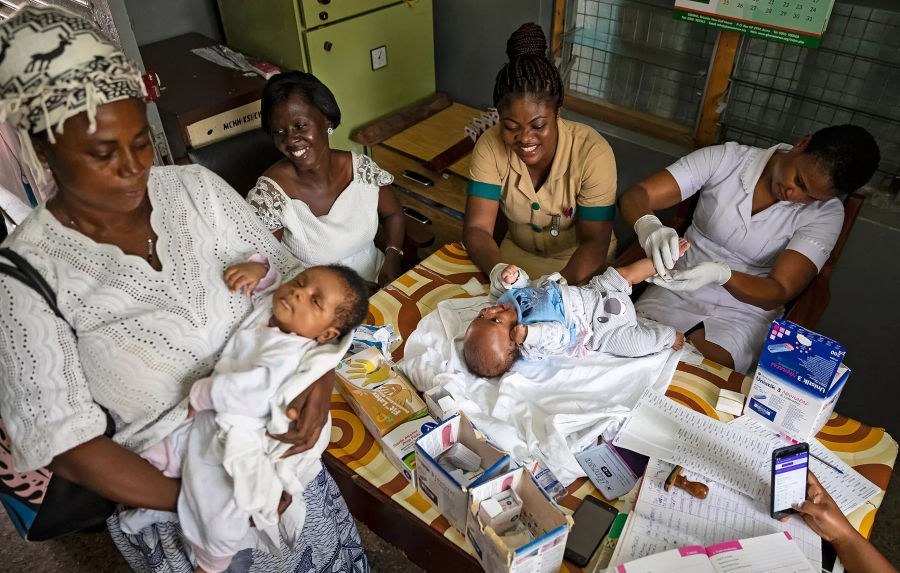
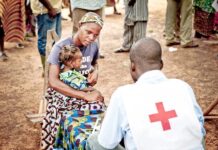
Illustrative Image: Building Capacity to Combat Pediatric Hematological Diseases in Sub-Saharan Africa: Addressing Anemia, Sickle Cell Disease, and Childhood Cancers
Image Source & Credit: Novartis
Ownership and Usage Policy
A recent study by Chirande et al. (2025) titled “Building capacity for pediatric hematological diseases in Sub-Saharan Africa” published in Blood Advances, reveal that pediatric hematological diseases in Sub-Saharan Africa—especially anemia, sickle cell disease, and hematological cancers—pose a massive but addressable health burden
“
Pediatric blood disorders in Sub-Saharan Africa cause high mortality but can be addressed through capacity building, improved diagnostics, and specialized training.
– Chirande et al. 2025
The study provides an in-depth examination of the significant burden, challenges, and ongoing initiatives related to childhood blood disorders across the region. It emphasizes that Sub-Saharan Africa (SSA) faces a pressing need to strengthen capacity in healthcare education and training, diagnostic infrastructure, and access to essential treatments and blood products. Hematological diseases represent a major public health concern in SSA. Anemia affects over 50% of children under five, primarily due to infections, nutritional deficiencies, and inherited disorders. Sickle Cell Disease (SCD) is particularly critical—SSA accounts for roughly 80% of global SCD births, with childhood mortality rates ranging from 40% to 90% before the age of five. Additionally, hematological cancers such as leukemia and lymphoma constitute nearly half of all pediatric cancers in the region, yet survival rates remain far lower than in high-income countries due to limited resources.
A key barrier to improving outcomes is the severe diagnostic gap: many conditions go undetected because of inadequate laboratory infrastructure, a shortage of trained specialists, and limited access to advanced testing. Importantly, the study situates these efforts within a broader epidemiological transition in SSA—from predominantly infectious diseases to a growing burden of noncommunicable diseases (NCDs), with hematological disorders playing a pivotal role. It calls for sustainable funding, strengthened health systems, and international partnerships to create lasting, systemic improvements in the prevention, diagnosis, and treatment of pediatric blood disorders.
How the Study was Conducted
The authors drew on multiple evidence sources and practical experiences. The authors reviewed literature and statistics on the major pediatric hematological diseases in Sub-Saharan Africa (SSA)—including anemia, sickle cell disease (SCD), and hematological cancers—and examined persistent health system challenges such as shortages in skilled healthcare workers, inadequate diagnostic infrastructure, and limited treatment access. By consolidating diverse sources of evidence and field-based experience, the article serves as a roadmap for targeted investments in pediatric hematology. It underscores that while it is neither lab-based nor field-based research, this synthesis of data, expertise, and programmatic insights offers a strategic guide for policymakers, funders, and health leaders committed to reducing the burden of pediatric blood disorders in SSA.
What the Authors Found
The study found that pediatric hematological diseases in Sub-Saharan Africa—especially anemia, sickle cell disease, and hematological cancers—pose a massive but addressable health burden, with extremely high mortality driven by severe shortages in diagnosis, treatment infrastructure, and trained specialists, yet promising capacity-building programs like the Global HOPE fellowship show that targeted, locally adapted training and collaboration can significantly improve care.
Why is this important
Heavy Disease Burden: Over half of children under five in SSA are anemic, and the region accounts for 80% of global sickle cell births. These largely preventable or treatable conditions cause high early-childhood mortality.
Critical Gaps in Care: Limited lab infrastructure, scarce trained specialists, and poor access to medicines result in late diagnosis and inadequate treatment. Survival for childhood leukemia or lymphoma is as low as 30% in SSA, compared to up to 90% in high-income countries.
Severe Workforce Shortages: Most countries fall far short of WHO’s target of one hematologist per 100,000 people; until 2018, Uganda had no trained pediatric hematologist.
Proven Capacity-Building Models: Initiatives like the Pediatric Hematology-Oncology fellowship in Uganda, online training, and multidisciplinary case conferences are successfully building local expertise and collaborative care systems.
Urgent Global Health Priority: With SSA shifting from infectious to noncommunicable diseases, pediatric hematological disorders are emerging as a major cause of child mortality and disability—making their control essential for health equity and the SDGs.
What the Authors Recommended
- Expand fellowship programs such as the Pediatric Hematology-Oncology training at Makerere University, supported by Texas Children’s Global HOPE, and integrate web-based and mobile platforms for lectures, mentorship, and clinical consultations from international experts.
- Invest in laboratory facilities and equipment to improve detection of sickle cell disease, glucose-6-phosphate dehydrogenase deficiency, and hematological cancers, while training pathologists and lab technicians for accurate and timely diagnoses.
- Guarantee a reliable supply of medicines, blood products, and supportive care services for anemia, bleeding disorders, and malignancies, supported by robust supply chain systems.
- Offer locally relevant training programs, create incentives to reduce brain drain, and foster multidisciplinary collaboration through regular case conferences involving all relevant healthcare professionals.
- Work with global institutions to secure funding, strengthen capacity-building programs, encourage knowledge exchange, and support collaborative research tailored to local health needs.
In conclusion, pediatric hematological diseases remain a significant but solvable challenge in Sub-Saharan Africa, demanding urgent and coordinated action. By investing in diagnostic infrastructure, expanding specialized training, ensuring reliable access to essential medicines and blood products, and fostering international collaboration, the region can drastically improve survival and quality of life for affected children. The evidence and strategies outlined by Chirande et al. (2025) make it clear that with sustained commitment and targeted interventions, the heavy burden of anemia, sickle cell disease, and childhood cancers can be reduced—transforming these conditions from life-threatening to manageable, and advancing health equity across the region.







 The African Research (AR) Index is a comprehensive scholarly directory and database focused explicitly on journal publishers that publish and disseminate African research.