Author: AR Managing Editor

  • Empowering Africa: A Strategic Call to Prioritize Science and Innovation for Sustainable Development

    Empowering Africa: A Strategic Call to Prioritize Science and Innovation for Sustainable Development

    With a population representing 15% of the global populace, the African continent bears a disproportionate 25% of the world’s disease burden. A complex interplay of health issues, including rising non-communicable diseases, persistent infectious diseases, and emerging infections, necessitates a radical shift in priorities. To foster sustainable economic development and mitigate the disease burden, African nations must make substantial investments in education, research, and scientific infrastructure.

    Challenges in Research and Development

    Africa’s research and development sector faces chronic underinvestment, stifling innovation. Contributing only 2% of the world’s research output and accounting for a mere 1.3% of research spending, the continent grapples with a 0.1% share of global patents. Over-reliance on Western funding models hampers the prioritization of issues most pertinent to Africans. This dependence also perpetuates inequitable decision-making and underrepresentation of African researchers on both local and global fronts.

    The Role of Scientific Knowledge

    Scientific knowledge is integral to economic development, health, and environmental sustainability. Despite a 2006 commitment by African Union members to allocate 1% of GDP to research and development, this goal remains unmet. The neglect of science can be indicative of governance failures, especially in nations with challenging political landscapes. African scientists must actively engage in politics and policy-making to ensure a scientific agenda takes center stage.

    Prioritizing Science in National Development

    Beyond health ministry budgets, research and development should be embedded as a pillar of national development and security. Advocacy for increased domestic funding by scientists is crucial to realizing long-term development aspirations. Once funding is secured, governments must invest in scientific infrastructure, creating an ecosystem conducive to innovation, discovery, and rapid market entry.

    Investing in Human Capital and Education

    To bridge the skills gap, Africa needs to invest in world-class education. Currently boasting 198 researchers per million people, the continent must strive for the world average, necessitating an additional million researchers with PhDs. Retaining talent and reversing the brain drain to Europe and the USA requires creating an environment where researchers have access to modern equipment, reliable utilities, ample funding, and collaboration with other talented individuals.

    Breaking Philanthropic Dependency

    The current model of philanthropic aid perpetuates Africa’s dependence on the Global North. To break free from this cycle, African governments need a clear and implementable strategy, leading decisions on fund utilization. Philanthropic organizations must align with Africa’s development goals, and African leaders must be transparent and accountable in managing financial assistance. The focus should be on creating an independent and resilient African health and economic system.

    Conclusion: Transforming Africa’s economic growth requires a paradigm shift towards strategic investments in science and innovation. By prioritizing research and development, fostering scientific infrastructure, investing in human capital, and breaking dependency on external aid, African nations can chart a course towards a future characterized by self-reliance, resilience, and sustained economic growth. Ifeyinwa Aniebo’s call for active involvement of scientists in shaping the continent’s destiny reflects the urgency and potential for transformative change.


  • Empowering Financial Inclusion: ADFI’s Human-Centered Design for Gender-Focused Digital Financial Solutions in Africa

    Empowering Financial Inclusion: ADFI’s Human-Centered Design for Gender-Focused Digital Financial Solutions in Africa

    In the quest to enhance financial inclusion and economic empowerment, the Africa Digital Financial Inclusion Facility (ADFI) has adopted innovative research approaches, particularly human-centered design, to understand and address barriers faced by marginalized groups, including women, youth, rural dwellers, and small-business owners. The focus is on creating digital financial solutions that are not only accessible and affordable but also culturally and socially relevant.

    Innovative Initiatives by Yello Digital Financial Services

    One notable initiative involves Yello Digital Financial Services Ltd, a fintech subsidiary of MTN Nigeria Communications Plc, which has developed gender-focused mobile money (MoMo) agent networks. These networks aim to empower women entrepreneurs by providing them with training on digital financial solutions, overcoming challenges posed by cultural and social norms. This initiative enables women like Judith Laokwali to better manage customer payments and improve their economic activities.

    Empowering Financial Inclusion: ADFI's Human-Centered Design for Gender-Focused Digital Financial Solutions in Africa

    Illustrative Image: Empowering Financial Inclusion: ADFI’s Human-Centered Design for Gender-Focused Digital Financial Solutions in Africa
    Image Source & Credit: African Development Bank Group
    Ownership and Usage Policy

    Human-Centered Design Approach

    Human-centered design research has played a pivotal role in shaping digital credit solutions offered by M-KOPA. By involving women in the design process, M-KOPA has tailored loan repayment options and facilitated access to digital credit using pay-as-you-go smartphone services as collateral. This approach has been piloted in Kenya, leading to increased women’s participation in a PAYG financial inclusion pathway.

    Similarly, Pula Advisors has utilized ADFI grants to conduct research and develop gender-centric microinsurance solutions for women smallholder farmers in Kenya, Nigeria, and Zambia. The research focuses on understanding social, cultural, and economic factors affecting women farmers’ access to microinsurance. The outcome is expected to be the creation of insurance products and services aligned with the specific needs of women farmers, ultimately closing the gender gap in microinsurance adoption.

    Innovative Initiatives by Yello Digital Financial Services:

    ADFI’s overarching strategy involves catalytic and strategic investments in digital financial solutions across three main pillars: digital infrastructure, policy and regulation, and products and innovation, with gender inclusion and capacity building as cross-cutting themes. By involving participants in the design process and addressing specific needs through research, ADFI aims to break down barriers to digital financial solutions’ growth and uptake, thereby accelerating financial inclusion and reducing gender disparities.

    Through initiatives like these, ADFI is not only empowering individuals like Judith Laokwali and women smallholder farmers but also contributing to the development of replicable and innovative human-centered design frameworks for digital financial services. The goal is to enable individuals to champion their own needs, actively participate in product design, and influence their communities on the benefits of digital financial solutions. This approach holds the promise of fostering sustainable economic growth and resilience among traditionally underserved populations.

  • Securing South Africa: Cybersecurity Challenges, Underfunding, and the Path to Robust Cyber Diplomacy

    Securing South Africa: Cybersecurity Challenges, Underfunding, and the Path to Robust Cyber Diplomacy

    A recent article by Devanny and Buchan highlights the cybersecurity challenges faced by South Africa, emphasizing the country’s vulnerability to ransomware attacks and its current inadequacies in cyber defense. Despite being the most internet-addicted nation globally, South Africa is grappling with the dark underbelly of the internet, particularly in the form of cyber threats.

    Cybersecurity is the practice of protecting systems, networks, and programs from digital attacks that aim to access, change, or destroy sensitive information, extort money, or interrupt normal business processes. Common categories of cybersecurity, such as network security, application security, information security, operational security, disaster recovery and business continuity, and end-user education.

    Cybersecurity Challenges and Underfunding

    South Africa, spending an average of 9.5 hours online per day, has become the eighth most targeted country globally for ransomware attacks, according to the South African Council for Scientific and Industrial Research. The nation’s cyber strategy is deemed underfunded, with the government lacking a clear stance in cyber governance debates, as outlined by researchers Joe Devanny and Russell Buchan from the Carnegie Endowment for International Peace. While South Africa introduced the Cybercrimes and Cybersecurity Bill in 2015 and established entities such as the military Cyber Command and the Computer Security Incident Response Team (CSIRT), the researchers argue that cybersecurity remains a low priority. The under-resourced Cyber Command, in particular, has faced challenges in developing sophisticated cyber capabilities due to deprioritization of defense expenditure.

    Geopolitical Ambiguity in Cyber Diplomacy

    The study sheds light on South Africa’s ambiguous geopolitical position in international cyber governance debates. Despite its historical commitment to promoting human rights and democracy, critics argue that the country’s foreign policy has lost its principled stance. In cyber governance discussions, South Africa has demonstrated a nuanced approach, aligning with both Western states and Russia. While participating in initiatives like the UN Group of Governmental Experts (GGE) and the Budapest Convention, it has also engaged in negotiations for a new cybercrime treaty, reflecting alignment with Russian initiatives. The Devanny and Buchan highlight the need for clarity in South Africa’s stance on regulating cyberspace, especially regarding whether existing international laws are deemed sufficient or if new legal initiatives should be developed.

    Recent Cyber Attacks

    Devanny and Buchan outline major cyber-attacks in South Africa, including incidents targeting City Power, Life Healthcare Group, Experian, Transnet, the Department of Justice and Constitutional Development, and the South African National Defence Force (SANDF). These attacks have caused disruptions to critical infrastructure, economic harm, and data breaches, underscoring the urgent need for a robust cybersecurity strategy.

    Conclusion

    Devanny and Buchan conclude by emphasizing that there is still an opportunity to shape South Africa’s cyber diplomacy. They urge the government to prioritize cybersecurity, invest in cyber capabilities, and take a clearer stance in global cyber governance discussions. The article underscores the importance of addressing underfunding issues and adopting stronger leadership in cybersecurity to safeguard the nation’s digital infrastructure and information.

  • Unlocking Africa’s Water Towers: Urgent Need for Global Recognition and Protection

    Unlocking Africa’s Water Towers: Urgent Need for Global Recognition and Protection

    Africa, home to 1.4 billion people, faces significant water stress with only 9% of the world’s freshwater resources. As the population is projected to reach close to 2.5 billion by 2050, the demand for limited freshwater will intensify. However, amidst the challenges, Africa possesses crucial “natural water towers” that serve as nature-based solutions to water and climate issues. This post sheds light on the importance of these water towers, the oversight they have faced, and the urgent need for their protection.

    The Significance of Natural Water Towers

    Natural water towers, like the Angolan Highlands Water Tower, play a pivotal role in sustaining ecosystems and human life downstream. The Angolan Highlands Water Tower, for example, feeds lakes and rivers across seven southern African countries, supporting food and water security, livelihoods, and millions of people. Additionally, it is the primary source of the Okavango Delta, a UNESCO World Heritage Site, and sustains a diverse range of wildlife, including the largest concentration of African elephants.

    The Global Recognition Gap

    While global attention has been directed towards water towers with a focus on ice and snow, Africa and Australia have been largely excluded from this analysis. The Water Tower Index, which ranked 78 water towers worldwide based on water storage and vulnerability, omitted Africa and Australia, leaving these regions out of the global concern spotlight.

    Challenges in Research and Recognition

    Africa’s limited research capacity, compared to regions like Australia, has exacerbated the oversight of its water towers. The lack of a continent-wide rivers and freshwater research institute has made it challenging to identify and study critical water systems. For instance, the Angolan Highlands Water Tower was only defined within academic literature last year, despite its significant hydrological and economic importance.

    The Africa Water Atlas, compiled by the UN Environment Programme in 2010, offers a limited perspective by categorizing water towers based on elevation, precipitation, and contributions to regions beyond their boundaries. This simplistic definition fails to capture the diverse ecosystems and freshwater environments across the African continent, leaving out several critical water towers.

    Unlocking Africa's Water Towers: Urgent Need for Global Recognition and Protection

    Illustrative Image: Unlocking Africa’s Water Towers: Urgent Need for Global Recognition and Protection
    Image Source & Credit: Kostadin Luchansky/National Geographic Okavango Wilderness Project.
    Ownership and Usage Policy

    The Way Forward

    Collaborative initiatives involving local experts, international organizations, and governments have begun addressing these gaps. However, increased funding, technological advancements, and interdisciplinary research are crucial for the sustainable management and conservation of Africa’s diverse freshwater resources. Future research must recognize the continent’s diversity and move beyond broad-based definitions to ensure the protection of Africa’s Water Towers.

    Conclusion: In the coming decade, climate change poses a threat to drinking water, agriculture, industry, and ecosystems. Africa’s water towers, supporting the world’s fastest-growing population, demand urgent attention for their scientific, cultural, and ecological significance. It is time to challenge traditional definitions and elevate Africa’s water towers to the global forefront, ensuring the resources they provide and the communities that depend on them receive the protection they deserve.

  • Revolutionizing Blood Cancer Analysis and Malaria Treatment: A Breakthrough Study Introduces the Gompertz-Lindley Distribution for Unprecedented Accuracy

    Revolutionizing Blood Cancer Analysis and Malaria Treatment: A Breakthrough Study Introduces the Gompertz-Lindley Distribution for Unprecedented Accuracy

    A recent article by Obulezi, et al., (2024) titled “A New Distribution for Modeling both Blood Cancer Data and Median Effective Dose (ED50) of Artemether-Lumefantrine against P. falciparum” published in Earthline Journal of Mathematical Sciences shows that the Gompertz-Makeham Weibull Distribution (GMWD) gave the lowest Akaike information criterion (AIC) and the highest coefficient of determination (R2), indicating a better fit and accuracy.

    This article delves into an innovative statistical framework for analyzing both blood cancer data and estimating the median effective dose (ED50) of artemether-lumefantrine, a crucial combination drug for treating malaria. The study introduces the Weibull-Exponential distribution to model the survival times of patients with acute myeloid leukemia (AML) and to estimate the ED50 of artemether-lumefantrine, comparing these outcomes with other established distributions.

    The Gompertz-Lindley distribution outperforms standard models, offering flexibility and accuracy for modeling leukemia data and Artemether-Lumefantrine ED50– Obulezi, et al., 2023

    Blood Cancer Data Analysis
    The authors employ the Weibull-Exponential distribution to effectively fit the survival times of patients diagnosed with acute myeloid leukemia (AML). This distribution is chosen for its ability to capture the intricate nuances of AML patient survival, and the results are meticulously compared with those obtained using other conventional distributions. The use of this distribution enables a more comprehensive understanding of the survival patterns in AML cases, shedding light on potential advancements in prognostic modeling.

    Median Effective Dose (ED50) Estimation
    In the realm of malaria treatment, the article focuses on estimating the median effective dose (ED50) of artemether-lumefantrine. The Weibull-Exponential distribution is employed for this task, allowing the authors to derive a more accurate representation of the drug’s potency. The obtained ED50 estimates are then rigorously compared with those derived from alternative distribution models. This analytical approach not only enhances the precision of drug dosage determination but also contributes valuable insights into the drug’s efficacy against P. falciparum.

    Weibull-Exponential Distribution
    Central to this research is the introduction of a novel distribution, the Weibull-Exponential distribution. This distribution is conceptualized as a mixture of Weibull and Exponential distributions, and the article provides a detailed exploration of its properties and estimation methods. By proposing this new distribution, the authors aim to address the limitations of existing models, offering a more flexible and accurate tool for analyzing survival data and drug efficacy.

    How the Study was Conducted

    The study utilized data from blood cancer patients sourced from the National Cancer Institute and the World Health Organization. Additionally, information on the median effective dose (ED50) of artemether-lumefantrine against P. falciparum was obtained from the WorldWide Antimalarial Resistance Network. For data analysis, the authors employed the R software to model various probability distributions, including the Weibull, log-normal, gamma, and generalized gamma distributions. Introducing a novel distribution termed the generalized log-normal gamma (GLNG), which combines aspects of both log-normal and gamma distributions. In the process of model comparison, the authors assessed the performance of the different distributions using criteria such as the Akaike information criterion (AIC), Bayesian information criterion (BIC), Kolmogorov-Smirnov (KS) test, and root mean square error (RMSE). Results indicated that the GLNG distribution exhibited the best fit and the lowest error for both the blood cancer and ED50 data.

    What the Authors Found

    The authors found that a new distribution called the Gompertz-Lindley distribution is proposed for modeling data on Leukemia and median effective dose (ED50) of Artemether-Lumefantrine against Plasmodium falciparum. The authors also found that a new distribution has three parameters that make it both flexible and tractable. It belongs to the Gompertz-G family of distributions, which can capture various shapes of hazard functions. The study shows that the Gompertz-Lindley distribution is applied to two real data sets and compared with other standard distributions. The authors show that the new distribution fits the data better than the competing distributions, based on goodness-of-fit criteria and model performance measures.

    Why is this Important

    Blood cancer data: The new distribution can fit the data on leukemia better than some existing distributions, such as the Weibull, gamma, and log-normal distributions. This can help researchers and clinicians to understand the characteristics and patterns of blood cancer and improve the diagnosis and treatment of leukemia patients.
    Median effective dose of artemether-lumefantrine: The new distribution can also estimate the median effective dose (ED50) of artemether-lumefantrine, which is a widely used artemisinin-based combination therapy (ACT) for treating uncomplicated falciparum malaria. This can help optimize the dosing schedule and efficacy of this antimalarial drug and reduce the risk of resistance and adverse effects.
    Novelty and applicability: The new distribution is novel because it is derived from the generalized exponential distribution, which has not been used before for modeling blood cancer data and median effective dose of artemether-lumefantrine. The new distribution is also applicable to other types of data that exhibit similar properties, such as skewedness, heavy tails, and bimodality.

    In conclusion, the study by Obulezi et al. introduces a groundbreaking statistical framework employing the Gompertz-Lindley distribution for modeling blood cancer data, particularly focusing on acute myeloid leukemia (AML), and estimating the median effective dose (ED50) of artemether-lumefantrine in the context of malaria treatment. The newly proposed distribution demonstrates superior fitting capabilities compared to established models, such as Weibull, gamma, and log-normal distributions, as evidenced by rigorous statistical criteria and model performance measures. This research holds significant implications for advancing our understanding of blood cancer characteristics, improving diagnosis and treatment strategies for leukemia patients, optimizing antimalarial drug dosing schedules, and contributing to the broader field of statistical modeling with the innovative introduction of the Gompertz-Lindley distribution. The study’s findings underscore the importance of embracing novel statistical approaches for enhanced accuracy and flexibility in analyzing diverse datasets, ultimately paving the way for advancements in medical research and clinical practice.

  • Understanding Listeriosis Challenges in Africa: Risks, Transmission Dynamics, and Recommendations for Enhanced Food Safety

    Understanding Listeriosis Challenges in Africa: Risks, Transmission Dynamics, and Recommendations for Enhanced Food Safety

    A recent article by Sibanda, et al., (2023) titled “Listeria monocytogenes at the food–human interface: A review of risk factors influencing transmission and consumer exposure in Africa” published in International Journal of Food Science & Technology, by John Wiley & Sons Ltd shows that Listeriosis is a foodborne disease that is not well understood or prioritized in Africa, despite causing the biggest outbreak in 2018 in South Africa.

    This article delves into the challenges posed by listeriosis, a bacterial foodborne disease, in the African context. It explores various aspects, including the incidence and mortality rates in Africa compared to other global regions, potential reasons behind the historically low reported cases, and the emergence of recent outbreaks, particularly in South Africa.

    The article reveals that Listeriosis in Africa is insufficiently understood, posing a significant public health risk, requiring urgent interventions and awareness.– Sibanda et al., 2023

    Listeriosis in Africa
    Listeriosis is a serious bacterial foodborne disease caused by Listeria monocytogenes. The piece critically examines the incidence and mortality rates of listeriosis in Africa, drawing comparisons with other parts of the world. It sheds light on the factors contributing to the comparatively low reported cases in the past, while also addressing the recent upsurge in South Africa and the factors associated with this outbreak.

    African Food Value Chains
    African food value chains are characterized by a diverse range of products, an informal sector, environmental conditions, and a lack of food safety regulations and standards. This article provides insights into the characteristics and challenges of agri-food value chains in Africa. It highlights key factors such as product diversity, the prevalence of informal sectors, environmental conditions, and the absence of robust food safety regulations and standards.

    Transmission Dynamics of L. monocytogenes
    The transmission dynamics of L. monocytogenes in African food value chains are influenced by various factors, such as animal reservoirs, soil and water contamination, processing and storage practices, and consumer behavior. An in-depth analysis is presented on the sources, pathways, and influencing factors related to the transmission of L. monocytogenes in African food value chains.

    How the Study was Conducted

    The authors employed a systematic review of the existing literature on listeriosis in Africa by utilizing databases such as PubMed, Scopus, and Web of Science. The search encompassed articles published between 2000 and 2020, employing specific keywords and adhering to predetermined inclusion and exclusion criteria. Extracted from the selected articles were data related to the epidemiology, risk factors, and control measures associated with listeriosis in the African context. The authors employed a descriptive analysis approach using Microsoft Excel and R software. The authors computed various metrics, including the incidence, mortality, and case fatality rates of listeriosis in Africa. Additionally, they examined the distribution of cases based on factors such as age, gender, and country. The authors also delved into identifying the primary sources and vehicles responsible for the transmission of Listeria monocytogenes. Furthermore, the study explored the challenges and opportunities linked to the prevention and control of listeriosis in the African region.

    What the Authors Found

    The authors found that Listeriosis is a foodborne disease that is not well understood or prioritized in Africa, despite causing the biggest outbreak in 2018 in South Africa. The authors also found that African food value chains (FVCs) have become longer and more informal, with increased consumption of processed ready-to-eat (RTE) foods that are associated with higher risk of L. monocytogenes exposure.

    Why is this Important

    Public health risk: L. monocytogenes is a foodborne pathogen that can cause severe infections, especially in vulnerable groups such as pregnant women, elderly, and immunocompromised individuals. The study found that L. monocytogenes was prevalent in various ready-to-eat foods and pasteurized milk samples from different African countries, indicating a potential public health risk for consumers.

    Food safety management: The study revealed that L. monocytogenes contamination was influenced by various factors along the food chain, such as raw materials, processing environments, hygiene practices, storage conditions, and distribution channels. The study suggested that continuous monitoring, stringent surveillance, and source tracking are crucial to ensure food safety and prevent outbreaks of listeriosis.

    Climate change adaptation: The study also discussed how climate change could affect the occurrence and persistence of L. monocytogenes in food products and environments. The study highlighted the need for adaptation strategies to cope with the challenges posed by climate change, such as improving infrastructure, enhancing cold chain, implementing hazard analysis and critical control points, and raising awareness among stakeholders.

    What the Authors Recommend

    • The authors suggest that African countries should implement systems for the detection and reporting of listeriosis cases: This could be done through laboratory diagnosis of meningitis and maternal infections, and enhanced by genomic surveillance techniques like whole-genome sequencing.
    • The study recommends that African countries should develop domestic standards and regulations for L. monocytogenes in high-risk RTE foods: This would provide a layer of consumer protection and reflect the risk profiles of African RTE products and populations.
    • In addition, the authors argue that African countries should conduct risk profiling of African RTE foods: This would help to understand the growth potential of L. monocytogenes in the commonly used temperature-time conditions of storage and consumption.
    • Furthermore, the study posits that African countries should provide consumer risk education and dietary guidelines for listeriosis-susceptible subpopulations: This would help to raise awareness and prevent exposure to the pathogen.

    In conclusion, this comprehensive review sheds light on the critical challenges posed by Listeriosis in the African context. Despite being a significant public health risk, the disease remains poorly understood and underprioritized in the region. The study emphasizes the intricate dynamics within African food value chains, revealing increased vulnerability due to longer and more informal chains, coupled with the rising consumption of ready-to-eat foods. The authors advocate for urgent actions, proposing the implementation of robust detection and reporting systems, the development of domestic standards, risk profiling of foods, and the importance of consumer education. Addressing these recommendations is crucial not only for safeguarding public health but also for building resilient food systems in the face of emerging threats like Listeria monocytogenes.

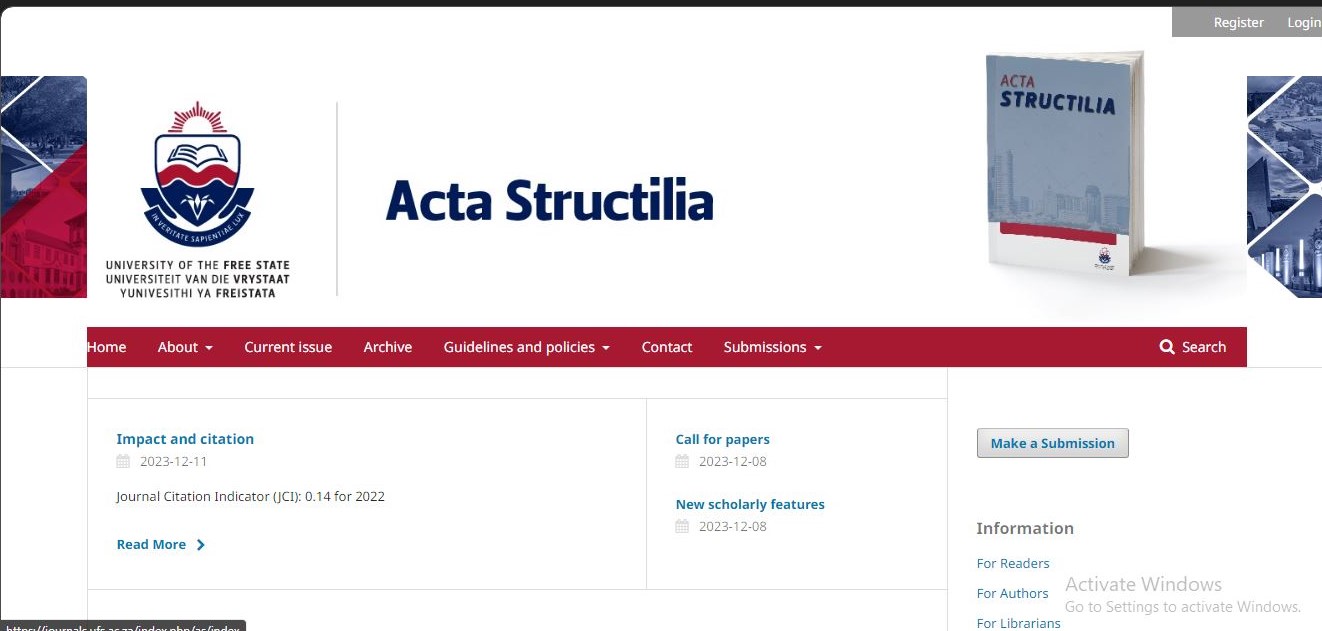
  • Acta Structilia: Elevating African Research Globally through AR Index Inclusion

    Acta Structilia: Elevating African Research Globally through AR Index Inclusion

    The African Research (AR) Index stands as a beacon for scholars and researchers seeking a comprehensive directory of journals dedicated to disseminating African research. Acta Structilia, an accredited South African journal, proudly holds a coveted spot in the AR Index, fostering the global communication and accessibility of African research. In this blog article, we delve into the significance of Acta Structilia’s inclusion in the AR Index, exploring the journal’s mission, details, and the impact it has on promoting African scholarly work.

    Acta Structilia in the AR Index

    Acta Structilia, affiliated with the University of the Free State, is a distinguished journal focusing on research articles in the physical and development sciences. The journal, listed as “ACTIVE” in the AR Index as of January 2024, holds the AR Index Number 554955. This recognition reflects the commitment of Acta Structilia to scholarly excellence and its alignment with the goal of the AR Index to enhance the accessibility, availability, visibility, and citation of indexed journals.

    Journal Details

    Acta Structilia, founded in 1993, is an annual publication that welcomes research contributions in diverse fields such as architecture, urban and regional planning, quantity surveying, construction management, project management, building economy, building engineering, and property development. The journal’s interdisciplinary nature, double-blinded peer review process, and adherence to a rigorous review duration of over six months per article ensure the publication of high-quality, well-vetted research.

    Key Information

    • Journal Publisher: University of the Free State
    • ISSN (Online): 2415-0487 | ISSN (Print): 1023-0564
    • Frequency: Annually | Review Type: Double Blinded
    • Open Access: Yes (CC Attribution 4.0 International License)

    Journal Officers

    • Editor: Prof. Kahilu Kajimo-Shakantu
    • Managing Editor: Ms Alna Beukes

    Submission Guidelines

    Acta Structilia maintains a user-friendly submission process, encouraging authors to submit articles in English within the desired length of 4,000 to 12,000 words (excluding references). The journal’s formatting requirements ensure consistency, with a focus on MS Word, Times New Roman font, and single-line spacing.

    Publication Ethics

    The journal places a strong emphasis on ethical publishing practices, adhering to the guidelines set by the Committee on Publication Ethics (COPE). The editorial team is committed to upholding the highest standards, ensuring that published content is ethically sound and devoid of any misconduct.

    Promoting Inclusivity and Diversity

    Acta Structilia’s inclusion in the AR Index is a testament to the journal’s role in promoting cultural diversity, equitable representation, and the advancement of quality scholarly work. By facilitating the global dissemination of African research, Acta Structilia contributes to a more inclusive scholarly discourse and encourages collaborations between African researchers worldwide.

    Conclusion: Acta Structilia’s presence in the AR Index signifies a commitment to advancing African research on a global scale. The journal’s dedication to high ethical standards, diverse interdisciplinary content, and its role in bridging knowledge gaps make it a valuable asset in the academic landscape. As African researchers continue to make significant contributions, Acta Structilia and similar journals play a crucial role in ensuring the visibility and impact of their work on the world stage.

    Visit the journal in AR index: Acta Structilia (ufs.ac.za)

  • Unlocking Academic Success: Unveiling Gender Disparities in High School Mathematics Performance in Assin North, Ghana

    Unlocking Academic Success: Unveiling Gender Disparities in High School Mathematics Performance in Assin North, Ghana

    A recent article by Amoah, E. (2024) titled “Gender and other Significant Factors Causing Disparities in Senior High School Students’ Mathematics Performance” published in Turkish Journal of Computer and Mathematics Education shows that male students scored significantly higher than female students in mathematics, with a mean difference of 7.0.

    The study reveals a significant gender gap in mathematics performance among senior high school students, emphasizing key factors and recommendations. – Amoah, E. 2024

    This study delves into the factors impacting the academic performance of senior high school students in mathematics, with a specific focus on gender discrepancies. The author’s objective is to provide a comprehensive understanding of the reasons behind the gender gap in mathematics achievement within the Assin North District of Ghana. Employing a cross-sectional survey design, the study incorporates a mathematics achievement test and a questionnaire to gather and analyze data from 500 final-year students spanning three public senior high schools. The author presents the study’s outcomes, indicating that male students demonstrated higher proficiency in mathematics compared to their female counterparts. Additionally, the research identifies key influential factors such as self-assurance, self-regard, teacher expertise, teaching methods, and the school environment. Furthermore, the study explores the implications of these findings for mathematics education and puts forth recommendations aimed at enhancing teaching and learning practices.

    How the Study was Conducted

    The author employed a mathematics achievement test and questionnaires to gather data from 500 final-year students across three public senior high schools in the Assin North District, Ghana. The test was scored out of 100 and the questionnaires measured various student-related, teacher-related, and school-related factors that may affect mathematics performance. The author used descriptive statistics to summarize the demographics and test score distribution of the students and to compare the mean scores of male and female students. In addition, the author also employed an independent-samples t-test to determine if the gender difference in mathematics performance was statistically significant. A probit regression analysis was also employed to evaluate the effect of various factors on students’ success or failure in mathematics.

    What the Authors Found

    The author found that male students scored significantly higher than female students in mathematics, with a mean difference of 7.0. This result is consistent with previous research that has identified gender disparities in mathematics achievement. The author also found that self-assurance and self-regard were significant predictors of mathematics performance. Positive self-assurance was associated with better performance, while negative self-regard was linked to lower performance. Socioeconomic background did not significantly affect performance. In addition, the author posits that school environment and teacher motivation were significant factors affecting mathematics performance. A negative school environment and lack of teacher motivation were associated with lower performance. Teacher subject matter knowledge, methods of teaching, and pupil interaction also significantly affected performance.

    Why is this Important

    Gender-responsive pedagogies: The study advocates for the implementation of gender-responsive pedagogies by senior high school mathematics teachers, to address the gender gap in mathematics performance. Gender-responsive pedagogies are teaching approaches that recognize and respond to the specific needs and interests of both male and female students and aim to promote gender equality and equity in education.
    Self-assurance and self-regard interventions: The study identifies self-assurance and self-regard as significant student-related factors influencing mathematics performance. Positive self-assurance and self-regard are associated with better performance, while negative self-assurance and self-regard are linked to lower performance.

    What the Authors Recommend

    • The study suggests that interventions to enhance students’ self-assurance and self-regard, such as providing positive feedback, encouraging self-reflection, and fostering a growth mindset, may improve their mathematics achievement.
    • The study recommends the formation of professional learning communities at the school level, to facilitate ongoing improvement in teachers’ knowledge, motivation, and instructional styles. Professional learning communities are groups of educators who collaborate regularly to share best practices, reflect on their practice, and engage in collective inquiry and learning.
    • The authors emphasize the crucial role of teachers in enhancing students’ mathematics achievement, and suggest that teachers need to be well-trained, motivated, and supported to use effective pedagogical strategies and assessment methods.
    • The authors point out the influence of school-related factors such as infrastructure, facilities, materials, and climate on students’ mathematics performance, and recommend that schools ensure that students have access to sufficient and quality resources and a safe and supportive learning atmosphere.

    In conclusion, this comprehensive study sheds light on the intricacies of gender disparities in mathematics performance among senior high school students in the Assin North District of Ghana. The findings underscore the significance of addressing not only academic factors but also the influence of self-assurance, self-regard, teacher expertise, teaching methods, and the overall school environment. Recognizing the identified gender gap, the study emphasizes the importance of gender-responsive pedagogies and interventions to foster positive self-assurance and self-regard. Furthermore, it highlights the pivotal role of teachers and recommends ongoing professional development through learning communities. By implementing these recommendations, schools can create an inclusive and supportive atmosphere, ensuring that both male and female students have equal opportunities to excel in mathematics, ultimately contributing to a more equitable and enriching educational experience.

  • Unlocking Quantum Potential: A Comprehensive Meta-Analysis on Variational Quantum Algorithms (VQAs) and Their Versatile Applications Across Industries

    Unlocking Quantum Potential: A Comprehensive Meta-Analysis on Variational Quantum Algorithms (VQAs) and Their Versatile Applications Across Industries

    A recent article by Mvita et al., (2023) titled “Meta-Analysis and Systematic Literature Review on Applications of Variational Quantum Algorithms (VQAs)” published in Industrial Engineering and Operations Management Society, shows that VQAs prove versatile in quantum tasks but face challenges like barren plateaus, hardware noise, limiting NISQ device performance.

    This article explores the multifaceted applications of variational quantum algorithms (VQAs) across diverse fields such as chemistry, optimization, and machine learning. Employing a systematic literature review and a meta-regression analysis of 192 publications on VQAs, the study aims to furnish a thorough overview of their current state, future prospects, challenges, and opportunities. Additionally, the article proposes potential applications of VQAs in the metallurgy and mineral processing industry.

    Variational Quantum Algorithms (VQAs) exhibit versatility and potential applications, yet face challenges, prompting exploration of error mitigation and hybrid architectures.– Mvita et al., 2023

    Some of the potential applications of VQAs in the metallurgy and mineral processing industry are:

    Molecular structure determination: VQAs can be used to find the ground and excited energy states of different molecules, which can help in understanding the properties and interactions of various materials.
    Material science applications: VQAs can be used to simulate and optimize the behavior of strongly correlated systems, which are relevant for designing novel materials with desired characteristics.
    Data compression and classification: VQAs can be used to compress and classify quantum data, which can be useful for processing large amounts of information from sensors, detectors, or imaging devices.
    Optimization and prediction: VQAs can be used to solve complex optimization problems, such as discrete search space optimization, or to develop trainable quantum models for accurate predictions of unknown and unseen data sets.

    How the study was conducted

    The authors meticulously formulated six key questions to guide their investigation. To compile relevant literature, they employed a systematic approach, leveraging specific keywords and criteria across diverse databases. The study’s selection process was transparently documented using PRISMA diagrams, inclusion and exclusion tables, ensuring a rigorous and reproducible methodology. The main indicator of meta-analytical effect size was Cohen’s d, with the authors translating other effect sizes reported in primary studies accordingly. Meta-regression was employed to scrutinize statistical relationships between VQA applications and outcomes, alongside the identification of potential moderators. Software tools such as Minitab and Excel played pivotal roles in effect size calculation and meta-regression analyses. A structured coding sheet was designed to record essential information from each primary study, including study name, effect size, and sample size. This systematic approach allowed for a comprehensive overview of the landscape, enabling researchers to discern patterns and trends. Preliminary sensitivity analyses were conducted to identify outliers and assess publication bias. The authors then embarked on the main meta-regression analysis, employing different models and variables to unravel nuanced insights into the relationships between VQA applications, outcomes, and potential moderating factors.

    What the authors found

    The authors found that VQAs are versatile and adaptable frameworks that can be used for various tasks, such as finding ground and excited states of molecules, solving combinatorial optimization problems, and learning patterns from quantum data. The authors also found that VQAs face several challenges, such as barren plateaus, hardware noise, and gradient estimation, that limit their performance and accuracy on noisy intermediate-scale quantum (NISQ) devices. In addition, the authors posit that VQAs also offer several opportunities, such as error mitigation, noise resilience, and hybrid quantum-classical architectures, that can enhance their potential and applicability in near-term quantum computing. VQAs have a strong connection with quantum machine learning, as they share similar methods, models, and objectives, and the lessons learned from one field can benefit the other.

    Why is this important

    This is an important topic because variational quantum algorithms (VQAs) are a promising approach to harness the power of quantum computing for various applications, such as chemistry, optimization, and machine learning. VQAs use a classical optimizer to train a parametrized quantum circuit, which can potentially achieve a quantum advantage over classical methods. However, VQAs also face many challenges, such as noise, barren plateaus, and circuit design. Therefore, it is useful to conduct a meta-analysis and systematic literature review on the existing literature on VQAs, to identify the main methods, outcomes, challenges, and opportunities in this field. A meta-analysis can provide a quantitative summary of the effect sizes and the heterogeneity of the results across different studies, while a systematic literature review can provide a qualitative synthesis of the research questions, methods, and findings of the relevant studies. By doing so, the authors aim to provide a comprehensive overview of the current state of the art and the future directions of VQAs.

    In conclusion, the meta-analysis and systematic literature review conducted by Mvita et al. shed light on the multifaceted landscape of variational quantum algorithms (VQAs). Their research illuminates the versatility of VQAs across diverse fields, showcasing their potential applications in industries like metallurgy and mineral processing. While VQAs prove instrumental in tasks such as molecular structure determination, material science simulations, and data processing, the study also highlights persistent challenges, including barren plateaus and hardware noise. Nevertheless, the authors identify promising opportunities such as error mitigation and hybrid quantum-classical architectures, emphasizing the continued potential of VQAs in shaping the landscape of quantum computing. This comprehensive overview serves as a valuable resource for researchers, offering insights into the current state, future prospects, and avenues for improvement within the realm of variational quantum algorithms.


  • Enhancing Cybersecurity in South African Banking: A Comprehensive Analysis of Anti-Fraud Technologies and Recommendations for Effective Cyberfraud Mitigation

    Enhancing Cybersecurity in South African Banking: A Comprehensive Analysis of Anti-Fraud Technologies and Recommendations for Effective Cyberfraud Mitigation

    A recent article by Akinbowale, et al., (2023) titled “Investigating the level of effectiveness of the anti-fraud technologies employed by the South African banking industry for cyberfraud mitigation” published in Journal of Financial Crime by Emerald Insight show that South African banks use diverse anti-fraud tech (e.g., filtering, firewalls) to combat cyberfraud.

    South African banks employ diverse anti-fraud technologies, combining internal and external measures, enhancing cyberfraud mitigation effectiveness against evolving digital threats.– Akinbowale et al., 2023

    This article delves into the pivotal role of anti-fraud technologies in the South African banking sector to combat cyberfraud. It examines the array of anti-fraud technologies implemented by banks, encompassing filtering software, firewalls, encryption, continuous auditing, data mining, and other relevant tools. The study scrutinizes the inherent nature of these anti-fraud technologies, discerning whether they are internally developed or sourced externally, and assesses their impact on the prevention and detection of cyberfraud. To gauge the effectiveness of these anti-fraud technologies, insights are drawn from the perspectives of key personnel within 17 licensed commercial banks in South Africa. Their responses serve as a valuable metric in evaluating the efficacy of the implemented measures. The article also addresses challenges associated with anti-fraud technologies and provides recommendations to enhance their utilization. Suggestions include increased investment in digital and emerging technologies, the development of human capacities within the banking sector, and improvements in regulatory and policy frameworks to fortify the overall anti-fraud landscape.

    How the study was conducted

    The authors employed a qualitative research design involving a purposive sampling method to collect data from key organizational staff across the 17 licensed commercial banks in South Africa. The authors employed data by means of structured questionnaires with ordinally scaled questions related to the anti-fraud technologies and their effectiveness in cyberfraud mitigation. The authors used non-parametric statistical tests such as chi-square, Fischer’s exact test, bivariate analysis and Spearman correlation to analyse the data and test the hypotheses.

    What the authors found

    The authors found that South African banking industry employs various anti-fraud technologies, such as filtering software, firewalls, encryption, continuous auditing, discovery sampling, virus protection, financial ratios, digital analysis and data mining, to combat cyberfraud. The authors posits that a combination of internal and external anti-fraud technologies has a positive effect on cyberfraud mitigation, as they help to ensure effective internal control systems, minimize internal and external fraud perpetrators, and meet the regulatory standards and customer expectations. In addition, the study also found that the effectiveness of anti-fraud technologies varies depending on the type, nature and deployment of the technologies.

    Why is this important

    Cyberfraud is a serious threat to the banking sector and the economy. Cyberfraud can cause financial losses, reputational damage, customer dissatisfaction, and legal liabilities for banks and their customers. According to the study, cyberfraud costs the global economy about $600 billion annually, and South Africa ranks among the top ten countries with the highest cybercrime rates in the world. Anti-fraud technologies are essential tools to prevent and detect cyberfraud. Anti-fraud technologies are software or hardware solutions that help banks monitor, analyse, and protect their information systems and transactions from cyberattacks. They can also help banks comply with regulatory requirements and industry standards for cybersecurity. The authors identify various types of anti-fraud technologies, such as filtering software, firewalls, encryption, continuous auditing, discovery sampling, virus protection, financial ratios, digital analysis, and data mining. Evaluating the effectiveness of anti-fraud technologies can help banks improve their cybersecurity strategies and performance. By measuring the impact and success rate of the anti-fraud technologies they use, banks can identify their strengths and weaknesses, and make informed decisions on how to allocate their resources, update their policies, and enhance their capabilities.

    What the authors recommend

    • The authors suggest that the South African banking industry should invest in more advanced and innovative anti-fraud technologies to enhance their cyberfraud mitigation capabilities and reduce the risk of cyberattacks.
    • The authors stress the need for periodic training and awareness programs for the staff and customers of the banks to enable them to effectively deploy and use the anti-fraud technologies and to prevent human errors or negligence that may facilitate cyberfraud.
    • The authors propose that the banks should align their ICT strategies with the existing legal and regulatory frameworks in South Africa and collaborate with relevant stakeholders such as the government, law enforcement agencies, and other financial institutions to combat cybercrime.

    In conclusion, the study underscores the critical role of anti-fraud technologies in fortifying the South African banking sector against the pervasive threat of cyberfraud. By delving into the diverse array of technologies employed, the research sheds light on the effectiveness of both internally developed and externally sourced measures. The findings emphasize the significance of a holistic approach, combining advanced technologies, periodic training programs, and alignment with legal frameworks. As cyberfraud continues to pose a substantial risk to the economy, the recommendations put forth by the authors serve as a roadmap for the South African banking industry to bolster its cybersecurity defenses, reduce vulnerabilities, and navigate the evolving landscape of digital threats. The call for increased investment in innovative technologies, coupled with strategic collaboration and adherence to regulatory standards, reflects a proactive stance essential for maintaining the integrity of financial systems and protecting the interests of banks and their customers.