


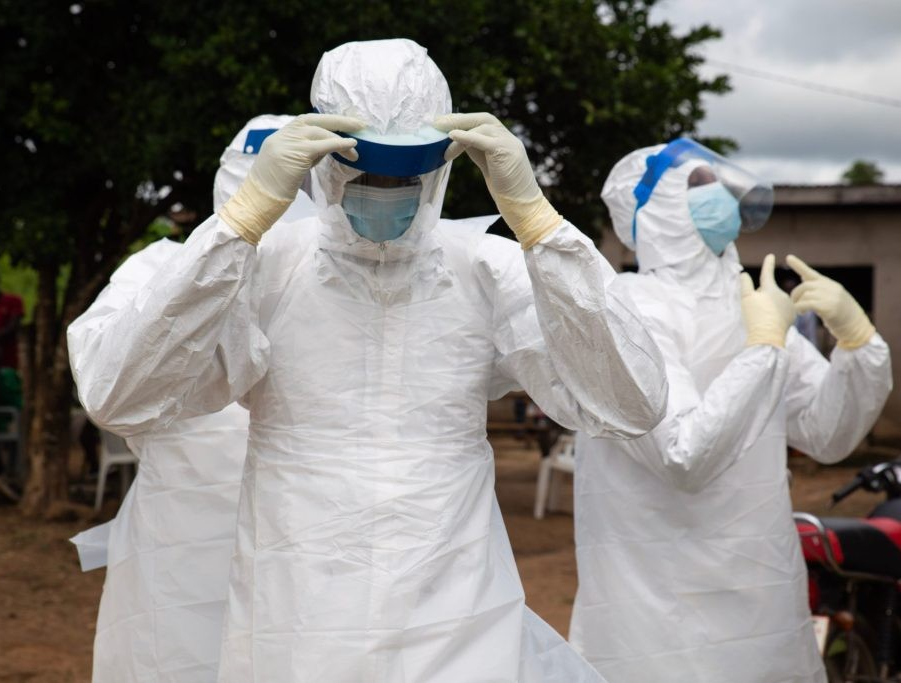
Illustrative Image: Africa CDC and UK-PHRST Study Highlights Impact of International Health Teams in Strengthening Outbreak Response Across Africa
Image Source & Credit: CDC
Ownership and Usage Policy
A landmark study jointly conducted by the Africa Centres for Disease Control and Prevention (Africa CDC) and the UK Public Health Rapid Support Team (UK-PHRST) has validated the essential contribution of international health teams in reinforcing Africa’s ability to respond to infectious disease outbreaks. Covering operations across African Union (AU) Member States between 2020 and 2023, the study provides a comprehensive evaluation of how international technical deployments have impacted national outbreak preparedness and emergency response systems.
Unveiled during a high-level virtual workshop held from 23 to 24 June 2025, the study is among the most detailed assessments yet of cross-border public health collaborations during health emergencies on the continent. It confirms that international teams were not only instrumental in providing rapid, short-term surge capacity but also in supporting long-term system-building efforts in critical areas such as epidemiology, laboratory diagnostics, clinical care, infection prevention and control (IPC), risk communication, and disease surveillance.
A key insight from the findings is that nearly 50% of international deployments addressed two or more of these priority areas simultaneously—underscoring their significance in responding to complex, multidimensional health crises.
In addition to front-line response support, the study highlights the broader, sustained impact of these teams. Contributions included the delivery of essential medical equipment, construction of infrastructure, development of emergency protocols, staff training, and capacity development initiatives. They also helped streamline coordination structures, fill critical human resource gaps, and transfer valuable knowledge to national personnel, thereby improving readiness for future outbreaks.
Dr. Radjabu Bigirimana, Programme Lead for Africa CDC’s African Volunteers Health Corps (AVoHC), stated:
“These deployments have delivered vital expertise, resources, and response capacity when countries needed them most. Yet, they also bring into focus the pressing need to build national capacities and reduce long-term dependency on external actors.”
One of the report’s central themes is the evolving nature of international support. While national stakeholders broadly acknowledged the timely and effective contributions of international teams, the study also emphasized that future deployments must better align with country-specific priorities, local infrastructure, and long-term health security strategies. Success often hinged on the skill level of deployed personnel and how well they were integrated into national response mechanisms.
Dr. Edmund Newman, Director of UK-PHRST, reinforced this view, commenting:
“We need to reimagine global health partnerships. International deployments should not be viewed solely as emergency stopgaps. Instead, they must be seen as strategic, co-developed investments in local public health systems designed to meet both immediate and long-term goals.”
Dr. Femi Nzegwu, Assistant Professor at the London School of Hygiene & Tropical Medicine and UK-PHRST’s Monitoring, Evaluation and Learning Lead, added:
“Our findings reflect the lived realities across African countries—where international teams provided critical support but also where there is a clear call for change. Future deployments must be more context-aware, equitable, and empowering, enabling African nations to take full ownership of their outbreak response capabilities.”
The workshop concluded with the collaborative development of a strategic roadmap to operationalise the study’s recommendations. This roadmap will serve as a practical guide for enhancing the sustainability, effectiveness, and coordination of future international health deployments. It also sets a course for transitioning from reliance on external surge capacity to strengthening endogenous, locally led health systems.










 The African Research (AR) Index is a comprehensive scholarly directory and database focused explicitly on journal publishers that publish and disseminate African research.