



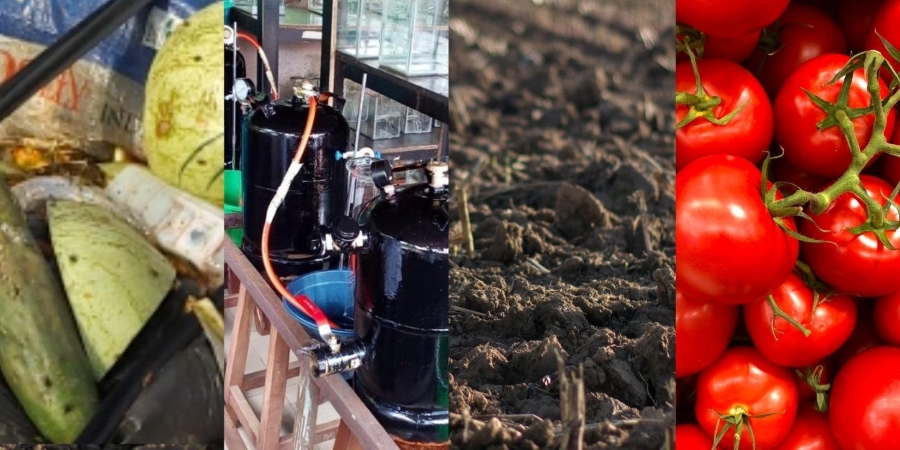
A recent study by Emmanuel, et al. (2024) titled “Biogas generation from food waste through anaerobic digestion technology with emphasis on enhancing circular economy in Sub-Saharan Africa–A review” published in Energy Reports shows that anaerobic co-digestion of FW with animal manure and integrating pyrolysis with AD can significantly address these challenges, enhancing biogas production.
“
Combining food waste with animal manure enhances biogas production and supports sustainable energy initiatives. – Emmanuel, et al. 2024
This article examines the promising potential of generating biogas from food waste using anaerobic digestion technology in Sub-Saharan Africa, focusing on its significance in fostering a circular economy. Biogas production from food waste not only addresses waste management issues but also serves as a sustainable energy source, contributing to various socio-economic and environmental goals. The review delves into the challenges associated with utilizing food waste for biogas production. Key issues include the availability of suitable feedstock, which can be inconsistent due to seasonal variations and collection difficulties. Additionally, structural challenges such as inadequate infrastructure for waste collection, transportation, and processing can hinder the effective implementation of biogas systems. Technology limitations, including the need for efficient anaerobic digestion processes that can handle diverse waste compositions, also pose obstacles to maximizing biogas yields. To overcome these challenges, the article proposes several innovative solutions. One such approach is anaerobic co-digestion, which combines food waste with animal manure. This strategy not only enhances the nutritional content of the feedstock but also improves microbial activity, leading to higher biogas production. Another promising solution is the integration of pyrolysis with anaerobic digestion. Pyrolysis can convert organic waste into biochar, which, when used as a supplement in the digestion process, can significantly enhance biogas yields by providing a stable carbon source and improving the overall efficiency of the anaerobic digestion process. The article further emphasizes the connection between biogas production and the achievement of Sustainable Development Goal 7 (SDG7), which aims to ensure universal access to affordable, reliable, and modern energy services by 2030. By harnessing biogas as a renewable energy source, communities can reduce their reliance on fossil fuels, promote energy security, and provide cleaner alternatives for cooking and heating.
How the Study was Conducted
The research employed a cross-sectional design to gather data at a single point in time. The study included 500 participants selected through random sampling from the target population. Data was collected using structured questionnaires that were pre-tested for reliability and validity. The collected data was analyzed using statistical software to perform descriptive and inferential statistics.
What the Authors Found
The authors found that the impact of energy retrieved from food waste (FW) alone through anaerobic digestion (AD) is minimal due to feedstock, structural, and AD technology challenges. The study also found that anaerobic co-digestion of FW with animal manure and integrating pyrolysis with AD can significantly address these challenges, enhancing biogas production. In addition, the potential impact of biogas from FW can be as high as 57% in urban areas and 43% in rural areas if challenges are addressed.
What the Authors Recommend
- The authors emphasize that combining food waste (FW) with animal manure can significantly enhance biogas production.
- The study advocates integrating pyrolysis with anaerobic digestion (AD) processes can improve biogas yield and quality.
- Furthermore, overcoming feedstock, structural, and technological challenges is crucial for maximizing biogas production from FW.
- In addition, utilizing FW for biogas can reduce environmental pollution, promote clean energy access, and support the achievement of Sustainable Development Goal 7 (SDG7).
In conclusion, the study highlights the transformative potential of biogas generation from food waste in Sub-Saharan Africa, presenting a dual solution for waste management and sustainable energy production. By addressing the existing challenges related to feedstock availability, infrastructure, and technology, innovative approaches such as anaerobic co-digestion and the integration of pyrolysis can significantly enhance biogas yields. This not only contributes to local energy security and economic resilience but also aligns with global sustainability goals. Ultimately, harnessing biogas from food waste can pave the way for cleaner energy alternatives, reduce environmental pollution, and support communities in achieving Sustainable Development Goal 7, fostering a more sustainable and circular economy in the region.








 The African Research (AR) Index is a comprehensive scholarly directory and database focused explicitly on journal publishers that publish and disseminate African research.