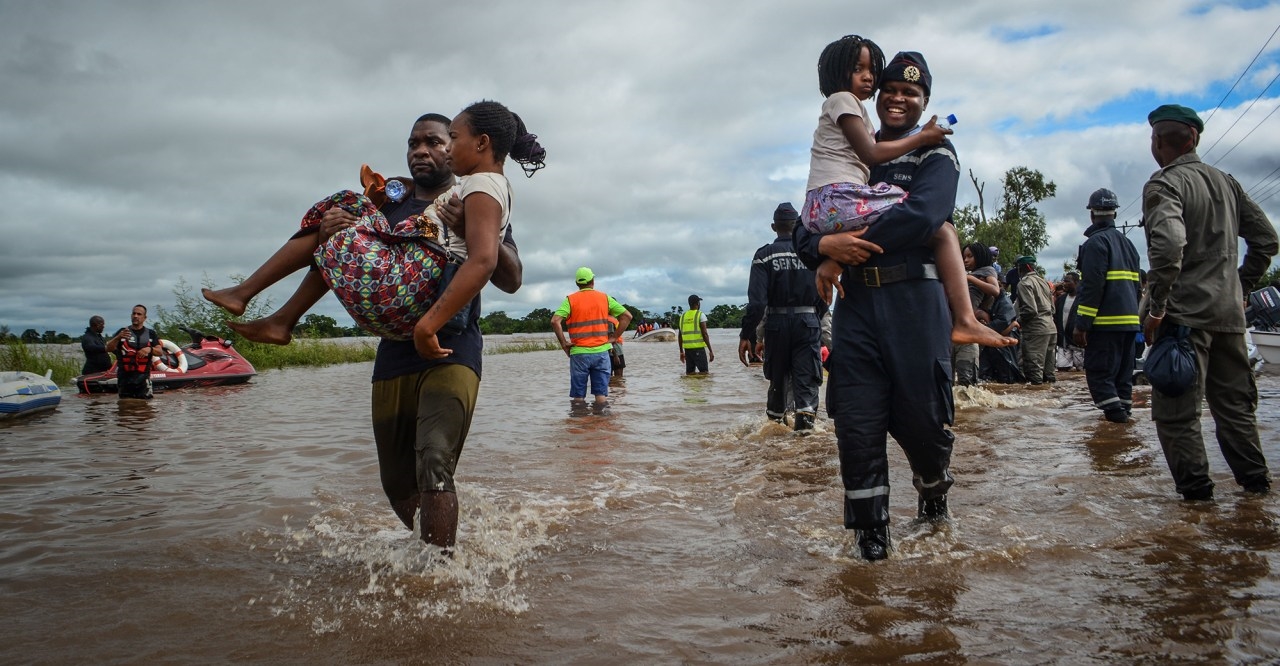
A recent study by Coetzee et al., (2023) titled “Financing Disaster Risk Reduction: Exploring the Opportunities, Challenges, and Threats Within the Southern African Development Community Region” published in the International Journal of Disaster Risk Science by Springer shows that disaster risk reduction (DRR) is not a priority in the budget allocations of the Southern African Development Community (SADC) member states compared to disaster response and recovery.
“
A budgetary imbalance, prioritizing disaster response over risk reduction in Southern African Development Community states.– Coetzee et al., 2023
In the intricate tapestry of Southern Africa, where the delicate balance of nature meets the realities of climate change, a critical examination of disaster risk reduction (DRR) financing becomes imperative. This study sheds light on the challenges and opportunities that define the landscape of DRR funding in the Southern African Development Community (SADC) region, a space highly susceptible to the whims of natural hazards and climate fluctuations. The study canvasses the significance, benefits, and obstacles surrounding investments in DRR, particularly in developing nations. The exploration extends to the international and national policy frameworks that underpin DRR funding, with a special focus on the Sendai Framework for Disaster Risk Reduction 2015−2030. The authors explore a meticulous analysis of current policies, legislation, and governance structures in five SADC member states—Botswana, Eswatini, Namibia, South Africa, and Zimbabwe—to uncover gaps and weaknesses. From the lack of explicit direction and detail in DRR funding provisions to the absence of crucial cost-benefit analysis, the study underscores the reliance on external donors as a vulnerability in the region.
How the study was conducted
The study employed a qualitative approach; it engaged 67 respondents across diverse sectors in the selected countries, using purposive and snowball sampling. Face-to-face interviews and focus group discussions, guided by open-ended questionnaires, were the conduits through which the rich tapestry of experiences was unveiled. The analysis, inspired by Tesch’s eight steps, brought order and meaning to the qualitative data.
What the authors found
The authors found that disaster risk reduction (DRR) is not a priority in the budget allocations of the Southern African Development Community (SADC) member states, compared to disaster response and recovery. The prioritization of disaster response and recovery over prevention becomes apparent, revealing the challenges and opportunities for financing DRR in the region. The study also found that multi-faceted factors influence DRR funding, including disaster impacts, climate change, political will, and policy frameworks.
Why is this important
The study sets the stage for a nuanced understanding of the challenges and opportunities inherent in financing DRR in the SADC region. By providing evidence-based insights and actionable recommendations, it aims to catalyze positive change, fostering a resilient and prepared Southern Africa in the face of future disasters. This study serves as a beacon, guiding stakeholders, policymakers, and practitioners toward a collaborative, informed, and sustainable approach to disaster risk reduction in the Southern African Development Community.
In navigating the complex landscape of disaster risk reduction (DRR) financing within the Southern African Development Community (SADC) region, this study illuminates critical disparities in budget allocations, revealing a prevailing imbalance favouring disaster response and recovery over prevention. The findings, rooted in a qualitative exploration across five SADC member states, underscore the multifaceted challenges and opportunities inherent in financing DRR. As the delicate tapestry of Southern Africa contends with the impacts of climate change and natural hazards, the study calls for a pivotal shift in priorities. The implications extend beyond mere insights, pointing towards the urgency of addressing policy and governance gaps while emphasizing the risks associated with overreliance on external donors. By providing evidence-based recommendations, this research serves as a guiding beacon for stakeholders, policymakers, and practitioners, advocating for a collaborative, informed, and sustainable approach to disaster risk reduction in the SADC region. The ultimate goal is to catalyze positive change, fostering resilience and preparedness that will fortify Southern Africa against the inevitable challenges of future disasters. Through a unified effort, this study envisions a more resilient and adaptive SADC community, equipped to navigate the storm of disaster risks and emerge stronger on the other side.

Question for Contribution and Comments
Dear reader, we value your input! Kindly share your thoughts, ideas, and comments regarding the question below in the comment section. Your valuable input will help shape our next article:
“Amidst the budgetary imbalance favouring disaster response, how can Southern African nations strike a harmonious chord between immediate crisis management and the imperative long-term investment in disaster risk reduction?”