Tag: academic exchange

  • TWAS-SISSA-Lincei Research Cooperation Visits Programme 2025: Fully Funded 3-Month Fellowship in Italy for Scientists from Least Developed Countries (LDCs)

    TWAS-SISSA-Lincei Research Cooperation Visits Programme 2025: Fully Funded 3-Month Fellowship in Italy for Scientists from Least Developed Countries (LDCs)


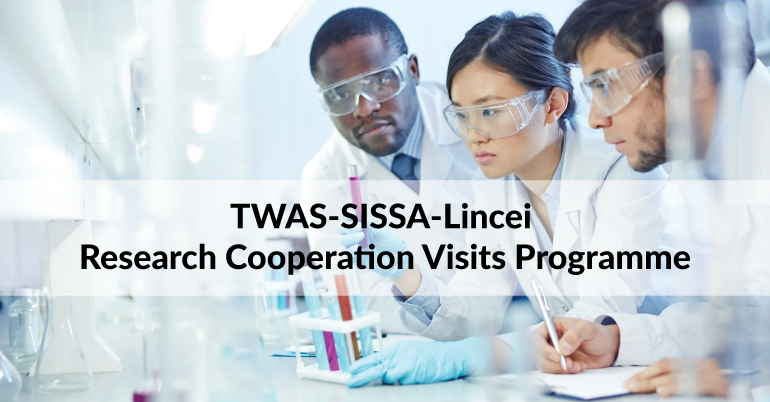
    Illustrative Image: TWAS-SISSA-Lincei Research Cooperation Visits Programme 2025: Fully Funded 3-Month Fellowship in Italy for Scientists from Least Developed Countries (LDCs)
    Image Source & Credit: Youth Opportunities
    Ownership and Usage Policy

    Overview

    The TWAS-SISSA-Lincei Research Cooperation Visits Programme is a prestigious initiative jointly organized by UNESCO-TWAS (The World Academy of Sciences), the Accademia Nazionale dei Lincei, and the International School for Advanced Studies (SISSA) in Italy.

    This programme provides young scientists from Least Developed Countries (LDCs) who hold at least an MSc degree the opportunity to spend three months in leading research laboratories located in the Friuli Venezia Giulia region of Italy — specifically in Trieste and Udine.

    These visits aim to foster collaborative research, training, and knowledge exchange in scientific fields that contribute directly to the United Nations Sustainable Development Goals (SDGs).


    🌱 Purpose and Philosophy

    This initiative follows a South-North-South Circular Model, designed to:

    1. Strengthen research capacity in developing nations by exposing scientists to cutting-edge facilities and methods in the Global North.

    2. Catalyze long-term international partnerships that continue even after the fellowship, ensuring sustained collaboration and knowledge transfer.

    3. Advance sustainability science, focusing on research that addresses global challenges such as climate change, energy, health, and biodiversity.

    This structure aligns with UNESCO-TWAS’s mission to promote scientific excellence and equity between nations, ensuring that talent from LDCs has access to world-class opportunities.


    🧭 Programme Details

    • Extended Deadline: 17 November 2025

    • Duration: 3 months

    • Host Country: Italy (Friuli Venezia Giulia Region)

    • Eligible Applicants: Nationals of Least Developed Countries

    • Minimum Qualification: MSc or higher

    • Age Limit: 40 years (as of 31 December 2025)

    • Funding:

      • Travel expenses and living costs are covered by the Italian Ministry of Foreign Affairs and International Cooperation (MAECI) and the Italian Agency for Development Cooperation (AICS) through TWAS.


    🏛️ Host Institutions

    Participants can undertake their research at world-class Italian institutions, including:

    • SISSA (International School for Advanced Studies)

    • ICGEB (International Centre for Genetic Engineering and Biotechnology)

    • INFN (National Institute for Nuclear Physics)

    • OGS (National Institute of Oceanography and Applied Geophysics)

    • Universities of Trieste and Udine

    • IOM-CNR Materials Foundry

    • Area Science Park

    • Elettra Sincrotrone Trieste

    Each institution offers diverse research areas ranging from physics, mathematics, and neuroscience to sustainable agriculture, blue economy, biotechnology, artificial intelligence, and environmental science.


    🔬 Fields of Study

    Research proposals must align with sustainability science and the UN SDGs.
    Some thematic areas include:

    • Physics & Cosmology (Astroparticle physics, statistical mechanics, quantum systems)

    • Neuroscience & Cognitive Science

    • Mathematics & Data Science

    • Biotechnology & Computational Biology

    • Oceanography, Climate Resilience & Marine Systems

    • Geophysics, Seismology & Earth Systems

    • Energy, Environment, and Sustainable Chemistry

    • Artificial Intelligence & High-Performance Computing

    • Cultural Heritage, Humanities, and Social Sciences


    🧩 Eligibility Criteria

    Applicants must:

    • Be nationals of an LDC (as defined by the UN).

    • Hold at least an MSc degree.

    • Be aged 40 or below.

    • Occupy a research position in their home country.

    • Present a research proposal relevant to sustainability and the SDGs.

    • Obtain a formal invitation from a host institution in Italy.

    • Provide two recommendation letters from referees familiar with their work.


    📑 Application Procedure

    Applications must include:

    1. Completed and signed application form.

    2. Copy of passport (bio-data page only).

    3. Curriculum Vitae (CV).

    4. Statement of research interests and future goals, indicating SDG relevance.

    5. List of publications (no reprints needed).

    6. Degree certificates (MSc or higher).

    7. Invitation letter from a host supervisor in Italy.

    8. Two letters of recommendation submitted separately to TWAS.

    Applications must be submitted via email to exchanges@twas.org by the extended deadline 17 November 2025.


    🕊️ Expected Outcomes

    • Capacity Building: Fellows return home with enhanced technical and analytical skills, contributing to national scientific development.

    • Sustainable Collaboration: Encourages ongoing partnerships between institutions in the Global North and South.

    • SDG Alignment: Ensures that research directly contributes to global sustainability goals.


    💡 Conceptual Insight: The South–North–South Model

    The TWAS-SISSA-Lincei programme represents an equitable model of scientific cooperation known as South–North–South collaboration.

    Unlike traditional models where talent flows one way (from South to North), this circular framework emphasizes reciprocity and mutual benefit:

    • Scientists from the South gain advanced training and exposure.

    • Host institutions in the North gain new perspectives and research diversity.

    • Knowledge and innovation are ultimately transferred back to the South, enriching local institutions and communities.

    This cycle strengthens global scientific ecosystems and ensures that scientific advancement serves all humanity, not just a select few regions.


    📬 Contact Information

    Email: exchanges@twas.org
    Website: www.twas.org
    Location: The World Academy of Sciences (TWAS), ICTP Campus,
    Strada Costiera 11, 34151 Trieste, Italy
  • Call for Applications: ARUA Early-Career Research Fellowship Program 2025

    Call for Applications: ARUA Early-Career Research Fellowship Program 2025


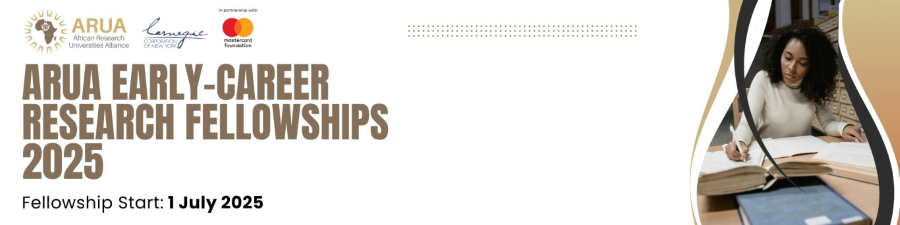
    Illustrative Image: Call for Applications: ARUA Early-Career Research Fellowship Program 2025
    Image Source & Credit: ARUA
    Ownership and Usage Policy

    Application Deadline: 31 December 2025
    Fellowship Type: Postdoctoral Research Fellowship
    Funding Partners: Mastercard Foundation & Carnegie Corporation of New York
    Fellowship Duration: 6 months
    Stipend: $2,000/month + travel and accommodation support
    Number of Fellowships: 42
    Target: African Early-Career Researchers (with emphasis on women scholars)


    About the ARUA Fellowship Program

    The African Research Universities Alliance (ARUA), in partnership with the Mastercard Foundation and the Carnegie Corporation of New York, invites applications for its prestigious Early-Career Research Fellowship Program 2025. This unique opportunity is designed to support up to 42 promising early-career African researchers in conducting high-quality, globally competitive research in collaboration with ARUA’s 13 Centres of Excellence (CoEs).

    By facilitating focused research time away from teaching and administrative responsibilities, the fellowship empowers young researchers to deepen their scholarship, expand their networks, and strengthen their academic reputations.

    Each selected fellow will be embedded within one of the ARUA CoEs, hosted at a university in a different African country from the fellow’s home institution, to ensure meaningful cross-border collaboration and knowledge exchange.


    About ARUA

    The African Research Universities Alliance (ARUA) is a pan-African network of leading research universities dedicated to expanding the continent’s contribution to global knowledge through collaborative research and advanced graduate training. ARUA fosters academic excellence through the establishment of thematic Centres of Excellence (CoEs), which serve as hubs for innovative, interdisciplinary research addressing Africa’s most pressing development challenges.


    Fellowship Objectives

    The ARUA Fellowship is guided by three core objectives:

    1. Capacity Building: To strengthen the research skills and academic portfolios of emerging African scholars.

    2. International Collaboration: To foster cross-institutional and cross-country scholarly partnerships across the African continent.

    3. Research Excellence: To support the generation of cutting-edge, solution-oriented research aligned with the thematic focus of ARUA CoEs.


    Fellowship Benefits

    Successful fellows will receive:

    • A monthly stipend of $2,000 for six months.

    • Travel support, including a round-trip ticket to the host institution.

    • Modest accommodation support while based at the CoE.

    • A professional environment for developing independent research.


    Eligibility Criteria

    To be considered for the fellowship, applicants must:

    • Be African nationals.

    • Hold a PhD in a relevant field linked to one of the ARUA CoE thematic areas.

    • Have completed their PhD within the last 5 years.

    • Be below 35 years old at the time of application.

    • Be employed as a faculty or research staff at an ARUA member university.

    • Demonstrate a strong publication record and potential for research leadership.

    • Be available for 6 months full-time residency at the host institution.

    • Be actively involved in a project with existing data or materials that aligns with the host CoE’s research agenda.

    Note: At least 70% of fellowships will be awarded to female candidates, and women are strongly encouraged to apply.


    Selection Process

    The selection will be carried out by the Director of the respective ARUA Centre of Excellence in collaboration with the Deputy Vice-Chancellor of the host institution. Fellowship slots will be filled on a rolling basis.

    Priority Deadline for First Batch:

    • Apply by 15 May 2025 for early consideration.

    • Selected fellows will be notified by 1 June 2025 and expected to commence on 1 July 2025.

    Final deadline for all applications is 31 December 2025, subject to availability.


    Required Application Documents

    1. Cover Letter: Detailing motivations for applying, relevance of your background, your intended CoE host, and how the fellowship will enhance your career. Include visa needs and any previous engagement with the proposed host institution.

    2. Curriculum Vitae: Comprehensive CV with personal details, academic qualifications, research outputs, publication contributions, and contact details of two referees.

    3. Letter of Support: From your home institution, confirming your employment status, institutional support, and assurance of return after the fellowship.

    4. Proof of PhD Award.

    5. Research Concept Note (max 1,500 words): Describing your project, objectives, relevance to the host CoE, and available data/materials.

    6. Two Academic Writing Samples: Should not be dissertation chapters. If co-authored, clearly describe your contribution.


    How to Apply

    Submit your application via the official ARUA Fellowship portal:
    👉 www.arua.org

    Ensure all required documents are compiled in the appropriate format before submission. Incomplete applications will not be considered.


    Why Apply?

    The ARUA Early-Career Fellowship Program is a transformative opportunity for emerging African scholars to gain international research exposure, contribute meaningfully to solving Africa’s grand challenges, and position themselves for leadership in academia and policy.

  • New IITA-CGIAR and China Agriculture University Partnership Boosts African Agricultural Innovation, Trade, and Development

    New IITA-CGIAR and China Agriculture University Partnership Boosts African Agricultural Innovation, Trade, and Development

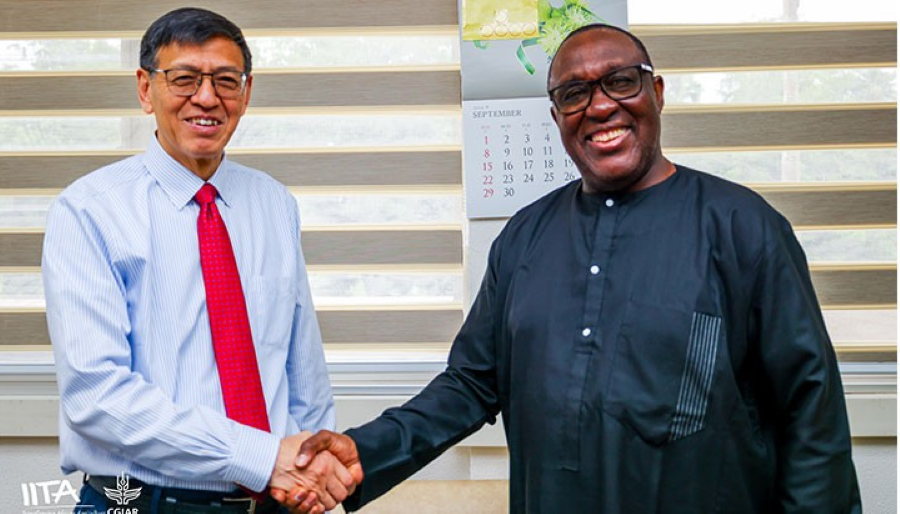
    In a significant development aimed at fostering agricultural research and trade collaboration between Africa and China, the International Institute of Tropical Agriculture (IITA-CGIAR) and China Agriculture University (CAU) have forged a new partnership. From 28 August to 1 September 2024, a Chinese delegation led by IITA Board member Dr. Fan Shenggen visited the IITA-CGIAR headquarters to explore avenues for joint research, agricultural development, and innovation across the African continent. The visit marked an important step toward strengthening ties between China and Africa in key areas like climate-smart agriculture, mechanization, and trade.

    During the week-long visit, IITA Director General and CGIAR Regional Director for Continental Africa, Dr. Simeon Ehui, welcomed the delegation, which comprised both academic and research experts. Dr. Ehui emphasized the importance of learning from China’s advancements in agricultural technology and expressed optimism about the opportunities this partnership would create. He stated, “There is so much Africa can learn from China. With this partnership, we can explore many opportunities like staff exchange, student exchange, research collaboration, and more.” The visit also involved IITA research scientists and management staff, who engaged in productive discussions on various collaboration fronts.

    Dr. Fan Shenggen underscored the Chinese government’s commitment to supporting agricultural development in Africa, particularly through academic research and technology transfer. “We are excited about forging collaborations with IITA in the area of breeding and research, especially in academics. We are also keen on nutrition and climate-smart agriculture,” he stated. These collaborations aim to enhance the resilience of African agriculture in the face of climate change and other pressing challenges.

    Several key areas of collaboration were highlighted during the discussions, including academic exchange programs for young researchers, small-scale mechanization to improve agricultural productivity, and digital data collection to facilitate precision agriculture. These initiatives will allow Africa and China to share knowledge and expertise, creating a mutually beneficial relationship that fosters innovation.

    One of the most critical points raised was the need for enhanced trade relations, particularly addressing issues that hinder Africa’s agricultural exports. The teams discussed trade analysis and how factors like aflatoxin contamination have negatively impacted the export of crops such as maize and groundnuts, resulting in reduced incomes for African farmers. Aflatoxin is a naturally occurring toxin produced by certain molds that can grow on food crops, and its presence in crops has been a significant barrier to accessing global markets. By leveraging IITA’s research capacity, the partnership seeks to tackle such barriers and boost trade opportunities for African farmers.

    To address these issues, both parties proposed the establishment of dedicated export zones in Nigeria, which would focus on improving the quality and safety of agricultural produce for international markets. These zones could significantly enhance the livelihoods of local farmers by providing them with better access to global markets while ensuring that their products meet international quality standards.

    The delegation also identified the importance of empowering youth by improving their access to agricultural technologies and innovations. One way to achieve this is through data collection for nutrition surveys, leveraging IITA’s expertise to enhance the nutritional quality of food systems in Africa. The focus on youth engagement in agricultural development reflects the need to equip the next generation of farmers and researchers with the tools and skills necessary to lead Africa’s agricultural transformation.

    Both teams committed to setting clear goals and timelines for implementing the initiatives discussed. Actionable plans were drawn up, with milestones to measure progress and deliverables to ensure accountability. Future meetings in China and other CGIAR Centers in Africa were also proposed to further strengthen this partnership and expand its scope.

    In summary, this new collaboration between IITA-CGIAR and China Agriculture University has the potential to transform African agriculture by combining China’s technological advancements and Africa’s rich agricultural resources. By focusing on areas such as climate-smart agriculture, mechanization, trade enhancement, and youth empowerment, the partnership aims to foster sustainable agricultural development across the continent.

  • 2024 DAAD PRIME Fellowship Program: Fully Funded Postdoctoral Research Opportunity in Germany and Europe

    2024 DAAD PRIME Fellowship Program: Fully Funded Postdoctoral Research Opportunity in Germany and Europe

    The German Academic Exchange Service (DAAD) invites applications for the 2024 DAAD PRIME Fellowship Program. This prestigious fellowship offers comprehensive funding, including an annual salary of up to €80,000, travel expenses, accommodation, and support for dependents accompanying the fellow abroad for more than one month.

    Fellowship Overview

    • Host Country: Germany
    • Study Abroad Locations: Various locations in Europe
    • Category: Fellowships
    • Eligible Countries: All countries
    • Reward: Full sponsorship, €80,000/year salary, travel costs
    • IELTS Requirement: None
    • Application Deadline: August 30, 2024

    Program Details

    The DAAD PRIME Fellowship supports postdoctoral researchers with temporary positions at German universities to facilitate their international mobility. Funded by the Federal Ministry of Education and Research (BMBF), the program includes a mandatory return phase for reintegration into the German science system, aiming to enhance participants’ qualifications for a career in science.

    The program is targeted at postdoctoral researchers who envision their long-term career in Germany. It provides funding for an independent research stay abroad, anchored by temporary employment at a German university.

    Eligibility Requirements

    To be eligible for the DAAD PRIME Fellowship Program 2024, applicants must meet the following criteria:

    • Possess above-average qualifications from any faculty.
    • Open to applicants of all nationalities.
    • Commit to both the research stay abroad and the return phase to Germany as mandatory parts of the program.
    • State an intent to continue their research career in Germany upon completion of the return phase if living abroad.
    • Not hold a permanent employment contract with the prospective host institution for the intended research activity.
    • Apply within six years of obtaining their first doctorate.
    • Have completed their doctorate with excellent results before the start of funding.

    Benefits

    The fellowship includes:

    • Salary: An 18-month temporary employment contract at a German university according to pay scale TV-L EG 13 (€70,000 – 80,000), with exact pay determined by the university based on prior experience.
    • Expatriate Allowance: A monthly expatriate allowance based on the destination’s area classification and the fellow’s gross income.
    • Travel Allowance: A DAAD lump sum travel subsidy for postdoctoral scientists.
    • Family Support: Travel allowance for spouses and children accompanying the fellow for at least one month during the research stay abroad.
    • Duration: An 18-month employment contract, which includes a 12-month research stay abroad followed by a 6-month return phase in Germany.
    • Flexibility: Option to combine stays at several research institutions in one or more countries during the 12 months abroad.

    Required Documents

    Applicants must prepare and submit the following documents:

    • Application Form
    • EU Standard Curriculum Vitae
    • Binding Declaration from the German Host University (form)
    • Invitation Letter from the German Host
    • Time Schedule for the planned work abroad and in Germany
    • Detailed and independently prepared Research Proposal
    • Confidential Letter of Recommendation from a University Professor
    • Short Summary/Abstract of the Research Project
    • One-page Career Plan

    Application Procedure

    To apply for the DAAD PRIME Fellowship Program 2024, follow these steps:

    1. Visit the DAAD Website: Access the fellowship section.
    2. DAAD Application Portal: The application form is available on the DAAD application portal. Click on “Stipendiendatenbank für Deutsche” to access the portal.
    3. Portal Registration: Complete the portal registration to generate and download the recommendation letter form.
    4. Upload Documents: After entering applicant data, upload all required documents, including the letter of recommendation, in PDF format.
    5. Submission Language: Except for certificates, submit all documents in English for evaluation and selection by international reviewers and committees.
    6. Update Applications: Applications submitted before the deadline can be updated and supplemented until the deadline.

    The DAAD PRIME Fellowship Program offers an exceptional opportunity for postdoctoral researchers to advance their careers through international research experience and reintegration into the German scientific community. Apply by August 30, 2024, to take advantage of this fully funded fellowship.

    Click here to apply 

  • Short-Term Fellowship Opportunity in France for Postdoctoral Researchers from the Horn of Africa: Apply Now!

    Short-Term Fellowship Opportunity in France for Postdoctoral Researchers from the Horn of Africa: Apply Now!

    The Fondation Maison des Sciences de l’Homme (FMSH) and the French Center for Ethiopian Studies (CFEE) are pleased to announce a short-term fellowship opportunity in France for postdoctoral researchers from the Horn of Africa (Ethiopia, Eritrea, Djibouti, and Somaliland).

    This fellowship aims to facilitate a two-month research stay in France, enabling scholars to conduct fieldwork, access libraries and archives, and engage in academic collaboration. This initiative is part of the Atlas Programme, which promotes short-term postdoctoral mobility, facilitated by the FMSH and its partners.

    Financial Support

    Successful applicants will receive a monthly stipend of 1,700€, disbursed at the beginning of each month of their stay. This financial assistance is intended to cover expenses related to transportation and accommodation.

    Eligibility Criteria

    • Nationality: Applicants must hail from Ethiopia, Eritrea, Djibouti, or Somaliland and be affiliated with a higher education or research institution, either public or private, in one of these countries.
    • Educational Background: Candidates must have obtained their doctoral degree after 2018.
    • Research Theme: Applicants should be engaged in social and human sciences research.
    • French Host Institution: Prior to application submission, candidates must secure a hosting arrangement with a French research institution. A letter from the hosting institution, expressing willingness to accommodate the applicant and outlining work conditions, is required.

    Obligations of Researchers

    Within 30 days of completing their stay, recipients must furnish the FMSH and CFEE with a comprehensive report detailing their research activities and the impact on their project.

    Application Procedure

    Candidates are required to complete an online application form and submit a scientific file, including their research project and supporting documents. The application platform will be accessible from January 15, 2024. The deadline for submission is March 18, 2024, 17:00 (Paris time). Documents must be in French or English.

    Contents of the Scientific File

    The scientific file should contain:

    • Research proposal (10,000 to 20,000 characters)
    • Bibliography
    • Detailed research itinerary (locations, institutions, contacts)
    • Curriculum vitae (maximum 2 pages)
    • List of publications
    • Copy of the PhD diploma
    • Letter from the director of the research institution in the home country
    • Invitation letter from the director of the hosting institution in France

    How to Apply

    Applicants should visit http://calls.msh-paris.fr, create an account or log in, and complete the application form under the “Atlas incoming 2024 Program,” specifically selecting “FMSH-CFEE: Horn of Africa > France.”

    Selection Process

    A selection committee comprising members from FMSH, CFEE, and external experts will evaluate applications based on:

    • Scientific quality and methodology
    • Relevance of the research to the Horn of Africa
    • Ability to establish scientific contacts locally Preference will be given to applicants who have not previously participated in the program.

    For inquiries about the application platform, contact fadili@msh-paris.fr.

    Atlas Program

    The Atlas program fosters short-term fellowships for postdoctoral researchers, facilitating academic exchange and collaboration.

    In conclusion, this fellowship opportunity stands as a gateway for postdoctoral researchers from the Horn of Africa to embark on enriching academic experiences in France. With its focus on facilitating research, fostering collaboration, and promoting scholarly exchange, the program aligns with the broader goals of advancing knowledge and understanding in the social and human sciences. We encourage eligible candidates to seize this chance for professional growth and cross-cultural engagement, contributing to the collective pursuit of academic excellence and international cooperation.

  • Empowering African Scholars: Fulbright Research Grants 2025 – Applications, Benefits, and Impact | U.S. Mission Uganda

    Empowering African Scholars: Fulbright Research Grants 2025 – Applications, Benefits, and Impact | U.S. Mission Uganda

    The U.S. Mission is inviting applications for the 2025 Fulbright African Research Scholar Program, with a closing date of April 12, 2024. This initiative provides funding for African university faculty, administrators, and research institute professionals to pursue postdoctoral research or curriculum development and research at academic or research institutions in the United States. Notably, programs involving dissertation research or general professional travel are ineligible for this program. Curriculum development grants aim to foster the creation of new courses, curricula, or programs upon the participant’s return to their home institution.

    Applicants can opt for either Research Grants or Program and Curriculum Development Grants. Research Grants typically span three to nine months and necessitate a Ph.D. They require a clear project statement directly aligned with the applicant’s ongoing teaching and/or research duties. Longer grants may be considered if the research proposal warrants additional time.

    Program and Curriculum Development Grants, lasting three to five months, focus on reading and research beneficial to both the scholar and their home institution. Proposals should articulate how the gained knowledge will enhance classroom instruction and other professional duties.

    Application and Selection Process

    • Applicants must hold Ugandan citizenship.
    • Awards are open to individuals of all academic disciplines, faculty ranks, sexes, and ages.
    • Clinical medical research proposals involving patient contact are not eligible.
    • Preference is given to proposals aligning with the Fulbright Program’s mission of fostering mutual understanding through academic exchange.
    • Special consideration is given to HIV/AIDS-related research proposals.
    • Preference is accorded to individuals who have not visited the United States in the past five years.
    • Proficiency in English is a prerequisite.
    • For research applicants, a minimum of three years of university teaching experience and a strong scholarly track record are preferred.
    • Plagiarism results in disqualification.
    • Doctoral dissertation research, postdoctoral research immediately following a doctorate, or general professional travel are ineligible.
    • Applications must be submitted online at: Application Link.

    Applications undergo review by a local selection panel. Final nominations are assessed in the United States by the J. William Fulbright Foreign Scholarship Board. Ideally, scholars should plan to commence their travel in August 2025 or January 2026 to align with U.S. university schedules. Only short-listed candidates receive further communication post-application review.

    Empowering African Scholars: The Impact of Fulbright Research Grants

    The Fulbright African Research Scholar Program offers invaluable opportunities for Africans seeking research grants. Here’s why these grants are important:

    1. Access to Resources: Research grants provide access to resources, facilities, and expertise that may not be readily available in African institutions. This access enhances the quality and depth of research conducted by African scholars.
    2. International Collaboration: Engaging in research abroad facilitates international collaboration and networking opportunities. Scholars can collaborate with experts in their field, exchange ideas, and establish long-term partnerships that benefit their home institutions.
    3. Capacity Building: Research grants contribute to capacity building by allowing scholars to acquire new skills, methodologies, and perspectives. This knowledge transfer enhances the research capabilities of African institutions and contributes to academic excellence.
    4. Knowledge Transfer: Scholars returning from research grants bring back valuable knowledge and experiences that enrich teaching, curriculum development, and research activities at their home institutions. This fosters the dissemination of knowledge and promotes academic growth within the African academic community.
    5. Professional Development: Research grants support the professional development of African scholars by providing opportunities for career advancement, publication, and recognition within their academic fields. These experiences contribute to personal growth and enhance the reputation of African scholars on the global stage.
    6. Addressing Local Challenges: Research grants enable scholars to address pressing local and regional challenges through innovative research projects. By focusing on issues relevant to African contexts, scholars can contribute to positive social, economic, and environmental change in their communities.
    7. Promoting Diversity and Inclusion: The Fulbright African Research Scholar Program promotes diversity and inclusion by welcoming applicants from diverse academic disciplines, backgrounds, and demographics. This inclusive approach fosters a vibrant exchange of ideas and perspectives, enriching the overall academic experience.

    Overall, research grants play a crucial role in empowering African scholars, advancing knowledge creation, and promoting international understanding and collaboration. The Fulbright African Research Scholar Program serves as a catalyst for academic excellence and innovation in Africa and beyond.

    For inquiries, please reach out to U.S. Mission Uganda via email: kampalaexchanges@state.gov.