Category: CONFERENCE UPDATES

This category features a post from ARM Magazine, spotlighting updates on the latest conferences in Africa.

  • 2025 Conference on Land Policy in Africa (CLPA)

    2025 Conference on Land Policy in Africa (CLPA)


    Illustrative Image: 2025 Conference on Land Policy in Africa (CLPA)
    Image Source & Credit: AU
    Ownership and Usage Policy

    Background

    The 2025 Conference on Land Policy in Africa (CLPA) will take place under the theme “Land Governance, Justice, and Reparations for Africans and Descendants of People of the African Diaspora.” This theme resonates deeply with the African Union’s ongoing commitment to the pursuit of justice, reparations, and restitution for the crimes of slavery, colonialism, and their lingering consequences. These historical injustices—rooted in systemic exploitation and racial domination—continue to shape patterns of land ownership, economic inequality, and social exclusion across Africa and among people of African descent globally.

    For centuries, African land, natural resources, and human labour were expropriated to fuel the industrial and economic growth of Western powers. The transatlantic slave trade forcibly removed millions of Africans from their homelands, subjecting them to dehumanizing conditions in plantations, mines, and factories across the Americas and Europe. Enslaved Africans generated immense wealth for colonial empires but were denied fundamental human rights, including the right to own property or benefit from the land they cultivated. Acts of resistance were met with brutal repression, including torture, deportation, and executions. Women, in particular, suffered grievous violations, including sexual violence, intended to produce generations of enslaved labourers.

    These atrocities did not end with emancipation. Post-slavery systems—such as segregationist land laws, sharecropping, and racial zoning—continued to exclude people of African descent from owning and controlling land. Such structures entrenched cycles of economic and social inequality, perpetuating the trauma that originated in slavery.


    Colonialism and Its Legacies

    The colonial project extended the violence of slavery through the territorial conquest and economic exploitation of Africa. Following the Berlin Conference of 1884–1885, European powers partitioned the continent, seizing land and natural resources under the guise of “civilizing missions.” Colonial administrations imposed new land governance systems that dismantled communal tenure arrangements and dispossessed indigenous peoples. Fertile lands were appropriated for settlers and foreign corporations, while African communities were relegated to reserves or became wage labourers on lands that once belonged to them.

    The colonial system institutionalized racial hierarchies, economic dependency, and cultural alienation. It not only stripped Africans of land and livelihoods but also eroded their cultural and spiritual heritage. Sacred artefacts, regalia, and symbols of authority—such as royal stools, drums, spears, and ancestral relics—were looted and shipped to Europe, where they remain displayed in museums. These stolen artefacts generate income abroad while depriving African societies of vital cultural anchors, sources of intergenerational memory, and creative inspiration.

    The violence of colonial domination was often genocidal. The extermination of the Herero and Nama peoples in Namibia (1904–1908), during which approximately 80% of the Herero and 50% of the Nama population were killed, exemplifies this brutality. Their ancestral lands were confiscated and remain largely under the control of German descendants to this day. Across Africa, colonial powers used forced labour, concentration camps, and public executions to suppress resistance. The extraction of resources and the destruction of indigenous systems of governance left profound social, economic, and ecological scars that persist in post-colonial societies.


    Cultural, Linguistic, and Environmental Disruptions

    Colonialism did not only transform political and economic systems—it also redefined social and cultural hierarchies. European languages were institutionalized as languages of power and progress, while African languages were devalued and marginalized. This linguistic dominance disrupted indigenous education systems and undermined local knowledge—especially in agriculture, medicine, and environmental stewardship.

    Colonial agriculture privileged export-oriented cash crops and European food systems, displacing indigenous crops that sustained local communities. This imposed model of production undermined food security, biodiversity, and self-sufficiency, consequences that remain evident in Africa’s contemporary struggles with climate change and rural poverty.


    The Case for Reparations and Land Justice

    Land remains a central pillar of identity, culture, and economic empowerment in Africa. It is both a material resource and a spiritual inheritance. Yet, due to the intertwined histories of slavery and colonialism, Africans and people of African descent continue to face structural barriers to accessing and benefiting from land. Reparative justice—particularly through land redistribution, restitution, or equitable access to land—offers a pathway to redressing historical wrongs and dismantling systemic inequalities.

    Experiences from other contexts, such as post-apartheid South Africa and the Māori land restitution process in New Zealand, demonstrate that meaningful reparations are possible when backed by political will, inclusive policy design, and strong institutional frameworks. Such efforts must go beyond financial compensation to include the restoration of cultural heritage, the return of artefacts, and the recognition of historical memory.

    Addressing contemporary land inequities also requires reforming statutory frameworks that still mirror colonial land laws. In both rural and urban contexts, descendants of colonizers and elites often control vast tracts of land, while marginalized communities endure displacement, eviction, and environmental degradation. Urban gentrification and exclusionary planning policies further perpetuate dispossession among descendants of enslaved and colonized peoples.


    Core and Cross-Cutting Themes

    The 2025 CLPA will provide a multidisciplinary platform for critical reflection, policy innovation, and collective action. The discussions will revolve around the following core themes:

    • Emerging best practices in developing responsive and inclusive land policies

    • Strengthening institutions for effective, transparent land governance and administration

    • Data, monitoring, and evaluation for evidence-based decision-making in land policy

    Cross-cutting themes will include:

    • Youth and intergenerational equity

    • Gender and social inclusion

    • Climate change and ecological reparations

    • Technology and innovation in land governance

    • Reparations and restorative justice

    Proposed sub-themes will further explore:

    • Land tenure and equity

    • Climate justice, resilience, and ecological reparations

    • Colonialism, agriculture, and agri-food systems

    • Land, urbanization, settlements, and conflicts

    • Colonial displacement and reparative justice

    • Land governance, international law, and reparations

    • Land, trade, colonialism, and economic injustice


    Partnerships and Format

    The Conference is jointly organized by the African Union Commission (AUC), United Nations Economic Commission for Africa (ECA), and the African Development Bank (AfDB), under the leadership of the African Land Policy Centre (ALPC). It will bring together policymakers, scholars, traditional leaders, civil society organizations, regional economic communities, and development partners to deliberate on the intersections of land, justice, and reparations.

    The 2025 CLPA will feature plenary sessions, parallel sessions, master classes, policy dialogues, side events, and exhibitions. A formal Call for Abstracts will guide the selection of academic and policy contributions, ensuring that discussions align with the conference theme and contribute to Africa’s broader agenda for justice, land reform, and sustainable development.


    Conclusion

    The 2025 CLPA offers an historic opportunity to confront the intertwined legacies of slavery and colonialism through a land justice lens. By re-examining questions of land governance, ownership, and reparations, the conference seeks to advance Africa’s collective agenda for restorative justice, equitable development, and the reclamation of African dignity and heritage.

    Land is not merely an economic asset—it is a foundation for sovereignty, identity, and self-determination. Addressing its dispossession is essential to achieving the vision of a just, prosperous, and united Africa.

    For more details click here

  • AFREC to Host Africa’s First Continental Energy Efficiency Conference in Addis Ababa

    AFREC to Host Africa’s First Continental Energy Efficiency Conference in Addis Ababa


    Illustrative Image: AFREC to Host Africa’s First Continental Energy Efficiency Conference in Addis Ababa
    Image Source & Credit: AFREC
    Ownership and Usage Policy

    The African Energy Commission (AFREC) has announced the launch of the first-ever African Energy Efficiency Conference (AfEEC), scheduled to take place on 10–11 December 2025 in Addis Ababa, Ethiopia. This landmark event will be held under the framework of the newly established African Energy Efficiency Alliance (AfEEA)—a continental initiative unveiled during COP29 to accelerate energy efficiency actions across Africa.

    The conference will serve as a continental platform dedicated to advancing energy efficiency as a key driver of economic transformation, sustainable development, and climate resilience. It aims to foster high-level dialogue, knowledge exchange, and investment opportunities to help African countries transition toward a cleaner, more efficient, and inclusive energy future.

    Pre-Conference Training and Alliance Launch

    Ahead of the main conference, specialized capacity-building sessions will take place from 8 to 9 December 2025, equipping policymakers, energy practitioners, and private-sector actors with technical and policy tools to implement energy efficiency programs effectively. During the event, AFREC will also officially operationalize the African Energy Efficiency Alliance (AfEEA)—a collaborative platform bringing together governments, development partners, financiers, businesses, and civil society organizations.

    The Alliance’s core mission is to strengthen knowledge sharing, coordinate advocacy, and mobilize investments that will fast-track the adoption of energy-efficient solutions across the continent.

    “Energy efficiency is Africa’s primary resource for sustainable development. It lowers emissions, cuts costs, and drives inclusive growth,”
    said Mr. Rashid Ali Abdallah, Executive Director of AFREC.
    “This conference will bring together the partnerships, expertise, and funding Africa requires to meet its energy efficiency targets.”

    Addressing Africa’s Dual Energy Challenge

    Africa faces a complex and urgent energy paradox: the need to expand access to modern, affordable, and reliable energy while simultaneously reducing emissions and mitigating the impacts of climate change.

    • Nearly 600 million Africans still live without access to electricity.

    • Around one billion people continue to rely on polluting fuels for cooking.
      At the same time, rapid population growth, urbanization, and industrialization are driving up energy demand, making efficiency a critical solution.

    Energy efficiency—often described as the “first fuel”—refers to using less energy to deliver the same level of service. It helps stretch existing energy resources further, reduces greenhouse gas emissions, and strengthens energy security. For Africa, efficiency offers a cost-effective, fast-track pathway to achieving universal energy access and climate commitments under the Paris Agreement.

    Aligning with the African Energy Efficiency Strategy and Action Plan

    The upcoming conference follows the adoption of the African Energy Efficiency Strategy and Action Plan (AfEES), endorsed earlier this year by the African Union Executive Council.
    AfEES outlines over 100 actionable measures across sectors, including power generation, industry, transport, buildings, and agriculture. The plan sets ambitious targets to boost Africa’s energy productivity by 50% by 2050 and by 70% by 2063, aligning with the African Union’s Agenda 2063 vision for inclusive and sustainable growth.

    Key Features of AfEEC 2025

    The two-day event will convene African Ministers, international partners, private sector leaders, and technical experts in a diverse program featuring:

    • Ministerial panels on policy leadership and regional cooperation

    • Technical sessions on innovative technologies and sectoral solutions

    • An investment forum to unlock financing for energy efficiency projects

    • Exhibitions and networking events showcasing tools, data systems, and partnerships that can accelerate implementation on the ground

    The conference is expected to generate collaborative frameworks, investment pledges, and policy commitments that will empower African nations to scale up energy efficiency as a cornerstone of their energy transitions.

    Call for Participation

    AFREC is inviting stakeholders, partners, and institutions across Africa’s energy ecosystem to take part in shaping this historic event and to contribute to a continent-wide movement for efficiency-driven growth.

    For details on registration and participation, please visit:
    👉 https://afeea.au-afrec.org/register-attend


    About AFREC

    The African Energy Commission (AFREC) is a specialized agency of the African Union (AU) mandated to coordinate, harmonize, and promote energy policy development and implementation across the continent. AFREC’s mission is to advance sustainable energy development through capacity building, data and information systems, policy harmonization, and strategic partnerships with AU member states and global stakeholders.

  • Africa Women Conference 2025: Legacy Meets Innovation in Johannesburg

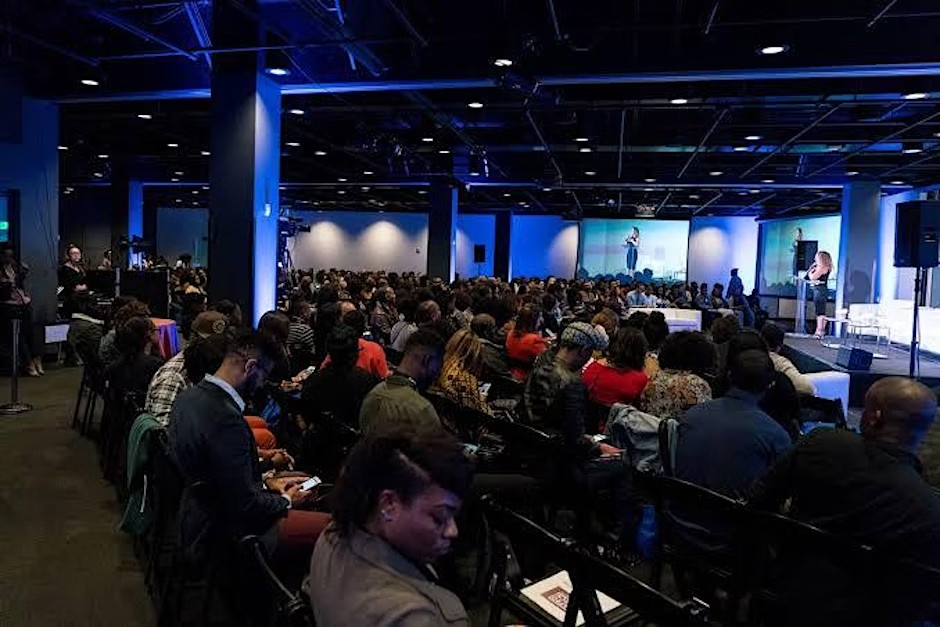
    Africa Women Conference 2025: Legacy Meets Innovation in Johannesburg


    Illustrative Image: Africa Women Conference 2025: Legacy Meets Innovation in Johannesburg
    Image Source & Credit: Africa Women Conference
    Ownership and Usage Policy

    The Africa Women Conference (AWC) will host its 9th edition in Johannesburg, South Africa, from November 5–7, 2025, under the timely and powerful theme: “Legacy Meets Innovation: Women Forging New Pathways for Africa’s Sustainable Development.”

    Since its launch in 2018, the AWC has evolved into one of Africa’s most influential platforms for the advancement of women. It has consistently provided a space for dialogue, policy engagement, and innovation that empowers African women to lead in shaping sustainable solutions for the continent’s progress. Over the years, the conference has attracted leaders from diverse fields—policymakers, academics, entrepreneurs, and development organizations—uniting them around a shared goal: to harness the potential of African women as catalysts for inclusive development.


    A Platform for Transformation

    The founding vision of the AWC has always been clear: to equip women of African descent with a forum for designing Afrocentric solutions to Africa’s challenges. Unlike many global gatherings that superimpose external strategies, AWC emphasizes indigenous knowledge, homegrown innovation, and partnerships rooted in Africa’s social realities. Its mission resonates strongly with the Sustainable Development Goals (SDGs), particularly those addressing gender equality, education, governance, and economic empowerment.

    Since its inception, the conference has been hosted in various countries—including the United States, Namibia, Morocco, Rwanda, The Gambia, and Zambia—each edition spotlighting themes ranging from digital inclusion to sustainable governance. These gatherings have reinforced the message that empowering women is not just a moral imperative but also a strategic necessity for Africa’s future.


    2025 Focus: Where Heritage Meets the Future

    The 2025 edition will place women at the center of a bold vision: how to blend Africa’s enduring legacy with cutting-edge innovation. This approach acknowledges that the continent’s future cannot be built by abandoning its roots; rather, it must be forged by integrating cultural heritage, indigenous knowledge systems, and modern technologies.

    Key discussions will include:

    • Re-imagining African Education in the AI Era: How can Africa harness artificial intelligence for education without losing its cultural context? The focus will be on merging technology-driven learning with local realities to ensure inclusivity and relevance.

    • Cross-Border Cooperation for Young Women: Building continental and regional networks to empower young African women, transcending geographical and socio-economic borders, and creating a united front for leadership.

    • Inclusive Governance and Innovation: Leveraging AI, big data, and indigenous systems of knowledge to drive electoral fairness, improve security, and enhance youth participation in governance.

    This theme—Legacy Meets Innovation—captures a deep truth: Africa’s sustainable development lies in the synergy of the wisdom of the past and the tools of the future.


    What Awaits Participants

    The three-day conference will offer a dynamic blend of intellectual engagement, practical training, and cultural celebration. Participants can expect:

    • Keynote Addresses from leading African and global thought leaders on innovation, governance, and women’s leadership.

    • Panel Discussions exploring critical issues such as gender inclusion, technology adoption, policy frameworks, and social equity.

    • Skill-Building Workshops equipping women with leadership, digital, and entrepreneurial skills.

    • Networking Sessions designed to foster collaborations among women entrepreneurs, policymakers, advocates, and development partners.

    • Exhibitions and Cultural Showcases that highlight Africa’s diverse heritage and the creativity of women-led innovations across the continent.


    A Gathering Beyond Borders

    The AWC 2025 is expected to attract a truly global audience, drawing representatives from across Africa and the diaspora. Participants will include government agencies, civil society organizations, women entrepreneurs, international partners such as UN Women and the African Union, and leading voices in academia and finance. This gathering of diverse stakeholders underlines the AWC’s role as a continental platform that bridges sectors, nations, and generations.


    Continuing a Legacy of Impact

    From its inaugural edition in New York in 2018 themed “Repositioning Africa: Roles of Women in Sustainable Development” to its 2024 conference in Lusaka, Zambia, which focused on “Digital Advancement: Harnessing Its Potentials for the African Woman”, the Africa Women Conference has consistently initiated conversations that translate into actionable commitments.

    Each edition contributes to a growing legacy—a legacy of shifting narratives about African women, transforming them from passive recipients of aid to architects of Africa’s development future.


    The Bigger Concept: Women as Architects of Africa’s Sustainable Future

    At its heart, the Africa Women Conference represents more than a single annual gathering. It embodies a movement of empowerment, resilience, and innovation. It acknowledges that the true drivers of Africa’s progress are its people—and within that, the women who carry legacies of resilience while navigating rapidly changing global dynamics.

    By blending legacy with innovation, AWC 2025 affirms a powerful idea: Africa’s sustainable development will not be imported—it will be imagined, built, and led by Africans themselves, with women at the forefront.

  • Pan African Conference on Teacher Education (PACTED 2025)

    Pan African Conference on Teacher Education (PACTED 2025)


    Illustrative Image: Pan African Conference on Teacher Education (PACTED 2025)
    Image Source & Credit: African Union
    Ownership and Usage Policy

    INVITATION TO MEDIA REPRESENTATIVES

    The Pan African Conference on Teacher Education (PACTED 2025) is set to convene in Addis Ababa, Ethiopia, from 01–03 October 2025. This landmark event will gather policymakers, educators, researchers, development partners, and civil society to deliberate on the future of teacher education in Africa.

    Organized by the African Union Commission’s Department of Education, Science, Technology and Innovation (ESTI), with the support of the European Union (EU) through the Regional Teachers Initiative for Africa (RTIA), the conference provides a strategic continental platform to address challenges and opportunities in teaching, with teachers at the center of Africa’s education transformation.


    WHY PACTED 2025 MATTERS

    Teacher education is the backbone of Africa’s educational systems. However, across the continent, challenges such as teacher shortages, uneven professional development opportunities, inadequate policy alignment, and insufficient recognition of teachers’ contributions continue to hinder progress.

    PACTED 2025 directly addresses these concerns by linking teacher training and professional development with broader continental commitments, including:

    • The African Union Decade of Accelerated Action for the Transformation of Education and Skills Development in Africa (2025–2034).

    • Agenda 2063 and the Sustainable Development Goals (SDGs).

    • Strategic frameworks like the Continental Education Strategy for Africa (CESA 26–35), the Continental Strategy for Technical and Vocational Education and Training (CTVET-34), and the Science, Technology, and Innovation Strategy for Africa (STISA-34).

    These frameworks collectively prioritize systemic reform, professionalization of teachers, foundational learning, digital transformation, green skills, and the integration of science, technology, and innovation (STI) in education.

    PACTED 2025 coincides with three major milestones:

    • African Union Continental Teachers Awards 2025 – celebrating excellence and innovation in teaching.

    • Launch of the African Union Teacher Community of Practice (CoP) Platform – a digital hub for collaboration, resource sharing, and professional growth.

    • Commemoration of World Teachers’ Day 2025 – spotlighting the vital role of teachers as architects of Africa’s education renaissance.


    OBJECTIVES

    PACTED 2025 will be a transformative event, not merely celebratory, but deeply strategic. The conference aims to:

    1. Strengthen Teacher Education Systems by aligning national policies with AU frameworks to prepare teachers for foundational learning, STEM education, and digital transformation.

    2. Enhance Collaboration through the launch of the Teacher CoP Platform, enabling networking and knowledge exchange across countries.

    3. Promote Recognition and Career Development via continental standards that support mobility, continuous learning, and teacher valorisation.

    4. Foster Multi-Stakeholder Partnerships to mobilize resources for education reform and skills development aligned with Africa’s demographic and technological realities.

    5. Address Critical Challenges such as teacher shortages, gender inequities, retention issues, and the integration of ICT in classrooms.

    6. Encourage Policy Innovation through evidence-based discussions and best practice sharing.

    7. Inspire Renewed Commitment from AU Member States toward investment in teacher training, professional growth, and management systems.


    EXPECTED OUTCOMES

    By the close of PACTED 2025, the following outcomes are anticipated:

    • Operationalization of the AU Decade of Education (2024–2034) and its flagship frameworks (CESA, CTVET, STISA).

    • Establishment of harmonized teacher qualification frameworks and standards across Africa.

    • Increased visibility and recognition of teachers as catalysts of change and continental development.

    • Strengthened teacher management systems, including recruitment, training, and continuous professional development.

    • Broad participation in the Teacher CoP Platform, creating sustainable regional and continental teacher networks.

    • Documentation and dissemination of innovative practices in teacher education and professionalization.

    • Renewed advocacy for investment in teacher training as a cornerstone of education reform.


    PARTICIPANTS

    PACTED 2025 will bring together a broad spectrum of stakeholders, including:

    • African Union Commission and AU Member States representatives.

    • National governments and policymakers.

    • Teachers, educators, and teacher unions.

    • Development partners and international organizations.

    • Academic and research institutions.

    • Civil society organizations and NGOs.

    • Private sector actors, industry leaders, and technology innovators.

    • Students and learners.

    • Media and communication partners.


    MEDIA CONTACTS

    For press and media inquiries, please reach out to:

    • Mr. Maqhawe Freedom Thwala | Digital Communications Officer | Department of Education, Science, Technology and Innovation, African Union Commission | 📧 ThwalaM@africanunion.org | Addis Ababa, Ethiopia.

    • Mr. Gamal Eldin Ahmed A. Karrar | Senior Communication Officer | Information and Communication Directorate (ICD), African Union Commission | 📧 GamalK@africanunion.org


    🌍 Conceptual Foundation of PACTED 2025

    At its core, PACTED 2025 recognizes that teachers are the heartbeat of Africa’s development agenda. By investing in teacher training, recognition, and professional development, Africa can drive systemic reform in education, ensure inclusive and equitable access, and build the skills base required for industrialization, digital transformation, and sustainable growth.

    The conference reflects a shift in focus from fragmented national efforts to coordinated continental action—where teachers are not just service providers but agents of change, innovators, and partners in shaping the continent’s future.

    In essence, PACTED 2025 is more than a conference—it is the launchpad of Africa’s Decade of Education transformation, situating teachers at the center of the journey toward knowledge-driven, sustainable, and inclusive development.

  • Safe Sport International Global Conference 2025: A Milestone Event in Johannesburg, South Africa

    Safe Sport International Global Conference 2025: A Milestone Event in Johannesburg, South Africa


    Illustrative Image: Safe Sport International Global Conference 2025: A Milestone Event in Johannesburg, South Africa
    Image Source & Credit: Sportanddev
    Ownership and Usage Policy

    Date: 26–28 November 2025
    Location: Johannesburg, South Africa

    Safe Sport International (SSI) is thrilled to announce its 6th Global Safe Sport Conference, set to take place for the first time on African soil. This landmark event represents a pivotal step in the global movement to promote safe, inclusive, and equitable sports environments across all levels—from grassroots programs to elite competition.

    About the Conference

    The SSI Global Safe Sport Conference is recognized worldwide as a premier forum for advancing safeguarding in sports. The 2025 edition will convene leaders, practitioners, researchers, policy advisors, and representatives from international sporting bodies, providing a unique platform to explore emerging trends, challenges, and best practices in the field of sports safety.

    This year’s conference will highlight the importance of context-driven safeguarding, with a particular focus on the Global South, while fostering cross-regional collaboration with stakeholders from the Global North. By combining practical workshops, keynote addresses, panel discussions, and cultural events, SSI2025 aims to drive actionable change in how sports organizations protect athletes and vulnerable groups.

    Why South Africa?

    South Africa, with its rich cultural heritage, history of resilience, and dynamic sports ecosystem, is the perfect host for this transformative event. Johannesburg, particularly the vibrant Melrose Arch precinct, will provide an inspiring backdrop for dialogue, learning, and innovation.

    Conference Objectives

    SSI2025 seeks to:

    • Showcase African Leadership: Elevate the voices, research, and initiatives emerging from Africa, demonstrating the continent’s growing influence in shaping global safeguarding standards.

    • Facilitate Global Exchange: Strengthen collaboration between stakeholders from different regions, fostering knowledge sharing and mutual learning between the Global North and South.

    • Build Capacity: Equip practitioners, organizations, and policymakers with the tools, frameworks, and strategies necessary to implement effective safeguarding measures.

    • Elevate Research: Highlight the work of researchers in the Global South, ensuring that policies and practices reflect the unique social, cultural, and legal contexts of diverse regions.

    Thematic Areas

    The conference program is structured around three main thematic days:

    • Day 1: Celebrating research and researchers from the Global South

    • Day 2: Examining safeguarding successes and challenges in the African context

    • Day 3: Exploring international safe sport priorities, frameworks, and evolving global standards

    Other key themes include:

    • Safeguarding across cultures: addressing policy, cultural, and legal challenges

    • Amplifying youth voices and protecting women, children, and marginalized groups

    • Connecting global frameworks to local contexts

    • Transitioning from crisis response to long-term cultural change in sports

    • Strengthening leadership and accountability in safeguarding initiatives

    The conference also aligns with the 16 Days of Activism Against Gender-Based Violence, reinforcing SSI’s commitment to protecting vulnerable populations in sporting environments.

    Organizing Partners

    SSI2025 is made possible through collaboration with:

    • Sport for Social Change Network Africa (SSCN Africa)

    • African Union Sports Council (AUSC)

    • Afrika Desk

    • Gauteng Tourism Authority (GTA)

    These partnerships ensure a conference that is not only globally significant but also locally impactful, amplifying the voices of African practitioners and researchers.

    Participation and Opportunities

    SSI invites all stakeholders—sports organizations, policymakers, researchers, and advocacy groups—to join this pivotal conversation. Opportunities include:

    • Pre-registering for tickets to secure your place at the in-person conference

    • Sponsorship and support, including funding participation for marginalized voices, providing venues and catering, and supporting post-conference research initiatives

    • Conference catch-up access, allowing stakeholders to view recorded sessions from past events (2018–2024) via Safe Sport Connect

    Conference History

    • 2018, Madrid: Inaugural SSI Global Conference

    • 2021–2022: Online conferences during the COVID-19 pandemic

    • 2023, London: Hybrid conference with over 290 participants

    • 2024: Online edition

    The decision to host SSI2025 in Africa follows calls from previous conferences to bring the next in-person gathering to the Global South, promoting inclusivity and regional representation in shaping the global safeguarding agenda.

    Accommodation, Transport, and Tourism

    Thanks to the support of the Gauteng Tourism Authority, participants will enjoy a variety of accommodation options near the main conference venue in Melrose Arch, Johannesburg. Transport and tourism guidance will also be provided to help attendees explore South Africa’s vibrant culture and heritage.

    Join the Conversation

    SSI2025 is more than a conference—it is a global movement to champion integrity, inclusion, and safety in sport. By participating, stakeholders contribute to shaping policies, practices, and partnerships that protect athletes, children, women, and marginalized groups worldwide.

    For the latest information, programme details, and pre-registration, visit the: Safe Sport International event webpage.

  • International Conference on Animal Genetics (ICAG 2025)

    International Conference on Animal Genetics (ICAG 2025)


    Illustrative Image: International Conference on Animal Genetics (ICAG 2025)
    Image Source & Credit: ISAG
    Ownership and Usage Policy

    Date: 10th September 2025
    Location: Alicante, Spain

    Overview

    The International Conference on Animal Genetics (ICAG 2025) is a premier global forum designed to bring together scientists, researchers, industry experts, and academicians working in the field of animal genetics. Scheduled for 10th September 2025 in the historic city of Alicante, Spain, ICAG provides an unparalleled opportunity for participants to exchange ideas, present innovative research, and explore the latest developments in animal genetics and related disciplines.

    Organized by the Conference Research Network, ICAG 2025 aims to foster meaningful collaborations across borders, enabling attendees to establish research partnerships, business connections, and international linkages that can advance both careers and the broader scientific community. The conference is expected to contribute significantly to the knowledge base in cutting-edge areas of animal genetics, supporting the growth of innovative practices and scientific discovery.

    Conference Objectives

    ICAG 2025 is designed to:

    • Showcase Cutting-Edge Research: Provide a platform for presenting the latest findings in animal genetics, including genetic mapping, breeding strategies, conservation genetics, and biotechnological applications.

    • Promote Interdisciplinary Collaboration: Encourage interaction among researchers, academic institutions, industry professionals, and policy-makers to stimulate cross-disciplinary projects.

    • Address Emerging Challenges: Facilitate discussions on current challenges such as genetic diversity preservation, livestock productivity, and sustainable breeding practices.

    • Advance Global Standards: Explore methodologies, tools, and technologies that enhance research quality and reliability in animal genetics studies.

    • Inspire Future Innovation: Encourage early-career researchers and established professionals alike to pursue novel research directions in genetics and biotechnology.

    Benefits of Attending

    Participants at ICAG 2025 will enjoy multiple professional and academic benefits:

    • Knowledge Advancement: Gain insights into emerging trends, innovative methodologies, and experimental results from leading researchers around the world.

    • Networking Opportunities: Connect with a global community of scientists, academicians, industry leaders, and potential collaborators.

    • Professional Growth: Enhance your profile by presenting research, engaging in discussions, and participating in workshops and panels.

    • Industry Exposure: Learn about cutting-edge technologies, genetic tools, and commercial applications transforming the field of animal genetics.

    • Career Development: Explore opportunities for research collaborations, academic appointments, and industry partnerships.

    • Recognition: Receive a participation certificate from an internationally recognized conference, highlighting your engagement in a high-profile scientific forum.

    Important Dates

    • Submission/Registration Deadline: 19th August 2025

    • Conference Date: 10th September 2025

    Organizer & Contact

    Organizer: Conference Research Network
    Conference Secretary: Conference Coordinator
    Email: info.conferenceresearchnetwork@gmail.com
    Registration & More Information: Register Here

    ICAG 2025 promises a dynamic, intellectually stimulating environment where knowledge meets collaboration. By attending, delegates will not only advance their own research but also contribute to the global effort to innovate and enhance the field of animal genetics.

  • PMI Global Summit Series Africa 2025

    PMI Global Summit Series Africa 2025


    Illustrative Image: PMI Global Summit Series Africa 2025
    Image Source & Credit: PMI Global
    Ownership and Usage Policy

    Kigali Convention Centre | Kigali, Rwanda | 19–21 August 2025

    Unite. Learn. Lead the Future.

    Join Africa’s foremost gathering of project leaders, innovators, and change-makers at the inaugural PMI® Global Summit Series Africa 2025, taking place in the vibrant city of Kigali, Rwanda. Building on the success and spirit of the former PMI® Africa Conference, this expanded summit brings you even more opportunities to engage with global experts, explore groundbreaking ideas, and elevate your project management career.

    This is more than a conference—it’s a movement. With only days remaining, the countdown is on to this historic event designed to gather project professionals from across Africa and beyond, grow leadership capabilities and technical expertise, and guide the next generation of impactful, purpose-driven professionals.

    Why You Should Attend:

    🚀 Gather with Africa’s Top Project Leaders
    Connect with senior executives, government officials, construction trailblazers, tech entrepreneurs, and practitioners across sectors. This is your chance to learn directly from those driving strategic transformation and infrastructure growth across the continent.

    📚 Grow Your Expertise with Actionable Insights
    Stay ahead of the curve by immersing yourself in curated sessions addressing the latest in project management practices, technology integration (including AI), sustainability, and global trends. Earn Professional Development Units (PDUs) as you sharpen the core competencies that today’s employers demand.

    🌍 Guide the Future Through Purpose-Driven Leadership
    Explore how the Power of Purpose is reshaping project outcomes—from social impact initiatives to digital innovation. Discover your unique potential to influence lasting change in your organization, your community, and the world.

    🌐 Expand Your Network, Globally and Locally
    Build meaningful relationships with fellow professionals from across Africa and around the world. Whether you’re a seasoned project manager or an emerging leader, the connections you make here could catalyze your next big opportunity.

    🤖 Experience the Future of Work
    Step into interactive exhibits and live demos that showcase how artificial intelligence and smart tools are revolutionizing the project management landscape. Learn how to integrate cutting-edge technologies to enhance productivity, decision-making, and strategic impact.

    💼 Discover Tools and Solutions to Overcome Daily Challenges
    Meet exhibitors offering innovative platforms, resources, and services designed to streamline workflows, mitigate risks, and optimize project delivery.


    Event Information:

    📅 Dates: 19–21 August 2025
    📍 Venue: Kigali Convention Centre, Kimihurura Roundabout, Kigali, Rwanda


    Sponsorship & Exhibition Opportunities:

    Are you looking to showcase your brand to an influential audience of decision-makers and industry professionals? The PMI Global Summit Series Africa offers prime opportunities for sponsors and exhibitors to connect with participants eager for tools, services, and insights that drive project excellence.

    📄 Download the sponsorship prospectus or contact us at advertising@pmi.org to learn more.


    Don’t Miss Out!

    This is your chance to be part of a transformative experience at the intersection of leadership, purpose, and innovation. Mark your calendar and prepare to ignite your potential in Kigali.

    Learn more and register now at PMI Africa Website

  • CANSO Africa Conference 2025 – Shaping the Future Skies of Africa

    CANSO Africa Conference 2025 – Shaping the Future Skies of Africa


    Illustrative Image: CANSO Africa Conference 2025 – Shaping the Future Skies of Africa
    Image Source & Credit: CANSO
    Ownership and Usage Policy

    📍 Nairobi, Kenya | 26–28 August 2025


    Following the impactful success of the 2024 edition, the CANSO Africa Conference 2025 returns with even greater ambition and clarity of purpose. This year’s conference will be held in Nairobi, Kenya, under the forward-looking theme:

    “Future Skies for Africa: Enhancing Alignment, Collaboration, and Implementation”

    More than just a regional gathering, this landmark event is a pivotal moment for African stakeholders to engage deeply with global trends in aviation and air traffic management (ATM). As global airspace becomes more dynamic—driven by automation, digitisation, new airspace users (like drones and space vehicles), and rising demand—Africa stands at a critical juncture. The region now has a unique opportunity to influence and align with global aviation transformation, ensuring its airspace is safe, efficient, and future-ready.


    ✈️ Why This Conference Matters

    The 2025 conference will convene top-level leaders, regulators, technical experts, innovators, and aviation stakeholders from across Africa and beyond. Together, they will explore how African ATM can align with global strategies, especially those outlined by:

    • CATS Global Council’s Vision 2045
    • CATS Concept of Operations (CONOPS)
    • ICAO’s evolving global frameworks and performance-based plans

    This is not just about vision—it’s about execution, adaptation, and regional leadership in a rapidly evolving airspace ecosystem.


    🔍 Key Focus Areas

    Through expert-led panels, interactive discussions, and collaborative workshops, the conference will explore:

    1. Understanding and Localizing CATS CONOPS
      • Deep dives into the Complete Air Traffic System (CATS) Concept of Operations and how it applies to Africa’s ATM environment.
      • Identification of African priorities within the broader global vision, with a focus on practical implementation pathways.
    2. Regional Harmonization and Strategic Alignment
      • Exploring how African Flight Information Regions (AFI) and national ATM strategies can be harmonised with the global CATS Vision 2045.
      • Promoting coordinated planning across borders and institutions.
    3. Harnessing Automation and Digitisation
      • Leveraging new technologies to enhance service delivery, efficiency, and sustainability.
      • Adopting performance-based navigation, AI-powered air traffic systems, and data-driven decision-making tools.
    4. Elevating Safety and Human Performance
      • Strengthening safety culture through leadership, data use, and benchmarking.
      • Enhancing human performance management as aviation becomes increasingly automated.
    5. Building a Regional Sub-Roadmap
      • Co-creating a tailored implementation roadmap that connects Africa’s local realities with the global aviation trajectory.

    💼 Who Should Attend?

    This is a must-attend event for:

    • National Civil Aviation Authorities
    • Air Navigation Service Providers (ANSPs)
    • Airport operators
    • Aviation technology providers
    • Researchers and academia
    • Multilateral and regional institutions
    • Safety and performance analysts
    • Emerging technology firms (e.g. drone and UTM providers)

    📝 Registration & Attendance Details

    CANSO members are encouraged to register promptly via the official form. Participation fees depend on membership categories:

    • FREE for staff of these Full Africa Member organisations:
      • ATNS, NAMA, ASECNA, Kenya Civil Aviation Authority, Ghana CAA, UCAA, and others.
    • 💶 EUR 625 for:
      • Full Members (outside Africa)
      • Associate Gold Members
      • Academia and Research Members
    • 💶 EUR 800 for:
      • Associate Silver Members

    For complete membership status, refer to the CANSO Member Directory.


    🌐 Venue & Travel

    Location: Nairobi, Kenya
    Detailed travel, accommodation, and visa information will be provided upon registration confirmation. Early booking is recommended due to high demand.


    🤝 Sponsorship & Exhibition

    Interested in showcasing your brand at the forefront of African aviation transformation? Sponsorship and exhibition opportunities are available, including:

    • Sapphire Sponsor
    • Lanyard Sponsor
    • Notebook Sponsor

    To express interest, contact: 📧 sales@canso.org


    📩 Contact Us

    For all inquiries about the conference or other CANSO events:

    CANSO Events Team
    📞 Tel: +31 (0)23 568 5390
    📧 Email: events@canso.org
    🌐 Website: www.canso.org


    🔚 Final Thoughts

    The CANSO Africa Conference 2025 offers a critical platform for aligning Africa’s aviation ambitions with the future of global airspace governance. It’s a call to collaborate, innovate, and implement—ensuring Africa’s skies are not only safe and sustainable, but also globally integrated and regionally empowered.

  • International Conference on African Startups

    International Conference on African Startups


    Illustrative Image: International Conference on African Startups
    Image Source & Credit: Eventbrite
    Ownership and Usage Policy

    Date & Time:
    Monday, September 1, 2025 — Wednesday, September 3, 2025
    🕙 10:00 AM – 5:00 PM EDT (Daily)
    🌍 Equivalent to 5:00 PM – 12:00 AM (East Africa Time)

    📍 Venue:
    Toronto Grand Convention Centre
    30 Baywood Road, Toronto, ON M9V 2Z8, Canada
    [View Map]

    🔁 Refund Policy:
    Full refunds available up to 7 days before the event.

    🌟 About the Conference:

    The International Conference on African Startups is a premier global event designed to spotlight the incredible innovation and entrepreneurial spirit emerging from the African continent. Hosted in Toronto, this three-day gathering will bring together visionary entrepreneurs, influential investors, policymakers, and ecosystem builders from across the globe — all united by a common goal: empowering African startups to thrive.

    This dynamic conference offers a unique platform to:

    • Discover ground-breaking startups led by African entrepreneurs

    • Network with key stakeholders across the global startup ecosystem

    • Attend thought-provoking panels, masterclasses, and pitch sessions

    • Explore collaborative opportunities for investment, mentorship, and strategic partnerships

    Whether you’re an aspiring entrepreneur, an established founder, a venture capitalist, or simply curious about Africa’s booming tech and innovation landscape, this event will offer valuable insights and connections.

    🌍 Inclusivity and Access:

    To ensure wide participation from across the continent, the conference offers free admission to all African entrepreneurs and participants. We believe in fostering equitable access to global platforms for African talent.

    🔒 Please note: A non-refundable processing fee of $120 CAD applies only if you request an invitation letter. Otherwise, participation is completely free for eligible attendees.

    🎟 Ticket Options:

    • General Admission – CA$420
      (Open to non-African participants or organizations)

    • African Entrepreneurs – FREE
      (Includes full access to all conference sessions and networking opportunities)

    🚀 Why Attend?

    • Gain insights into emerging trends shaping Africa’s startup landscape

    • Connect with global investors seeking new markets and talent

    • Learn from successful African founders and global mentors

    • Showcase your startup or business idea to a worldwide audience

    Don’t miss this opportunity to be part of one of the most vibrant, forward-looking conversations around African entrepreneurship.

    🌐 Join us in shaping the future of innovation in Africa — from the heart of Toronto to the soul of the continent.

    Website: International Conference on African Startups 

  • Invitation to Participate in BioNCiD 2025 – International Congress on Biopharm Nonclinical Development

    Invitation to Participate in BioNCiD 2025 – International Congress on Biopharm Nonclinical Development


    Illustrative Image: Invitation to Participate in BioNCiD 2025 – International Congress on Biopharm Nonclinical Development
    Image Source & Credit: BioNCiD
    Ownership and Usage Policy

    Dear Colleagues,

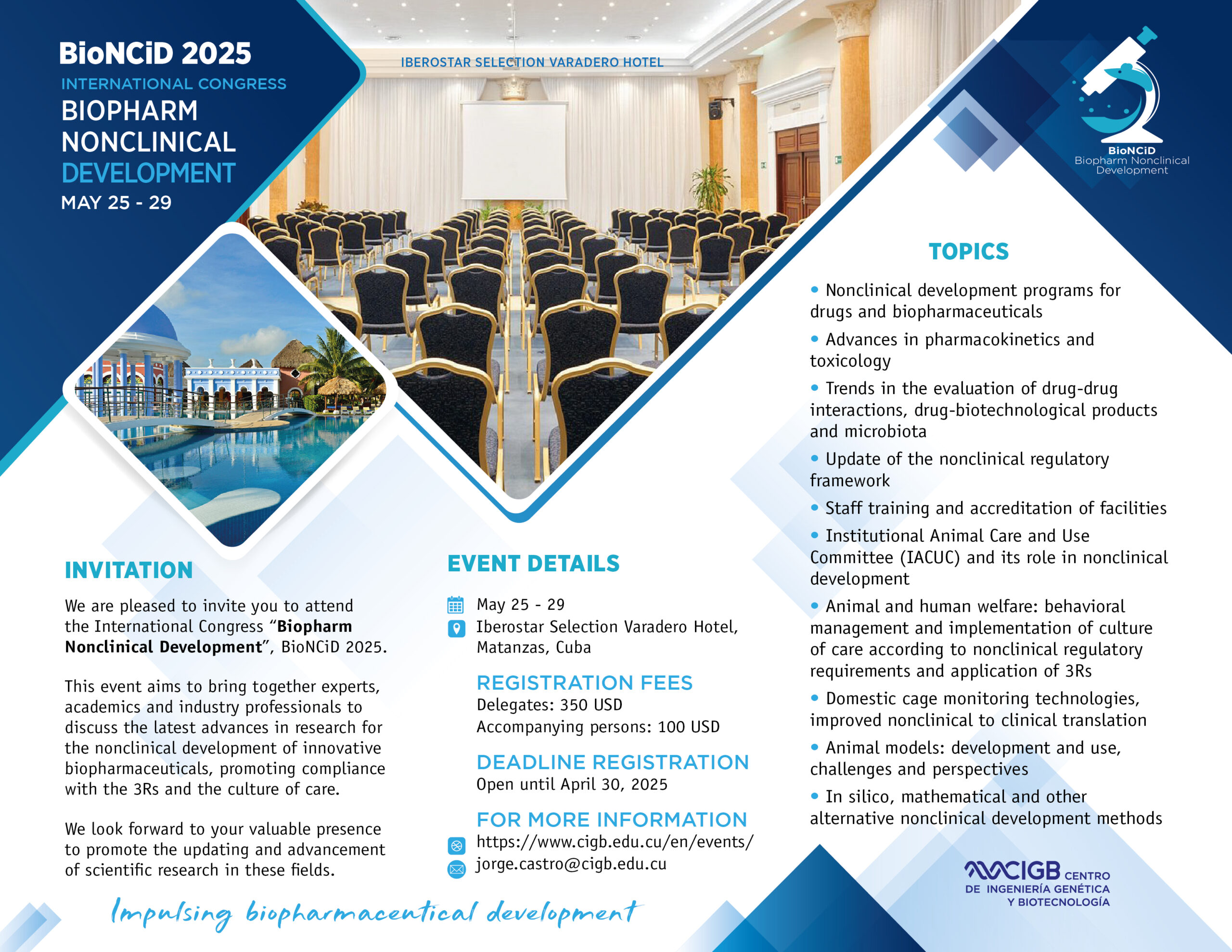
    We are pleased to extend a warm invitation to your institution/organization to participate in the upcoming International Congress “Biopharm Nonclinical Development” (BioNCiD 2025), organized by the Center for Genetic Engineering and Biotechnology (CIGB), Havana, Cuba. Your participation would be of great importance to us.

    Event Details:
    📅 Date: May 25–29, 2025
    📍 Venue: Iberostar Selection Hotel, Varadero, Cuba

    About the Congress

    Nonclinical Development is a vital phase in the process of obtaining pharmaceutical and biotechnological products. BioNCiD 2025 aims to:

    • Update the scientific community on the latest advancements in nonclinical development.

    • Promote compliance with the 3 Rs (Replacement, Reduction, and Refinement) and the Culture of Care.

    • Encourage scientific and regulatory progress in the nonclinical evaluation of biotech and pharmaceutical products.

    • Facilitate networking and exchange among leading international academic and industry experts.

    Main Topics

    1. Nonclinical Development Programs of Drug and Biotechnological Products

    • Trends in Pharmacokinetic and Toxicology Development

    • Drug-Drug Interactions: Especially between drugs/biologics and microbiota

    • Updates in the Nonclinical Regulatory Framework

    2. Animal and Personal Welfare

    • Staff Training and Facility Accreditation

    • The Role of IACUC in Nonclinical Development

    • Animal Welfare, Behavior Management, and Culture of Care in Regulatory Contexts

    • Compassion Fatigue and Human-Animal Interaction

    • Home Cage Monitoring Technologies and Improved Translational Outcomes

    3. Alternative Methods or Modeling to Animal Experimentation

    • Development and Use of Novel and Traditional Animal Models, including Genetically Engineered Animals

    • Animal Models in Emerging Diseases

    • Monitoring and Utilization of Spontaneous Animal Models

    Should you require further information, please contact:
    bioncid@cigb.edu.cu

    If you are unable to attend, we kindly ask that you forward this information to colleagues who may be interested.

    We look forward to welcoming you at BioNCiD 2025!

    Warm regards,
    The Organizing Committee
    Center for Genetic Engineering and Biotechnology (CIGB), Havana, Cuba