Tag: University of Cape Town

  • July 2025: Mrs Millicent Akotam Agangiba – African Female Researcher of the Month

    July 2025: Mrs Millicent Akotam Agangiba – African Female Researcher of the Month


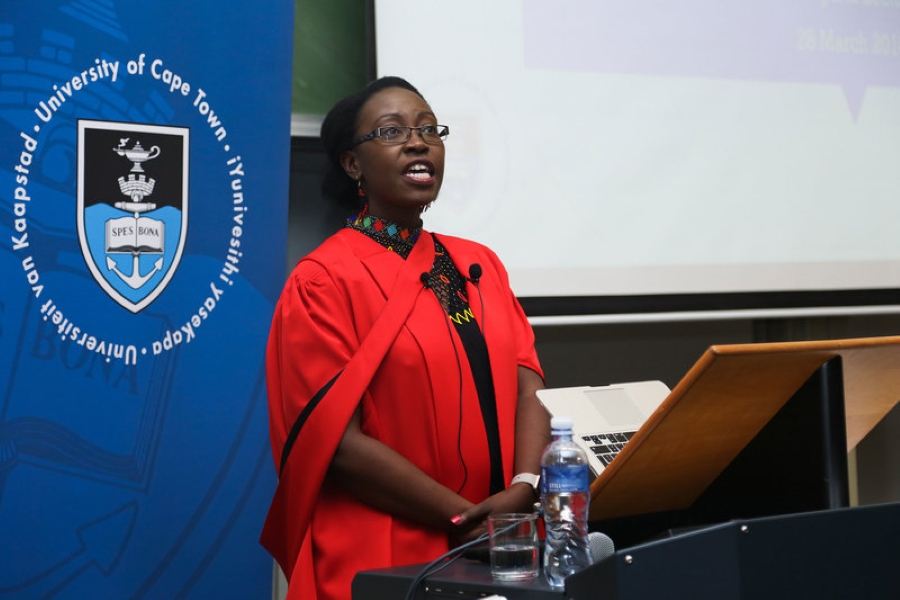
    Illustrative Image: July 2025: Mrs Millicent Akotam Agangiba – African Female Researcher of the Month
    Image Source & Credit: University of Cape Town
    Ownership and Usage Policy
    African Researchers AwardJuly 2025: Mrs Millicent Akotam Agangiba – African Female Researcher of the Month

    Dr. Millicent Akotam Agangiba is a distinguished Ghanaian academic, award-winning researcher, and advocate for inclusive digital access. A Senior Lecturer in Information Technology and the former Head of Department at the University of Professional Studies, Accra (UPSA), Dr. Agangiba exemplifies the transformative power of technology in advancing equity, access, and innovation across Africa and beyond. With over 14 years of experience in academia, her career spans institutions in Ghana, South Africa, and Russia, where she has championed research in Human-Computer Interaction, Assistive Technologies, Web Accessibility, and Inclusive e-Government systems.

    A Prestigious International Recognition

    Dr. Agangiba gained continental recognition when she won the L’Oréal-UNESCO For Women in Science Award (2016), an honour bestowed on her in Sandton, Johannesburg, South Africa. She received a Doctoral Fellowship worth €5,000 for her impactful research titled:

    “Investigating E-government Accessibility for Persons with Disabilities in Developing Countries – The Case of Ghana.”

    This research explores the often-overlooked digital divide that excludes persons with disabilities from public digital services. Her work seeks to inform the design of accessible and inclusive e-government platforms in developing countries, and it stands as a bold effort to reimagine public service through the lens of equity and technology.

    As part of a select group of 14 outstanding female scientists chosen from across Sub-Saharan Africa, Dr. Agangiba’s win highlights her exceptional academic excellence, innovation, and commitment to societal impact. Her project was selected based on its originality, scientific merit, and transformative potential—contributing to inclusive digital governance and social justice.

    The L’Oréal-UNESCO fellowship programme has, for nearly two decades, uplifted more than 2,500 women scientists in 112 countries, and Dr. Agangiba’s selection is a testimony to her intellectual rigor, scientific leadership, and advocacy for inclusion in STEM.

    Academic Background

    • PhD in Information Systems
      University of Cape Town, South Africa (2020)

    • MSc in Computer Science
      Tver State Technical University, Russia (2007)

    Teaching and Academic Leadership

    Dr. Agangiba began her academic career in 2010 and has held several notable positions:

    • Head of Department & Senior Lecturer, University of Professional Studies, Accra (2023–2024)

    • Senior Lecturer, University of Mines and Technology, Tarkwa (2021–2023)

    • Lecturer, University of Mines and Technology, Tarkwa (2011–2021)

    • Lecturer, Pentecost University College, Accra (2010–2011)

    • Lecturer, Zenith University College, Accra (2010)

    She has taught undergraduate and postgraduate courses in:

    • Human-Computer Interaction

    • Programming Languages (C#, Java, Python)

    • Web and Database Systems (SQL/NoSQL)

    • Computer Networking and Cloud Computing

    • Artificial Intelligence and the Internet of Things

    Research Interests and Expertise

    Dr. Agangiba’s scholarly focus addresses some of the most pressing challenges in the digital age, particularly the marginalization of vulnerable populations in technological advancement. Her research covers:

    • Human-Computer Interaction (HCI)

    • Assistive and Inclusive Technologies

    • Web Accessibility for People with Disabilities

    • E-Government and Digital Inclusion

    • AI and Emerging Technologies for Social Impact

    She has published in reputable international journals and presented at global conferences, further amplifying the global relevance of her work.

    Awards and Recognitions

    • L’Oréal-UNESCO For Women in Science Sub-Saharan Africa Fellowship (2016)

    • Don Norman Design Awards (2024) – for contributions to inclusive design in digital services

    • Schlumberger Faculty for the Future Fellowship (2015–2018)

    • Best Poster Award, European Conference on Digital Government, Portugal (2018)

    Professional Affiliations

    • Senior Member, IEEE (Institute of Electrical and Electronics Engineers)

    • Professional Member, Institution of Engineering and Technology (IET), Ghana

    • Member, International Association of Engineers (IAENG)

    • Member, Association of Information Systems (AIS)

    • Member, Internet Society Chapter (ISOC)

    Leadership and Advocacy

    Beyond academia, Dr. Agangiba is a passionate advocate for inclusive digital policy. She serves as the Executive Director of Inclusive Tech Group, Ghana, a non-profit organization championing the use of technology to promote inclusion and accessibility for underrepresented communities.

    She brings a global perspective and intercultural competence, shaped by her experiences across Africa, Europe, and Eurasia, with a deep commitment to ensuring that digital transformations do not leave anyone behind.

    Conclusion

    Dr. Millicent Akotam Agangiba is a trailblazer in the field of Information Systems and inclusive digital development. Her work not only advances scientific knowledge but also bridges the gap between research and real-world impact. Her recognition by the L’Oréal-UNESCO For Women in Science Programme places her among the most influential African women in STEM, and her ongoing contributions continue to inspire the next generation of female scientists and technologists across the continent.

  • July 2025: Professor Kelly Chibale – African Male Researcher of the Month

    July 2025: Professor Kelly Chibale – African Male Researcher of the Month


    Illustrative Image: July 2025: Professor Kelly Chibale – African Male Researcher of the Month
    Image Source & Credit: ACS axial
    Ownership and Usage Policy

    African Researchers AwardJuly 2025: Professor Kelly Chibale – African Male Researcher of the Month

    Professor Kelly Chibale, PhD, FRSSAf, FRSC, MASSAf, FAAS, is a globally celebrated Zambian-born organic chemist, visionary scientific leader, and founder of Africa’s first integrated drug discovery centre. Currently a professor of organic chemistry at the University of Cape Town (UCT) and holder of the prestigious Neville Isdell Chair in African-centric Drug Discovery and Development, Chibale is internationally acclaimed for transforming Africa’s pharmaceutical research landscape and promoting health innovation tailored to African needs.

    Early Life and Academic Journey

    Born on 31 March 1964 in Muwele Village, in Zambia’s Mpika district, Chibale’s humble beginnings—growing up without electricity or running water—fostered a deep sense of purpose and resilience. After completing his BSc in Chemistry at the University of Zambia in 1987, Chibale began his career at Kafironda Explosives in Mufulira. With limited opportunities for graduate studies in Zambia, he secured a Cambridge Livingstone Trust Scholarship and moved to the University of Cambridge, where he earned his PhD under the supervision of the renowned chemist Stuart Warren, focusing on the synthetic organic chemistry of optically active molecules.

    Global Research Contributions

    Chibale’s postdoctoral journey took him to world-class institutions, including the University of Liverpool (as a Sir William Ramsay Fellow), and The Scripps Research Institute, where he advanced the synthesis of complex natural products and angiogenesis inhibitors for cancer treatment. A pivotal moment in his career came when he returned to Africa in 1996, inspired to apply medicinal chemistry in addressing diseases burdening the continent.

    After joining UCT in 1996, he held a Sandler Foundation Sabbatical Fellowship at the University of California, San Francisco in 2002. He was promoted to Professor in 2007 and became a Life Fellow of UCT in 2009.

    Founder of H3D – Africa’s First Drug Discovery Centre

    In 2010, Professor Chibale founded the Holistic Drug Discovery and Development Centre (H3D) at UCT—the first and only drug discovery centre of its kind in Africa. Through H3D and its nonprofit arm, H3D Foundation NPC, Chibale pioneered a new era in African biomedical science by integrating medicinal chemistry, biology, and pharmacology to discover drugs for infectious diseases such as malaria, tuberculosis, and antibiotic-resistant bacteria.

    His team’s most notable success includes the discovery of MMV390048, a groundbreaking antimalarial compound developed in partnership with Medicines for Malaria Venture (MMV). It became the first African-discovered drug candidate to enter phase I clinical trials in Africa. A follow-up compound, UCT943, also entered the global drug development pipeline.

    International Recognition and Prestigious Awards

    Professor Chibale’s impact has earned him numerous accolades and international distinctions, such as:

    • 🏆 Royal Society (UK) Africa Prize (2023) – for groundbreaking contributions to drug discovery on the African continent.

    • 🏅 Schmidt Sciences AI2050 Senior Fellowship (2023) – one of just seven recipients globally, for using AI in biomedical research.

    • 🎓 Honorary Doctorate, University of Basel (2023) – awarded by the Faculty of Science for leadership in pharmaceutical innovation.

    • ✒️ First African Editor-in-Chief of an American Chemical Society journal, ACS Medicinal Chemistry Letters (2023).

    • 🥇 South African Medical Research Council Gold Medal (2016) – recognizing excellence in medical science.

    • 🥇 South African Chemical Institute Gold Medal (2018) – for outstanding contributions to chemical science.

    • 🥇 National Science and Technology Forum–BHP Billiton Award (2011) – for outstanding senior Black researcher in South Africa.

    • 🥇 NRF Special Recognition Award (2012) – Champion of Research Capacity Development.

    • 🎖️ UCT Alan Pifer Research Award (2011) – for socially responsive research.

    Global Influence and Leadership

    Chibale has been consistently recognized as a thought leader, appearing on:

    • Fortune Magazine’s Top 50 World’s Greatest Leaders (2018)

    • New African Magazine’s 100 Most Influential Africans (2019)

    • The Medicine Maker Power List (2020, 2021) – among the top 60 global pharmaceutical leaders.

    • Timmerman Report (2021) – as one of 22 influential Black biotech leaders in the U.S.

    • Harvard Public Health Magazine (2022) – among 25 standout African public health voices.

    He is also a Fellow of multiple prestigious institutions, including:

    • Royal Society of Chemistry (FRSC)

    • Royal Society of South Africa (FRSSAf)

    • African Academy of Sciences (FAAS)

    • University of Cape Town (Life Fellow)

    Champion of African Innovation

    Professor Chibale is not only a world-renowned scientist but also a mentor and science diplomat. He has established exchange programmes for South African students, collaborated with global pharmaceutical companies, and worked closely with governments and funding agencies—including Bill Gates—to build Africa’s capacity for innovation in drug development.

    Through his writing, including for The Conversation, he has advocated for African-led solutions to African health problems, arguing that true innovation must reflect the genetic diversity, cultural context, and disease burden of African populations.

    Legacy

    Professor Kelly Chibale’s journey from a rural Zambian village to a global pharmaceutical pioneer stands as a testament to the power of education, perseverance, and visionary leadership. His work has redefined what is possible for African science—building not just compounds, but capacity, collaboration, and hope.

  • December 2024: Professor Caroline Ncube – African Female Researcher of the Month

    December 2024: Professor Caroline Ncube – African Female Researcher of the Month

    African Researchers AwardDecember 2024: Professor Caroline Ncube – African Female Researcher of the Month

    Overview

    Professor Caroline Ncube is an esteemed academic at the University of Cape Town (UCT), where she serves as a professor in the Faculty of Law. Her groundbreaking work in intellectual property (IP) law has established her as a thought leader in understanding and leveraging IP to foster societal and economic progress. With a career spanning significant academic contributions, thought leadership, and impactful teaching, Professor Ncube’s work exemplifies the transformative power of legal scholarship in addressing global challenges.

    In recognition of her contributions, Professor Ncube was named the 2024 Distinguished Women Researcher in Humanities and Social Sciences by the South African Women in Science Awards (SAWiSA). This prestigious honor from the Department of Science and Innovation (DSI) highlights her pivotal role in advancing innovation and addressing critical issues through her research.

    Academic and Research Excellence

    Professor Ncube’s research focuses on intellectual property law and its intersections with innovation and development. She has a keen interest in the societal impacts of IP, particularly in:

    • Education: Exploring how IP can improve access to educational resources and support inclusive learning environments.
    • Health: Investigating how IP frameworks can enhance the development and dissemination of healthcare innovations.
    • Climate Change: Analyzing the role of IP in driving sustainable solutions for environmental challenges.
    • Economic Development: Highlighting the ways IP can serve as a tool for fostering entrepreneurship and economic resilience, especially in developing nations.

    Her research is distinguished by its multidisciplinary approach, bridging law, social justice, and sustainable development. Her commitment to knowledge dissemination extends beyond academia, as she actively engages policymakers and industry leaders to promote equitable and inclusive IP systems.

    Award Recognition: SAWiSA 2024

    The 2024 SAWiSA awards ceremony, held in Mbombela, Mpumalanga, celebrated women leaders in science, technology, engineering, and mathematics (STEM). The event’s theme, “Transition towards an Innovation Economy: The Role of Women Leaders in STEM,” emphasized inclusivity and the often-overlooked contributions of women to diverse innovation sectors.

    Upon receiving the award, Professor Ncube remarked:

    “Being among all the finalists of the 2024 SAWiSA awards was a great affirmation. Just looking around and seeing generations of women in science all on a mission to heal the nation and world with their work was so inspiring. It shows us what women in science and academia can achieve and what those following us can also achieve. Igama lamakhosikazi malibongwe (Praise be to womankind).”

    Leadership and Impact

    Professor Ncube has consistently demonstrated leadership in her field by mentoring emerging scholars and promoting diversity in legal research. Her work embodies a vision of inclusive legal systems that empower marginalized communities and support global equity in innovation.

    Her influence extends to the Emerging Researcher Programme (ERP) at UCT, which supports early-career researchers, particularly women, in strengthening their academic capabilities. This initiative reflects her commitment to fostering a diverse and dynamic academic landscape.

    Thought Leadership and Advocacy

    Professor Ncube is a sought-after voice in national and international forums on intellectual property. Her ability to connect legal theory with practical applications has positioned her as an advocate for progressive IP policies that prioritize public good over private monopoly. She collaborates with stakeholders across sectors, including governments, non-governmental organizations, and private industries, to ensure that IP laws support sustainable and equitable innovation.

    Inspiring Future Generations

    As an award-winning researcher, mentor, and advocate, Professor Caroline Ncube continues to inspire future generations of women in STEM and law. Her work not only addresses critical global challenges but also underscores the importance of empowering women leaders to drive innovation and societal transformation.

    Her recognition as a 2024 SAWiSA Distinguished Women Researcher solidifies her legacy as a beacon of excellence in intellectual property law and a champion for inclusive innovation economies.

  • Postdoctoral Research Fellowship Opportunity: Exploring Climate, Health, and Vulnerability in African and Asian Cities

    Postdoctoral Research Fellowship Opportunity: Exploring Climate, Health, and Vulnerability in African and Asian Cities

    The African Centre for Cities (ACC) is seeking applications for a three-year Postdoctoral Research Fellowship as part of the project “If Cities Could Speak: Vulnerability, Climate, and Health in the City,” led by the Indian Institute of Human Settlements (IIHS). This fellowship opportunity, funded by the Wellcome Trust, aims to explore the intersection of climate-related hazards and public health in vulnerable urban areas across Africa and Asia.

    About the African Centre for Cities (ACC)

    Established in 2007 at the University of Cape Town, ACC is an interdisciplinary urban research institute within the School of Architecture, Planning, and Geomatics. The center focuses on fostering critical urban research and policy discourses to promote vibrant, democratic, and sustainable urban development in the global south.

    Project Overview

    The project spans from April 2024 to April 2027, collaborating with partners in South Africa (ACC), Kenya (KDI), Sierra Leone (SLURC), and India (IIHS). It addresses:

    1. Impact of Climate Hazards on Health: Investigating how climate hazards affect public health in vulnerable areas, considering the complexity of health and climate risks.
    2. Methodological Approach: Utilizing mixed methodologies such as GIS mapping and health ethnography to advance understanding in public health and urban studies.
    3. Knowledge Translation: Creating non-academic outputs to communicate findings effectively to diverse audiences, including communities and policymakers.

    Role of the Postdoctoral Fellow

    The successful candidate will join an interdisciplinary team at ACC, focusing on vulnerable settlements within cities. Key responsibilities include:

    • Methodology Development: Collaborating on city-wide risk mapping and providing qualitative inputs.
    • Field Research: Conducting health history interviews and participant observations in selected settlements.
    • Output Development: Contributing to academic and non-academic outputs, including visual materials and short films.

    Eligibility Criteria Applicants must have

    • Recently completed a doctoral degree (or submitted PhD under review) in fields related to urban studies, public health, or related disciplines.
    • Demonstrated experience in research within informal settlements or vulnerable urban areas.
    • Ability to translate research findings for diverse audiences and willingness to engage with mixed research methodologies.

    Conditions and Application Process

    The fellowship is valued at R 420,000 per annum, renewable up to three years, contingent on performance and funding availability. Applicants must submit a proposal, CV, academic transcripts, and contact details of referees by July 29, 2024, to faranaaz.bennett@uct.ac.za.

    Selection Process

    Shortlisted candidates will undergo interviews in early August, conducted by a panel comprising ACC staff and project members. For more information, contact Dr. Liza Cirolia at liza.cirolia@uct.ac.za.

  • AERC PhD Fellowships 2024/2025: Empowering African Economists for Sustainable Development

    AERC PhD Fellowships 2024/2025: Empowering African Economists for Sustainable Development

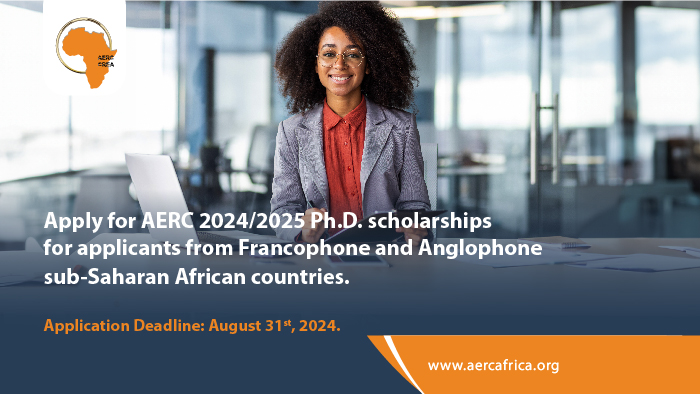
    The African Economic Research Consortium (AERC) is currently accepting applications for its 2024/2025 PhD Fellowships. This opportunity is designed for students from Francophone and Anglophone sub-Saharan African countries who are pursuing advanced studies in economics. Established in 1988, the AERC is a not-for-profit organization focused on enhancing economic policy research and training across Africa. The organization plays a vital role in supporting capacity building in economic policy through policy research and graduate education.

    The fellowship program aims to strengthen the continent’s economic research capacity by providing scholarships to students admitted to AERC Collaborative PhD Programs (CPP) at various universities. These universities include:

    • University of Cape Town, South Africa
    • University of Abomey-Calavi, Benin
    • University of Dar es Salaam, Tanzania
    • University of Benin, Nigeria
    • Félix Houphouet-Boigny University, Côte d’Ivoire
    • University Cheikh Anta Diop in Dakar, Senegal
    • University of Ibadan, Nigeria
    • University of Nairobi, Kenya
    • University of Yaoundé II, Cameroon
    • University of Pretoria, South Africa
    • University of Witwatersrand, South Africa

    To be eligible, applicants must fulfill the following criteria:

    1. University Admission: Applicants must be admitted to one of the listed CPP universities for a PhD program in economics.
    2. Academic Background: A minimum of Second Class Honours (Upper Division) or equivalent in economics, agricultural economics, or related fields from an accredited institution is required. Additionally, a master’s degree with coursework and a thesis in economics, agricultural economics, or related fields is essential. The coursework must cover core economic subjects such as microeconomics, macroeconomics, quantitative methods, and econometrics.
    3. Research and Professional Experience: While not mandatory, having at least one publication in a peer-reviewed journal is an advantage. Prior involvement in economic management, research, or training within the public sector is also beneficial.
    4. Diversity and Inclusion: The program encourages applications from women and candidates from post-conflict or fragile states.

    Applicants who wish to apply should first seek admission to one of the listed universities through the respective university’s application process. Upon receiving an admission letter, they must upload the following documents to the AERC scholarship portal:

    • Application cover letter
    • Curriculum vitae
    • Evidence of admission to one of the eligible universities
    • Certified copies of academic transcripts and certificates

    The application deadline for the fellowship is August 31, 2024.

    By offering this fellowship, the AERC aims to nurture a new generation of economists who can contribute significantly to policy-making, economic development, and research in their home countries and across the African continent. This initiative is critical for ensuring the long-term sustainability and resilience of Africa’s economic systems and policy frameworks.

    Visit the Official Webpage of the African Economic Research Consortium (AERC) PhD Fellowships

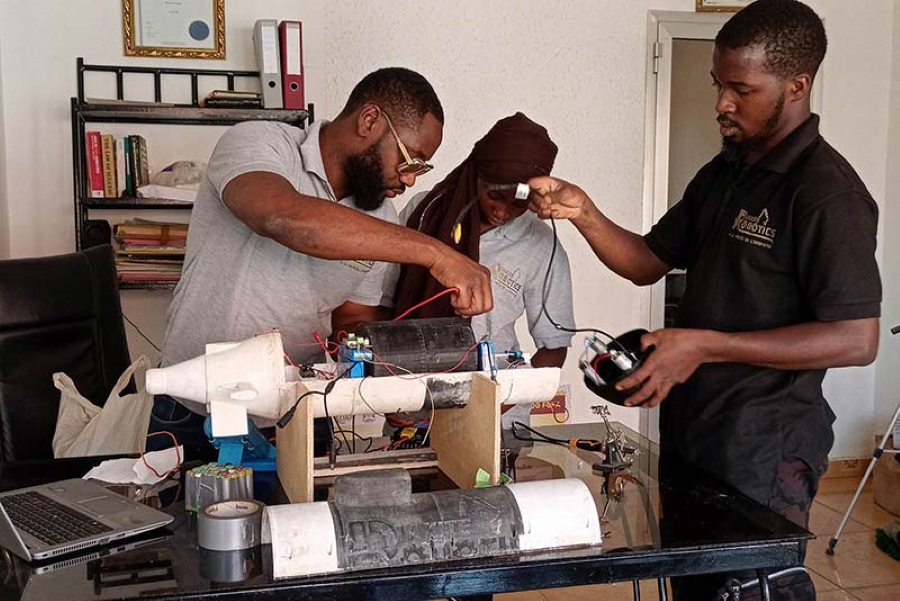
  • Pioneering Robotics Research in South Africa: Unveiling the African Robotics Unit’s Innovations in Marine Systems, Spatial Intelligence, and Biology-Inspired Robotics

    Pioneering Robotics Research in South Africa: Unveiling the African Robotics Unit’s Innovations in Marine Systems, Spatial Intelligence, and Biology-Inspired Robotics

    In the realm of robotics, South Africa may not be the first country that comes to mind, but the African Robotics Unit (ARU) at the University of Cape Town has been pioneering groundbreaking research, capitalizing on the unique opportunities presented by the country’s distinct challenges and advantages. The authors explore the multifaceted initiatives undertaken by the ARU, shedding light on their contributions to both international robotics research and local scientific endeavors.

    Location-Specific Opportunities

    South Africa’s intricate challenges, from inconsistent electricity supply to harsh climatic conditions, might appear unfavorable for robotics research. However, the ARU has identified specific opportunities within these challenges. Over the past decade, the ARU has empowered local scientists to leverage South Africa’s location-specific advantages, notably in marine systems research and biodiversity-inspired robotics.

    Autonomous Marine Systems Lab

    In collaboration with the UCT Centre for Marine and Antarctic Research for Innovation and Sustainability (MARIS), the ARU’s Autonomous Marine Systems Lab focuses on designing scalable autonomous platforms and sensors for ocean science research. South Africa’s strategic location at the convergence of the Atlantic, Southern, and Indian oceans provides a unique gateway for exploring the Southern Ocean, a vital component in understanding global climate dynamics. The lab’s recent deployment of novel waves-in-ice instruments in Antarctica represents a pioneering effort, generating a first-of-its-kind dataset for the region.

    Spatial Intelligence Lab

    The ARU’s Spatial Intelligence Lab addresses fundamental technical and social barriers hindering the widespread deployment of robots in the South African and African context. From the cost challenges associated with robotic platforms to niche problems like operating agricultural robots in extreme temperatures, the lab strives to make robotics more accessible within the Southern African context.

    Biology-Inspired Robotics

    Given South Africa’s rich biodiversity, it is unsurprising that a significant portion of the ARU’s work lies in biology-inspired robotics. Starting with Dima, a wheeled robot inspired by cheetah tail movements, the ARU has delved into rapid maneuverability. Current projects include Baleka, a quasi-direct drive bipedal robot, and Kemba, a quadruped with a unique combination of electric motors and pneumatic actuators. The ARU’s collaboration with cheetah sanctuaries and advancements in machine learning have enabled the creation of AcinoSet, the first dataset of three-dimensional reconstructions of running cheetahs.

    Growing Robotics Presence

    The ARU’s endeavors are part of a larger trend in South African research institutions. The Robotics, Autonomous Intelligence, and Learning (RAIL) Lab at the University of Witwatersrand and the Electronic Systems Lab (ESL) at Stellenbosch University contribute to the country’s growing robotics presence. These institutions focus on acquiring environmental knowledge, developing novel behaviors for autonomous systems, and expanding into automation across various domains.

    Conclusion: In a hypothetical scenario where African ingenuity could flourish unencumbered, South Africa’s robotics groups would undoubtedly lead the world. The ARU’s initiatives extend beyond robotics, shaping a brighter future for scientists in South Africa and contributing valuable insights to global research endeavors.