Tag: underserved populations

  • IDRC Launches CAD 1.2 Million Grants for SRHR Research in Sub-Saharan Africa: Empowering African Researchers and Communities

    IDRC Launches CAD 1.2 Million Grants for SRHR Research in Sub-Saharan Africa: Empowering African Researchers and Communities

    The International Development Research Centre (IDRC) has launched a funding initiative titled “Addressing Neglected Areas of Sexual and Reproductive Health and Rights in Sub-Saharan Africa” (ANSRHRA) for 2024. This initiative aims to improve sexual and reproductive health and rights (SRHR) for underserved populations, particularly women and girls, across sub-Saharan Africa by supporting transformative gender-based research projects.

    Award Overview

    • Application Deadline: May 13, 2024, by 23:59 ET.
    • Award Type: Grants
    • Grant Funding: Up to CAD 1.2 million per implementation research team, with a duration of up to 36 months.

    Eligibility and Priority Areas: The ANSRHRA Initiative is specifically focused on five key areas of SRHR:

    1. Improving access to family planning and contraceptive services.
    2. Expanding access to safe abortion where legally permitted and providing post-abortion care.
    3. Upholding SRHR rights and ensuring access to services for adolescents.
    4. Preventing and improving services for those experiencing sexual and gender-based violence.
    5. Strengthening advocacy for SRHR.

    Successful projects must address at least one of these focus areas and demonstrate a commitment to gender-transformative change and feminist research methodologies. This includes integrating health systems research perspectives, collaborative approaches, and working with local priorities and knowledge, especially from underserved populations.

    Project Team Requirements

    • A research team must include:
      • An African-based principal investigator from an eligible institution in the same country as the project.
      • A senior member of a civil society organization prioritizing or led by underserved populations, active in supporting priority SRHR areas, as a co-principal investigator.
      • An independent researcher based at a Canadian institution as a co-principal investigator.
      • At least one decision-maker at the local, district, or national level from the same country as the principal investigator.

    Application Process: The application process involves a two-stage approach:

    1. Letter of Interest (LOI): In the initial stage, applicants must submit a letter of interest, which includes completing an eligibility checklist and uploading supporting documents.
    2. Full Technical Proposal: Only successful applicants from the LOI stage will be invited to submit a detailed technical proposal.

    Important Dates and Resources:

    • Virtual Q&A Webinar: Scheduled for March 26, 2024, from 8:00-9:30 a.m. EDT/3:00-4:30 p.m. CAT, with simultaneous French interpretation.
    • Registration for Webinar: Closes on March 25, 2024, at 5:00 p.m. EDT/11:00 p.m. CAT.
    • Further Information and Resources: Applicants are encouraged to consult the call document and FAQs for detailed requirements and eligibility criteria.

    Empowering African Research and Innovation in Sexual and Reproductive Health and Rights

    The International Development Research Centre (IDRC) funding initiative “Addressing Neglected Areas of Sexual and Reproductive Health and Rights in Sub-Saharan Africa” (ANSRHRA) for 2024 presents a significant opportunity for research grants to Africans, particularly in the following ways:

    1. Local Empowerment and Ownership: By emphasizing the inclusion of African-based principal investigators and research teams, the initiative fosters local ownership and empowerment in tackling SRHR issues. This approach ensures that research is grounded in the local context and tailored to meet the specific needs of African communities.
    2. Capacity Building: The grants offer an avenue for African researchers and institutions to strengthen their research capacity in SRHR. This includes gaining access to international collaborations, methodologies, and best practices that can enhance local research expertise and contribute to sustainable development.
    3. Focus on Underserved Populations: By prioritizing research that addresses the SRHR needs of underserved populations such as women, girls, and adolescents, the grants empower local researchers to identify and address pressing issues within their communities. This targeted approach can lead to more effective and relevant interventions.
    4. Interdisciplinary and Collaborative Approaches: The initiative’s requirement for a collaborative team, including researchers from Canadian institutions and local decision-makers, promotes interdisciplinary and cross-cultural approaches to research. This collaboration can lead to innovative solutions and a more comprehensive understanding of SRHR challenges.
    5. Policy and Advocacy Impact: By including decision-makers as part of the research team, the grants facilitate the translation of research findings into actionable policy changes and advocacy efforts. This integration can lead to long-term improvements in SRHR services and rights for African populations.
    6. Fostering Gender-Transformative Change: The focus on gender-transformative change and feminist research methodologies emphasizes the importance of challenging traditional norms and power structures. This approach can contribute to greater gender equality and empowerment within African societies.
    7. Access to Funding and Resources: The grants provide substantial financial support (up to CAD 1.2 million per team) for research projects over an extended period (up to 36 months). This level of funding enables researchers to undertake comprehensive studies and implement transformative initiatives.
    8. Promoting Sustainable Change: By supporting projects that integrate local priorities and knowledge, the grants promote sustainable, community-driven change that aligns with the values and needs of African populations.

    Overall, the IDRC’s ANSRHRA Initiative offers African researchers and institutions a unique and impactful opportunity to contribute to the advancement of sexual and reproductive health and rights in the region, fostering sustainable and meaningful change for underserved populations.

    For the complete eligibility requirements, including a list of eligible countries and frequently asked questions (FAQs), please visit the links below:

    1. Call for letters of interest document
    2. FAQ document 

    Visit Award Webpage for Details

  • Empowering Financial Inclusion: ADFI’s Human-Centered Design for Gender-Focused Digital Financial Solutions in Africa

    Empowering Financial Inclusion: ADFI’s Human-Centered Design for Gender-Focused Digital Financial Solutions in Africa

    In the quest to enhance financial inclusion and economic empowerment, the Africa Digital Financial Inclusion Facility (ADFI) has adopted innovative research approaches, particularly human-centered design, to understand and address barriers faced by marginalized groups, including women, youth, rural dwellers, and small-business owners. The focus is on creating digital financial solutions that are not only accessible and affordable but also culturally and socially relevant.

    Innovative Initiatives by Yello Digital Financial Services

    One notable initiative involves Yello Digital Financial Services Ltd, a fintech subsidiary of MTN Nigeria Communications Plc, which has developed gender-focused mobile money (MoMo) agent networks. These networks aim to empower women entrepreneurs by providing them with training on digital financial solutions, overcoming challenges posed by cultural and social norms. This initiative enables women like Judith Laokwali to better manage customer payments and improve their economic activities.

    Empowering Financial Inclusion: ADFI's Human-Centered Design for Gender-Focused Digital Financial Solutions in Africa

    Illustrative Image: Empowering Financial Inclusion: ADFI’s Human-Centered Design for Gender-Focused Digital Financial Solutions in Africa
    Image Source & Credit: African Development Bank Group
    Ownership and Usage Policy

    Human-Centered Design Approach

    Human-centered design research has played a pivotal role in shaping digital credit solutions offered by M-KOPA. By involving women in the design process, M-KOPA has tailored loan repayment options and facilitated access to digital credit using pay-as-you-go smartphone services as collateral. This approach has been piloted in Kenya, leading to increased women’s participation in a PAYG financial inclusion pathway.

    Similarly, Pula Advisors has utilized ADFI grants to conduct research and develop gender-centric microinsurance solutions for women smallholder farmers in Kenya, Nigeria, and Zambia. The research focuses on understanding social, cultural, and economic factors affecting women farmers’ access to microinsurance. The outcome is expected to be the creation of insurance products and services aligned with the specific needs of women farmers, ultimately closing the gender gap in microinsurance adoption.

    Innovative Initiatives by Yello Digital Financial Services:

    ADFI’s overarching strategy involves catalytic and strategic investments in digital financial solutions across three main pillars: digital infrastructure, policy and regulation, and products and innovation, with gender inclusion and capacity building as cross-cutting themes. By involving participants in the design process and addressing specific needs through research, ADFI aims to break down barriers to digital financial solutions’ growth and uptake, thereby accelerating financial inclusion and reducing gender disparities.

    Through initiatives like these, ADFI is not only empowering individuals like Judith Laokwali and women smallholder farmers but also contributing to the development of replicable and innovative human-centered design frameworks for digital financial services. The goal is to enable individuals to champion their own needs, actively participate in product design, and influence their communities on the benefits of digital financial solutions. This approach holds the promise of fostering sustainable economic growth and resilience among traditionally underserved populations.

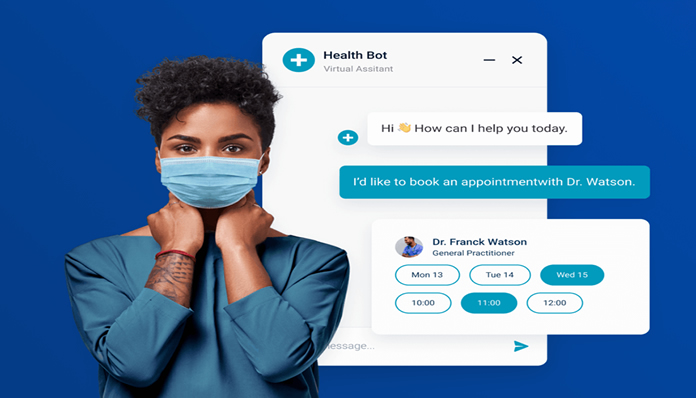
  • Health Chatbots in Africa: Transforming Healthcare for Underserved Populations – A Comprehensive Scoping Review 2023

    Health Chatbots in Africa: Transforming Healthcare for Underserved Populations – A Comprehensive Scoping Review 2023

    A recent article by Phiri, M., & Munoriyarwa, A. (2023) titled Health Chatbots in Africa: Scoping Review published in Journal of Medical Internet Research. The main finding of the paper is that health chatbots in Africa are very instrumental for health promotion, disease prevention, diagnosis, treatment, and self-management, and that they have the potential to improve access to health care, especially for underserved populations, by providing low-cost, convenient, and personalized services.

    This article is about health chatbots in Africa, which are computer programs that can interact with users through text or voice to provide health information, services, or support. The article is a scoping review, which means it aims to map the existing literature on this topic and identify the main themes, gaps, and challenges.

    Methods

    The methodology used in the study is based on the scoping review framework proposed by Arksey and O’Malley (2005) and refined by Levac et al. (2010) and the Joanna Briggs Institute (2015). The scoping review methodology consists of six steps:

    Identifying the research question: The authors formulated a broad research question to guide the scoping review: “What is the current state of knowledge on health chatbots in Africa?”

    Identifying relevant studies: The authors searched six electronic databases (PubMed, Scopus, Web of Science, CINAHL, Cochrane Library, and African Journals Online) and two grey literature sources (Google Scholar and OpenGrey) for studies published from January 2017 to December 2020 that reported on health chatbots in Africa. They also searched the reference lists of the included studies and contacted experts in the field for additional studies.

    Study selection: The authors screened the titles and abstracts of the retrieved studies using predefined inclusion and exclusion criteria. They then retrieved the full texts of the potentially relevant studies and assessed them for eligibility. Two reviewers independently performed the screening and selection process, and any disagreements were resolved by consensus or consultation with a third reviewer.

    Charting the data: The authors extracted data from the included studies using a standardized data extraction form. The data extraction form included information on study characteristics, chatbot characteristics, health topic, target population, purpose, functionality, design, development, deployment, evaluation, outcomes, and challenges. Two reviewers independently extracted the data, and any discrepancies were resolved by discussion or consultation with a third reviewer.

    Collating, summarizing, and reporting the results: The authors analyzed the data using descriptive statistics and thematic analysis. They presented the results in tables, figures, and narrative summaries. They also used a PRISMA-ScR flow diagram to report the study selection process and a PRISMA-ScR checklist to ensure transparent reporting of the scoping review.

    Consulting with stakeholders: The authors consulted with stakeholders from academia, industry, policy, and practice to validate and contextualize the findings of the scoping review. They conducted semi-structured interviews with 12 stakeholders who had experience or expertise in health chatbots in Africa. They used an interview guide that covered topics such as current practices, challenges, opportunities, and recommendations for health chatbots in Africa. They analyzed the interview data using thematic analysis and integrated the results with the literature review findings.

    Some of the main findings of the article are:

    • Health chatbots in Africa are mainly used for health promotion, disease prevention, diagnosis, treatment, and self-management.
    • Health chatbots in Africa have the potential to improve access to health care, especially for underserved populations, by providing low-cost, convenient, and personalized services.
    • Health chatbots in Africa face several challenges, such as lack of internet connectivity, low digital literacy, language and cultural barriers, ethical and legal issues, and limited evidence of effectiveness and impact.

    Some common examples of health chatbots in Africa are:

    • NurseBot in South Africa, which provides health information and advice to pregnant women and new mothers through WhatsApp.
    • Mum’s Companion in Zimbabwe, which provides maternal and child health information and support through Facebook Messenger.
    • Nuru in Kenya and Ghana, which provides agricultural, financial, classified ads, and health services through Facebook Messenger⁴.
    • Sexual and Reproductive Health Chatbot in Kenya, which provides sexual and reproductive health information and referrals through Facebook Messenger.
    • Medbit in Nigeria, which provides medical consultations and referrals through WhatsApp.

    Implications of the study

    • The implications of the study are that health chatbots in Africa can have positive impacts on health care delivery and health outcomes, but also face significant challenges and limitations that need to be addressed. Some of the possible implications are:
    • Health chatbots in Africa can improve access to health information and services, especially for rural and remote populations, who may have limited or no access to health facilities, health workers, or reliable sources of health information. Health chatbots can provide health education, awareness, and prevention messages, as well as diagnosis, treatment, and self-management support, through mobile phones or social media platforms that are widely used in Africa. Health chatbots can also reduce the cost and time of seeking health care, as well as the stigma and discrimination that some people may face when accessing health services.
    • Health chatbots in Africa can enhance the quality and efficiency of health care delivery, by providing personalized, tailored, and evidence-based health advice and interventions. Health chatbots can also complement and augment the role of human health workers, by providing them with decision support tools, training opportunities, and feedback mechanisms. Health chatbots can also facilitate communication and coordination among different levels of the health system, such as primary, secondary, and tertiary care.
    • Health chatbots in Africa can improve health behaviors and outcomes, by influencing the knowledge, attitudes, beliefs, and practices of users regarding various health issues. Health chatbots can also monitor and track the progress and adherence of users to health interventions, such as physical activity, healthy diet, weight management, medication intake, etc. Health chatbots can also provide emotional and social support to users, by building rapport, trust, empathy, and motivation.
    • Health chatbots in Africa can also pose several challenges and risks to health care delivery and outcomes, such as lack of internet connectivity, low digital literacy, language and cultural barriers, ethical and legal issues, and limited evidence of effectiveness and impact. Health chatbots may not be able to reach or serve all segments of the population equally, due to disparities in access to technology, infrastructure, or resources. Health chatbots may also not be able to capture or address the complexity and diversity of health needs and contexts in Africa. Health chatbots may also raise ethical and legal concerns regarding data privacy, security, consent, accountability, liability, etc. Health chatbots may also have unintended or adverse effects on health behaviors and outcomes, such as misinformation, misdiagnosis, over-reliance, or user dissatisfaction.

    In conclusion, the scoping review by Phiri and Munoriyarwa highlights the potential and challenges of health chatbots in Africa. These computer programs have demonstrated their significance in promoting health, preventing diseases, and improving access to healthcare for underserved populations. The study sheds light on the various examples of health chatbots in Africa, serving as valuable tools for health promotion and self-management. However, challenges such as internet connectivity, digital literacy, and ethical concerns must be addressed to ensure equitable and effective implementation. Overall, the findings emphasize that while health chatbots hold promise for transforming healthcare delivery in Africa, careful consideration and further research are essential to fully harness their benefits while mitigating potential risks.

    Question for Contribution and Comments

    Dear reader, we value your input! Kindly share your thoughts, ideas, and comments regarding the question below in the comment section. Your valuable input will help shape our next article:

    “Considering the diverse and complex healthcare landscape in Africa, how can health chatbots be culturally sensitive to effectively bridge the gap between traditional medical practices and modern technological solutions?”