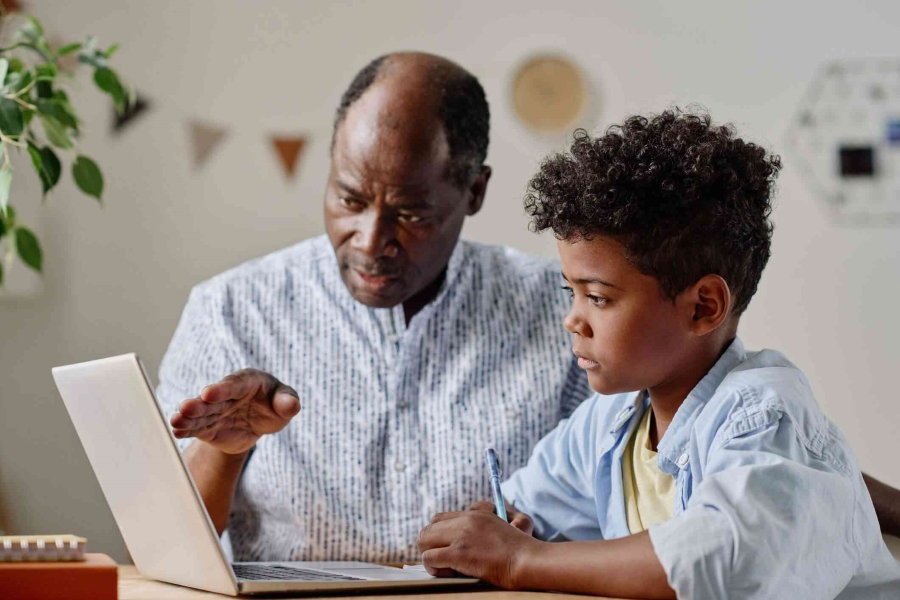
Illustrative Image: Authoritarian Parenting and Its Impact on Children’s Emotional Well-Being and Academic Performance: Insights from a Ugandan Study.
Image Source & Credit: Regain
Ownership and Usage Policy
A recent study by Mugyenyi et al. (2025) titled “The Impact of Authoritarian Parenting on Children’s Psychological Well-Being and Academic Performance” published in the International Journal of Multidisciplinary Research and Growth Evaluation reveals that most children experienced moderate levels of authoritarian parenting, characterized by high control and low emotional warmth.
“
Authoritarian parenting harms children’s emotional well-being and academic performance, while supportive parenting fosters higher self-esteem, confidence, and academic success.
– Mugyenyi et al. 2025
This study explored how strict and controlling (authoritarian) parenting affects children’s emotional health and academic achievement among primary school pupils. The research found that most children experienced moderate levels of authoritarian parenting, characterized by high control and low emotional warmth. Results showed significant negative correlations between authoritarian parenting and both psychological well-being (r = -0.472, p < 0.01) and academic performance (r = -0.389, p < 0.01). Conversely, psychological well-being was positively associated with academic performance (r = 0.531, p < 0.01). Pupils from authoritarian homes had an average academic score of 56.4%, compared to 71.5% among those from non-authoritarian homes. The findings indicate that children raised under authoritarian parenting are more likely to suffer from low self-esteem, increased anxiety, and poorer academic outcomes. The study further emphasizes that emotional well-being is a strong predictor of academic success and that supportive, balanced parenting fosters better psychological and educational development. However, the study acknowledges certain limitations, including its cross-sectional design—which limits causal inference—its reliance on self-reported data, which may introduce bias, and its focus on a single urban area, reducing generalizability to other contexts.
How the Study was Conducted
The study used a quantitative cross-sectional survey to explore the relationship between authoritarian parenting, children’s psychological well-being, and academic performance among 306 Primary Seven pupils in Makindye Division, Kampala District, Uganda.
Participants were selected using multi-stage sampling to ensure representation from both public and private schools. Data were gathered through three tools:
The Parenting Styles and Dimensions Questionnaire (PSDQ) to assess authoritarian traits.
A child-adapted Psychological Well-Being Scale to measure emotional and social health.
School exam records to evaluate academic performance.
A pilot study, expert reviews, and Cronbach’s alpha (≥ 0.7) confirmed the validity and reliability of the instruments. Data collection took place during school hours, with voluntary participation and permission from authorities.
Analysis was done using SPSS, employing descriptive statistics, Pearson correlation, and linear regression to test relationships among variables. Ethical approval, confidentiality, and informed consent were strictly observed.
Overall, the study systematically examined how strict and controlling parenting affects pupils’ emotional well-being and academic outcomes in Makindye Division.
What the Authors Found
The authors found that authoritarian parenting – marked by strict control, low warmth, and limited child involvement — negatively affects both children’s psychological well-being and academic performance.
Specifically:
Children from authoritarian homes had lower self-esteem, emotional health, and social interaction.
They also scored significantly lower in school subjects compared to those from supportive homes.
A positive link was found between emotional well-being and academic success, showing that emotionally healthy children perform better academically.
Why is this important
It Highlights Parenting as a Key Factor in Child Development
The study shows that how parents raise their children — especially the balance between control and emotional warmth — deeply affects a child’s mental health and school success. This means parenting is not just a family matter; it’s a critical part of children’s education and emotional growth.
It Connects Emotional Well-Being to Academic Success
By proving that children’s psychological health strongly influences academic performance, the study emphasizes that education isn’t only about teaching facts — it’s also about supporting children emotionally. This insight encourages schools to pay attention to counseling, emotional support, and teacher sensitivity.
It Raises Awareness About the Harms of Authoritarian Parenting
In many Ugandan (and broader African) households, strict and controlling parenting is often seen as “discipline.”
This research challenges that belief by showing that excessive control can cause anxiety, low self-esteem, and poor academic outcomes, helping parents recognize the value of empathy and open communication.
It Guides Schools and Policymakers
TThe findings highlight the need for parent education programs, school-based emotional support initiatives, and national policies that integrate family and mental health strategies to create more child-friendly and emotionally supportive learning environments.
It Fills a Research Gap in Uganda
Most prior studies on parenting styles come from Western or Asian contexts.
This study provides Ugandan-based evidence, helping educators and policymakers understand how cultural and socio-economic factors shape parenting and child outcomes locally.
What the Authors Recommended
- Promote Positive Parenting Education: Establish community-based programs to teach caregivers the importance of emotional warmth, open communication, and balanced discipline, while discouraging harsh or authoritarian practices.
- Enhance Emotional Support in Schools: Integrate counseling services, social–emotional learning activities, and teacher training to support pupils’ mental and emotional well-being, particularly those from stressful home environments.
- Train Teachers and Caregivers: Provide professional development to help teachers understand the impact of family environments, identify emotional distress, and create safe, inclusive classrooms that foster both academic and emotional growth.
- Implement Policy-Level Interventions: Encourage policymakers to incorporate parenting education and mental health support into national education strategies, promote family-centered initiatives, and allocate funding for school counseling programs.
- Encourage Future Research: Conduct longitudinal and large-scale studies across diverse settings to explore how cultural and socio-economic factors influence parenting styles and children’s development.
In conclusion, the study by Mugyenyi et al. (2025) provides compelling evidence that authoritarian parenting—characterized by high control and low emotional warmth—negatively affects children’s emotional well-being and academic performance. By demonstrating the close link between psychological health and learning outcomes, the research highlights the urgent need for positive parenting education, emotional support in schools, and policy interventions that prioritize children’s holistic development. Ultimately, fostering empathy, open communication, and balanced discipline within families and classrooms can create a more nurturing environment where children thrive both emotionally and academically.