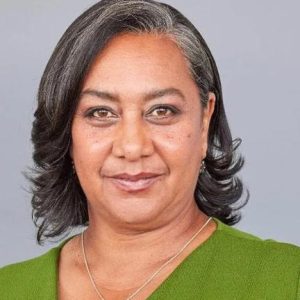
Illustrative Image: August 2025: Professor Priscilla Baker – African Female Researcher of the Month
Image Source & Credit: Dirco
Ownership and Usage Policy
 August 2025: Professor Priscilla Baker – African Female Researcher of the Month
Overview
Professor Priscilla Baker is a distinguished South African analytical chemist whose pioneering contributions to environmental electrochemistry and her commitment to mentorship and scientific leadership have earned her a place among the continent’s most influential scientists. In June 2025, she was named the African and Arab States Laureate of the prestigious L’Oréal–UNESCO For Women in Science International Awards, a recognition that places her among the top five women scientists globally for that year. This accolade, awarded at UNESCO headquarters in Paris, celebrates her groundbreaking work on electrochemical microsensors used for detecting environmental contaminants—research that has broad applications in the pharmaceutical, health, food, and energy sectors.
Early Life and Education
Born and raised in Bellville South, Cape Town, Professor Baker’s academic journey began with a Bachelor of Science degree in Physical Oceanography from the University of Cape Town (UCT) in 1990. As the only Black woman in her class, she encountered systemic barriers early on. Recalling how research vessels were neither designed for women nor receptive to people of colour in professional scientific roles, she pivoted from oceanography to analytical chemistry—a field in which she would eventually thrive.
She later obtained a National Diploma in Analytical Chemistry from the Cape Peninsula University of Technology, before pursuing an Honours and MSc in Chemistry at the University of the Western Cape (UWC). Her MSc research focused on the evaluation of trace metals in the atmosphere, indicating an early interest in environmental monitoring. In 2004, she completed her PhD in Chemistry at Stellenbosch University, with a dissertation on novel metal tin oxide composites as anodes for phenol degradation—a topic aligned with sustainable environmental practices.
Academic and Research Leadership
Currently a Professor of Analytical Chemistry at the University of the Western Cape, Professor Baker serves as co-director of SensorLab, an internationally recognized research group focusing on the electrodynamics of materials and the development of sensor technologies. Her research encompasses analytical chemistry, electrochemistry, nanoscience, and environmental science, particularly in developing integrated analytical protocols to address environmental, health, and safety monitoring challenges.
Her expertise in electrochemical microsensors—devices used to detect trace contaminants in air, water, and biological systems—has led to critical advancements in monitoring pollution, ensuring pharmaceutical safety, and contributing to green energy research. These contributions were central to her 2025 L’Oréal–UNESCO award win.
Global Recognition and Awards
Professor Baker’s scientific excellence has been recognized both nationally and internationally. Key accolades include:
-
L’Oréal–UNESCO For Women in Science International Award (2025) – Laureate for Africa and the Arab States.
-
Distinguished Woman Scientist Award (2014) – Awarded by South Africa’s Department of Science and Technology in the category of Physical and Engineering Sciences.
-
South African Research Chair (SARChI) in Analytical Systems and Processes for Priority and Emerging Contaminants (ASPPEC), awarded in 2018 by the Department of Science and Technology and the National Research Foundation.
Mentorship and Capacity Building
A dedicated mentor, Professor Baker has been instrumental in nurturing the next generation of African scientists. Her leadership of the Southern African Systems Analysis Centre (SASAC) from 2017–2019 significantly expanded interdisciplinary research capacity across the continent. Under her guidance, nearly 60 PhD candidates were recruited into transboundary research initiatives addressing regional and global scientific challenges.
Additionally, she established the Senergylab Associated International Laboratory, a collaborative postgraduate training program between UWC’s SensorLab and LPPI at CY Cergy Paris University, France. This initiative promotes dual-degree PhD programmes, international research exchange, and joint capacity building in electrochemistry and polymer sciences.
Professional Affiliations and Community Service
Professor Baker is an engaged member of several scientific bodies:
-
Fellow, African Academy of Sciences (2018)
-
Fellow, Royal Society of Chemistry (UK, 2019)
-
Deputy Chairperson, Electroanalytical Chemistry Division, International Society of Electrochemistry (ISE) (2013–2016)
-
Regional Representative for South Africa and Africa, ISE (2016–2021)
-
Member, Academy of Science of South Africa
-
Participant in the European Scientific Network for Artificial Muscles (ESNAM) and the Marie Curie International Staff Exchange Scheme (IRSES)
Her service in these roles has strengthened African representation in global science, while fostering collaborative networks for innovation in electrochemical technologies.
Personal Philosophy and Community Engagement
Beyond the laboratory, Professor Baker is deeply committed to educational outreach and community development. She frequently returns to her high school in Bellville South to motivate learners, especially young girls of colour, to pursue careers in science. Her journey—from being excluded from oceanographic vessels to becoming an internationally celebrated scientist—serves as a beacon of resilience, transformation, and empowerment.
Legacy and Impact
With over two decades of leadership in research, mentorship, and policy engagement, Professor Priscilla Baker continues to expand the frontiers of science in Africa and beyond. Her work not only advances the field of analytical chemistry but also helps dismantle the structural barriers that have historically marginalized women and people of colour in science.
Her 2025 L’Oréal–UNESCO award is not just a recognition of personal excellence, but a celebration of her broader mission: to create inclusive scientific ecosystems where innovation and equity thrive together.
“My story is not just about overcoming barriers—it’s about building bridges for others.”
— Prof. Priscilla Baker