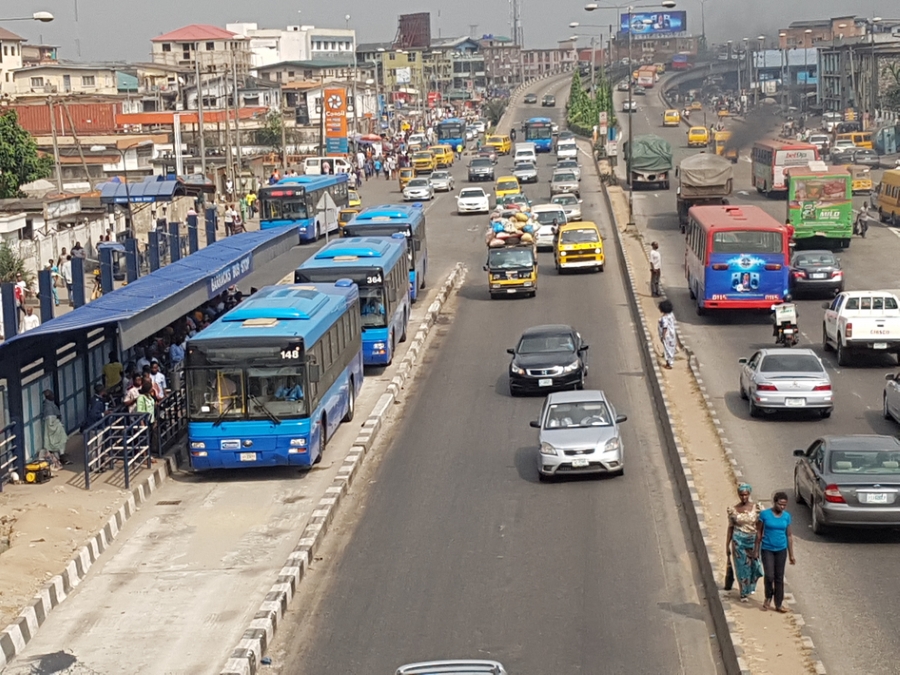
Tag: Roads

  • Impact of Infrastructure and Urbanization on Poverty Dynamics in Nigeria: Insights from a 2024 Study

    Impact of Infrastructure and Urbanization on Poverty Dynamics in Nigeria: Insights from a 2024 Study

    A recent study by Nwikpugi, J. B. (2024) titled “Modeling the relationship between infrastructure, urbanization, and poverty dynamics in Nigeria” published in Faculty of Natural and Applied Sciences Journal of Mathematical Modeling and Numerical Simulation, shows that urbanization had a short-term negative effect on economic development by increasing poverty.

    Urbanization initially reduces poverty but hinders long-term economic development, while telecommunication infrastructure significantly contributes to increased poverty in Nigeria.– Nwikpugi, J. B. 2024

    The article provides an in-depth analysis of how infrastructure and urbanization impact poverty dynamics in Nigeria. The research delves into the influence of urbanization and infrastructure development, particularly focusing on roads, electric power, and telecommunication, on poverty levels in Nigeria over a period spanning from 1990 to 2022. The study aims to understand the nuanced effects of these factors on economic conditions and poverty rates within the country. The study reveals a complex relationship between urbanization and poverty. In the short term, urbanization appears to have a positive impact, potentially reducing poverty levels. This could be due to the creation of job opportunities and improved access to services in urban areas. However, in the long run, urbanization is found to impede economic development. This long-term hindrance may result from issues such as overpopulation, strain on urban infrastructure, and inadequate urban planning, which can exacerbate poverty. On the other hand, the study identifies telecommunication infrastructure as a significant factor contributing to poverty. The reasons for this negative impact might include the high costs of telecommunication services and inadequate coverage in rural areas, which can limit economic opportunities and access to information for the impoverished population.

    How the Study was Conducted

    The study utilized annual time series data from the Central Bank of Nigeria (CBN), the Statistical Bulletin, the World Bank, and the Debt Management Office (DMO) covering the period from 1990 to 2022. Urbanization was represented by the Urban Population Growth (UPG) rate, while infrastructure was denoted by the number of cemented roads (PRD), electric power supply (EPS), and telecommunication infrastructure (TCI). The poverty headcount served as the dependent variable. The series underwent integration at orders zero and one, as determined by an Augmented Dickey-Fuller stationarity test on the variables. The Autoregressive Distributed Lag (ARDL) approach based on bounds cointegration test was used to ascertain the long-term relationship between the variables. The study employed the Aik model to analyze the impact of infrastructure and urbanization on poverty. The ARDL method was used for estimation, ensuring that the estimated model did not depart from the fundamental tenet of the classical least squares. Post-estimation tests were conducted to check for normality, serial correlation, and heteroskedasticity.

    What the Authors Found

    The author found that urbanization had a short-term negative effect on economic development by increasing poverty. The study also found that the provision of telecommunication infrastructure was identified as the primary cause of poverty.

    Why is this Important

    Policy Implications: Understanding the impact of infrastructure and urbanization on poverty dynamics informs policy decisions. Policymakers can use these insights to design targeted interventions that address poverty effectively.
    Sustainable Development Goals (SDGs): The study aligns with SDG 1 (No Poverty) and SDG 9 (Industry, Innovation, and Infrastructure). By identifying the role of infrastructure in poverty reduction, it contributes to global efforts to eradicate poverty and promote sustainable development.
    Investment Priorities: The recommendation to enhance road infrastructure, telecommunication facilities, and electric power supply highlights areas where investment is needed. Allocating resources strategically can lead to positive economic outcomes.
    Long-Term Planning: Recognizing the short-term negative impact of urbanization on poverty emphasizes the need for long-term planning. Balancing urbanization with poverty reduction efforts is essential for sustainable development.

    What the Authors Recommend

    • The author suggests that investing in better road networks can improve connectivity, facilitate trade, and enhance economic growth. This includes both urban and rural roads.
    • The author also recommends that strengthening telecommunication infrastructure can boost access to information, e-commerce, and digital services. It plays a crucial role in poverty reduction.
    • The author advocates access to reliable electricity is essential for economic activities, education, and healthcare. Efforts should focus on expanding and stabilizing the power grid.
    • In addition, the study argues that while urbanization can contribute to economic growth, policymakers should manage it carefully to avoid short-term negative effects on poverty. Balancing urban development with poverty reduction efforts is crucial.

    In conclusion, the study by Nwikpugi (2024) provides crucial insights into the intricate relationship between infrastructure, urbanization, and poverty dynamics in Nigeria. By highlighting both the short-term and long-term impacts of urbanization and the pivotal role of infrastructure development, particularly in roads, electric power, and telecommunication, this research offers valuable guidance for policymakers. To achieve sustainable economic growth and effectively reduce poverty, strategic investments and careful urban planning are essential. These findings underscore the importance of targeted interventions and long-term planning to balance the benefits of urbanization with the goal of poverty alleviation, aligning with broader sustainable development objectives.

  • Unlocking Economic Growth: Impact of High-Speed Internet on Foreign Direct Investment in Africa

    Unlocking Economic Growth: Impact of High-Speed Internet on Foreign Direct Investment in Africa

    A recent article by Mensah, J. T., & Traore, N. (2024) titled “Infrastructure Quality and FDI Inflows: Evidence from the Arrival of High-Speed Internet in Africa” published in The World Bank Economic Review, indicate that access to high-speed Internet induces foreign direct investment (FDI), particularly in the banking and technology sectors.

    Access to high-speed internet induces FDI, particularly in banking and technology sectors, emphasizing the pivotal role of infrastructure in development– Mensah, J. T., & Traore, N. 2024

    This article explores the impact of infrastructure quality on foreign direct investment (FDI) in developing countries. Specifically, it investigates how the arrival of high-speed internet in Africa triggered FDI into the region. The study also explores the role of complementary infrastructure, such as access to electricity and road connectivity, in amplifying the impact of internet connectivity on investment. The authors indicate that access to high-speed internet induces FDI, particularly in the service sector, with subsectors like finance, technology, retail, and health services benefiting the most. Additionally, improvements in governance quality and incumbent firm performance are plausible mechanisms for this impact.

    How the Study was Conducted

    The researchers aim to estimate the causal impact of high-speed internet connectivity on FDI inflows. The authors exploit variations in access to high-speed internet caused by the gradual arrival of submarine fiber-optic internet cables across African countries. Additionally, they consider spatial differences in terrestrial fiber cable networks within African locations. The authors utilize project-level data on FDI from fDiMarkets, a subsidiary of the Financial Times. This dataset covers the period from 2003 to 2018 and provides detailed information on FDI announcements, sectors, investors, capital investment, and job creation. The treatment group comprises subnational districts connected to high-speed internet via submarine cables, while the control group consists of districts lacking such connectivity. The staggered arrival of submarine cables acts as the treatment variable. The study analyzes FDI across various sectors, including services (finance, technology, retail, health), manufacturing, and other subsectors. Outcome variables include binary indicators for FDI presence, the number of FDI projects, and the monetary value of FDI. District-level fixed effects are incorporated to control for unobserved heterogeneity. Additional controls such as distance to the coast, total road length, and electricity grid network density are included to account for other factors that might influence FDI inflows. An event study is conducted to track trends in FDI receipts before and after the introduction of high-speed internet. The results indicate a rise in FDI inflows subsequent to internet connectivity. The authors perform robustness checks, including alternative standard error clustering and expanding the sample to encompass countries with prior connections to first-generation submarine cables.

    What the Authors Found

    The main findings of the study indicate that access to high-speed Internet induces foreign direct investment (FDI), particularly in the banking and technology sectors. However, the impact is mainly observed in countries with reliable electricity infrastructure, highlighting the role of complementarities in the impact of infrastructure.

    Why is this Important

    Research and Policy Implications: The article explores the impact of high-speed Internet connectivity on foreign direct investment (FDI) in Africa. Understanding this relationship has significant implications for policymakers, investors, and development organizations. It sheds light on how improving infrastructure quality, such as Internet access, can attract investment and foster economic growth.
    Infrastructure Development: The study highlights the role of complementary infrastructure (such as electricity and roads) in amplifying the impact of Internet connectivity. Policymakers can use this information to prioritize investments in infrastructure development to enhance the business environment and attract FDI.
    Sector-Specific Insights: The article identifies which sectors benefit the most from high-speed Internet. For example, the finance and technology services sectors experience significant positive effects. This knowledge can guide investment promotion efforts and sector-specific policies.
    Economic Growth: FDI is a crucial driver of economic growth, as it brings technology transfer, job creation, and capital inflows. By understanding how Internet connectivity affects FDI, countries can strategically invest in infrastructure to boost their economies.
    Digital Transformation: The arrival of high-speed Internet via submarine cables transformed Africa’s digital landscape. It enabled financial technologies (Fintech), digital entrepreneurship, and e-commerce. Recognizing this transformation helps policymakers and businesses adapt to the digital era.

    What the Authors Recommend

    • The authors suggest that policymakers in developing countries should prioritize investment promotion initiatives to reduce transaction costs for investors. Complementary infrastructure, such as access to electricity and roads, plays a crucial role in amplifying the impact of Internet connectivity on investment. Therefore, investing in infrastructure development is essential.
    • High-speed Internet connectivity has a significant impact on FDI, particularly in the service sector. Subsectors like finance, technology, retail, and health services benefit the most from Internet connectivity. The authors recommend that policymakers should encourage investment in these areas.
    • Improving the quality of governance can make countries more attractive for investment.
      Increased performance of incumbent firms, driven by Internet connectivity, signals high returns on investment and encourages FDI inflows.
    • In addition, the authors posit that policymakers should support digital entrepreneurship and create an enabling environment for tech start-ups. Investments in technology services, fintech, and other digital sectors can drive economic growth.

    In conclusion, the research presented underscores the transformative power of high-speed internet connectivity on foreign direct investment in Africa. By illuminating the positive impact on various sectors, from finance to technology, the study underscores the importance of strategic infrastructure development. Complementary investments in electricity and road networks emerge as crucial factors in amplifying the benefits of internet access. As policymakers prioritize investment promotion and digital entrepreneurship, fostering an enabling environment becomes paramount. Ultimately, embracing the digital era and bolstering infrastructure can propel Africa’s economic growth and competitiveness on the global stage.