Tag: Research visibility

  • Tropical Journal of Pharmaceutical Research: A Prestigious AR-Indexed Journal Advancing Pharmaceutical Sciences

    Tropical Journal of Pharmaceutical Research: A Prestigious AR-Indexed Journal Advancing Pharmaceutical Sciences

    The Tropical Journal of Pharmaceutical Research (TJPR) stands as a leading peer-reviewed journal dedicated to promoting high-quality research in pharmaceutical sciences and allied disciplines. Published by the Pharmacotherapy Group at the University of Benin, Nigeria, this esteemed journal is widely recognized for its commitment to fostering scientific knowledge and collaboration across academia, the pharmaceutical industry, and healthcare professionals.

    AR Index Recognition: A Mark of Excellence

    As of February 2025, the Tropical Journal of Pharmaceutical Research has been officially listed as an ACTIVE journal in the AR Index under the AR Index Number: 949580. This recognition solidifies TJPR’s reputation as a credible and impactful journal within the scientific community. Being part of the AR Index ensures increased visibility and accessibility for researchers worldwide, enhancing the dissemination of groundbreaking pharmaceutical and biomedical research.

    Scope and Focus of the Journal

    TJPR seeks to encourage research that is of both tropical and international relevance. The journal publishes articles in pharmaceutical sciences and related fields, including:

    • Biotechnology
    • Cell and Molecular Biology
    • Drug Utilization (including Adverse Drug Events)
    • Medical and Life Sciences
    • Related Engineering Fields

    While the journal primarily focuses on original research papers, it also welcomes comprehensive review articles that address pressing topics in pharmaceutical sciences.

    Key Journal Information

    • Title: Tropical Journal of Pharmaceutical Research (Trop J Pharm Res)
    • Publisher: Pharmacotherapy Group, University of Benin, Nigeria
    • Affiliation: Faculty of Pharmacy, University of Benin, Benin City, Nigeria
    • ISSN (Online): 1596-9827 | ISSN (Print): 1596-5996
    • Publication Frequency: Monthly
    • Review Type: Single-Blind Peer Review (1-2 rounds per article)
    • Open Access: Yes, under CC Attribution 4.0 International License

    Journal Fees & Open Access Policy

    TJPR follows an Open Access publishing model, ensuring that its research is freely accessible to the global scientific community. However, authors should note the following publication fees:

    • Submission Fee: None
    • Publication Fee:
      • Normal Track: $600
      • Fast Track: $1,000

    These fees help maintain the journal’s high standards and enable its open-access model, allowing widespread dissemination of valuable research.

    Peer-Review Process & Ethical Standards

    The Tropical Journal of Pharmaceutical Research maintains a rigorous peer-review process, ensuring the publication of only high-quality research. Manuscripts typically undergo 1-2 rounds of review, with an estimated review duration of 1-2 months per article. The journal’s ethical standards align with the Committee on Publication Ethics (COPE) Best Practice Guidelines, ensuring integrity, originality, and transparency in research publications.

    Editorial Team & Contact Information

    TJPR is led by a team of distinguished scholars:

    • Editor-in-Chief: Professor Augustine O. Okhamafe
    • Managing Editor: Professor Patrick Erah

    For inquiries and manuscript submissions, researchers can contact the editorial team via:

    Why Publish with TJPR?

    Publishing with the Tropical Journal of Pharmaceutical Research offers several advantages:

    1. Global Visibility: Indexed in AR Index, ensuring worldwide recognition.
    2. High-Impact Research: Covers cutting-edge topics in pharmaceutical sciences.
    3. Rapid Peer-Review: Single-blind review process with a timely publication schedule.
    4. Open Access Advantage: Research is freely available to scholars and professionals globally.
    5. Multidisciplinary Collaboration: Encourages interactions among pharmaceutical scientists, healthcare professionals, and the industry.

    Final Thoughts

    The Tropical Journal of Pharmaceutical Research continues to be a pivotal platform for researchers in pharmaceutical sciences, offering a gateway for high-quality, peer-reviewed publications. With its active AR Index listing, TJPR has strengthened its credibility, ensuring that published research reaches a global audience and contributes significantly to scientific advancements.

    For more details, visit AR Index Profile
  • Acta Structilia: Elevating African Research Globally through AR Index Inclusion

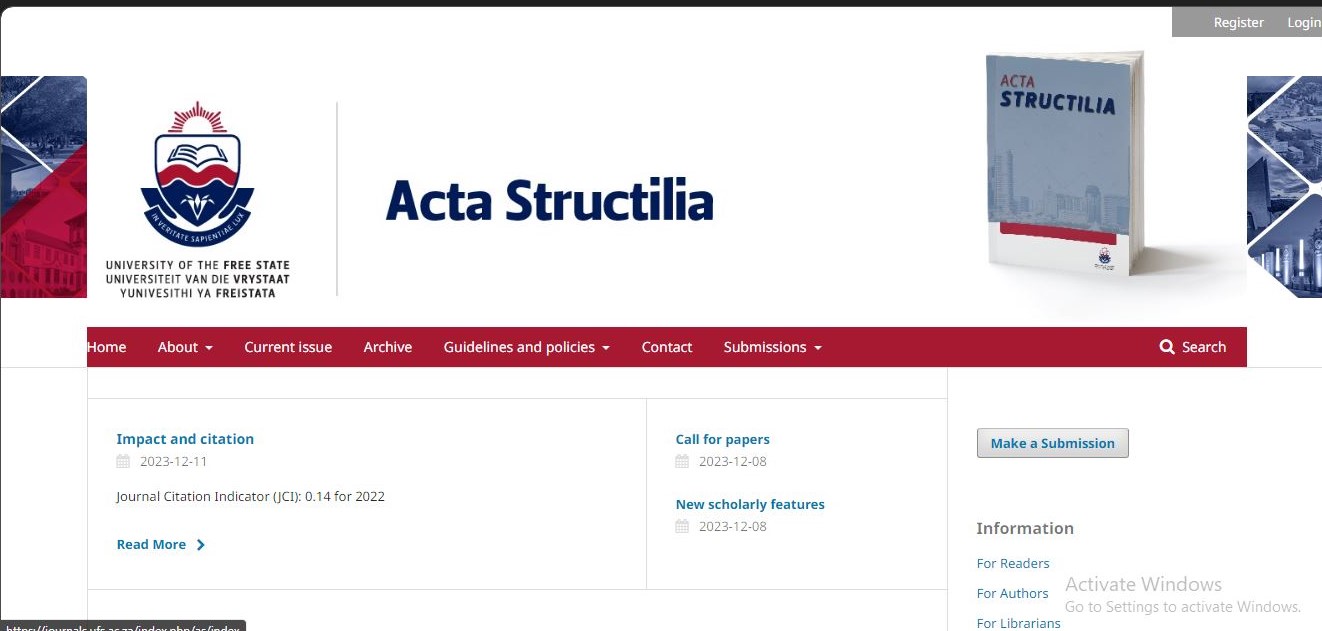
    Acta Structilia: Elevating African Research Globally through AR Index Inclusion

    The African Research (AR) Index stands as a beacon for scholars and researchers seeking a comprehensive directory of journals dedicated to disseminating African research. Acta Structilia, an accredited South African journal, proudly holds a coveted spot in the AR Index, fostering the global communication and accessibility of African research. In this blog article, we delve into the significance of Acta Structilia’s inclusion in the AR Index, exploring the journal’s mission, details, and the impact it has on promoting African scholarly work.

    Acta Structilia in the AR Index

    Acta Structilia, affiliated with the University of the Free State, is a distinguished journal focusing on research articles in the physical and development sciences. The journal, listed as “ACTIVE” in the AR Index as of January 2024, holds the AR Index Number 554955. This recognition reflects the commitment of Acta Structilia to scholarly excellence and its alignment with the goal of the AR Index to enhance the accessibility, availability, visibility, and citation of indexed journals.

    Journal Details

    Acta Structilia, founded in 1993, is an annual publication that welcomes research contributions in diverse fields such as architecture, urban and regional planning, quantity surveying, construction management, project management, building economy, building engineering, and property development. The journal’s interdisciplinary nature, double-blinded peer review process, and adherence to a rigorous review duration of over six months per article ensure the publication of high-quality, well-vetted research.

    Key Information

    • Journal Publisher: University of the Free State
    • ISSN (Online): 2415-0487 | ISSN (Print): 1023-0564
    • Frequency: Annually | Review Type: Double Blinded
    • Open Access: Yes (CC Attribution 4.0 International License)

    Journal Officers

    • Editor: Prof. Kahilu Kajimo-Shakantu
    • Managing Editor: Ms Alna Beukes

    Submission Guidelines

    Acta Structilia maintains a user-friendly submission process, encouraging authors to submit articles in English within the desired length of 4,000 to 12,000 words (excluding references). The journal’s formatting requirements ensure consistency, with a focus on MS Word, Times New Roman font, and single-line spacing.

    Publication Ethics

    The journal places a strong emphasis on ethical publishing practices, adhering to the guidelines set by the Committee on Publication Ethics (COPE). The editorial team is committed to upholding the highest standards, ensuring that published content is ethically sound and devoid of any misconduct.

    Promoting Inclusivity and Diversity

    Acta Structilia’s inclusion in the AR Index is a testament to the journal’s role in promoting cultural diversity, equitable representation, and the advancement of quality scholarly work. By facilitating the global dissemination of African research, Acta Structilia contributes to a more inclusive scholarly discourse and encourages collaborations between African researchers worldwide.

    Conclusion: Acta Structilia’s presence in the AR Index signifies a commitment to advancing African research on a global scale. The journal’s dedication to high ethical standards, diverse interdisciplinary content, and its role in bridging knowledge gaps make it a valuable asset in the academic landscape. As African researchers continue to make significant contributions, Acta Structilia and similar journals play a crucial role in ensuring the visibility and impact of their work on the world stage.

    Visit the journal in AR index: Acta Structilia (ufs.ac.za)

  • DFG Neuroscience Initiative: Fostering African-German Collaboration for Inclusive Advancements in Brain Research

    DFG Neuroscience Initiative: Fostering African-German Collaboration for Inclusive Advancements in Brain Research

    The Deutsche Forschungsgemeinschaft (DFG), German Research Foundation, invites researchers from all African countries and Germany to partake in a significant scientific exchange in the field of neuroscience. This initiative encompasses a broad spectrum of research questions, covering basic, applied, and clinical topics. It is designed to facilitate collaboration, yet it explicitly excludes neglected tropical infectious diseases in humans and animals, along with their social and behavioral aspects.

    Aim of the Initiative

    The primary goal is for participating researchers to identify shared interests in neuroscience and cultivate novel collaborative ventures. The DFG aims to facilitate this exchange through a multi-step process:

    1. Invitation to Submit Posters:

      • Researchers are invited to submit posters reflecting their profiles, expertise, and ideas for collaborative research projects. Posters should go beyond showcasing previous projects, emphasizing current research interests. Submission deadline: February 29, 2024.
      • DFG will screen posters for compliance and compile an exclusive poster book sent to peers with accepted posters. This platform will serve as the basis for subsequent collaboration.
    2. Call for the Initiation of International Collaboration:

      • A subsequent call for DFG proposals aims to fund collaborative relationships between African and German researchers. The DFG can support bilateral or multilateral African/German researcher teams. Detailed information will be provided in a virtual meeting in June 2024. Proposals must be submitted in English by August 31, 2024.
      • Eligibility: Proposals must include a researcher from Germany and one from an African country, both having submitted accepted posters. Only German researchers fulfilling DFG eligibility requirements can submit proposals. Funds can be allocated to both German and African collaboration partners.
    3. Forum Connect and Exchange:

      • Approved travel funds will enable project partners from African countries to participate in the “Forum Connect and Exchange” in Bonn from September 22–26, 2025. This forum, organized by the DFG, aims to facilitate networking and scientific exchange, gathering lessons learned from African and German collaborations.
      • Participation is limited to applicants from Germany and their collaboration partners from African countries with funding under the Initiative for International Collaboration.

    Gender and Diversity

    The DFG strongly encourages proposals from researchers of all genders, sexual identities, ethnicities, backgrounds, career stages, universities, and research institutions, including those with disabilities or chronic illnesses. This emphasis on diversity underscores the commitment to creating an inclusive and dynamic collaborative research environment.

    Nurturing Scientific Excellence and Inclusivity: The DFG’s Neuroscience Initiative’s Impact on African Research and Collaboration

    The Deutsche Forschungsgemeinschaft’s (DFG) initiative in neuroscience, with a focus on collaboration between African and German researchers, holds significant importance for the African continent.

    1. Scientific Capacity Building:
      • The initiative provides a platform for African researchers to engage in cutting-edge neuroscience research, fostering capacity building and skill development.
      • Collaborative projects with German researchers offer opportunities for knowledge transfer and technology exchange, contributing to the advancement of neuroscience expertise in African countries.
    2. International Collaboration and Networking:
      • The initiative encourages international collaboration, allowing African researchers to establish valuable connections with their German counterparts.
      • Networking opportunities, such as the “Forum Connect and Exchange,” enable African scientists to build relationships, exchange ideas, and participate in a global scientific community.
    3. Research Visibility and Recognition:
      • By inviting researchers to submit posters and promoting collaboration, the initiative enhances the visibility of African researchers on the international stage.
      • Inclusion in the exclusive poster book and subsequent collaborative projects can lead to increased recognition of African scientists and their contributions to neuroscience.
    4. Funding Opportunities:
      • The call for proposals provides a chance for African researchers to access funding from the DFG for collaborative projects. This financial support is crucial for the implementation of research initiatives and the development of sustainable partnerships.
    5. Promoting Inclusive Research:
      • The DFG’s emphasis on diversity, including researchers of all genders, sexual identities, ethnicities, backgrounds, and abilities, aligns with the principles of inclusivity.
      • The commitment to inclusivity ensures that a broad range of perspectives and expertise are brought to neuroscience research, fostering a richer and more comprehensive scientific landscape.
    6. Addressing Health Challenges:
      • While the initiative excludes neglected tropical infectious diseases, it still contributes to addressing health challenges by focusing on neuroscience. Understanding neurological disorders and brain-related issues is crucial for improving healthcare outcomes in Africa and globally.
    7. Cultural and Social Impact:
      • The collaboration between African and German researchers promotes cultural exchange and understanding. This can lead to more culturally sensitive and context-specific research, addressing the social dimensions of neuroscience in diverse populations.
    8. Long-Term Sustainability:
      • The initiative’s multi-step process, including poster submissions, proposal calls, and collaborative forums, indicates a commitment to long-term sustainability in research partnerships. This approach fosters enduring relationships and ongoing scientific collaboration.

    In summary, the DFG’s neuroscience initiative offers African researchers a unique opportunity to participate in a global scientific community, enhance their research capabilities, and contribute to the advancement of neuroscience with a focus on inclusivity and diversity.

    Read more ……..