Tag: research funding Africa

  • PAGES African Mobility Fellowship 2025: Funding for Early-Career Researchers in Paleoscience Across Africa

    PAGES African Mobility Fellowship 2025: Funding for Early-Career Researchers in Paleoscience Across Africa


    Illustrative Image: PAGES African Mobility Fellowship 2025: Funding for Early-Career Researchers in Paleoscience Across Africa
    Image Source & Credit: Opportunity Desk
    Ownership and Usage Policy

    Application Deadline: 15 August 2025

    The Past Global Changes (PAGES) initiative invites applications for the 2025 African Mobility Fellowship Program, a unique opportunity designed to support early-career researchers from Africa who are working in the field of past global changes, also known as paleoscience. This fellowship promotes academic exchange and cross-border collaboration within Africa by funding short research stays at institutions in other African countries.

    Purpose and Vision

    This fellowship program aims to strengthen scientific cooperation and knowledge transfer across the African continent by facilitating mobility for PhD students and postdoctoral researchers. The objective is to enhance the skills and international exposure of young scientists while fostering the development of a robust pan-African paleoscience research network.

    By enabling scholars to conduct research in a host institution outside their home country, the program supports the generation of new collaborative projects, encourages the sharing of technical expertise, and contributes to long-term scientific development across Africa.

    Scope of Support

    The African Mobility Fellowship provides limited financial support to cover:

    • International travel (economy class air tickets)

    • Visa costs

    • Accommodation and living expenses during the research stay

    • Laboratory consumables (up to 10% of the total budget)

    ⚠️ Note: Insurance and personal expenses are not covered. PAGES holds no responsibility for changes or cancellations to travel arrangements.

    Fellowship Duration and Timeline

    • Fellowship stays must be between 2 and 4 weeks in duration.

    • The awarded fellowship must be utilized within 12 months of being granted.

    • Suggested timeline:

      • 15 August 2025: Application deadline

      • September – October 2025: Review and selection by PAGES Scientific Committee

      • October 2025: Applicants are notified of decisions

      • November – December 2025: Financial/logistical arrangements finalized

      • January – December 2026: Fellowship activities to take place

    Eligibility Criteria

    Applicants must meet all of the following requirements:

    1. Research Focus: Currently conducting research related to past global changes, within the scope of PAGES.

    2. Career Stage:

      • PhD candidates in the final phase of their doctoral research, or

      • Postdoctoral researchers within five years of completing their PhD (includes those not yet holding a postdoc position).

    3. Institutional Affiliation:

      • Must be enrolled or employed at an academic institution based in Africa.

    4. Citizenship:

      • Must be a citizen of an African country.

    5. Mobility:

      • Willing and able to conduct research in another African country.

    6. Host Institution:

      • Must secure a formal invitation/acceptance letter from the proposed host institution or researcher.

    7. Fellowship Period:

      • Proposed visit must last at least 2 weeks but no more than 4 weeks.

      • Fellowship must take place within 12 months of the award date.

    Application Requirements

    To apply, candidates must submit a complete application package consisting of

    1. Completed Application Form (available via PAGES website)

      • Description of the proposed research and travel plan (max. 1000 words), including how it aligns with PAGES’ scientific scope.

      • Statement on the expected impact of the fellowship on the applicant’s professional development and benefit to the home institution or country (max. 200 words).

      • Timeline and expected outcomes of the project.

      • A detailed budget breakdown (in USD).

    2. Two Letters of Recommendation:

      • One from the applicant’s current supervisor at the home institution.

      • One from the proposed host researcher/institution confirming the willingness to host the applicant.

    3. Curriculum Vitae (CV):

      • Maximum of 2 pages outlining academic background, publications, relevant research experience, and achievements.

    How to Apply

    • Applications should be submitted by email to: pages@pages.unibe.ch

    • Email subject line: “Application PAGES African Mobility Fellowship”

    • Preferred language for submission: English (French is also accepted)

    • Incomplete or late applications will not be considered.

    📥 Download the Application Form

    Post-Fellowship Requirements

    All fellows must submit a final report to PAGES upon completion of their exchange. The report must include:

    • A detailed financial report

    • A scientific summary of the research conducted

    • A 650-word article (including one figure) suitable for publication in the Past Global Changes Magazine

    Host Institutions in Africa

    The following African institutions have previously hosted fellows or expressed willingness to host new applicants:

    • Botswana: Botswana International University of Science and Technology (BIUST)

    • Cameroon: University of Dschang, Department of Plant Biology

    • Egypt: Ain Shams University, Cairo

    • Ivory Coast: Université Félix Houphouët-Boigny, UFR STRM

    • Mauritania: IMROP, Nouadhibou

    • Morocco: Caddi Ayyad University, Marrakech

    • South Africa:

      • University of Cape Town – Stable Light Isotope Laboratory

      • University of the Witwatersrand

      • Stellenbosch University – Central Analytical Facility

      • University of Mpumalanga

      • University of Johannesburg

      • University of the Free State

    Note: Institutions listed reserve the right to accept or reject fellows. PAGES does not directly facilitate placement.

    Contact for More Information

    For queries or assistance with the application process, please contact

    📧 Email: pages@pages.unibe.ch
    🌐 Website: pastglobalchanges.org

    This fellowship is a unique opportunity to gain valuable research experience, develop international collaborations, and strengthen the African paleoscience community. Apply now and help shape the scientific future of the continent.

  • 30 Trailblazing African Women Scientists Honored at the 2023 L’Oréal-UNESCO For Women in Science Awards

    30 Trailblazing African Women Scientists Honored at the 2023 L’Oréal-UNESCO For Women in Science Awards

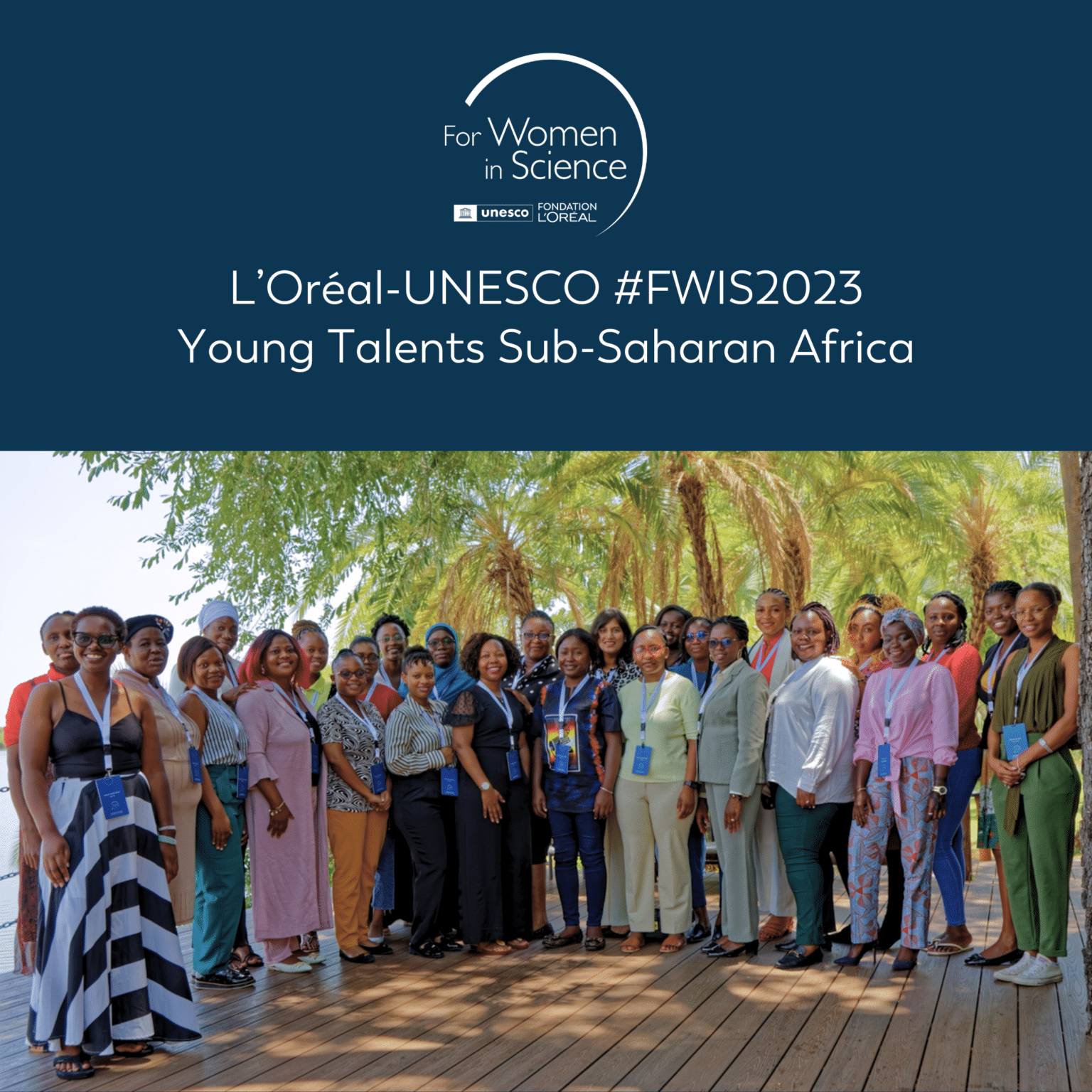
    Paris, 8th November 2023 The Fondation L’Oréal and UNESCO have proudly announced the 30 winners of the 14th edition of the L’Oréal UNESCO For Women in Science Young Talents Sub-Saharan Africa Awards. This prestigious recognition honors the groundbreaking work of African women scientists and reaffirms the importance of gender equality in science.

    Empowering Women Scientists: A Crucial Step for Africa and the World

    Scientific research remains a pivotal force in addressing global challenges, yet Africa contributes only 2.5% to the world’s scientific workforce. In an era marked by escalating social, economic, environmental, and health crises, it is imperative to harness all available scientific expertise. Women scientists, often underrepresented in academia and research, play an essential role in driving progress.

    For the 14th consecutive year, the L’Oréal UNESCO For Women in Science Young Talents Sub-Saharan Africa Awards recognize the outstanding contributions of female researchers. This year, the program has expanded, awarding 30 promising young scientists—25 PhD candidates and 5 postdoctoral researchers—a significant increase from previous editions. These laureates, representing 17 African nations, including first-time participants from Cabo Verde and Lesotho, exemplify the resilience and innovation required to tackle pressing scientific challenges.

    Honoring Excellence in Scientific Research

    Selected from a competitive pool of 632 applicants, these brilliant women were chosen by a distinguished panel of 10 experts led by Professor Aggrey Ambali, Director of Technical Cooperation and Program Funding at the African Union Development Agency (AUDA-NEPAD). Their research spans a diverse range of disciplines, including biochemistry, epidemiology, ecology, artificial intelligence, and public health. By pioneering new methodologies and solutions, these scientists are making substantial contributions to the advancement of knowledge and the improvement of life in Africa and beyond.

    Fanta Yadang Sabine Adeline, one of the 2023 awardees, aptly stated, “The future of Africa is in the hands of its scientists.” This sentiment is echoed by her fellow laureates, whose groundbreaking work is poised to reshape various scientific fields and inspire future generations.

    Encouraging Scientific Dialogue and Mentorship

    Providing visible role models for young women is essential to fostering future generations of scientists. To facilitate this, the Young Talents engaged in an intergenerational dialogue on the morning of November 8th with Botswana’s First Lady, H.E. Mrs. Neo Jane Masisi, alongside 150 school students. This knowledge exchange session aimed to inspire young girls to pursue careers in science and technology, bridging the gender gap in STEM fields.

    The L’Oréal-UNESCO Young Talents Sub-Saharan Africa Programme

    Established in 2000, the L’Oréal-UNESCO For Women in Science Young Talents program has provided over 250 grants annually across more than 110 countries. The initiative not only funds promising researchers but also advocates for the vital inclusion of women in scientific advancements. Over the past 25 years, the partnership between UNESCO and the Fondation L’Oréal has recognized more than 4,100 female scientists at different career stages, celebrating their contributions to scientific progress.

    As Lidia Brito, Assistant Director-General for Natural Sciences at UNESCO, emphasized, “The L’Oréal-UNESCO Young Talents are the very future of science. We look forward to working with them to further reinforce the pivotal role of women in science for a sustainable and inclusive future.”

    The 2023 laureates will receive financial grants of €10,000 for PhD candidates and €15,000 for postdoctoral researchers. This funding will aid them in advancing their projects and overcoming financial barriers to research. Beyond monetary support, the program offers leadership training, equipping these scientists with the skills needed to navigate professional challenges, including gender biases and work-life balance constraints.

    A Call for Collective Action

    Scientific progress cannot afford to overlook half of humanity’s potential. “Enabling women scientists to emerge in the public arena and be recognized for the quality of their work requires urgent action,” said Alexandra Palt, CEO of the Fondation L’Oréal. “It is everyone’s responsibility—institutions, companies, and civil society—to ensure that women receive the recognition they deserve.”

    Meet the 2023 L’Oréal-UNESCO For Women in Science Young Talents: A Glimpse into Their Research

    Southern Africa

    • Bhamini SREEKEESSOON (Mauritius): Harnessing tidal energy for a sustainable future.
    • Bonolo Bonita PHINIUS (Botswana): Fighting hepatitis B through innovative research.
    • Constance CHINGWARU (Zimbabwe): Developing biopesticides from native plants.
    • Felicidade NIQUICE (Mozambique): Enhancing occupational health and safety in hospitals.
    • Maria Nelago KANYAMA (Namibia): Using AI to combat water scarcity.
    • Mesha MBISANA (Botswana): Improving food safety to promote better health.
    • Nthabeleng HLAPISI (Lesotho): Advancing phototherapies for cancer treatment.

    Central Africa

    • Fanta Sabina Adeline YADANG (Cameroon): Exploring medicinal treatments for neurodegenerative diseases.
    • Hadidjatou DAIROU (Cameroon): Investigating the healing properties of native plants for cardiovascular disease.
    • Lydie Kamga MESSADO (Cameroon): Conservation of orchids in rainforests.

    East Africa

    • Cheryl KERAMA (Kenya): Studying sugar regulation’s impact on tuberculosis.
    • Devotha Godfrey NYAMBO (Tanzania): Using machine learning to prevent infectious diseases in livestock.
    • Esther UWIMAANA (Uganda): Towards a tuberculosis vaccine.
    • Mwende Mbilo (Kenya): Innovating to enhance solar energy solutions.
    • Naelijwa Mshanga (Tanzania): Improving nutrition for women and children.

    West Africa

    • Aderonke KOREDE (Nigeria): Studying the health benefits of natural ingredients.
    • Bernice Konadu AGYEMAN (Ghana): Improving drinking water quality.
    • Dorcas Atibilla (Ghana): Analyzing mosquito behavior to fight malaria.
    • Fatou Lo Niang (Senegal): Using machine learning to prevent cardiovascular diseases.
    • Ini ADINYA (Nigeria): Applying mathematics to optimize investments.
    • Pamela Borges (Cabo Verde): Advancing breast cancer research through gene studies.
    • Temitope ABIOLA (Nigeria): Enhancing biodiesel efficiency through metabolic engineering.

    Conclusion

    The L’Oréal-UNESCO For Women in Science Young Talents Sub-Saharan Africa Awards celebrate scientific excellence and reaffirm the crucial role of women in research. By empowering these outstanding researchers, the program is paving the way for a more inclusive and innovative scientific community that will benefit Africa and the world. The continued support of institutions, governments, and the private sector is vital to ensuring that women in science receive the recognition, funding, and opportunities they deserve.

  • UNESCO-Equatorial Guinea Fellowship 2025: Grants for Young African Women Scientists in Life Sciences

    UNESCO-Equatorial Guinea Fellowship 2025: Grants for Young African Women Scientists in Life Sciences

    Deadline for Applications: 31 March 2025

    Addressing Gender Disparities in African Scientific Research

    Women remain significantly underrepresented in the global research landscape, constituting only 33% of researchers worldwide, as highlighted in the UNESCO Science Report 2021. This disparity is even more pronounced in Sub-Saharan Africa, where women make up just 32% of researchers, according to the UNESCO Institute for Statistics. The imbalance is largely driven by a lack of funding, insufficient resources, and limited access to research opportunities for women in scientific fields. In 2015, scientific research expenditures in Africa accounted for a mere 1.01% of global spending, while African publications comprised only 3.5% of global scientific output in 2018. These factors hinder equitable participation and limit opportunities for African women in science.

    To bridge this gap, UNESCO and the Republic of Equatorial Guinea have launched the first-ever UNESCO-Equatorial Guinea Fellowship Programme for Young Women Scientists in Africa. This initiative is dedicated to empowering young African women scientists by fostering their careers and enhancing their contributions to life sciences. The programme provides targeted financial support and mentorship, ensuring that women have the resources and opportunities necessary to make meaningful contributions to scientific advancements on the continent.

    About the Fellowship Programme

    Established in 2024 by UNESCO’s Executive Board and funded by the Republic of Equatorial Guinea, the Young African Women Scientists Programme aims to encourage and promote the participation of outstanding female researchers in the life sciences. The programme will award two exceptional young women scientists annually, granting them financial resources to conduct cutting-edge research that contributes to the scientific and technological development of their respective countries.

    Each year, two laureates will receive a $25,000 grant each, totaling $50,000, to advance their research projects and bolster their scientific careers.

    Eligibility Criteria

    Candidates must meet the following requirements:

    • Hold African nationality and conduct research at a recognized institution or laboratory in Africa.
    • Be under 45 years of age at the time of application.
    • Possess a PhD in the life sciences.
    • Be actively engaged in scientific research that advances knowledge and contributes to sustainable development.

    Please Note: Only Governments of African Member States, in consultation with their National Commissions, are authorized to submit applications. Self-nominations will not be considered.

    Application Submission Process

    Applications must be pre-registered through the following online portal:
    👉 www.unesco.org/egip/account-request

    Once pre-registered, applicants will be invited to complete a comprehensive online submission form in English or French. The application must include:

    1. A research proposal outlining an innovative and achievable project within a one-year timeframe, considering available facilities.
    2. A detailed work plan specifying activities, objectives, expected outcomes, and a clear timeline for project completion.
    3. A comprehensive budget breakdown demonstrating how the $25,000 grant will be allocated (e.g., materials, equipment, travel, publication fees, etc.).
      • Grant disbursement:
        • $23,000 will be provided at the start of the project.
        • $2,000 will be disbursed upon submission of a final report detailing project results and fund usage.
    4. A summary of past research, including publications and supporting documents, with key scientific contributions highlighted.
    5. A detailed CV, listing academic qualifications, research experience, professional positions, and current work.
    6. One or two recommendation letters from a thesis supervisor or a peer in the research field (excluding individuals from the candidate’s immediate work environment).

    Incomplete applications will not be considered.

    Contact and Further Information

    For inquiries, please reach out to the Secretariat of the UNESCO-Equatorial Guinea International Prize for Research in the Life Sciences:
    📧 lifesciencesprize@unesco.org

    This prestigious fellowship represents a significant step forward in empowering African women scientists, promoting equitable access to resources, and ensuring a sustainable future driven by scientific excellence. By investing in these talented individuals, UNESCO and the Republic of Equatorial Guinea are shaping the next generation of female scientific leaders on the African continent.

    For more information, visit the official UNESCO website.

  • WARC Travel Grant 2025: Apply Now for Funding to Support Intra-African Research Collaboration

    WARC Travel Grant 2025: Apply Now for Funding to Support Intra-African Research Collaboration

    Overview of the WARC Travel Grant 2025

    The West African Research Center (WARC) Travel Grant is an initiative aimed at fostering collaboration and enhancing research partnerships within the African continent. By providing financial support to African scholars and graduate students, the grant promotes intra-African research exchanges between institutions, contributing to the growth and diversity of research across the region. The grant offers travel support and stipends, helping scholars visit other institutions, libraries, archives, or research sites essential to their academic work.

    Application Deadline

    The deadline for applications for the WARC Travel Grant 2025 is October 20, 2024.


    Grant Details

    The WARC Travel Grant is specifically designed to support the mobility of African researchers, enabling them to engage in various academic activities across the continent. Each successful applicant may receive funding to cover travel costs up to $1,500, along with an additional stipend of $1,500 to help cover expenses during the research visit.

    Who Can Apply?

    Eligible applicants must be nationals of West African countries and meet the following requirements:

    • Must be a scholar or graduate student engaged in academic research.
    • Should be affiliated with a university, research institution, or academic program in West Africa.
    • Graduate students must include a letter of recommendation from a professor overseeing their research.

    Eligible Fields

    This grant is open to applicants from various fields of research, allowing for a broad range of academic disciplines to benefit from the opportunities provided.

    Types of Activities Supported

    Grant funds may be used for:

    • Visiting libraries or archives in Africa that house critical resources necessary for the applicant’s research.
    • Engaging in collaborative work with fellow scholars or researchers at other African institutions.
    • Conducting field research at relevant sites in Africa to advance the applicant’s project.

    Application Requirements

    The application process requires the submission of the following documents:

    1. Abstract: A concise (50-80 words) summary of the proposed research activity, including a clear statement of purpose.
    2. Project Description: A detailed, six-page (double-spaced) description of the research or project, explaining why travel is necessary and how it will contribute to the applicant’s work. The description should be written in language that is accessible to non-specialists.
    3. Proposed Budget: A breakdown of the estimated costs involved in the research visit.
    4. Curriculum Vitae (CV): A full CV outlining the applicant’s academic background, research record, and teaching experience (if applicable).
    5. Passport Copy: A photocopy of the applicant’s passport, confirming their West African nationality.
    6. Recommendation Letter: A formal recommendation from a professor or supervisor, particularly for graduate students.
    7. Host Institution Invitation (if applicable): If the applicant is visiting another institution, an invitation letter from the host institution is required.
    8. Archive/Material Description (if applicable): If the applicant intends to consult specific collections or archives, they must provide a detailed description of the materials and their relevance to the research.

    How to Apply

    All applications must be submitted online in PDF format. Visit the official WARC Travel Grant webpage for more details and to access the application portal.

    Selection Process

    The selection process prioritizes West African nationals, particularly those affiliated with West African universities, research institutions, or academic programs. Successful candidates will be chosen based on the quality and relevance of their research proposal, the necessity of travel, and the potential impact of their work on African scholarship.


    Grant Benefits

    Recipients of the WARC Travel Grant will receive:

    • Up to $1,500 in travel expenses.
    • A stipend of $1,500 to cover additional costs during the research visit.

    The grant facilitates access to critical research materials and promotes the exchange of ideas and collaboration between African scholars, helping to elevate the standard of academic work in Africa.

    Contact Information

    For inquiries, applicants may contact:

    The WARC Travel Grant is funded by the Bureau of Educational and Cultural Affairs of the US Department of State through a grant provided by the Council of American Overseas Research Centers.


    Visit the Award Webpage for Details

  • Apply for the 2024 West African Research Center (WARC) Travel Grant: Up to $3,000 for African Scholars and Graduate Students

    Apply for the 2024 West African Research Center (WARC) Travel Grant: Up to $3,000 for African Scholars and Graduate Students

    The West African Research Center (WARC) is excited to announce the 2024 Travel Grant Program aimed at fostering intra-African collaboration and knowledge exchange among scholars and graduate students. This initiative provides financial support to facilitate research visits within Africa, promoting deeper connections and cooperative ventures across the continent.

    Grant Details

    • Funding Amount: Up to $1,500 for travel expenses and an additional $1,500 stipend.
    • Usage of Funds:
      • Travel to libraries or archives within Africa that house critical resources for your research.
      • Collaborative projects with colleagues at different African institutions.
      • Visits to research sites located across Africa.

    Eligibility Requirements

    • Open exclusively to West African nationals.
    • Priority is given to applicants affiliated with academic or research institutions based in West Africa.

    Application Components

    1. Abstract: Provide a concise summary (50–80 words) outlining your proposed activity and its purpose.
    2. Project/Research Description: Detail your research project in up to six double-spaced pages, including an explanation of why the travel is essential. The description should be accessible to non-specialist readers.
    3. Proposed Budget: Outline how you plan to use the grant funds.
    4. Curriculum Vitae: Include your academic and teaching history.
    5. Passport Copy: A photocopy of your passport is required to confirm West African nationality.
    6. Recommendation Letter: A letter of recommendation must accompany your application.
    7. Supporting Documents:
      • Institutional Visit: An invitation letter from the host institution.
      • Archive Consultation: A description of the collections you plan to consult and their relevance to your research.
      • Graduate Students: A letter of recommendation from your supervising professor.

    Submission Instructions

    • All application materials should be submitted online in PDF format.
    • For more information or to address inquiries, please contact Mariane Yade at warccroa@gmail.com.

    Application Deadline: October 20, 2024

    Funding Support: The WARC Travel Grant Program is funded by the Bureau of Educational and Cultural Affairs of the US Department of State, through a grant from the Council of American Overseas Research Centers.

    Further Information: For additional details and to access the application, visit the official webpage of the West African Research Center (WARC) Travel Grant Program.