Tag: malaria surveillance

  • Urban Malaria in Sub-Saharan Africa: Prevalence, Risk Factors, and Control Strategies

    Urban Malaria in Sub-Saharan Africa: Prevalence, Risk Factors, and Control Strategies


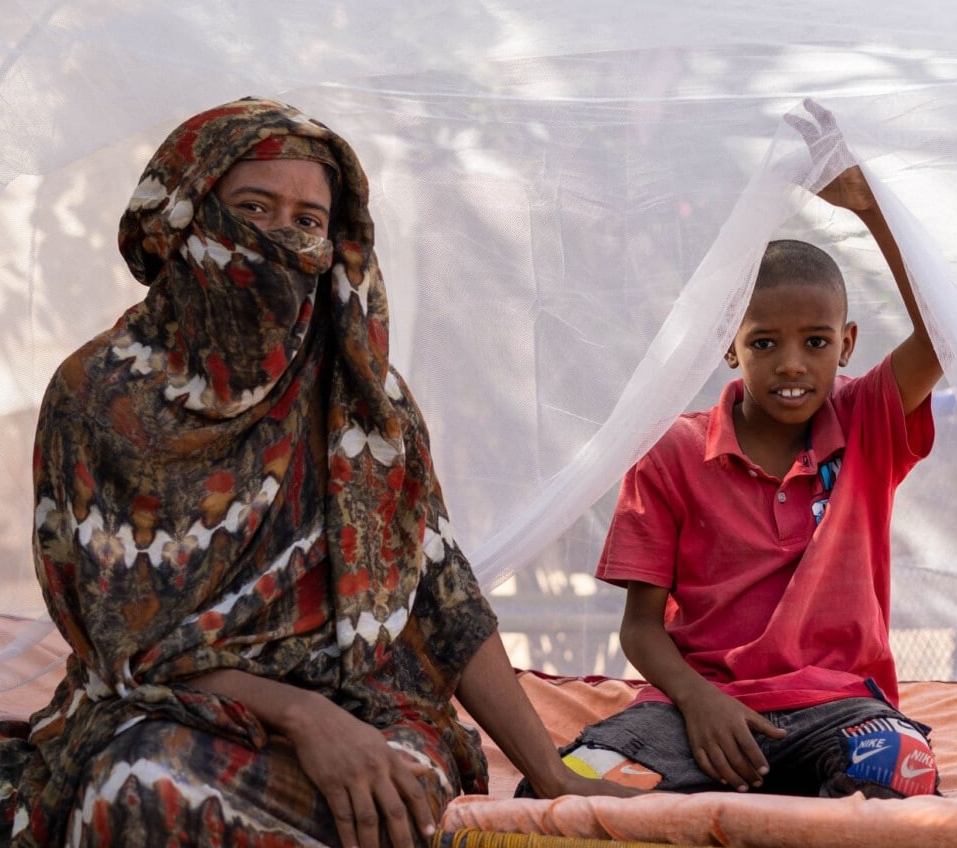
    Illustrative Image: Urban Malaria in Sub-Saharan Africa: Prevalence, Risk Factors, and Control Strategies
    Image Source & Credit: UNICEF
    Ownership and Usage Policy

    A recent study by Merga et al. (2025) titled “Urban malaria in sub-Saharan Africa: a scoping review of epidemiologic studies” published in Malaria Journal by Springer Nature reveals that urban malaria is a significant and complex public health challenge in SSA.

    Urban malaria in sub-Saharan Africa is widespread, context-specific, and driven by diverse factors, requiring localized, multi-sectoral interventions for control.
    – Merga et al. 2025

    The study provides a comprehensive investigation into how malaria behaves and spreads in urban environments across sub-Saharan Africa (SSA). Its main objectives are to map the epidemiology of urban malaria, identify research gaps, and guide effective strategies for control and elimination. The review highlights how environmental, demographic, and socioeconomic factors shape malaria transmission in urban areas, offering new insights into a traditionally rural-associated disease. The authors reveal that the prevalence of urban malaria in SSA ranges widely from 0.06% to 55%, though most studies report between 10–30%. The dominant malaria parasites identified are Plasmodium falciparum and Plasmodium vivax. Several risk factors contribute to transmission, including socioeconomic status, travel history, prior malaria infections, proximity to water sources, vegetation around homes, temperature and humidity levels, livestock ownership, and the use (or lack) of insecticide-treated nets (ITNs). Rapid and unplanned urbanization further exacerbates the problem by creating breeding grounds for mosquitoes, with the spread of Anopheles stephensi—a mosquito species highly adapted to urban environments—posing a growing threat. Interestingly, in some cases, malaria prevalence in urban areas exceeds that of rural regions, challenging traditional assumptions about malaria’s geographic distribution.

    How the Study was Conducted

    The study employed a rigorous and structured methodology to map existing evidence and highlight research gaps. Guided by the Joanna Briggs Institute (JBI) scoping review framework and the enhanced model by Levac, Colquhoun, and O’Brien, the review synthesized both qualitative and quantitative findings to address broad research questions on urban malaria. A three-step search strategy was applied across major databases including PubMed, CINAHL, ScienceDirect, Google Scholar, and the Cochrane Library. The process began with an initial search, followed by refinement of keywords from titles, abstracts, and index terms, and concluded with an expanded search across all databases as well as citation screening. Only studies published in English from 2014 onward, covering both peer-reviewed and grey literature, were considered.

    • Eligibility was determined using the PCC framework:
    • Population: Urban residents of all ages and sexes
    • Concept: Urban malaria (prevalence, incidence, risk factors)
    • Context: Sub-Saharan Africa

    Included study types ranged from observational and analytical designs to case reports, case series, cross-sectional studies, and literature reviews that met the criteria. In total, 2,437 records were identified, with an additional 24 studies from citation checks. After removing duplicates and screening abstracts and titles, 32 full-text articles were selected. Data extraction was performed independently by three reviewers using a structured JBI-based form.

    What the Authors Found

    The authors found that urban malaria in sub-Saharan Africa is widespread, complex, and highly context-dependent, driven by a combination of sociodemographic, socioeconomic, environmental, and mobility-related factors—challenging the traditional view that malaria is primarily a rural disease and requiring localized, multi-sectoral interventions for effective control.

    Why is this important

    Urbanization Fuels New Risks
    By 2050, nearly 70% of SSA’s population will live in cities, where unplanned growth creates mosquito breeding grounds and intensifies malaria risk.

    Emerging Vector Threats
    The rise of Anopheles stephensi—a city-adapted, insecticide-resistant mosquito—poses a serious danger of large-scale urban malaria outbreaks.

    Rural-Focused Policies Fall Short
    Traditional malaria strategies target rural areas, but this study shows urban malaria can be equally severe, requiring localized, data-driven interventions.

    Holistic, Adaptive Solutions Are Needed
    Because risk factors differ across cities, tailored approaches addressing socioeconomic, environmental, and behavioral drivers are vital to achieve global malaria elimination goals.

    What the Authors Recommended

    • The authors emphasise integrating health, housing, sanitation, and socioeconomic policies to reduce malaria risk through environmental management, better diagnostics, improved care, and poverty reduction.
    • The study advocates design interventions tailored to local realities by mapping high-risk urban zones, tracking mobility, and adapting to vector behavior in each city as well as invest in standardized diagnostics, robust reporting, and geospatial tools to generate accurate, timely data for guiding urban malaria control.
    • Furthermore, prioritize surveillance and containment of Anopheles stephensi, an insecticide-resistant mosquito that thrives in urban environments and threatens malaria elimination progress.
    • In addition, ensure urban malaria control is embedded in national health agendas, with funding linked to achieving the SDGs and WHO elimination targets.

    In conclusion, addressing urban malaria in sub-Saharan Africa demands innovative, context-specific, and multi-sectoral strategies that integrate health, infrastructure, and socioeconomic policies to effectively curb transmission, protect vulnerable populations, and advance global malaria elimination goals.
  • Malaria Elimination in Southern Africa: The Critical Role of Inter-Country Cooperation and the SADC E8 Initiative

    Malaria Elimination in Southern Africa: The Critical Role of Inter-Country Cooperation and the SADC E8 Initiative

    A recent study by Sikaala, et al., (2024) titled “Malaria elimination and the need for intensive inter-country cooperation. a critical evaluation of regional technical co-operation in Southern Africa” published in Malaria Journal by Springer examines effective malaria elimination in Southern Africa requires intensive inter-country cooperation.

    Intensive inter-country cooperation is essential for successful malaria elimination in Southern Africa, with the SADC E8 initiative driving significant progress.– Sikaala, et al., (2024)

    This study examines malaria elimination efforts in Southern Africa. The study evaluates the Southern Africa Development Community (SADC) Malaria Elimination Eight (E8) initiative, which aims to coordinate malaria interventions across eight countries to eliminate malaria by 2030. It emphasizes the importance of intensive inter-country cooperation for malaria elimination, highlighting the need for cross-border coordination to strengthen surveillance, planning, knowledge exchange, and resource optimization. The study describes the role of technical working groups composed of specialists from member countries and partner institutions, focusing on areas such as surveillance, vector control, diagnosis, case management, and research. The authors also outline the achievements and challenges faced by the E8 collaboration, including the establishment of malaria border health posts, the development of a regional malaria microscopy slide bank, and capacity building for regional malaria parasite genomic surveillance.

    How the Study was Conducted

    The study is overseen by the ministers of health from the E8 countries, supported by an intergovernmental technical committee and specialized working groups. These groups consist of technical personnel from member countries and partner institutions. They focus on areas such as surveillance, vector control, diagnosis, case management, and research. The working groups have initiated collaborative projects that lay the groundwork for malaria elimination. Examples include establishing border health posts and developing a regional malaria microscopy slide bank. Efforts include training and certifying laboratory personnel, entomology fellowships, and developing a facility for regional external competency assessment in collaboration with the World Health Organization.

    What the Authors Found

    The authors found that effective malaria elimination in Southern Africa requires intensive inter-country cooperation. The authors also found that the Elimination Eight (E8) initiative has made significant strides in coordinating malaria interventions across eight countries. Despite progress, there are challenges such as maintaining funding and building capacities for malaria elimination. The groundwork for malaria elimination has been laid, but the sustainability of these efforts is crucial for future success.

    Why is this Important

    Collaboration and Synergy: The study underscores the critical role of inter-country cooperation in tackling malaria. By pooling resources, expertise, and efforts, the eight countries involved (the E8) can achieve more significant impact than if they worked independently. This collaborative approach fosters synergy, allowing for shared knowledge, joint research, and coordinated interventions.
    Policy Alignment: The study’s findings emphasize the need for policy alignment across borders. When countries harmonize their malaria control strategies, it becomes easier to address cross-border challenges such as migration of infected individuals, movement of mosquitoes, and drug resistance. A unified approach ensures that policies are complementary rather than conflicting.
    Resource Optimization: Regional cooperation enables efficient use of limited resources. Countries can share best practices, optimize funding, and avoid duplication of efforts. For instance, if one country successfully implements a vector control program, neighboring countries can learn from its experience and adapt similar strategies.
    Surveillance and Early Detection: The study highlights the importance of surveillance systems that span national boundaries. Early detection of malaria cases and outbreaks requires real-time data sharing. By collaborating, countries can identify hotspots, track transmission patterns, and respond promptly to prevent further spread.
    Cross-Border Movement: People move across borders for various reasons—trade, work, family visits, etc. The study emphasizes the need for cross-border health services, including malaria diagnosis and treatment. Harmonizing health systems ensures that travelers receive consistent care regardless of their location.
    Capacity Building: The study’s methodology includes capacity-building efforts. By training healthcare workers, entomologists, and laboratory personnel across countries, the region can build a skilled workforce capable of sustaining malaria elimination efforts.
    Political Commitment: The study indirectly highlights the role of political commitment. When ministers of health collaborate and prioritize malaria elimination, it sends a powerful message. Political will drives resource allocation, policy changes, and sustained efforts.
    Sustainability: The study’s success lies not only in initial progress but also in sustainability. Countries must commit to long-term elimination goals, even beyond the study period. This involves maintaining funding, strengthening health systems, and engaging communities.

    What the Authors Recommend

    • The authors recommend strengthening inter-country cooperation among the E8 countries (Angola, Botswana, Eswatini, Mozambique, Namibia, South Africa, Zambia, and Zimbabwe). This involves regular communication, joint planning, and collaborative implementation of malaria control strategies.
    • To address cross-border challenges, the study suggests harmonizing policies related to malaria prevention, diagnosis, and treatment. Consistent policies facilitate data sharing, surveillance, and coordinated responses.
    • The authors emphasize the need for optimal resource allocation. Countries should allocate funds, personnel, and equipment strategically to maximize impact. Sharing best practices and avoiding duplication is essential.
    • The study recommends capacity-building efforts across countries. Training healthcare workers, entomologists, and laboratory staff ensures a skilled workforce capable of sustaining malaria elimination efforts.
    • The authors advocate that establishing cross-border surveillance systems is critical. Early detection of cases and outbreaks requires real-time data exchange. Collaborative efforts can enhance surveillance effectiveness.
    • The authors stress the importance of political commitment. Ministers of health and policymakers must prioritize malaria elimination, allocate resources, and advocate for sustained efforts.
    • Engaging communities is vital. The study suggests involving local leaders, community health workers, and residents in malaria control programs. Community participation improves adherence to interventions.
    • Beyond the study period, the focus should be on sustainability. Countries must commit to long-term goals, secure funding, and integrate malaria control into broader health systems.

    In conclusion, the study by Sikaala, et al., underscores the paramount importance of inter-country cooperation for effective malaria elimination in Southern Africa. The collaborative efforts of the SADC E8 initiative have demonstrated that regional coordination, joint planning, and shared resources can drive significant progress in combating malaria. While challenges such as sustained funding and capacity building remain, the groundwork laid by the E8 countries offers a strong foundation for achieving the 2030 malaria elimination goal. By fostering cross-border coordination, harmonizing policies, and engaging local communities, Southern Africa can lead the way in the global fight against malaria. The study emphasizes that sustained political commitment, robust surveillance systems, and ongoing community involvement are key to ensuring the long-term success and sustainability of malaria elimination efforts.