Tag: L’Oréal-UNESCO For Women in Science

  • September 2025: Ms. Nomthandazo Sibiya-Dlomo – African Female Researcher of the Month

    September 2025: Ms. Nomthandazo Sibiya-Dlomo – African Female Researcher of the Month


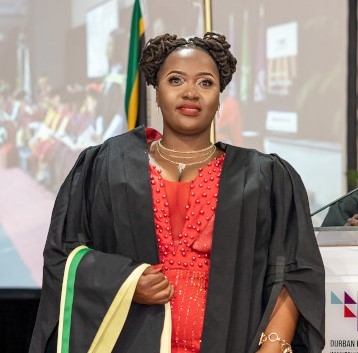
    Illustrative Image: September 2025: Ms. Nomthandazo Sibiya-Dlomo – African Female Researcher of the Month
    Image Source & Credit: Durban University of Technology
    Ownership and Usage Policy
    African Researchers AwardSeptember 2025: Ms. Nomthandazo Sibiya-Dlomo – African Female Researcher of the Month

    Ms. Nomthandazo Sibiya-Dlomo is an accomplished lecturer and doctoral candidate in the Department of Chemical Engineering at the Durban University of Technology (DUT). Her outstanding contributions to science and engineering have positioned her as one of South Africa’s most promising young researchers. In recognition of her remarkable achievements, she was named one of nine winners of the Doctoral Fellows Award at the 2025 South African Women in Science Awards (SAWiSA), held in Bloemfontein on 21 August 2025.

    The prestigious SAWiSA ceremony, themed “Unpacking STEM Careers: Her Voice in Science”, honoured women scientists who exemplify excellence and serve as role models for the next generation. For Ms. Sibiya-Dlomo, the award is a culmination of resilience, determination, and an unwavering passion for research that addresses pressing environmental challenges.

    Academic and Research Journey

    Raised by her grandparents in Mangamanzini Township, Folweni, Ms. Sibiya-Dlomo’s humble beginnings instilled in her a strong work ethic and the desire to change her circumstances. Motivated by her upbringing and determined to create a better future for her children, she pursued higher education with exceptional dedication.

    She graduated Cum Laude with a Bachelor of Technology (BTech) in Chemical Engineering in 2018, followed by a master’s degree in Chemical Engineering, which she completed with a Dean’s Merit Award in 2023. Her master’s thesis, “Treatment of Industrial Effluent Using Specialised Magnetised Coagulants”, reflected her strong commitment to sustainable engineering solutions.

    Currently, she is in the third year of her Doctor of Engineering (DEng) in Chemical Engineering at DUT, supervised by Professor Sudesh Rathilal and Dr. Thembisile Mahlangu. Her doctoral research focuses on wastewater treatment, specifically investigating the use of modified agricultural waste products—such as sugar cane, banana, and orange residues—as low-cost adsorbents for the removal of heavy metal ions from industrial effluents. With over 261 citations, an h-index of 6, and an i10-index of 6, her work is already making a measurable impact in the scientific community.

    Awards and Recognitions

    Ms. Sibiya-Dlomo’s career is decorated with numerous local and international accolades:

    • 2025 SAWiSA Doctoral Fellows Award – Recognising her as one of South Africa’s top emerging women scientists.

    • 2024 Research Debut – Young Talents from Africa Prize (Eni Awards, Italy).

    • 2024 L’Oréal-UNESCO For Women in Science Young Talents Award (South Africa).

    • 2023 NRF Research Excellence Award for Next Generation Researchers.

    • NRF-DAAD In-Country Scholarship – for doctoral research excellence.

    In addition, she has published in respected journals such as Scientific African, Materials Today, Polymers, Cleaner Chemical Engineering, and Biofuels, Bioproducts and Biorefining. She has delivered five oral conference presentations, including an international presentation in Thailand.

    Overcoming Challenges

    Her academic journey has not been without obstacles. While pursuing her Master’s degree during the COVID-19 pandemic, she faced delays in research due to lab closures, procurement setbacks, and severe personal challenges, including a battle with depression. With the support of her family, colleagues, and especially her supervisor Prof. Rathilal and her close friend Ms. Gloria Amo-Duduodu, she overcame these hurdles and emerged stronger.

    She credits her husband, Mr. Khanyisani Dlomo, for breaking cultural norms and becoming her pillar of support, ensuring that she had the space and time to excel academically while balancing family responsibilities.

    Inspirational Voice for the Next Generation

    Beyond her scientific achievements, Ms. Sibiya-Dlomo is deeply committed to inspiring young women to pursue careers in Science, Technology, Engineering, and Mathematics (STEM). She believes in empowering the next generation with innovative problem-solving skills to address environmental and public health challenges.

    Reflecting on her journey, she often shares motivational advice with students:

    “To all young people, no matter your background, if you are determined and hardworking, you will never sit at home. Work hard, get good grades, and sponsors will support you in STEM.”

    She dedicates her 2025 SAWiSA award to her children, Zethembiso and Simingaye, emphasizing her mission to break barriers and build a legacy for future generations.

    Institutional and Community Recognition

    At DUT, Ms. Sibiya-Dlomo is recognised not only for her academic achievements but also for her contribution to the university’s broader mission. Professor Fulufhelo Nemavhola, Deputy Vice-Chancellor: Research, Innovation and Engagement at DUT, lauded her recognition at SAWiSA as a reflection of DUT’s commitment to research excellence and societal impact, aligned with the university’s ENVISION2030 strategy.

    Conclusion

    From her humble beginnings in Folweni to the national stage at the South African Women in Science Awards, Ms. Nomthandazo Sibiya-Dlomo exemplifies resilience, innovation, and leadership in science. Her cutting-edge research on wastewater treatment demonstrates how African scientists can harness local resources to tackle global challenges.

    As she continues her doctoral journey and expands her contributions to academia and society, she stands as a powerful role model for young women in STEM—proof that perseverance, passion, and purpose can transform not only individual lives but entire communities.
  • 30 Trailblazing African Women Scientists Honored at the 2023 L’Oréal-UNESCO For Women in Science Awards

    30 Trailblazing African Women Scientists Honored at the 2023 L’Oréal-UNESCO For Women in Science Awards

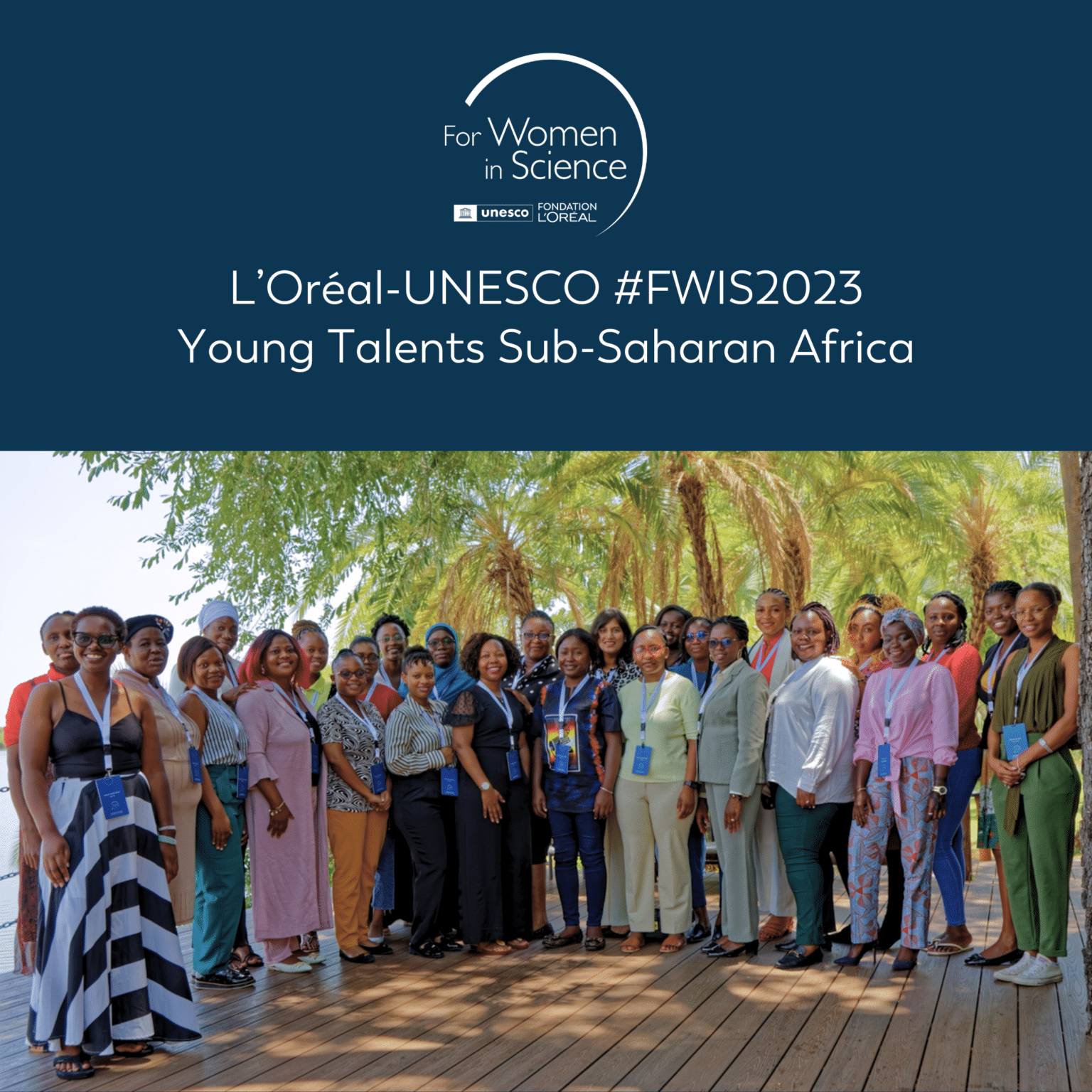
    Paris, 8th November 2023 The Fondation L’Oréal and UNESCO have proudly announced the 30 winners of the 14th edition of the L’Oréal UNESCO For Women in Science Young Talents Sub-Saharan Africa Awards. This prestigious recognition honors the groundbreaking work of African women scientists and reaffirms the importance of gender equality in science.

    Empowering Women Scientists: A Crucial Step for Africa and the World

    Scientific research remains a pivotal force in addressing global challenges, yet Africa contributes only 2.5% to the world’s scientific workforce. In an era marked by escalating social, economic, environmental, and health crises, it is imperative to harness all available scientific expertise. Women scientists, often underrepresented in academia and research, play an essential role in driving progress.

    For the 14th consecutive year, the L’Oréal UNESCO For Women in Science Young Talents Sub-Saharan Africa Awards recognize the outstanding contributions of female researchers. This year, the program has expanded, awarding 30 promising young scientists—25 PhD candidates and 5 postdoctoral researchers—a significant increase from previous editions. These laureates, representing 17 African nations, including first-time participants from Cabo Verde and Lesotho, exemplify the resilience and innovation required to tackle pressing scientific challenges.

    Honoring Excellence in Scientific Research

    Selected from a competitive pool of 632 applicants, these brilliant women were chosen by a distinguished panel of 10 experts led by Professor Aggrey Ambali, Director of Technical Cooperation and Program Funding at the African Union Development Agency (AUDA-NEPAD). Their research spans a diverse range of disciplines, including biochemistry, epidemiology, ecology, artificial intelligence, and public health. By pioneering new methodologies and solutions, these scientists are making substantial contributions to the advancement of knowledge and the improvement of life in Africa and beyond.

    Fanta Yadang Sabine Adeline, one of the 2023 awardees, aptly stated, “The future of Africa is in the hands of its scientists.” This sentiment is echoed by her fellow laureates, whose groundbreaking work is poised to reshape various scientific fields and inspire future generations.

    Encouraging Scientific Dialogue and Mentorship

    Providing visible role models for young women is essential to fostering future generations of scientists. To facilitate this, the Young Talents engaged in an intergenerational dialogue on the morning of November 8th with Botswana’s First Lady, H.E. Mrs. Neo Jane Masisi, alongside 150 school students. This knowledge exchange session aimed to inspire young girls to pursue careers in science and technology, bridging the gender gap in STEM fields.

    The L’Oréal-UNESCO Young Talents Sub-Saharan Africa Programme

    Established in 2000, the L’Oréal-UNESCO For Women in Science Young Talents program has provided over 250 grants annually across more than 110 countries. The initiative not only funds promising researchers but also advocates for the vital inclusion of women in scientific advancements. Over the past 25 years, the partnership between UNESCO and the Fondation L’Oréal has recognized more than 4,100 female scientists at different career stages, celebrating their contributions to scientific progress.

    As Lidia Brito, Assistant Director-General for Natural Sciences at UNESCO, emphasized, “The L’Oréal-UNESCO Young Talents are the very future of science. We look forward to working with them to further reinforce the pivotal role of women in science for a sustainable and inclusive future.”

    The 2023 laureates will receive financial grants of €10,000 for PhD candidates and €15,000 for postdoctoral researchers. This funding will aid them in advancing their projects and overcoming financial barriers to research. Beyond monetary support, the program offers leadership training, equipping these scientists with the skills needed to navigate professional challenges, including gender biases and work-life balance constraints.

    A Call for Collective Action

    Scientific progress cannot afford to overlook half of humanity’s potential. “Enabling women scientists to emerge in the public arena and be recognized for the quality of their work requires urgent action,” said Alexandra Palt, CEO of the Fondation L’Oréal. “It is everyone’s responsibility—institutions, companies, and civil society—to ensure that women receive the recognition they deserve.”

    Meet the 2023 L’Oréal-UNESCO For Women in Science Young Talents: A Glimpse into Their Research

    Southern Africa

    • Bhamini SREEKEESSOON (Mauritius): Harnessing tidal energy for a sustainable future.
    • Bonolo Bonita PHINIUS (Botswana): Fighting hepatitis B through innovative research.
    • Constance CHINGWARU (Zimbabwe): Developing biopesticides from native plants.
    • Felicidade NIQUICE (Mozambique): Enhancing occupational health and safety in hospitals.
    • Maria Nelago KANYAMA (Namibia): Using AI to combat water scarcity.
    • Mesha MBISANA (Botswana): Improving food safety to promote better health.
    • Nthabeleng HLAPISI (Lesotho): Advancing phototherapies for cancer treatment.

    Central Africa

    • Fanta Sabina Adeline YADANG (Cameroon): Exploring medicinal treatments for neurodegenerative diseases.
    • Hadidjatou DAIROU (Cameroon): Investigating the healing properties of native plants for cardiovascular disease.
    • Lydie Kamga MESSADO (Cameroon): Conservation of orchids in rainforests.

    East Africa

    • Cheryl KERAMA (Kenya): Studying sugar regulation’s impact on tuberculosis.
    • Devotha Godfrey NYAMBO (Tanzania): Using machine learning to prevent infectious diseases in livestock.
    • Esther UWIMAANA (Uganda): Towards a tuberculosis vaccine.
    • Mwende Mbilo (Kenya): Innovating to enhance solar energy solutions.
    • Naelijwa Mshanga (Tanzania): Improving nutrition for women and children.

    West Africa

    • Aderonke KOREDE (Nigeria): Studying the health benefits of natural ingredients.
    • Bernice Konadu AGYEMAN (Ghana): Improving drinking water quality.
    • Dorcas Atibilla (Ghana): Analyzing mosquito behavior to fight malaria.
    • Fatou Lo Niang (Senegal): Using machine learning to prevent cardiovascular diseases.
    • Ini ADINYA (Nigeria): Applying mathematics to optimize investments.
    • Pamela Borges (Cabo Verde): Advancing breast cancer research through gene studies.
    • Temitope ABIOLA (Nigeria): Enhancing biodiesel efficiency through metabolic engineering.

    Conclusion

    The L’Oréal-UNESCO For Women in Science Young Talents Sub-Saharan Africa Awards celebrate scientific excellence and reaffirm the crucial role of women in research. By empowering these outstanding researchers, the program is paving the way for a more inclusive and innovative scientific community that will benefit Africa and the world. The continued support of institutions, governments, and the private sector is vital to ensuring that women in science receive the recognition, funding, and opportunities they deserve.