Tag: land dispossession

  • 2025 Conference on Land Policy in Africa (CLPA)

    2025 Conference on Land Policy in Africa (CLPA)


    Illustrative Image: 2025 Conference on Land Policy in Africa (CLPA)
    Image Source & Credit: AU
    Ownership and Usage Policy

    Background

    The 2025 Conference on Land Policy in Africa (CLPA) will take place under the theme “Land Governance, Justice, and Reparations for Africans and Descendants of People of the African Diaspora.” This theme resonates deeply with the African Union’s ongoing commitment to the pursuit of justice, reparations, and restitution for the crimes of slavery, colonialism, and their lingering consequences. These historical injustices—rooted in systemic exploitation and racial domination—continue to shape patterns of land ownership, economic inequality, and social exclusion across Africa and among people of African descent globally.

    For centuries, African land, natural resources, and human labour were expropriated to fuel the industrial and economic growth of Western powers. The transatlantic slave trade forcibly removed millions of Africans from their homelands, subjecting them to dehumanizing conditions in plantations, mines, and factories across the Americas and Europe. Enslaved Africans generated immense wealth for colonial empires but were denied fundamental human rights, including the right to own property or benefit from the land they cultivated. Acts of resistance were met with brutal repression, including torture, deportation, and executions. Women, in particular, suffered grievous violations, including sexual violence, intended to produce generations of enslaved labourers.

    These atrocities did not end with emancipation. Post-slavery systems—such as segregationist land laws, sharecropping, and racial zoning—continued to exclude people of African descent from owning and controlling land. Such structures entrenched cycles of economic and social inequality, perpetuating the trauma that originated in slavery.


    Colonialism and Its Legacies

    The colonial project extended the violence of slavery through the territorial conquest and economic exploitation of Africa. Following the Berlin Conference of 1884–1885, European powers partitioned the continent, seizing land and natural resources under the guise of “civilizing missions.” Colonial administrations imposed new land governance systems that dismantled communal tenure arrangements and dispossessed indigenous peoples. Fertile lands were appropriated for settlers and foreign corporations, while African communities were relegated to reserves or became wage labourers on lands that once belonged to them.

    The colonial system institutionalized racial hierarchies, economic dependency, and cultural alienation. It not only stripped Africans of land and livelihoods but also eroded their cultural and spiritual heritage. Sacred artefacts, regalia, and symbols of authority—such as royal stools, drums, spears, and ancestral relics—were looted and shipped to Europe, where they remain displayed in museums. These stolen artefacts generate income abroad while depriving African societies of vital cultural anchors, sources of intergenerational memory, and creative inspiration.

    The violence of colonial domination was often genocidal. The extermination of the Herero and Nama peoples in Namibia (1904–1908), during which approximately 80% of the Herero and 50% of the Nama population were killed, exemplifies this brutality. Their ancestral lands were confiscated and remain largely under the control of German descendants to this day. Across Africa, colonial powers used forced labour, concentration camps, and public executions to suppress resistance. The extraction of resources and the destruction of indigenous systems of governance left profound social, economic, and ecological scars that persist in post-colonial societies.


    Cultural, Linguistic, and Environmental Disruptions

    Colonialism did not only transform political and economic systems—it also redefined social and cultural hierarchies. European languages were institutionalized as languages of power and progress, while African languages were devalued and marginalized. This linguistic dominance disrupted indigenous education systems and undermined local knowledge—especially in agriculture, medicine, and environmental stewardship.

    Colonial agriculture privileged export-oriented cash crops and European food systems, displacing indigenous crops that sustained local communities. This imposed model of production undermined food security, biodiversity, and self-sufficiency, consequences that remain evident in Africa’s contemporary struggles with climate change and rural poverty.


    The Case for Reparations and Land Justice

    Land remains a central pillar of identity, culture, and economic empowerment in Africa. It is both a material resource and a spiritual inheritance. Yet, due to the intertwined histories of slavery and colonialism, Africans and people of African descent continue to face structural barriers to accessing and benefiting from land. Reparative justice—particularly through land redistribution, restitution, or equitable access to land—offers a pathway to redressing historical wrongs and dismantling systemic inequalities.

    Experiences from other contexts, such as post-apartheid South Africa and the Māori land restitution process in New Zealand, demonstrate that meaningful reparations are possible when backed by political will, inclusive policy design, and strong institutional frameworks. Such efforts must go beyond financial compensation to include the restoration of cultural heritage, the return of artefacts, and the recognition of historical memory.

    Addressing contemporary land inequities also requires reforming statutory frameworks that still mirror colonial land laws. In both rural and urban contexts, descendants of colonizers and elites often control vast tracts of land, while marginalized communities endure displacement, eviction, and environmental degradation. Urban gentrification and exclusionary planning policies further perpetuate dispossession among descendants of enslaved and colonized peoples.


    Core and Cross-Cutting Themes

    The 2025 CLPA will provide a multidisciplinary platform for critical reflection, policy innovation, and collective action. The discussions will revolve around the following core themes:

    • Emerging best practices in developing responsive and inclusive land policies

    • Strengthening institutions for effective, transparent land governance and administration

    • Data, monitoring, and evaluation for evidence-based decision-making in land policy

    Cross-cutting themes will include:

    • Youth and intergenerational equity

    • Gender and social inclusion

    • Climate change and ecological reparations

    • Technology and innovation in land governance

    • Reparations and restorative justice

    Proposed sub-themes will further explore:

    • Land tenure and equity

    • Climate justice, resilience, and ecological reparations

    • Colonialism, agriculture, and agri-food systems

    • Land, urbanization, settlements, and conflicts

    • Colonial displacement and reparative justice

    • Land governance, international law, and reparations

    • Land, trade, colonialism, and economic injustice


    Partnerships and Format

    The Conference is jointly organized by the African Union Commission (AUC), United Nations Economic Commission for Africa (ECA), and the African Development Bank (AfDB), under the leadership of the African Land Policy Centre (ALPC). It will bring together policymakers, scholars, traditional leaders, civil society organizations, regional economic communities, and development partners to deliberate on the intersections of land, justice, and reparations.

    The 2025 CLPA will feature plenary sessions, parallel sessions, master classes, policy dialogues, side events, and exhibitions. A formal Call for Abstracts will guide the selection of academic and policy contributions, ensuring that discussions align with the conference theme and contribute to Africa’s broader agenda for justice, land reform, and sustainable development.


    Conclusion

    The 2025 CLPA offers an historic opportunity to confront the intertwined legacies of slavery and colonialism through a land justice lens. By re-examining questions of land governance, ownership, and reparations, the conference seeks to advance Africa’s collective agenda for restorative justice, equitable development, and the reclamation of African dignity and heritage.

    Land is not merely an economic asset—it is a foundation for sovereignty, identity, and self-determination. Addressing its dispossession is essential to achieving the vision of a just, prosperous, and united Africa.

    For more details click here
  • Fortress Conservation in Africa: The Human Cost, Colonial Legacy, and Path Toward Community-Led Solutions”

    Fortress Conservation in Africa: The Human Cost, Colonial Legacy, and Path Toward Community-Led Solutions”


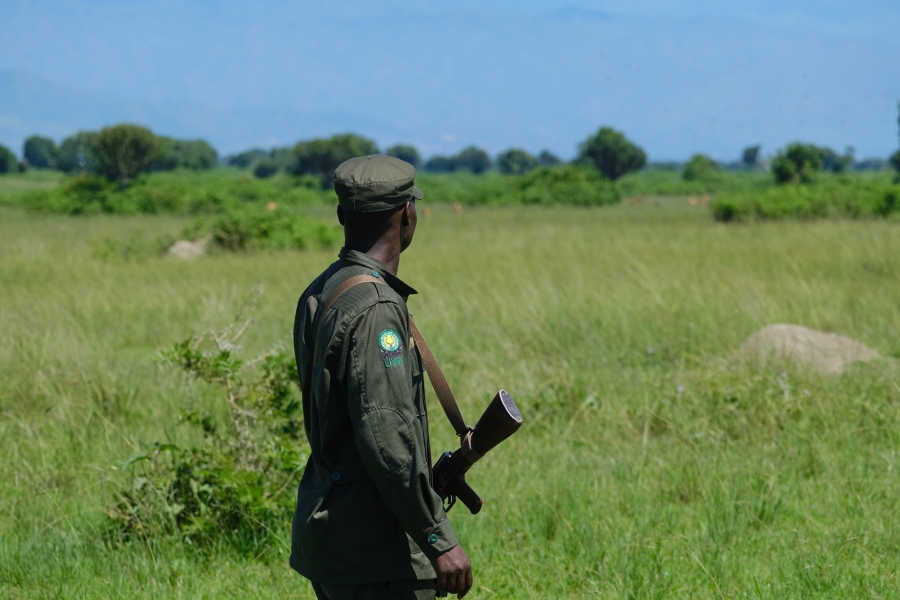
    Illustrative Image: Fortress Conservation in Africa: The Human Cost, Colonial Legacy, and Path Toward Community-Led Solutions”
    Image Source & Credit: Mongabay
    Ownership and Usage Policy

    Africa holds one of the world’s richest stores of biodiversity, from vast savannahs teeming with elephants and lions to dense forests that shelter gorillas and countless lesser-known species. Yet beneath the global fascination with African wildlife lies a lesser-told story: the human cost of conservation. For generations, African communities have borne the heavy burden of protecting these ecosystems, often while being dispossessed of their ancestral lands and criminalized for their ways of life.

    The dominant conservation narrative portrays African landscapes as pristine, empty wildernesses — best protected from people rather than with them. This idea, reinforced by colonial history, wildlife documentaries, and conservation campaigns, has entrenched the notion that Africans themselves are threats to nature, and that salvation must come from outside experts, often from the West. As Kenyan writer Binyavanga Wainaina once observed in his satirical essay How to Write About Africa, the story is always told from the perspective of the elephant, gorilla, or lion — rarely from the perspective of the people who live alongside them.

    The Colonial Legacy of Fortress Conservation

    The modern conservation estate in Africa is built upon colonial policies of land appropriation. National parks such as Serengeti (1958), Virunga (1925), Kruger (1926), and Etosha (1907) were established under the principle of fortress conservation — the idea that biodiversity can only survive if people are excluded. Communities that had long relied on these landscapes for food, water, medicine, spiritual practices, and cultural identity were expelled, often violently.

    This legacy continues in post-independence Africa. Even newer models — conservancies, wildlife management areas, and community-based resource schemes — are frequently critiqued for reproducing the same exclusionary logics. Many of these initiatives allow only marginal participation by local communities, often limited to tourism-related jobs or the sale of cultural artifacts, while the land itself is renamed, rebranded, and reallocated to more “desirable” stakeholders.

    Militarization compounds this injustice. Protected areas are patrolled by heavily armed rangers, funded largely by Western donors, creating what some scholars describe as “ecosystems of fear.” Conservation thus becomes entangled with violence, surveillance, and the denial of resource sovereignty.

    The Reality of Living With Wildlife

    For communities bordering conservation areas, wildlife is not an abstract symbol of biodiversity but a daily presence with profound consequences. Many African parks are unfenced, allowing animals to roam into nearby settlements. Crop destruction, livestock predation, and even loss of human life are common — often without compensation.

    At the 2023 Community-led Conservation Congress in Namibia, a local leader recounted the death of a woman trampled and killed by an elephant while collecting firewood. Such stories illustrate the profound costs borne by people forced to coexist with animals without adequate protection or recognition of their rights.

    Research in southern Kenya has shown that livestock predation by lions and other carnivores makes pastoralism increasingly unsustainable. Many households lose thousands of dollars’ worth of animals, forcing them to switch to farming — which in turn invites further conflict with elephants raiding crops. One pastoralist explained how elephants destroyed his entire tomato harvest overnight, despite months of investment and effort. These recurring losses are not merely economic; they also create fear, disrupt education, and erode social cohesion.

    Conservation as Extraction

    Conservation in Africa must also be understood alongside other extractive industries like mining, logging, and industrial agriculture. Like diamonds or timber, wildlife and wilderness have been commodified, often for the benefit of global tourism markets. The fortress model ignores that wildlife exists both inside and outside protected areas, and that African communities have long maintained cultural practices — such as sacred sites, totemism, and seasonal resource use — that sustain biodiversity without external intervention.

    Despite exclusion, African peoples invest an estimated $2–4 billion annually in conservation efforts, often without donor or government support. This reality challenges the assumption that conservation is something Africans must be taught. In truth, Africans are the original stewards of their lands.

    Toward a New Vision of Conservation

    For over two decades, scholars and activists have called for a shift toward community rights and human-centered approaches. The 2003 IUCN World Parks Congress in Durban highlighted the importance of Indigenous and local peoples in conservation, yet progress has been slow. Militarization persists, and colonial legacies remain entrenched.

    What is needed is a reconciliation-driven approach that acknowledges historical injustices and centers the knowledge systems, cultural practices, and aspirations of African communities. As articulated in the Laboot Declaration (2022) by Indigenous leaders of East Africa:

    “We take care of our lands. This is our land by birth. We have knowledge, that was gifted to us by our forefathers, that teaches us how to sustain our land and be sustained by it. How can someone that has never lived in our land know how to care for it?”

    At its heart, conservation must move beyond treating wildlife as more valuable than human lives. It must embrace principles of justice, equity, peace, and collaboration, recognizing that sustainable futures are built on relationships between people, animals, and landscapes.

    Instead of pouring millions into militarized enforcement, the path forward requires investing in reconciliation, restoring land rights, and supporting community-driven models that work with, not against, local people. Africans care deeply about their natural heritage — perhaps more than anyone else — and their leadership is essential for building conservation strategies that are truly sustainable.

  • Community-Based Wildlife Tourism in South Africa: Environmental Justice, Land Dispossession, and Neocolonial Dependencies

    Community-Based Wildlife Tourism in South Africa: Environmental Justice, Land Dispossession, and Neocolonial Dependencies

    A recent study by van Megen, L., & Anthony, B. P. (2025) titled “Exploring Community-Based Wildlife Tourism from an Environmental Justice Perspective: A Case Study of the Wild Olive Tree Camp in South Africa,” published in Human Ecology, reveals that community-based wildlife tourism (CBWT) provides short-term benefits like employment and financial gains but risks reinforcing neocolonial dependencies and long-term inequalities.

    Community-based wildlife tourism provides short-term economic benefits but reinforces neocolonial dependencies, limiting local agency, land rights, and long-term sustainability in South Africa.– van Megen, L., & Anthony, B. P. (2025

    The article “Exploring Community-Based Wildlife Tourism from an Environmental Justice Perspective: A Case Study of the Wild Olive Tree Camp in South Africa” by Lizzy van Megen and Brandon P. Anthony examines the intersection of community-based wildlife tourism (CBWT) and environmental justice (EJ) within the Kruger to Canyons Biosphere Region, South Africa. The study explores whether CBWT can foster equitable land management and provide lasting benefits to local communities while critiquing its potential to reinforce neocolonial dependencies. Using an environmental justice framework, the research delves into historical land dispossession, apartheid-era segregation, and the neoliberal conservation model, which often prioritizes market-driven approaches over local empowerment. The authors investigate how tourism management structures contribute to power imbalances, limiting local agency, knowledge access, and land rights. The study also critiques “green grabbing” and territorialization—processes that have historically marginalized indigenous communities from their lands under the guise of conservation. Ultimately, this research contributes to broader environmental justice scholarship by contextualizing South Africa’s historical and socio-political realities within modern conservation efforts. It calls for a fundamental restructuring of tourism governance to ensure sustainable community-led economies that restore agency over environmental resources and break cycles of dependence. The findings offer critical insights for policymakers and conservation practitioners striving for a more inclusive and just tourism model.

    How the Study was Conducted

    The study employs a qualitative case study methodology to examine the role of community-based wildlife tourism (CBWT) in promoting equitable land management through an environmental justice (EJ) lens. Focusing on the Wild Olive Tree Camp (WOTC) in the Kruger to Canyons Biosphere Region, South Africa, the research explores historical land dispossession, conservation challenges, and tourism’s role in shaping local livelihoods. The Wild Olive Tree Camp was selected due to its historical significance in land dispossession and conservation efforts. The Manyeleti Game Reserve (MGR), where the camp is situated, serves as a microcosm of broader socio-political struggles related to post-apartheid land ownership, access to environmental resources, and the integration of local communities into tourism economies. The research was conducted between April and July 2023, involving 23 participants across five categories:Tourists visiting WOTC, Staff of WOTC, Citizens of Welverdiend, Managers in the WOTC business, and employers in the regional wildlife tourism industry. Data was gathered using semi-structured interviews (lasting between 30 and 90 minutes) and a focus group discussion. Participants were recruited through snowball sampling, ensuring diverse perspectives. The study was conducted in collaboration with local organizations, including the University of Witwatersrand, K2C NPC, and Indalo Inclusive.

    Participants provided written or verbal consent, with anonymity ensured through coded identifiers based on their group. Ethical compliance emphasized confidentiality and transparency, fostering community trust and collaboration in the research process. Using thematic analysis, interview transcripts were coded into themes such as land claims, conservation benefits, tourism-related dependencies, economic challenges, and environmental justice perspectives. The study aimed to: assess local perceptions of post-apartheid land ownership structures in Manyeleti Game Reserve. Evaluate how CBWT contributes to or disrupts neocolonial power dynamics. Analyze the short- and long-term impacts of neoliberal mechanisms on tourism and local communities.

    What the Authors Found

    The study found that community-based wildlife tourism (CBWT) provides short-term benefits like employment and financial gains but risks reinforcing neocolonial dependencies and long-term inequalities. Local communities acknowledge tourism’s benefits but remain affected by historical land dispossession, calling for greater integration of Indigenous knowledge into conservation. Fences around protected areas symbolize colonial exclusion, restricting both physical and psychological access to land. The COVID-19 pandemic exposed economic vulnerabilities, highlighting the need for local economic resilience over global reliance. Wildlife is seen as a renewable resource essential for both tourism and community well-being. While tourists often hold misconceptions about rural South Africa, CBWT can reshape global perspectives through direct engagement. The study urges a critical reassessment of CBWT structures to ensure greater local autonomy and sustainable community-led economies.

    Why is this important?

    Addressing Historical Injustices
    The research highlights the need to acknowledge and address historical trauma related to land dispossession and segregation in South Africa. By promoting equitable land management and the inclusion of local communities, the study seeks to rectify past injustices and create fair opportunities for all.

    Promoting Environmental Justice
    The study contributes to the broader environmental justice framework by examining how CBWT can help distribute environmental resources and benefits more equitably. This is crucial for ensuring that marginalized communities have access to and can benefit from their natural resources.

    Restructuring Power Dynamics
    By analyzing the neoliberal approach to conservation and tourism, the study emphasizes the importance of restructuring power imbalances in tourism management. This aims to ensure that local communities have a say in how their lands and resources are used, leading to more sustainable and just practices.

    Enhancing Community Well-being
    The practical implications of the study suggest that CBWT can provide short-term economic benefits to local communities, enhancing employment opportunities and community morale. This is significant for improving the quality of life for individuals living in these regions.

    Informing Policy and Practice
    The study provides valuable insights for policymakers and practitioners on how to develop more inclusive and equitable conservation and tourism practices. By integrating Indigenous knowledge systems and addressing neocolonial dependencies, the research offers a pathway toward more sustainable and just environmental management.

    Educational Value
    The findings of the study underscore the importance of educating stakeholders about the historical and contemporary challenges in conservation and tourism. This can foster a more inclusive approach and encourage the integration of diverse perspectives in environmental management.

    What the Authors Recommended

    • The authors recommend acknowledging historical trauma from segregation and apartheid to foster equitable land management and conservation.
    • The study emphasizes the need to restructure power imbalances in tourism by ensuring fair access to land rights and knowledge for local communities.
    • To promote sustainability and justice, the author advocates for the integration of Indigenous knowledge into conservation efforts.
    • Community empowerment should be prioritized through job creation and initiatives that enhance local morale. Additionally, inclusive policies must be developed to support land restitution and ensure equitable conservation practices.
    • Lastly, the authors stress the importance of educating stakeholders on both historical and contemporary challenges in tourism and conservation to encourage a more just and inclusive approach.

    In conclusion, the study by van Megen and Anthony sheds critical light on the complexities of community-based wildlife tourism (CBWT) in South Africa, highlighting both its potential benefits and inherent challenges. While CBWT offers short-term economic opportunities, it also risks perpetuating historical inequalities and neocolonial dependencies if not carefully restructured. By integrating Indigenous knowledge, addressing land dispossession, and empowering local communities, tourism can become a vehicle for true environmental justice rather than a continuation of exclusionary conservation models. Moving forward, policymakers, conservationists, and stakeholders must collaborate to ensure tourism fosters sustainable, community-led economies that restore agency and create lasting change.