Tag: health security

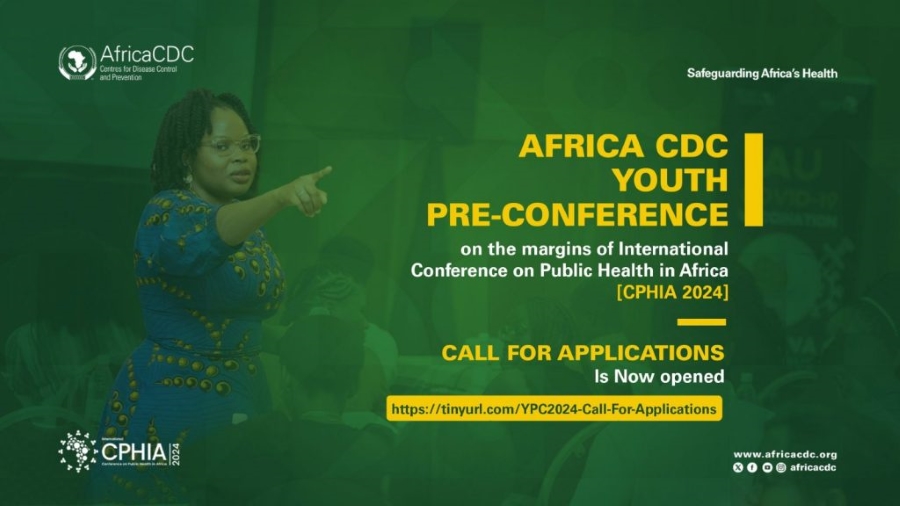
  • Africa CDC Youth Pre-Conference 2024: Amplifying Youth Voices in Health Policy and Research – Apply by August 31

    Africa CDC Youth Pre-Conference 2024: Amplifying Youth Voices in Health Policy and Research – Apply by August 31

    Background

    The Africa CDC Youth Pre-Conference (YPC) is a prominent initiative by the Africa Centers for Disease Control and Prevention (Africa CDC), held annually in conjunction with the International Conference on Public Health in Africa (CPHIA). The YPC provides a dynamic platform for young public health professionals from across Africa and the diaspora to network, exchange ideas on pressing health issues, and showcase their contributions to a broad audience.

    The 2022 and 2023 editions of YPC were themed “Meaningful Youth Engagement for Advancing Sustainable Health Security in Africa” and “Youth Leadership for a Safer and Healthier Africa,” respectively. These events brought together over 250 delegates from 48 African Union Member States, offering engagement with high-level officials, workshops on critical thematic areas, and collaborative sessions to develop Africa CDC’s Youth Engagement Strategy and the Bingwa Initiative 2.0.

    The Africa CDC is excited to announce the 2024 Africa CDC Youth Pre-Conference (YPC 2024), which will be held in-person from November 23-24, 2024, in Rabat, Morocco. This year’s theme, “Amplifying Youth Voices: Youth Shaping Health Policy, Practice, and Research in Africa,” aims to highlight and expand the role of young Africans in shaping the continent’s health landscape.

    Conference Goals

    YPC 2024 seeks to:

    1. Showcase Contributions: Highlight the significant impact young Africans are making in health policy, practice, and research.
    2. Empower Young Leaders: Explore strategies to broaden engagement and empower youth to drive transformation in the health sector across Africa.

    Conference Tracks

    The conference will focus on six key areas where youth are leading innovations and efforts:

    1. Youth and Digital Health Innovations: Exploring how young people are leveraging technology to advance health solutions.
    2. Empowering Youth: Developing workforce skills and creating job opportunities in the health sector.
    3. Advancement of Local Pharmaceutical Manufacturing: Supporting youth-driven initiatives to enhance local pharmaceutical production.
    4. Championing Reproductive Health and HIV/AIDS: Highlighting youth-led efforts in addressing reproductive health and HIV/AIDS challenges.
    5. Support for Community Health Workers (CHWs): Fostering youth involvement in supporting and improving CHW programs.
    6. One Health for a Healthier Future: Promoting integrated approaches that connect human, animal, and environmental health.

    Objectives and Expected Outcomes

    General Objective

    The 2024 Youth Pre-Conference aims to foster advocacy and enhance meaningful youth engagement, active participation, and inclusive leadership in public health. It also seeks to educate and empower youth to contribute to strengthening health security and universal health coverage (UHC) across Africa.

    Specific Objectives

    1. Assess Youth Engagement: Evaluate the current levels and types of youth engagement in health policy, practice, and research.
    2. Improve Engagement: Provide insights on enhancing and broadening youth involvement in line with the Africa CDC’s Strategy for Youth Engagement and Participation in Global Health.
    3. Highlight Contributions: Showcase the impact of African youth on public health and explore ways to strengthen their capacities.
    4. Showcase Innovations: Present youth-driven innovations and contributions to health policy, practice, and research.
    5. Increase Enrollment in CHW Programs: Emphasize the importance of involving youth in CHW programs as a strategy for disease outbreak response and reducing youth unemployment.
    6. Identify UHC Opportunities: Identify aspects of UHC and health security where youth can play a leading role.

    Expected Outcomes

    1. Presentation Opportunities: Provide a platform for young professionals and researchers to present their work across the six tracks.
    2. Networking: Facilitate connections among African youth in public health and leading professionals.
    3. Documented Contributions: Showcase and document the contributions of young African professionals to the public health evidence base.
    4. Justification for Youth Involvement: Establish the benefits of including youth in community health programs and their impact on social-political capital.
    5. Additional Engagement Opportunities: Identify new opportunities for youth involvement in health.

    Conference Details

    • Dates: November 23-24, 2024
    • Venue: Rabat, Morocco

    Format

    • Plenary Sessions and Keynotes: Presentations by high-level officials and experts.
    • Parallel Sessions and Workshops: Interactive sessions and workshops across various formats.
    • Oral and Poster Presentations: Opportunities to present youth-led or youth-focused research and projects.
    • Networking: Opportunities for attendees to connect and collaborate.

    Eligibility and Application Process

    Eligibility Criteria

    • Age: 18 to 35 years
    • Citizenship: Must be a citizen of an African Union (AU) member state.
    • Experience: At least an undergraduate education and initial professional experience in health or related fields. Extensive work experience may supplement degrees in non-health disciplines.
    • Leadership and Commitment: Demonstrated leadership potential and strong commitment to public health through involvement in youth-led initiatives, advocacy, or community organizing.
    • Equity Statement: The selection process will ensure diverse representation, considering factors such as gender, geographical balance, ethnic and social diversity, and disability status.

    How to Apply

    • Application Form: Complete the online application form here by August 31, 2024, 05:00 pm EAT.
    • Submission Requirements: Submit your CV and a 300-word abstract or article related to one of the six tracks.

    Article/Abstract Submission Guidelines

    • Alignment: Ensure the abstract/article aligns with the chosen track and relates to youth in Africa.
    • Original Submission: Submit each abstract/article only once and under a single track.
    • Word Limit: The abstract/article must not exceed 300 words.

    Submission Options

    1. Policy or Implementation Project Abstract: Detail the theory of change or lessons learned from a policy or program.
    2. Article or Commentary: Provide a detailed analysis or commentary on an issue related to the selected track.
    3. Research Abstract: Present research findings with details on methods, results, and conclusions.

    Important Dates

    • Application Open: August 12, 2024
    • Application Deadline: August 31, 2024, 05:00 pm East Africa Time
    • Notification of Selection: By end of September 2024
    • Confirmation of Attendance: By October 20, 2024
    • Conference Dates: November 23-24, 2024

    For more details and to apply, visit the website

    application form here.
  • Strengthening Disaster Preparedness in the Horn of Africa: Key Insights from Regional Training in Djibouti

    Strengthening Disaster Preparedness in the Horn of Africa: Key Insights from Regional Training in Djibouti

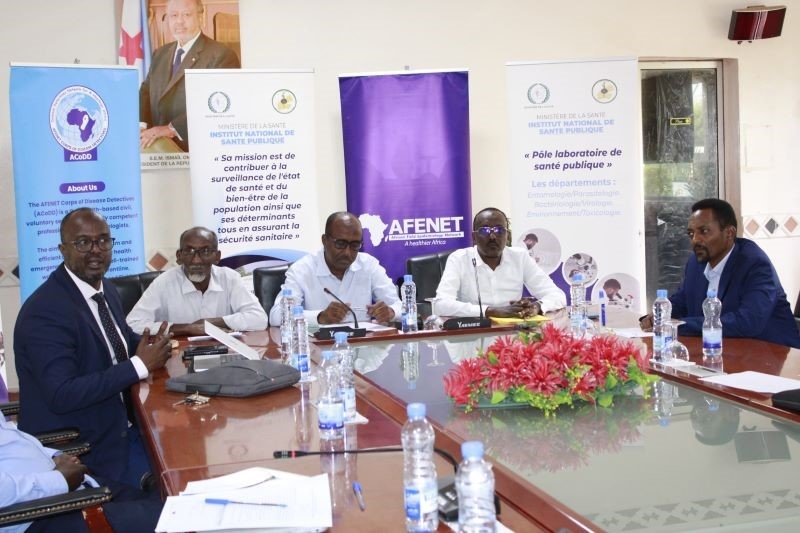
    The Horn of Africa has taken a pivotal step in enhancing its public health readiness through a groundbreaking regional disaster preparedness and response Training of Trainers (ToT) held in Arta Region, Djibouti, from May 5 to May 9, 2024. This five-day training program represents a collaborative effort involving the US Centers for Disease Control and Prevention (CDC), the African Field Epidemiology Network (AFENET), and Djibouti’s Ministry of Health. The initiative aims to foster a coordinated approach to managing disasters and public health emergencies across the region.

    High-Profile Inauguration and Attendance

    The ToT inauguration was graced by an array of dignitaries and key stakeholders. His Excellency Mohammod Ali, the Secretary General of Djibouti’s Ministry of Health, officially opened the event, signaling its significance to the country’s health policy framework. Among the notable attendees were Dr. Houssein Youssouf Darar, Director General of Djibouti’s National Institute of Health; Elmi Bouh, President of the Regional Council of Arta; and Hassan Dabaleh, Prefect of the Arta region. The event also saw participation from representatives of the US-CDC, including Dr. Bayleyegn Tesfaye and Dr. Schnall Amy, both from the National Center for Environmental Health, and Dr. Tatek Bogale, the AFENET Regional Technical Coordinator for the Horn of Africa.

    Training Focus and Objectives

    The training brought together 24 healthcare professionals from various AFENET member countries, including Djibouti, Ethiopia, and Somaliland/Somalia. Using the latest Disaster Epidemiology and Toxic Outbreak Investigation materials, participants underwent rigorous training designed to equip them with advanced skills for conducting rapid needs assessments and setting up effective surveillance systems. These skills are critical for effective disaster response and public health emergency management. The ultimate goal is for these trained professionals to become trainers themselves, enabling them to share their knowledge and skills within their respective countries, thereby strengthening regional resilience.

    Acknowledgment of Partnerships and Collaborative Efforts

    During the opening ceremony, the speakers highlighted the invaluable role of the US-CDC and AFENET in supporting the initiative. Their contributions have been instrumental in enhancing the region’s capacity to respond to public health crises. The collaboration between Djibouti’s Ministry of Health, the National Institute of Health, and other stakeholders was emphasized as key to building a robust health system in the region.

    Importance of Regional Preparedness

    The regional disaster preparedness and response training represents more than just a capacity-building exercise; it marks a significant stride toward creating a coordinated and robust public health infrastructure in the Horn of Africa. The ability to respond swiftly to disasters and public health emergencies can save lives and mitigate broader societal impacts. The skills and knowledge shared through this training aim to ensure that healthcare professionals across the region are better prepared to handle emergencies, thus strengthening the overall resilience of the health system.

    Looking Forward

    As the training concludes, the participants return to their respective countries with a wealth of knowledge and a mandate to disseminate what they have learned. The continued collaboration among regional health authorities, international partners, and local stakeholders will be crucial in maintaining and building upon the progress made during this training. The success of such initiatives not only improves immediate response capabilities but also contributes to the long-term goal of creating a more resilient and health-secure Horn of Africa.

  • Empowering Africa: The Urgent Imperative for Local Vaccine Production and Health Security

    Empowering Africa: The Urgent Imperative for Local Vaccine Production and Health Security

    In an article penned by Thelma Chioma Abeku on January 10, 2024, the imperative for Africa to embark on vaccine production for its populace takes center stage. UN Secretary-General Antonio Guterres underscored the significance of vaccine equity in February 2021, emphasizing it as the “biggest moral test before the global community.” This resonated during the COVID-19 pandemic, exposing the vulnerability of Africa’s health systems and amplifying the need for self-reliance in addressing public health challenges.

    The 3rd International Conference on Public Health in Africa (CPHIA) in Zambia delved into the challenges and opportunities associated with advancing local production in vaccines, diagnostics, and therapeutics. The African Union, along with member states and partners, set an ambitious goal of achieving at least 60 percent vaccine manufacturing on the continent by 2040. Just as good governance entails providing national security and infrastructure, vaccine production is framed as a global public good essential for safeguarding community health.

    The article acknowledges the pivotal role played by institutions such as the Institut Pasteur in Dakar, dedicated to researching infectious diseases affecting Africa. While commendable, there’s a consensus that more needs to be done to drive the vaccine manufacturing process forward. Africa bears a significant burden of infectious diseases globally, necessitating a local, African-led approach to innovation in vaccine production for self-sufficiency.

    Challenges to Overcome

    The challenges outlined include the need for collaboration to address infrastructure gaps and create a conducive ecosystem for manufacturing facilities. H.E Dr. Jean Kaseya, Director General of the Africa Centre for Disease Control, stressed the importance of a robust ecosystem capable of producing vaccines and medical products in a harmonized manner. This underscores the call for significant investments in research and development, driven by collaborations between governments, the private sector, and international partners.

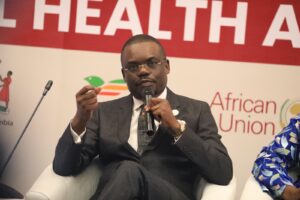
    H.E Dr. Jean Kaseya, Director General of the Africa Centre for Disease Control, stressed the importance of a robust ecosystem capable of producing vaccines and medical products in a harmonized manner

    Illustrative Image: H.E Dr. Jean Kaseya, Director General of the Africa Centre for Disease Control, stressed the importance of a robust ecosystem capable of producing vaccines and medical products in a harmonized manner
    Image Source & Credit: African Union
    Ownership and Usage Policy

    Regulatory processes also emerge as a crucial point, emphasizing the necessity to streamline regulations across African countries for cross-border collaboration and adherence to international quality benchmarks. The article advocates for the need to assure vaccine demand and distribution alongside prioritizing research and development, aligning the vaccine production agenda with the needs of Africa’s growing population.

    Ms. Shingai Machingaidze, Ag. Chief Science Officer at the Africa Centre for Diseases Control, stresses Africa’s need to take the lead in vaccine development for diseases prevalent on the continent rather than relying on external assistance. The author highlights the positive impact of Gavi, the Vaccine Alliance’s $1.8 billion pledge to strengthen Africa’s vaccine manufacturing efforts, including the establishment of the African Vaccine Manufacturing Accelerator (AVMA).

    The Way Forward

    To move forward, Prof. Abderrahmane Maaroufi, Director of Institut Pasteur Maroc, outlines four pillars for African vaccine manufacturing: political commitment, capacity building, effective regulation, and sustained funding. Political commitment involves mobilizing local manufacturers and firms through efficient public-private partnerships, with Morocco serving as an example. Capacity building emphasizes enhancing human competencies and infrastructure to support manufacturing activities across the continent. Establishing robust regulatory systems and sustaining funding through mechanisms like public-private partnerships are crucial for ensuring high-quality products and local resource mobilization.

    As the vaccine manufacturing landscape evolves, African leaders are encouraged to promote knowledge sharing, technological transfer, and collaboration between high-income and lower-middle-income countries. This, the author argues, will enable Africa to redefine its global health role by leading in local vaccine, diagnostics, and therapeutic manufacturing, ensuring health security through strategic investments and partnerships.