Tag: global cooperation

  • Enhancing Disaster Management in Zambia: Key Findings, Strategies, and Policy Recommendations

    Enhancing Disaster Management in Zambia: Key Findings, Strategies, and Policy Recommendations

    A recent study by Chitondo, et al. (2024) titled “Disaster Management and Mitigation Strategies in Zambia: A Systematic Review” published in World Journal of Advanced Research and Reviews, shows that the existing disaster management framework in Zambia involves multiple institutions and stakeholders, but there are gaps in coordination and resource allocation.

    Zambia’s disaster management framework requires improved coordination and resource allocation among multiple institutions and stakeholders.-Chitondo, et al. 2024

    The study focuses on disaster management and mitigation strategies in Zambia, exploring a range of natural and human-induced disasters, including floods, droughts, disease outbreaks, and industrial accidents. It provides a detailed analysis of Zambia’s disaster management framework, shedding light on the key institutions, policies, and stakeholders that play a critical role in disaster preparedness, response, and recovery efforts. A central theme of the study is the importance of a comprehensive, multi-dimensional approach to disaster management. Effective strategies must encompass several key elements: preparedness, risk reduction, community engagement, innovation, and global cooperation. Preparedness involves the proactive identification of potential risks and the development of strategies to address them before disasters strike. Risk reduction focuses on minimizing the vulnerability of communities and infrastructure to disaster impacts. Community engagement is crucial, as local populations are often the first responders, and their involvement can enhance the effectiveness of disaster response efforts. Innovation plays a pivotal role in developing new tools and methods to predict, prevent, and respond to disasters more efficiently. Finally, global cooperation is essential, as disasters often transcend national borders, requiring coordinated efforts from multiple countries and international organizations.

    How the Study was Conducted

    The research employs a mixed-methods approach, combining both qualitative and quantitative analyses to provide a comprehensive understanding of the subject. Qualitative analysis involves a thorough examination of policy documents and literature, offering insights into existing frameworks and strategies. This is complemented by quantitative assessments derived from data collected through interviews, questionnaires, and project observation schedules involving 250 respondents. These methods ensure a robust and well-rounded analysis of disaster management practices in Zambia.

    What the Authors Found

    The authors found that effective disaster management requires a multi-dimensional strategy that includes preparedness, risk reduction, community engagement, innovation, and global cooperation. The authors posit that the existing disaster management framework in Zambia involves multiple institutions and stakeholders, but there are gaps in coordination and resource allocation.

    Why is this Important

    Enhanced Preparedness: By understanding the current disaster management framework and identifying gaps, the study helps improve preparedness for future disasters. This can save lives and reduce economic losses.
    Policy Improvement: The findings highlight discrepancies between policy and implementation, providing a basis for policymakers to refine and enforce more effective disaster management policies.
    Community Resilience: Emphasizing community involvement and capacity building ensures that local populations are better equipped to handle disasters. This fosters resilience and self-reliance.
    Resource Allocation: Identifying areas where resources are lacking allows for better allocation and utilization of funds and materials, ensuring that they reach the most vulnerable populations.
    Global Cooperation: The study underscores the need for international collaboration in disaster management, promoting the sharing of knowledge, technology, and resources.

    What the Authors Recommended

    • The authors suggest improving coordination among various institutions and stakeholders involved in disaster management to ensure a unified and efficient response.
    • The authors recommend fostering greater involvement of local communities in disaster preparedness and response activities. This includes leveraging local knowledge and encouraging community-based initiatives.
    • The author suggests that policymakers should invest in training and resources to build the capacity of both institutions and communities to handle disasters more effectively.
    • In addition, policymakers should encourage the use of innovative technologies and practices in disaster management to improve efficiency and effectiveness.

    In conclusion, the study by Chitondo et al. (2024) provides valuable insights into the strengths and shortcomings of Zambia’s disaster management framework. By highlighting the importance of a multi-dimensional approach that includes preparedness, risk reduction, community engagement, innovation, and global cooperation, the research underscores the need for enhanced coordination, resource allocation, and policy refinement. The findings offer a clear pathway for improving disaster management strategies, ensuring that Zambia is better equipped to handle future crises, protect its communities, and build long-term resilience.
  • Raising Sustainable Development Goal Awareness in Africa: Insights from Ghana’s Study on Communication Strategies and Public Perception

    Raising Sustainable Development Goal Awareness in Africa: Insights from Ghana’s Study on Communication Strategies and Public Perception

    A recent study by Odoom, et al., (2024) titled “Examining the Level of Public Awareness on the Sustainable Development Goals in Africa: An empirical evidence from Ghana” published in Environment, Development and Sustainability by Springer examines that the communication strategies used to raise SDG awareness were generally ineffective, with stakeholder engagement, radio, and TV programs being moderately effective, while community dialogue and social media were not.

    Ghana’s awareness of the Sustainable Development Goals is uneven, with low recognition of certain goals, necessitating improved communication and engagement strategies.– Odoom, et al., (2024)

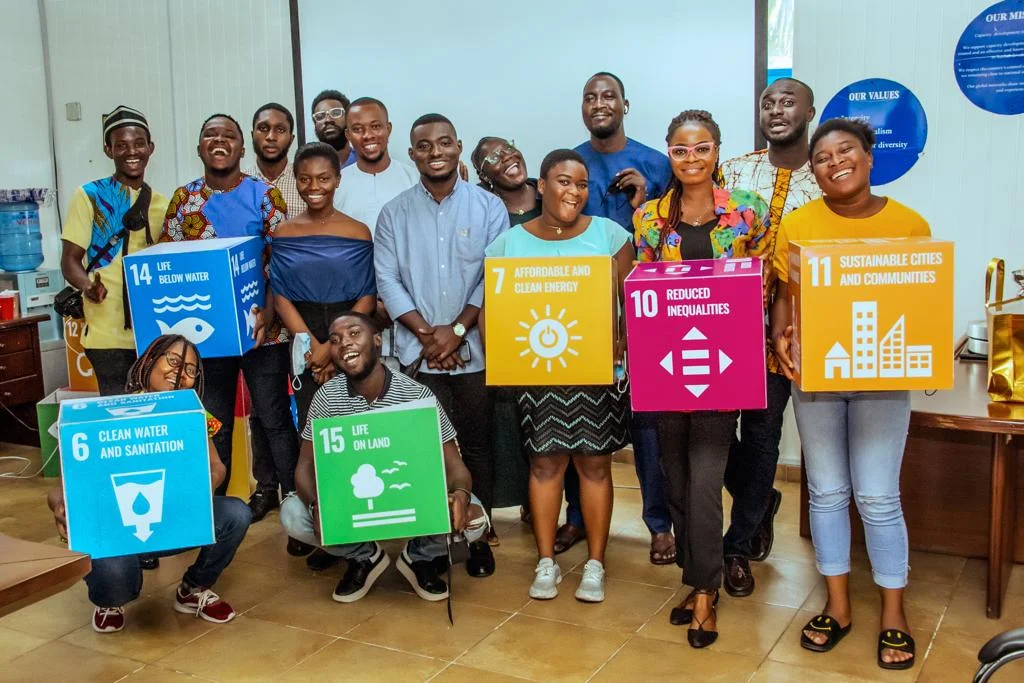
    The article “Examining the level of public awareness on the Sustainable Development Goals in Africa: An Empirical Evidence from Ghana,” investigates the awareness of Ghanaians regarding the United Nations’ Sustainable Development Goals (SDGs). The research assesses the awareness among Ghanaians about various SDGs, finding high awareness for goals related to poverty, hunger, health, gender equality, and clean water, but very low awareness for goals related to industry, life below water, and peace and justice. The study evaluates the effectiveness of communication strategies in raising SDG awareness and suggests that the government should re-examine its approach to involve grassroots populations more effectively. It reveals no significant difference in awareness between male and female respondents but shows that educational levels impact the overall awareness of the SDGs.

    How the Study was Conducted

    The authors employed a descriptive survey design within a quantitative research approach. The authors utilized convenience sampling to select 431 respondents. Data was collected through a questionnaire administered in two ways: as a Google Form distributed via social media and as a self-administered questionnaire by the research team. The data collection occurred over two months, from August to October 2021, and was analyzed using Means, standard deviation, Mann–Whitney U test, Kruskal Wallis, and Pearson Product-Moment Correlations. The study also ensured ethical considerations such as confidentiality, anonymity, and voluntary participation.

    What the Authors Found

    The authors of the study found high awareness among Ghanaians about SDGs related to poverty, hunger, health, gender equality, and clean water. However, awareness of SDGs concerning industry, life below water, and peace was very low. The authors also found that there is no significant difference in awareness levels between male and female Ghanaians. In addition, the authors found that the communication strategies used to raise SDG awareness were generally ineffective, with stakeholder engagement, radio, and TV programs being moderately effective, while community dialogue and social media were not.

    Why is this Important

    Policy Implications: The low awareness of certain SDGs highlights the need for targeted communication strategies. Policymakers can use this information to design more effective awareness campaigns and engage grassroots populations.
    Equity and Inclusivity: By understanding which goals have low awareness, efforts can be directed toward ensuring that all SDGs receive equal attention. This promotes inclusivity and ensures that no goal is left behind.
    Sustainable Development: The SDGs are critical for global development. Raising awareness about them is essential for achieving sustainable development, poverty reduction, and environmental protection. Without awareness, progress toward these goals may be hindered.
    Education and Advocacy: The study emphasizes the role of education in increasing awareness. Policymakers, educators, and civil society organizations can collaborate to educate citizens about the SDGs and encourage advocacy.
    Global Cooperation: The SDGs are a global agenda. When citizens are aware of them, they can actively participate in advocating for their implementation, fostering global cooperation.

    What the Authors Recommend

    • Given the low awareness of certain SDGs, the authors recommend developing targeted communication strategies. These strategies should focus on raising awareness for specific goals that currently lack public attention. For example, industry-related goals, life below water, and peace-related goals could benefit from tailored communication efforts.
    • The authors advocate that policymakers and organizations should actively engage grassroots populations. Community dialogues, workshops, and educational programs can help disseminate information about the SDGs. By involving local communities, awareness can be increased more effectively.
    • While radio and TV programs were moderately effective, social media and community dialogue were less so. The authors suggest exploring innovative ways to use social media platforms and community engagement to improve awareness. Collaborating with media outlets can also enhance communication efforts.
    • Educational institutions play a crucial role in raising awareness. The authors recommend integrating SDGs into school curricula. Educators can incorporate SDG-related content into lessons, promoting understanding and advocacy among students.
    • In addition, the authors emphasize that the government should allocate resources to SDG awareness campaigns. Public service announcements, billboards, and community events can be effective tools. Additionally, policymakers should collaborate with civil society organizations and private sector entities to amplify awareness efforts.
    • Regular monitoring and evaluation of awareness levels are essential. Policymakers should assess the impact of communication strategies and adjust them as needed. Data-driven decision-making will lead to more effective awareness campaigns.

    The study conducted by Odoom, et al., sheds light on the varying levels of awareness about the Sustainable Development Goals in Ghana and identifies critical gaps in communication strategies. With high awareness of goals relating to poverty, hunger, and health, but lower recognition of industry, life below water, and peace, the findings underscore the need for a strategic overhaul to ensure all SDGs are equally prioritized. The recommendations to engage grassroots populations, enhance community dialogue, and leverage educational institutions highlight practical pathways to boost public understanding and advocacy. These insights not only guide policymakers in Ghana but also serve as a blueprint for similar efforts across Africa and beyond. Ultimately, the success of the SDGs depends on informed and engaged citizens who are committed to driving sustainable development forward.

  • Insights into Migration Dynamics: A Comparative Analysis of Africa and the USA

    Insights into Migration Dynamics: A Comparative Analysis of Africa and the USA

    A recent study by Akpuokwe, et al., (2024) titled “MIGRATION TRENDS AND POLICIES: A REVIEW OF AFRICAN AND USA PERSPECTIVES” published in International Journal of Applied Research in Social Sciences, shows that African and USA regions experience migration driven by economic aspirations, with individuals seeking better opportunities and improved living standards.

    Migration in Africa and the USA is driven by economic aspirations, conflicts, and environmental challenges, emphasizing the need for global cooperation.– Akpuokwe, et al., (2024)

    The International Journal of Applied Research in Social Sciences recently published an insightful exploration into migration patterns and policies in Africa and the United States. The article delves into the multifaceted reasons driving migration within Africa, encompassing economic aspirations, political instability, and environmental pressures leading to both voluntary and involuntary displacement. It sheds light on how these factors intertwine to shape migration patterns across the continent. A critical examination of the role played by the African Union in crafting migration policies within the continent is provided. Additionally, the complex immigration landscape of the USA is dissected, highlighting how societal demands and political climates influence the formulation of immigration regulations and enforcement. Through a comparative lens, the article scrutinizes migration trends and policies between Africa and the USA. It draws attention to shared themes and disparities, offering insights into how differing socio-economic contexts impact migration management strategies. Emphasizing the imperative of collaborative efforts in addressing migration challenges globally, the article advocates for inclusive, humane, and sustainable policies. It stresses the necessity of fostering international cooperation to devise comprehensive approaches that prioritize the well-being of migrating populations. The article culminates in a compelling call to action for the development of holistic migration policies that take into account the diverse needs and circumstances of migrant communities.

    How the Study was Conducted

    The authors compare migration trends and policies between Africa and the USA, identifying common themes and differences. The authors also examine various forms of migration, including economic migration, forced displacement, and asylum-seeking. The study delves into the policy frameworks of both regions, considering federal and state-level initiatives in the USA and regional integration efforts in Africa. Furthermore, the authors emphasize the importance of international cooperation to address migration challenges and promote sustainable policies.

    What the Authors Found

    The authors found that both African an USA experience migration driven by economic aspirations, with individuals seeking better opportunities and improved living standards. The authors also found that conflicts and environmental challenges lead to forced migration, affecting millions in Africa and influencing asylum-seeking in the USA.

    Why is this Important

    Informed Decision-Making: Policymakers, governments, and international organizations can use these findings to make informed decisions regarding migration management. Understanding the complexities of migration allows for targeted interventions and better resource allocation.
    Humanitarian Considerations: Recognizing the impact of forced displacement and asylum-seeking on vulnerable populations is essential. These findings highlight the need for policies that prioritize humanitarian assistance, protection, and rights.
    Global Cooperation: Migration is a global phenomenon, and cooperation between countries and regions is vital. By understanding common challenges and differences, collaborative efforts can be fostered to address migration effectively.
    Sustainable Development: Economic migration can contribute positively to both origin and destination countries. These findings underscore the importance of sustainable policies that balance economic interests with social and environmental considerations.

    What the Authors Recommend

    • The authors recommend that global cooperation develop comprehensive migration policies considering economic, humanitarian, and environmental aspects. These policies should address both voluntary economic migration and forced displacement.
    • The authors emphasize fostering international cooperation among countries and regions. Addressing migration challenges requires joint efforts, shared data, and coordinated responses.
    • The authors argue that global cooperation should prioritize the rights and well-being of migrants. Ensure access to education, healthcare, and legal protections regardless of migration status.

    In conclusion, this study provides a comprehensive examination of migration patterns and policies in Africa and the United States, highlighting the interconnected factors driving migration and the importance of collaborative, inclusive, and sustainable approaches in addressing migration challenges globally. By fostering international cooperation and prioritizing the rights and well-being of migrants, policymakers and stakeholders can work towards creating a more humane and equitable migration landscape. This research serves as a call to action for the development of holistic migration policies that consider the diverse needs and circumstances of migrant communities, ultimately promoting human dignity, social justice, and global cooperation in managing migration.

  • Climate Change and Humanitarian Crises: Urgent Action Needed for Adaptation and Mitigation

    Climate Change and Humanitarian Crises: Urgent Action Needed for Adaptation and Mitigation

    In recent years, the world has witnessed an alarming escalation in humanitarian crises due to the exacerbating effects of climate change. The World Health Organization estimates that over 3 billion people reside in regions highly susceptible to climate-related adversities such as severe heatwaves, floods, droughts, and storms. If current trends persist, by 2050, an additional 250,000 deaths annually could occur from malnutrition, disease, and heat stress, attributing to the ramifications of climate change.

    El Niño Drives Climate Variability

    The El Niño Southern Oscillation (ENSO) cycle plays a pivotal role in driving climate variability, characterized by abnormal ocean temperature fluctuations in the tropical Pacific. While ENSO is a naturally occurring phenomenon, research suggests that climate change may exacerbate the intensity and frequency of El Niño events. Consequently, regions particularly vulnerable to natural disasters, such as Africa, Latin America, and Asia, experience severe repercussions including prolonged droughts, crop failures, and water shortages, thus perpetuating a cycle of agricultural distress and food insecurity.

    Devastating Impacts on Farming Communities

    In African nations like Zambia, where agriculture is a cornerstone of livelihoods, the ramifications of climate change and El Niño-induced droughts are profoundly felt. Signs of impending drought are unmistakable, with dire predictions of long-lasting effects on millions of lives through crop failures, livestock losses, and shortages of food and water. Small-scale farmers, already marginalized, face the grim reality of being unable to sustain their families. Beyond agriculture, the ramifications of drought extend to degraded water sources, diminished biodiversity, and compromised health and infrastructure, exacerbating the vulnerability of communities already on the brink.

    Climate Change and Humanitarian Crises: Urgent Action Needed for Adaptation and Mitigation

    Illustrative Image: Climate Change and Humanitarian Crises: Urgent Action Needed for Adaptation and Mitigation
    Image Source & Credit: People in need
    Ownership and Usage Policy

    Regional Agricultural Outlook

    Across southern and eastern Africa, unfavorable weather patterns pose significant challenges to crop and pastoral agriculture. Forecasts linked to El Niño predict below-average precipitation and heightened temperatures, likely diminishing yields in crucial cereal production regions. Similarly, pastoral communities in areas like southeastern Ethiopia grapple with acute food insecurity due to consecutive seasons of failed rains, resulting in widespread livestock fatalities. While some regions, such as the coastal areas of Angola, may experience favorable conditions, the overarching impact of climate fluctuations persists throughout much of sub-Saharan Africa, underscoring the urgent need for targeted intervention and support.

    Urgent Adaptation and Mitigation Needed

    In light of the escalating climate shocks, urgent measures are imperative to bolster adaptation, disaster risk management, and resilience-building efforts. Communities must be empowered to diversify livelihoods, embrace climate-smart agricultural practices, and access early warning systems to mitigate the impact of disasters. Additionally, there is a pressing need for global cooperation to curtail greenhouse gas emissions and minimize future climatic disruptions. Organizations like People in Need are at the forefront of this endeavor, working tirelessly to mitigate the impact of natural disasters and bolster the resilience of vulnerable communities worldwide.

    Conclusion
    As climate change continues to escalate, the imperative for concerted action has never been more urgent. It is imperative that we prioritize adaptation and mitigation efforts to safeguard vulnerable communities from the ravages of climate-induced humanitarian crises. Through collective action and unwavering commitment, we can strive towards a more sustainable and resilient future for all.