
Tag: environmental sciences

  • UNESCO-Equatorial Guinea International Life Sciences Prize 2025: Application Details and Eligibility

    UNESCO-Equatorial Guinea International Life Sciences Prize 2025: Application Details and Eligibility

    Deadline for Applications: 31 March 2025

    The UNESCO-Equatorial Guinea International Prize for Research in the Life Sciences recognizes the extraordinary contributions of individuals, groups, institutions, and non-governmental organizations to improving human life. This prestigious award, established by UNESCO’s Executive Board in 2008, plays a pivotal role in advancing global knowledge, fostering innovation, and strengthening capacities for sustainable development in line with the 2030 Agenda for Sustainable Development.

    About the Prize

    The Prize underscores the transformative power of life sciences in enhancing human well-being. Funded by the Republic of Equatorial Guinea, the prize celebrates groundbreaking work across fields such as medicine, biology, agriculture, environmental sciences, and emerging technologies. Each year, up to three laureates share the US$ 300,000 monetary award, which honors their efforts to advance knowledge and develop solutions that significantly improve the quality of life for individuals and communities around the globe.

    The Prize also aims to contribute directly to achieving Sustainable Development Goals (SDGs), particularly SDG 1 (No Poverty), SDG 2 (Zero Hunger), SDG 5 (Gender Equality), SDG 8 (Decent Work and Economic Growth), and SDG 10 (Reduced Inequalities).

    Eligibility Criteria

    Candidates for this distinguished recognition must have demonstrated outstanding achievements in research that tangibly contribute to the betterment of human life. Eligible nominees include:

    • Individuals or groups of scientists making significant advancements in their fields.
    • Institutions and non-governmental organizations (NGOs) recognized for transformative contributions to the life sciences.

    Candidatures can only be submitted by:

    • UNESCO Member States, via their National Commissions.
    • Non-governmental organizations officially partnered with UNESCO and are active in relevant fields.

    Each submitting entity may present up to five nominations.

    Selection Process

    1. Submission and Preliminary Review:
      The Secretariat of the Prize reviews all submissions to ensure they meet eligibility requirements.
    2. Jury Evaluation:
      An international jury, comprised of experts in relevant disciplines, assesses eligible applications.
    3. Final Decision:
      Based on the jury’s recommendations, the UNESCO Director-General selects the laureates.
    4. Award Ceremony:
      The Prize is formally awarded at an official ceremony organized by UNESCO, celebrating the winners’ achievements on a global stage.

    Application Process

    Interested candidates must first be endorsed by their National Commission or a partnering NGO. The process includes:

    1. Registration:
      Candidates must create an account via the UNESCO-Equatorial Guinea International Prize application portal.
    2. Completion of Online Application:
      After registration, candidates will complete an application form in English or French. Required components include:

      • Background Information: Details of the candidate or organization.
      • Contribution Outline: Explanation of how the nominee’s work aligns with the objectives of the Prize.
      • Research Summary: A concise overview of the key achievements and their impact.
      • Publications: A list of major scientific publications supporting the nominee’s candidacy.

    Note: Self-nominations and incomplete applications will not be considered.

    How to Submit Nominations

    • Designating authorities must invite and endorse candidates before submissions are made.
    • Only officially endorsed applications will be received by the UNESCO Secretariat for evaluation.

    Contact Information

    For further inquiries, applicants and endorsing authorities may contact the Secretariat of the UNESCO-Equatorial Guinea International Prize for Research in the Life Sciences:
    Email: lifesciencesprize@unesco.org

    This prize represents a unique opportunity to highlight and honor transformative contributions in the life sciences that improve lives and drive sustainable development. Take this chance to nominate or support groundbreaking work that inspires global progress!

    For more information, visit UNESCO.
  • Postdoctoral Position: Space2Place Project for Soil Fertility Management in Africa | Wageningen University & Research

    Postdoctoral Position: Space2Place Project for Soil Fertility Management in Africa | Wageningen University & Research

    The Earth Systems and Global Change Group at Wageningen University and Research is seeking applications for a postdoctoral position (2 years) in an exciting project titled: “Space2Place: Development of a scientific modeling framework to underpin reliable Fertilizer Decision Support Tools for Africa,” commencing in Spring 2024.

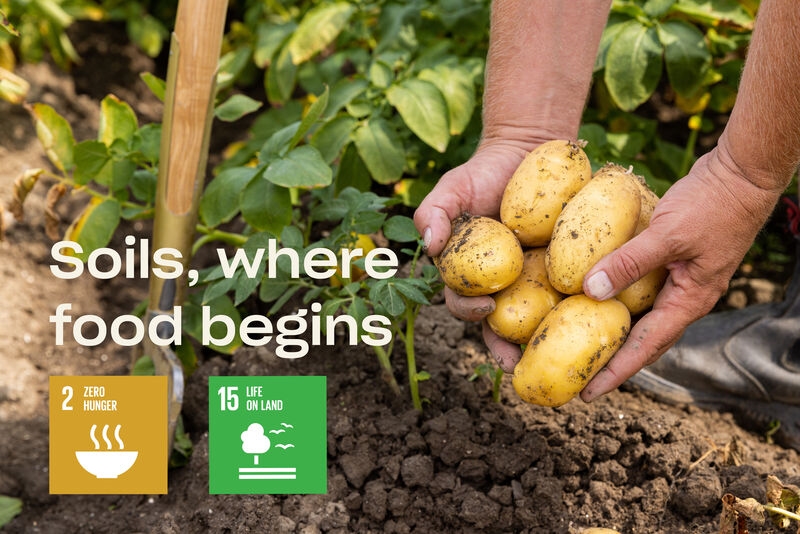
    Funded by the USAID-BRFS program ‘Feed the Future Soil Fertility Technology Adoption, Policy Reform, and Knowledge Management,” this project aims to develop, test, and apply a Pan-African scalable Decision Support Tool to enhance the efficiency of soil fertility management in Zambia, Malawi, Tanzania, Rwanda, Uganda, Ethiopia, Niger, and Madagascar. The project targets increased yields and incomes in Africa by improving fertilizer use efficiency, thereby reducing costs and adverse environmental impacts. The primary outcome will be site-specific soil fertility and agronomic fertilizer recommendations.

    About Wageningen University & Research

    Wageningen University & Research is a leading institution in life sciences, dedicated to exploring nature’s potential to enhance quality of life. With a collaborative approach across disciplines, the university and research institutes contribute to finding solutions to global challenges in food and the living environment. The integrated approach and diverse collaborations make Wageningen University & Research a dynamic and inspiring place to work.

    As a postdoctoral researcher, your responsibilities include:

    • Expanding, testing, and validating a prototype modeling framework to assess carbon and nutrient flows on both field and regional levels for various crops and soil types. This involves integrating empirical, statistical, and process-based modules into an integrated soil, plant, and crop model. Specific focuses include macro and micronutrient interactions, water availability’s impact on phosphorus uptake, and quantifying fertilizer nutrient recoveries while considering site-specific conditions.
    • Calculating required inputs of carbon and nutrients considering nutrient recovery, crop utilization efficiency, water availability, and soil buffering capacities.
    • Applying the modeling framework to selected case study regions.
    • Comparing and evaluating various fertilizer strategies to enhance crop yield and nutritional quality.

    Work Environment

    This research is conducted within the Sub-team ‘Nutrients, Food, and Environment’ of the Earth Systems and Global Change Group at Wageningen University and Research. You will primarily be supervised by Dr. Gerard Ros and Prof. Dr. Wim de Vries, collaborating closely with soil scientists and agronomists from the Plant Science Group, ISRIC, and partners of the S2P project. This project is part of the Space2Place initiative led by the partners of the SOILS Consortium of the International Fertilizer Development Centre (IFDC).

    Candidate Requirements

    Ideal candidates possess:

    • A completed PhD degree in environmental sciences, soil science, or equivalent.
    • Advanced experience in modeling, statistics, and data handling.
    • Proven experience in scientific writing.
    • Ability to work independently and collaboratively in a team.
    • Fluency in English language (level C1).

    We Offer

    Wageningen University & Research offers excellent employment terms, including sabbatical leave, study leave, and partially paid parental leave, flexible working hours, accrual of additional compensation/holiday hours, sports facilities, a fixed December bonus, and an excellent pension scheme. Competitive gross salary ranges from €3,226 to €5,929 per month for a full-time 38-hour workweek, in accordance with the Collective Labour Agreements for Dutch Universities (CAO-NU). There are also opportunities for personal development and internal advancement.

    International Applicants

    Wageningen University & Research welcomes international applicants and provides support for visa applications and integration into the community. Further assistance is available regarding housing, schooling, and employment for partners. Certain categories of international staff may be eligible for a tax exemption on part of their salary during their first five years in the Netherlands.

    Further Information and Application

    For more information about this position, contact Dr. Gerard Ros (gerard.ros@wur.nl) or Prof. Dr. Wim de Vries (wim.devries@wur.nl). For procedural inquiries, reach out to Noorien Abbas, corporate recruiter (noorien.abbas@wur.nl). To apply, use the application button on the vacancy page of our website. The application deadline is April 22, 2024.

    Equal Opportunitie

    Wageningen University & Research promotes equal opportunities and welcomes applications from individuals with diverse backgrounds. Inclusivity is a priority, and the organization strives to provide equal career opportunities for all.

    Location: Wageningen

    Closing Date: April 22, 2024

    To Apply: Click here