Tag: economic stability

  • Macroeconomic Factors and Copper Value Addition in Zambia: Insights from a 1980–2021 Study on Exports, GDP, and Resource Management

    Macroeconomic Factors and Copper Value Addition in Zambia: Insights from a 1980–2021 Study on Exports, GDP, and Resource Management


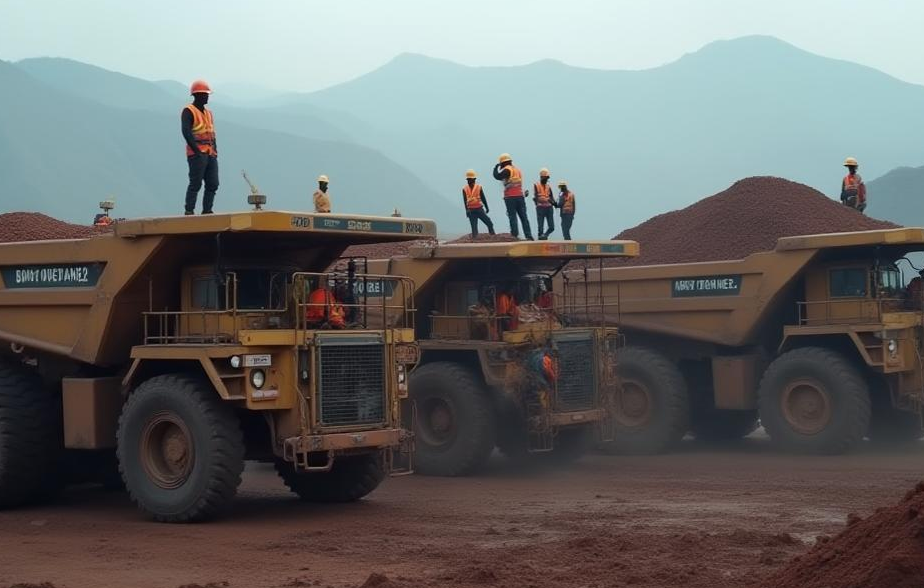
    Illustrative Image: Macroeconomic Factors and Copper Value Addition in Zambia: Insights from a 1980–2021 Study on Exports, GDP, and Resource Management
    Image Source & Credit: AInvest
    Ownership and Usage Policy

    A recent study by Chisanga et al. (2025) titled “Macroeconomic factors and natural resource management in Africa: evidence from copper value addition in Zambia” published in Discover Sustainability by Springer Nature reveals that copper exports and GDP growth are major drivers of value addition, while inflation provides a short-term boost but poses long-term risks.

    Zambia’s copper value addition is driven by exports, GDP growth, exchange rates, and stable macroeconomic management.– Chisanga et al. 2025

    The study offers a comprehensive analysis of how Zambia’s copper industry has been influenced by key economic forces over the past four decades (1980–2021). Despite being one of the world’s leading copper producers, Zambia continues to add relatively little value to its copper exports through local processing and manufacturing, and this research seeks to explain why. The findings reveal that copper exports and GDP growth are major drivers of value addition, while inflation provides a short-term boost but poses long-term risks. Exchange rate depreciation enhances competitiveness over time, and revenues from mineral rents hold significant potential for supporting infrastructure and education if strategically managed. Interestingly, high copper prices appear to reduce value addition, likely due to rising production costs and weaker competitiveness of processed products. Meanwhile, trade value margins show no statistically significant effect, suggesting that other factors play a more decisive role.

    By linking its results to the Sustainable Development Goals (SDGs)—notably SDG 9 (Industry, Innovation, and Infrastructure), SDG 12 (Responsible Consumption and Production), and SDG 15 (Life on Land)—the study underscores the importance of policy reforms that ensure economic stability, improve export competitiveness, encourage investment in downstream copper processing, and channel mineral rents into long-term development. Ultimately, the research highlights that for Zambia and other resource-rich African countries, achieving macroeconomic stability and practicing effective resource management are essential to transforming raw material exports into sustainable engines of industrial growth and development.

    How the Study was Conducted

    The study employed a rigorous econometric framework to examine both short-term and long-term dynamics between key economic indicators and the performance of the copper sector. Using annual data spanning 1980 to 2021 from the World Bank’s World Development Indicators, the analysis considered copper exports, copper prices, GDP, inflation, exchange rates, trade value margins, mineral rents, and copper value addition.

    The research began with descriptive statistics to evaluate the distribution and variability of each variable, revealing pronounced volatility in inflation and exchange rates compared to the relative stability of GDP and copper prices. To ensure the suitability of the data for econometric analysis, Augmented Dickey-Fuller (ADF) and Zivot-Andrews (ZA) unit root tests were applied, confirming stationarity while accounting for potential structural breaks.

    The core analysis utilized the Autoregressive Distributed Lag (ARDL) model, selected for its flexibility in handling mixed integration orders (I(0) and I(1)). This approach captured both short-run and long-run relationships, while an Error Correction Mechanism (ECM) quantified the speed of adjustment toward equilibrium following economic shocks. Model selection was guided by the Akaike Information Criterion (AIC) to ensure robustness without overfitting.

    Extensive diagnostic checks confirmed the reliability of the model: the Breusch-Godfrey LM test indicated no autocorrelation, the Breusch-Pagan-Godfrey test confirmed homoskedasticity, and residuals were normally distributed. Further, the CUSUM and CUSUMSQ tests validated stability over time, while the Ramsey RESET test verified correct specification and the absence of omitted variable bias.

    Testing the hypotheses—where the null assumed macroeconomic factors do not significantly influence copper value addition—the findings strongly supported the alternative hypothesis. The results demonstrated that GDP, copper exports, inflation, exchange rates, and mineral rents exert significant influence on copper value addition in Zambia, highlighting the complex interplay of domestic and external economic forces in shaping the sector’s growth trajectory.

    What the Authors Found

    The authors found that Zambia’s copper value addition is significantly influenced by macroeconomic factors, with GDP growth, copper exports, exchange rate depreciation, mineral rents, and short-term inflation enhancing value addition, while high global copper prices and long-term inflation undermine it—highlighting the critical need for stable macroeconomic management, export promotion, and downstream processing to maximize benefits from the copper sector.

    Why is this important

    Resource Paradox in Africa – Abundant natural resources, like Zambia’s copper, don’t automatically lead to prosperity unless value addition and local processing are prioritized.

    Importance of Value Addition – Processing raw materials locally creates jobs, drives industrialization, and strengthens economic resilience, compared to exporting unprocessed resources.

    Role of Macroeconomic Stability – Controlling inflation, managing exchange rates, and ensuring stable policies are crucial to unlocking the full benefits of resource-based industries.

    Policy and Development Impact – The study offers evidence-based guidance for smarter resource management, aligning with SDGs 9 (Industry), 12 (Responsible Consumption), and 15 (Life on Land).

    Broader Lessons for Africa – Countries like Nigeria can apply these insights to reform oil and mineral sectors, emphasizing refining, diversification, and long-term planning beyond short-term commodity price gains.

    What the Authors Recommended

    The authors offer a set of strategic policy recommendations aimed at enhancing copper value addition in Zambia. These are grounded in their empirical findings and are designed to help Zambia—and other resource-rich African nations—leverage their natural resources more effectively for sustainable development.

    • Ensure Macroeconomic Stability – Control inflation and maintain a stable, competitive exchange rate to support investment, export revenues, and local copper value addition.
    • Invest Mineral Rents Productively – Channel mining revenues into infrastructure, education, skills development, and technology to avoid the “resource curse” and strengthen long-term growth.
    • Boost Export Competitiveness – Improve trade logistics, reduce barriers, and expand export infrastructure while promoting local processing and manufacturing of copper products.
    • Promote Downstream Processing – Incentivize domestic industries through tax breaks, subsidies, and technology support to expand copper refining and manufacturing capacity.
    • Mitigate Price Volatility Risks – Develop stabilization mechanisms, such as commodity funds or hedging strategies, to offset the negative impact of high global copper prices on value-added products.

    In conclusion, the study by Chisanga et al. (2025) makes it clear that Zambia’s path to sustainable growth lies not in the sheer volume of copper extracted, but in how effectively the nation manages its macroeconomic environment and channels resource wealth into long-term development. By stabilizing inflation, enhancing export competitiveness, investing mineral rents into infrastructure and human capital, and prioritizing downstream copper processing, Zambia can transform its copper sector into a true engine of industrialization. These lessons extend beyond Zambia, offering a blueprint for other resource-rich African countries seeking to break free from the resource paradox and align their development strategies with the Sustainable Development Goals.

  • Small High-Intensity Farms, Food Forests, and Gardens: A Sustainable Path to Food Security, Employment, and Climate Resilience in Namibia

    Small High-Intensity Farms, Food Forests, and Gardens: A Sustainable Path to Food Security, Employment, and Climate Resilience in Namibia

    Introduction

    As the world faces an increasing challenge of food insecurity, climate change, and economic instability, it is essential to find innovative, sustainable solutions to address these growing issues. One such approach is the implementation of small high-intensity farms, food forests, and gardens in every village. This model offers a sustainable path to food security, job creation, and a reliable source of income for rural communities. In stark contrast to industrial agriculture, which often leads to environmental degradation, economic disparity, and limited access to affordable food for the majority, these local, small-scale farming initiatives can be transformative for both individuals and nations.

    The Case Against Industrial Agriculture

    Industrial agriculture, dominated by large-scale monocropping systems, relies heavily on chemical fertilizers, pesticides, and high resource consumption. While it has been touted for its ability to produce large quantities of food, it has several significant drawbacks. Monoculture farming requires vast stretches of land, leading to deforestation, habitat loss, and a reduction in biodiversity. Over time, these practices degrade soil health and increase dependency on synthetic inputs, which harm the environment and increase costs for farmers. Moreover, industrial agriculture consolidates economic power in the hands of large agribusinesses, leaving small farmers unable to compete or access fair market prices.

    The consequences of this system extend beyond environmental degradation. Villagers, often the most vulnerable populations, are priced out of industrial food markets. While industrial food may be abundant, the local population struggles to afford it due to economic disparities. As such, a fundamental shift is needed to empower rural populations to become more self-sufficient and productive. This approach, involving the integration of small, sustainable farming systems, addresses not only food security but also the broader issue of economic inequality.

    The Power of Permaculture and Local Organic Farming

    Permaculture offers a holistic, sustainable farming approach that can revolutionize food production. Rather than relying on external inputs and chemical fertilizers, permaculture systems emphasize building healthy ecosystems where plants, animals, and microorganisms work together. For example, nitrogen-fixing plants like legumes can be strategically planted to enrich the soil for neighboring crops. This reduces dependency on artificial fertilizers and enhances soil fertility naturally.

    The use of permaculture techniques also improves energy efficiency. For instance, strategically placing water sources uphill can create gravity-fed irrigation systems, reducing the need for external energy inputs. Local organic farming, empowered by permaculture principles, strengthens local economies by reducing reliance on imported inputs and markets. Successful implementations, like those in Kenya’s Molo region, demonstrate the transformative power of permaculture. Farmers have doubled their yields through training and the adoption of these sustainable practices.

    Food Forests in Arid Regions

    In regions facing droughts and water scarcity, food forests present a viable solution. In Senegal, for example, food forests are thriving in arid regions similar to Namibia’s climate. By utilizing drought-resistant species and applying permaculture techniques, these forests provide year-round food while combating desertification and improving soil health. This model has successfully reduced dependency on traditional agriculture, fostering food security in even the harshest environments.

    One example is the Great Green Wall project in Senegal, which is helping to combat desertification by establishing food forests in the Sahel region. These forests employ drought-resistant trees such as baobab and moringa, providing both food and medicinal resources year-round. This layered approach allows for optimal use of land, with deep-rooted trees accessing groundwater and shallow-rooted vegetables benefiting from shade and moisture retention. Such food forests are also being implemented in Namibia, where they offer a model for enhancing food security in arid climates.

    Fodder Production for Livestock

    For livestock farmers, access to affordable, high-quality feed is a constant challenge. Local fodder production offers an innovative solution to this issue, reducing costs and improving livestock health. Hydroponic systems, which allow for the rapid growth of barley or sorghum, offer a way to produce nutrient-rich feed in just a few days. In northern Namibia, perennial grasses like Brachiaria are being used to improve milk yields and reduce overgrazing, further enhancing the sustainability of livestock farming.

    Additionally, plants like lucerne (alfalfa) and purslane offer drought-tolerant, high-nutrient feed for livestock, perfect for Namibia’s arid conditions. Water-based, fast-growing plants such as duckweed and azolla provide protein-rich supplements that thrive in minimal water, ensuring a sustainable feed supply for animals even in water-scarce regions. These systems not only improve livestock health but also reduce the need for expensive commercial feed, making farming more economically viable.

    Integrating Animals and Insects into Farming Systems

    Integrating animals such as chickens, goats, and pigs into farming systems creates a diverse ecosystem that benefits both crops and livestock. Chickens can help manage pests while also providing manure that fertilizes the soil. Goats and pigs contribute to land preparation, with their natural digging behaviors aiding in soil aeration and weed control. Insects like black soldier flies can also be utilized to convert organic waste into high-protein feed for poultry and fish, closing nutrient loops within the farming system and minimizing waste.

    Aquaponics: A Symbiotic System for Urban and Rural Areas

    Aquaponics, which combines fish farming with hydroponic crop cultivation, is an excellent solution for small-scale, sustainable food production. In Nairobi, rooftop aquaponics systems are providing both vegetables and fish for urban communities, creating a symbiotic relationship between fish and plants. The fish waste provides nutrients for the plants, and the plants help purify the water for the fish, dramatically reducing water use compared to traditional agriculture. This system not only conserves water but also increases food security by providing two food sources in a single closed-loop system.

    Aquaponics is also ideal for areas with limited access to arable land or water resources. By operating on minimal inputs, often with solar-powered pumps, aquaponics systems can function off-grid, making them suitable for remote or underdeveloped areas. The combination of fish and vegetables offers a diverse and nutritious food source, contributing to both food security and sustainable farming practices.

    Success Stories from Kenya and Zimbabwe

    The success of small high-intensity farms has been demonstrated in Kenya and Zimbabwe. In the Nyando Basin, farmers have adopted climate-smart agriculture, integrating crops, trees, and livestock to improve resilience to changing weather patterns. Similarly, Zimbabwe’s Chikukwa Ecological Land Use Community Trust has transformed degraded land into productive, biodiverse farms through permaculture, restoring food security and providing income for local communities. These examples underscore the potential of small farms to drive both environmental restoration and economic development.

    Urban Solutions: Greywater Food Circles

    Urban areas also stand to benefit from sustainable farming practices. In Windhoek, greywater food circles offer a simple yet effective solution for addressing water scarcity and food insecurity. These circular planting systems, often centered around fruit trees, reuse household wastewater from showers, sinks, and washing machines to irrigate food-producing plants. By making use of nutrient-rich greywater, these systems support the growth of vegetables, herbs, and fruit trees in urban backyards, maximizing water reuse and reducing waste. This sustainable urban agriculture solution helps enhance food production while conserving water resources in areas facing extreme water shortages.

    National Benefits of Small High-Intensity Farms for Namibia

    The widespread adoption of small high-intensity farms, food forests, and gardens across Namibia would have profound implications for the nation’s prosperity and sustainability. These systems offer numerous benefits, from improved nutrition and education outcomes to job creation and climate resilience.

    Nutritional Benefits and Improved Educational Outcomes

    Access to fresh, diverse, and organic food is critical for the health and cognitive development of children. Proper nutrition during childhood has been linked to better academic performance and improved attendance rates. By fostering the growth of small farms and food forests, Namibia can combat malnutrition and ensure that its youth are well-nourished, setting them up for success in school and life.

    Reducing Urbanization and Eradicating Poverty

    The decentralization of food production through small high-intensity farms reduces the pressure on urban centers, where overcrowding and poverty often lead to social instability. By creating employment opportunities in rural areas, these farms empower local communities and reduce the need for migration to cities. This helps alleviate urban poverty and fosters more balanced, regional development.

    Improving Health and Wellbeing

    In addition to the economic and nutritional benefits, engaging in farming can have significant mental health benefits. Working with the land, whether through planting, harvesting, or animal husbandry, fosters a connection to nature and provides a sense of purpose and achievement. This can reduce stress, anxiety, and depression, contributing to overall health and wellbeing. A healthier population, both physically and mentally, will reduce the burden on healthcare systems, leading to lower medical costs and improved public health outcomes.

    Fighting Climate Change: Enhancing Resilience to Drought and Flooding

    Namibia’s vulnerability to climate change, particularly its susceptibility to droughts and floods, can be mitigated by adopting small high-intensity farming systems. These systems, built on permaculture principles, are designed to be resilient to extreme weather events. Techniques such as rainwater harvesting, greywater reuse, soil conservation, and crop diversification increase the ability of these farms to adapt to changing weather patterns. The integration of trees and improved soil health also helps prevent flooding and combat desertification, ensuring consistent agricultural yields even in unpredictable conditions.

    Conclusion

    The adoption of small high-intensity farms, food forests, and gardens across Namibia offers a comprehensive, sustainable solution to many of the nation’s most pressing challenges. This approach not only secures food security and reduces poverty but also enhances education, public health, and climate resilience. By empowering rural communities and promoting sustainable farming practices, Namibia can create a prosperous, self-sufficient, and resilient future for its people. This model provides an opportunity for long-term national growth, ensuring that future generations inherit a thriving, equitable, and environmentally sustainable nation.