Tag: cultural convergence

  • Exploring Cultural Interconnectivity Between Jewish and Yoruba Traditions: Enhancing Peaceful Coexistence and Socio-Economic Development

    Exploring Cultural Interconnectivity Between Jewish and Yoruba Traditions: Enhancing Peaceful Coexistence and Socio-Economic Development

    A recent study by Okediji, et al. (2024) titled “Cultural Interaction: An Overview of the Interconnectivity Between Jewish and Yoruba Traditional Cultures” published in the African Journal of Humanities and Contemporary Education Research shows that the cultural interaction between the two societies can enhance peaceful coexistence and socio-economic development.

    Cultural interactions between Jewish and Yoruba traditions can enhance peaceful coexistence and promote socio-economic development.– Okediji, et al. 2024

    This article provides a comprehensive overview of the interconnections between Jewish and Yoruba traditional cultures, exploring how these two rich cultural traditions have influenced and intersected with each other over time. It delves into the historical backgrounds of both cultures, tracing their points of contact and interactions across different periods and regions. By examining specific cultural practices, rituals, and traditions, the article highlights notable similarities, exchanges, and mutual influences between the Jewish and Yoruba communities, offering insights into the shared elements that have shaped their cultural identities.

    How the Study was Conducted

    The study compares cultural elements from both Jewish and Yoruba traditions to identify similarities and differences and examines historical interactions and influences between the two cultures. The study reviews existing literature on both cultures to provide a comprehensive background and also includes field research to gather primary data from cultural practitioners and communities. The study used historical, anthropological, and sociocultural methodologies to reconstruct past events and analyze the cultural interactions. This approach helps to provide a thorough understanding of the cultural interactions between the Jewish and Yoruba traditions.

    What the Authors Found

    The authors found a possibility of historical contact between the Jewish and Yoruba societies, which has led to significant cultural interconnectivity and convergence. The authors posit that the cultural interaction between the two societies can enhance peaceful coexistence and socio-economic development.

    Why is this Important?

    Cultural Preservation: It helps preserve and document the rich cultural heritage of both societies, ensuring that valuable traditions and practices are not lost over time.
    Promoting Unity: Highlighting commonalities and shared histories, it fosters a sense of unity and mutual respect between different cultural groups.
    Socio-economic Development: Positive cultural exchanges can lead to collaborative efforts that boost socio-economic development and innovation.
    Conflict Resolution: Understanding and appreciating cultural interconnectivity can play a crucial role in resolving conflicts and promoting peaceful coexistence.
    Educational Value: It provides valuable insights for academic research and education, enriching our understanding of human history and cultural evolution.

    What the Authors Recommended

    • The authors emphasize and encourage cultural practices that foster development and peaceful coexistence.
    • The authors advocate for identifying and eliminating cultural practices that are detrimental to societal progress.
    • Furthermore, the study recommends continuing to use historical, anthropological, and socio-cultural methodologies to understand further and strengthen cultural interconnectivity.
    • In addition, facilitate discussions and exchanges between different cultural groups to promote mutual understanding and respect.

    In conclusion, the study by Okediji et al. underscores the profound cultural interconnectivity between Jewish and Yoruba traditions, offering valuable insights into how these shared histories can foster peaceful coexistence and socio-economic progress. By promoting mutual respect, understanding, and collaboration, cultural exchanges between diverse societies hold the potential to preserve heritage, resolve conflicts, and drive collective development. This research encourages continued exploration of such interactions, emphasizing the importance of cultural preservation and unity in an increasingly interconnected world.
  • Ilorin Archaeological Discoveries: Unveiling Millennia of History and Cultural Exchange

    Ilorin Archaeological Discoveries: Unveiling Millennia of History and Cultural Exchange

    Nestled in the heart of Nigeria, the ancient city of Ilorin stands as a testament to a rich tapestry of history that has long been shrouded in mystery. Over the centuries, this city, steeped in the Yoruba tradition, has witnessed the ebb and flow of civilizations, serving as a pivotal hub for trade, culture, and socio-political dynamics. Emerging onto the stage of history in the late 1700s, Ilorin’s strategic location bridging the savannah and forest regions of Nigeria catapulted it into prominence within the Oyo empire, a formidable force in the region during the 16th to early 19th centuries. Its position facilitated vibrant inter-regional trade networks, fostering the exchange of goods, ideas, and craftsmanship across West Africa. Renowned for its trade in horses, agricultural produce, and artisanal creations like lantana stone beads and textiles, Ilorin thrived as a bustling center of commerce and cultural convergence. However, alongside these flourishing exchanges, the city also bore witness to the harrowing trade in enslaved people, a stark reminder of darker chapters in its history.

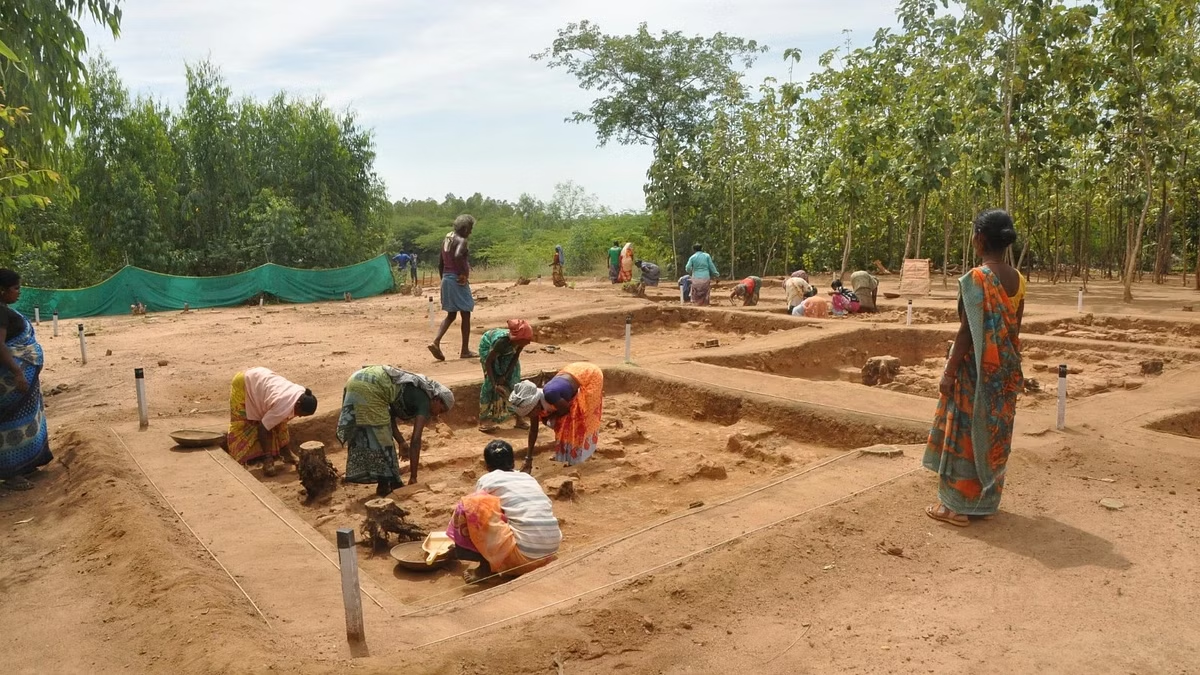
    The 1800s ushered in a new era for Ilorin as it became enmeshed in the fold of the Islamic emirate system under the Sokoto caliphate. This integration heralded significant socio-political transformations, propelling the city into a period of expansion and influence. Despite the rich tapestry of oral traditions and written accounts that have preserved much of Ilorin’s history, the deeper layers of its pre-1800s existence remained veiled until recent archaeological endeavors. Unlike neighboring communities where archaeological studies have shed light on their settlement histories, Ilorin’s ancient past remained largely unexplored until now. Pioneering doctoral research has embarked on a journey to unravel over a millennium of human habitation in Ilorin preceding the 1800s. Through meticulous excavation and analysis, a treasure trove of material evidence has come to light, offering tantalizing glimpses into the city’s distant past and its intricate connections to the broader Yoruba cosmos.

    Delving into 10 distinct units, seven of which underwent excavation, this groundbreaking research unearthed a diverse array of artifacts spanning material technology, settlement patterns, architecture, rituals, and culinary practices. Potsherds, in particular, emerged as invaluable windows into the socio-cultural dynamics of ancient societies and their interactions with the environment. Among the most striking discoveries were potsherd pavements, ancient architectural marvels that bear testament to the ingenuity and craftsmanship of bygone eras. These pavements, adorned with intricate patterns and laid in herringbone fashion, provide tantalizing clues about regional interactions and technological preferences. A stark contrast emerged between Ilorin’s edge-laid pavements and the flat-laid pavements of the nearby Oyo kingdom, hinting at distinct cultural trajectories despite geographical proximity.

    Moreover, radiocarbon dating, and pottery analysis unveiled a chronological narrative spanning from the mid-sixth to the pre-16th centuries AD, shedding light on a millennia-old saga of human occupation in Ilorin. These findings challenge conventional narratives, positioning early Ilorin as a vibrant socio-political entity that flourished contemporaneously with or even preceding esteemed Yoruba centers like Ile-Ife and Old Oyo.

    Through the lens of archaeology, the research illuminates the fluid and dynamic nature of ancient politics, revealing how borderland regions like Ilorin served as crucibles of cultural exchange and social interaction. It underscores the transient nature of culture and the enduring significance of these liminal spaces in shaping the tapestry of human history. In essence, the journey through Ilorin’s ancient past unveils not just a city’s history but a testament to the resilience, innovation, and interconnectedness of human civilization across the ages.