Tag: convergence analysis

  • New Fixed Point Approximations with C-Class Akram and Generalized MJ Contractions: Advances in Metric Space Theory and Iterative Convergence

    New Fixed Point Approximations with C-Class Akram and Generalized MJ Contractions: Advances in Metric Space Theory and Iterative Convergence


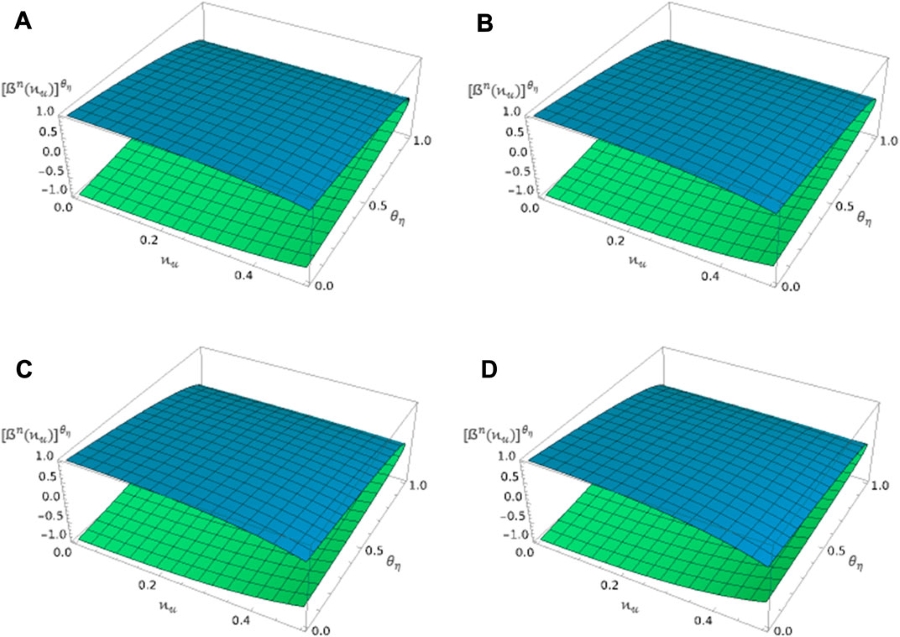
    Illustrative Image: New Fixed Point Approximations with C-Class Akram and Generalized MJ Contractions: Advances in Metric Space Theory and Iterative Convergence
    Image Source & Credit: Frontiers
    Ownership and Usage Policy

    A recent study by Omidire et al. (2025) titled “Approximating Fixed Point of Generalized C-class Contractivity Conditions” published in International Journal of Mathematical Sciences and Optimization: Theory and Applications reveals that the newly introduced contractivity conditions—C-Class Akram Contraction and C-Class Generalized MJ Contraction—successfully establish unique fixed points and unique common fixed points in metric spaces.

    C-Class Akram and Generalized MJ contractions guarantee unique fixed and common fixed point convergence in metric spaces.– Omidire et al. 2025

    This study focuses on approximating fixed points under novel contractivity conditions in metric spaces. It introduces two new types of contractivity conditions: C-Class Akram Contraction and C-Class Generalized MJ Contraction. The authors establish the convergence of Picard and Jungck iterations toward unique fixed points and unique common fixed points, respectively. Fixed point theory is a fundamental tool in mathematics, engineering, and other fields, as it helps solve complex nonlinear mathematical problems, such as optimization and differential equations. The study generalizes and extends several existing results in fixed point theory, incorporating concepts such as altering distance functions and C-class functions.

    How the Study was Conducted

    The study employed mathematical analysis and iterative methods within the framework of fixed point theory to introduce and investigate two novel contractivity conditions—C-Class Akram Contraction and C-Class Generalized MJ Contraction. By generalizing existing fixed point results, the researchers formulated new mathematical definitions and explored their properties in metric spaces.
    To validate their findings, the authors utilized rigorous proof techniques to establish the existence and uniqueness of fixed points under these new contractivity conditions. The authors also analyzed the convergence behavior of Picard and Jungck iterative schemes, demonstrating that these processes reliably approximated unique fixed points. Furthermore, the study included comparative analyses with existing theories, extending classical results and highlighting the improved applicability of the proposed conditions. These combined methods underscore the effectiveness of the new contractivity conditions and mark a meaningful advancement in fixed point approximations.

    What the Authors Found

    The authors introduced two novel contractivity conditions—C-Class Akram Contraction and C-Class Generalized MJ Contraction—which successfully establish the existence and uniqueness of fixed points and common fixed points in metric spaces. These results generalize and extend several classical fixed point theorems, including those of Banach, Jungck, Kannan, and Akram contractions. Furthermore, they demonstrated that Picard Iteration converges to a unique fixed point under the C-Class Akram Contraction, while Jungck Iteration converges to a unique common fixed point under the C-Class Generalized MJ Contraction. These findings enhance the stability and efficiency of iterative methods in solving nonlinear mathematical problems such as optimization and differential equations.

    Why is this important

    This study is important because it advances fixed point theory, a fundamental tool used in mathematics, engineering, and optimization.

    Enhancing Mathematical Techniques – The novel contractivity conditions improve existing fixed point results, making iterative methods more robust.

    Solving Real-World Problems – Fixed point methods help in solving complex nonlinear problems, such as differential equations, optimization, and computational simulations.

    Generalization of Existing Theorems – The research extends classical results like Banach’s contraction principle, making them applicable in broader scenarios.

    Applications in Engineering and Science – Fixed point theory plays a key role in areas like control systems, economics, physics, and artificial intelligence.

    Improving Algorithm Efficiency – The study establishes better conditions for convergence, making numerical methods more reliable.

    What the Authors Recommended

    The authors recommend further exploration of fixed point approximations under more generalized contractivity conditions in metric spaces. Specifically, they suggest:

    • Investigating other types of contractivity conditions beyond C-Class Akram Contraction and C-Class Generalized MJ Contraction to refine fixed point results. Testing the effectiveness of their proposed conditions in broader mathematical structures like Banach spaces or Hilbert spaces.
    • Exploring computational methods to apply these contractivity conditions for solving real-world problems in optimization, differential equations, and engineering.
    • Further comparing their findings with classical fixed point results to highlight improvements in convergence speed and accuracy.

    In conclusion, the study by Omidire et al. (2025) marks a significant advancement in fixed point theory by introducing novel contractivity conditions that ensure the existence and uniqueness of fixed points in metric spaces. Through rigorous mathematical analysis and iterative methods, the research not only generalizes classical results but also enhances the stability and efficiency of iterative schemes such as Picard and Jungck iterations. These findings have important implications for solving complex nonlinear problems across mathematics, engineering, and applied sciences, paving the way for future exploration and practical applications of fixed point approximations in diverse fields.
  • Unlocking the Power of the Weighted Average Method for Solving Nonlinear PDEs: Insights from the Burger-Fisher Equation

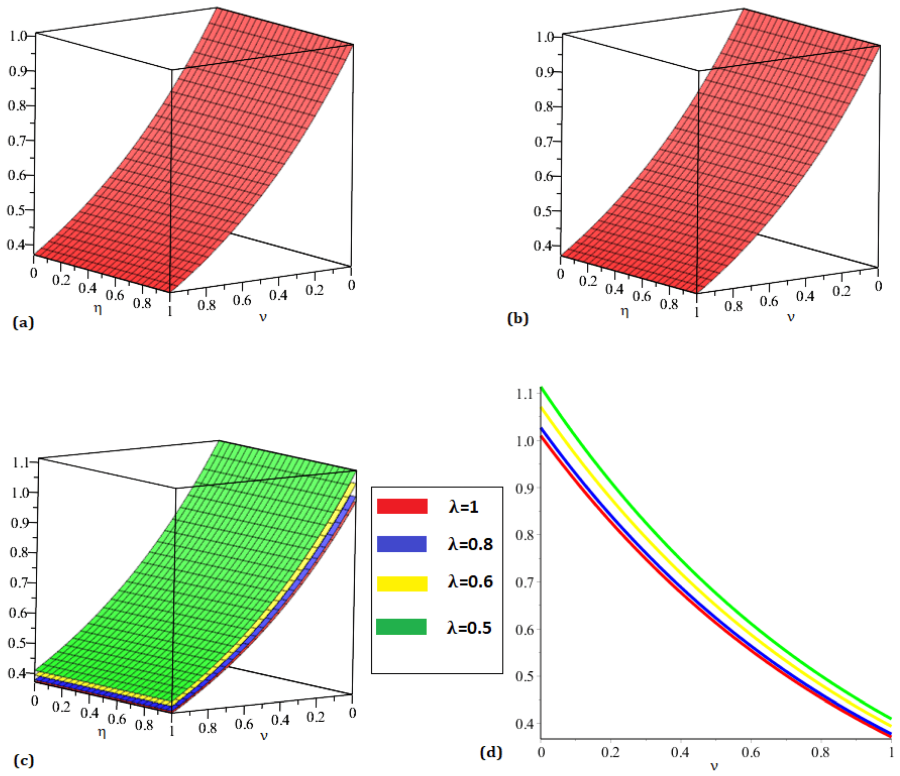
    Unlocking the Power of the Weighted Average Method for Solving Nonlinear PDEs: Insights from the Burger-Fisher Equation

    A study by Loyinmi et al. (2025) titled “Exploring the Efficacy of the Weighted Average Method for Solving Nonlinear Partial Differential Equations: A Study on the Burger-Fisher Equation” published in EDUCATUM Journal of Science, Mathematics, and Technology reveals that WAM provides a stable and accurate numerical approach for solving the Burger-Fisher equation, making it a valuable tool for researchers dealing with nonlinear PDEs.

    The Weighted Average Method (WAM) is a stable, accurate, and reliable numerical approach for solving nonlinear partial differential equations. – Loyinmi et al. 2025

    The study “Exploring the Efficacy of the Weighted Average Method for Solving Nonlinear Partial Differential Equations: A Study on the Burger-Fisher Equation” investigates the effectiveness of the Weighted Average Method (WAM) in solving the Burger-Fisher equation, a nonlinear partial differential equation (PDE) that plays a crucial role in fields such as fluid dynamics, population dynamics, and chemical kinetics. This equation integrates aspects of both the Burgers equation and Fisher equation, making it essential for modeling convection, diffusion, and reaction processes, particularly in phenomena like shock wave formation and turbulence.

    The Weighted Average Method discretizes spatial and temporal derivatives using a combination of forward, backward, and central differences. Its numerical implementation involves solving a tridiagonal matrix system at each time step, demanding substantial computational resources. To facilitate this, the study employs MATLAB and MAPLE for numerical computations. Comprehensive convergence and stability analyses validate the method’s reliability and accuracy, with comparisons against exact solutions revealing minimal errors, reinforcing the method’s effectiveness.

    The findings demonstrate that WAM provides a stable and accurate numerical approach for solving the Burger-Fisher equation, making it a valuable tool for researchers dealing with nonlinear PDEs. The study underscores the importance of fine-tuning numerical parameters and leveraging computational techniques to enhance accuracy. Ultimately, this research contributes to the advancement of numerical methods, offering practical insights for solving complex mathematical models in various scientific and engineering applications.

    How the Study was Conducted

    The weighted average method discretizes both spatial and temporal derivatives using a combination of forward, backward, and central differences. The method’s implementation involves solving a tridiagonal matrix system at each time step, requiring significant computational resources. Mathematical software like MATLAB and MAPLE are utilized for computations. The convergence and stability analyses are conducted to ensure the method’s reliability and accuracy. The study compares numerical solutions obtained via the weighted average method with exact solutions, finding negligible errors that confirm the method’s accuracy.

    What the Authors Found

    The authors findings demonstrate that WAM is a highly accurate, stable, and practical numerical method for addressing complex nonlinear PDEs. These results have significant implications for scientific and engineering applications, offering a robust computational tool for solving challenging mathematical problems.

    Why is this important?

    Advancing Numerical Methods: The Weighted Average Method (WAM) is demonstrated to be highly accurate and reliable for solving nonlinear partial differential equations (PDEs), like the Burger-Fisher equation. This contributes to the advancement of numerical methods, providing researchers with a powerful tool for addressing complex mathematical problems.

    Practical Applications: The Burger-Fisher equation models phenomena such as convection, diffusion, and reaction processes, which are fundamental in various scientific disciplines like fluid dynamics, population dynamics, and chemical kinetics. The ability to solve this equation accurately has practical implications in these fields, aiding in the development of predictive models and enhancing our understanding of these processes.

    Improving Computational Techniques: By utilizing mathematical software like MATLAB and MAPLE to implement the Weighted Average Method, the study highlights the importance of leveraging computational resources. This approach ensures high accuracy and stability in solving nonlinear PDEs, which is essential for practical applications and further research.

    Cross-Disciplinary Relevance: The study’s findings are not limited to the Burger-Fisher equation alone but have broader implications for other nonlinear PDEs encountered in diverse scientific and engineering fields. The principles and methodologies developed in this research can be applied to a wide range of problems, making the study valuable across multiple disciplines.

    Improving Accuracy in Predictions: Accurate numerical solutions to nonlinear PDEs, like those provided by the Weighted Average Method, are crucial for developing reliable predictive models. These models are essential for understanding and forecasting behaviors in complex systems, from fluid flow and heat transfer to biological processes and chemical reactions.

    Foundation for Further Studies: The study’s rigorous analysis of stability and convergence, as well as its demonstration of the practical utility of the Weighted Average Method, provides a solid foundation for future research. Researchers can build on these findings to develop even more efficient and accurate numerical methods for solving nonlinear PDEs.

    What the Authors Recommended

    Based on the finding, the authors recommend the following:

    • Parameter Optimization: Researchers should focus on fine-tuning numerical parameters, such as the time step size (Δ𝑡) and spatial step size (Δ𝑥), to achieve optimal accuracy when using the Weighted Average Method (WAM) for solving nonlinear PDEs like the Burger-Fisher equation.
    • Computational Resources: The study emphasizes the importance of leveraging computational resources effectively. Utilizing mathematical software like MATLAB and MAPLE can help manage the computational demands of solving the tridiagonal matrix system at each time step.
    • Application to Other Nonlinear PDEs: The authors suggest that the Weighted Average Method, demonstrated to be effective for the Burger-Fisher equation, could be applied to other nonlinear partial differential equations. This can further validate the method’s robustness and versatility across different scientific and engineering fields.
    • Further Research: The study encourages future research to build on their findings by exploring the application of WAM to more complex and higher-dimensional nonlinear PDEs. This could expand the method’s applicability and contribute to the development of more advanced numerical techniques.
    • Practical Implementations: Practitioners and researchers are encouraged to use the Weighted Average Method for practical applications in fields such as fluid dynamics, population dynamics, and reaction-diffusion systems. The method’s high accuracy and stability make it a valuable tool for developing reliable predictive models.
    • Stability and Convergence Analyses: The authors recommend conducting thorough stability and convergence analyses for any numerical method applied to nonlinear PDEs. Ensuring the method’s reliability through these analyses is crucial for achieving precise numerical approximations.

    In conclusion, the study by Loyinmi et al. (2025) highlights the effectiveness of the Weighted Average Method (WAM) as a stable and accurate numerical approach for solving nonlinear partial differential equations like the Burger-Fisher equation. By leveraging advanced computational tools such as MATLAB and MAPLE, the research underscores the importance of optimizing numerical parameters and conducting rigorous stability and convergence analyses. The findings not only contribute to the advancement of numerical methods but also have far-reaching implications across various scientific and engineering disciplines, from fluid dynamics to chemical kinetics. As researchers continue to refine and expand the applications of WAM, this study serves as a valuable foundation for future developments in computational mathematics and predictive modeling.