Tag: conservation leadership

  • Whitley Awards 2026 for Mid-Career Conservation Leaders in the Global South (£50,000)

    Whitley Awards 2026 for Mid-Career Conservation Leaders in the Global South (£50,000)


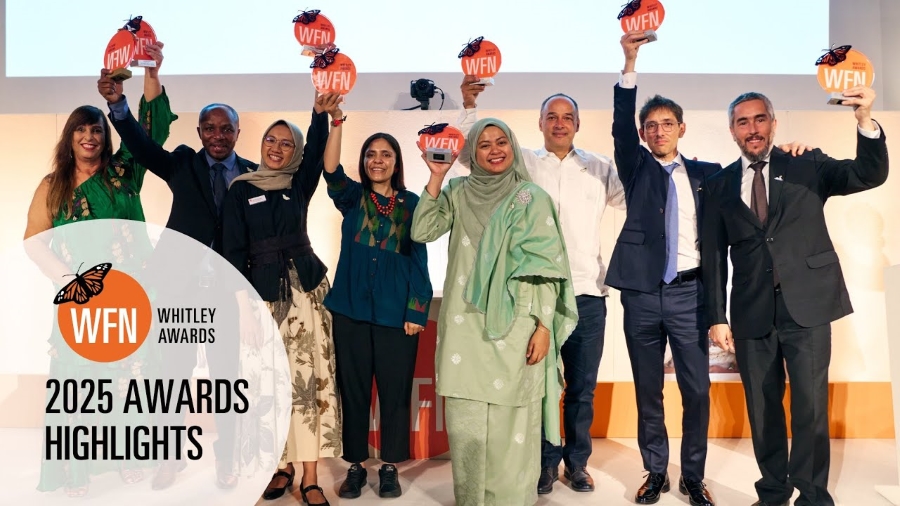
    Illustrative Image: Whitley Awards 2026 for Mid-Career Conservation Leaders in the Global South (£50,000)
    Image Source & Credit: Whitley Fund for Nature
    Ownership and Usage Policy

    Application Deadline: 31 October 2025

    The Whitley Awards, often described as the “Green Oscars,” are now open for applications for the 2026 cycle. This prestigious international award provides recognition and funding to outstanding grassroots conservation leaders working in the Global South. Each year, the program places a global spotlight on individuals who are making significant strides in protecting biodiversity while working closely with local communities.

    What are the Whitley Awards?

    Established by the Whitley Fund for Nature (WFN), the awards celebrate mid-career conservationists who have already demonstrated measurable impact in wildlife conservation and are ready to scale their proven projects. Unlike many grants, the Whitley Awards focus on conservation that is:

    • Locally led – applicants must be nationals of the country where they are working.

    • Community-based – projects must actively engage local people as part of the solution.

    • Scientifically grounded – initiatives must be evidence-based and focused on practical, real-world outcomes.

    The overarching concept of the Whitley Awards is to empower “conservation from within”—supporting leaders who understand the ecological, cultural, and socio-economic dynamics of their regions and who are uniquely positioned to deliver sustainable change.

    Award Value and Benefits

    • Funding Support: Each Whitley Award winner receives £50,000 GBP in project funding, disbursed over one year. This funding is intended to help expand and strengthen projects that are already proven effective.

    • Global Recognition: Winners gain international visibility through a high-profile awards ceremony and extensive media coverage.

    • Network Access: Awardees join a vibrant network of past Whitley winners, conservation experts, and potential donors, opening doors to long-term collaboration.

    • Capacity Building: Beyond funding, the award provides winners with opportunities to enhance their leadership skills, strategic planning, and outreach.

    Who Can Apply?

    The Whitley Awards are designed for dynamic, mid-career conservation leaders who are already leading impactful wildlife projects in the Global South. Applicants must:

    • Be nationals of the country in which they are carrying out their work.

    • Be leading projects that involve local communities at the grassroots level.

    • Demonstrate that their work has a solid scientific foundation and delivers measurable results.

    • Be seeking support to scale up a proven initiative, not to start a brand-new, untested project.

    Note: You do not need to be nominated or invited to apply. The awards are open to self-applicants who meet the eligibility criteria.

    Application Process

    1. Check Eligibility
      Review the eligibility criteria carefully to ensure your project aligns with the Whitley Fund for Nature’s mission. Projects that are not community-based or lack a scientific foundation will not be considered.

    2. Register for the Application Portal

      • Applicants must register via the official WFN application portal.

      • Once registered, you will receive unique login details that allow you to access and complete your application online.

    3. Prepare Supporting Documents

      • Download and complete the Logical Framework/Timeline (Word template) and Budget (Excel template) provided in the portal.

      • Upload the completed documents along with your application form.

    4. Contact Referees

      • Secure three referees who can provide references in support of your application.

      • It is the applicant’s responsibility to ensure referees submit their recommendations before the 31 October 2025 deadline.

    5. Submit Application
      Complete and save your application online. Remember that incomplete forms or outdated templates from previous years will not be accepted.

    Timeline

    • Applications Open: Now accepting submissions.

    • Deadline: Midnight (GMT), 31 October 2025.

    • Whitley Awards Ceremony: Spring 2026 in London. The event will be broadcast live and streamed globally, giving winners significant international exposure.

    Why the Whitley Awards Matter

    The Whitley Awards are not just about funding—they are about building global champions for conservation. By supporting leaders who are deeply embedded in their local contexts, the awards foster long-term conservation solutions that balance biodiversity protection with the needs of local communities. This holistic approach ensures that conservation is not imposed externally, but rather emerges from within communities themselves, increasing the likelihood of sustainable impact.


    👉 For more details and to apply, visit the Official Whitley Awards Webpage.
  • January 2025: Florence Aghomo – African Female Researcher of the Month

    January 2025: Florence Aghomo – African Female Researcher of the Month

    African Researchers AwardJanuary 2025: Florence Aghomo – African Female Researcher of the Month

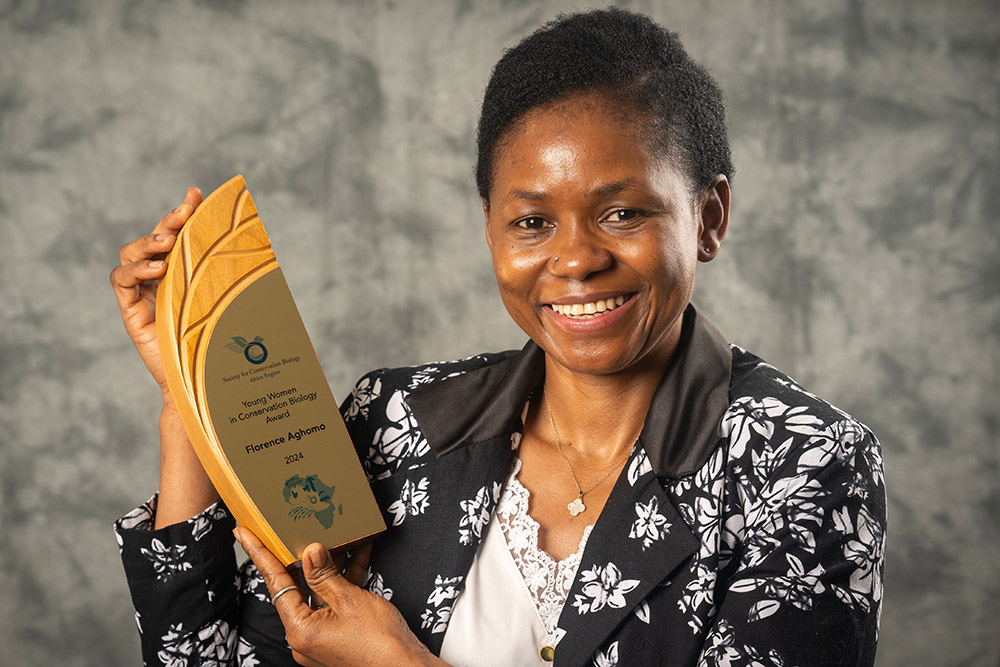
    Florence Aghomo is a trailblazer in the field of conservation biology, celebrated for her leadership, dedication, and impactful work in primate conservation. As a doctoral student in the Interdepartmental Doctoral Program in Anthropological Sciences at Stony Brook University, Aghomo is committed to advancing the science of conservation while advocating for endangered species and preserving ecosystems in Africa. In recognition of her extraordinary contributions to conservation, she was honored with the prestigious Young Women in Conservation Biology (YWCB) Award from the Society for Conservation Biology (SCB) Africa Region in December 2023.

    Background and Education

    Florence Aghomo is currently pursuing her Ph.D. under the mentorship of Dr. Patricia C. Wright, a distinguished professor at the State University of New York (SUNY) and an icon in conservation biology. As a member of the Institute for the Conservation of Tropical Environments (ICTE), Aghomo is building a robust foundation in anthropological sciences with a focus on conservation biology. Her academic pursuits are deeply intertwined with her passion for wildlife conservation and the preservation of biodiversity in tropical ecosystems.

    Award Recognition and Impact

    The YWCB Award, which acknowledges young women in Africa who have made remarkable contributions to the conservation biology field, was awarded to Aghomo for her exemplary leadership and dedication to advancing the discipline in Africa. The award highlights her ability to inspire others, demonstrate creativity in conservation practices, and effectively work across various social, ethnic, and gender lines to achieve tangible conservation outcomes.

    The Young Women in Conservation Biology Working Group, established by SCB Africa Region, aims to bridge the gender gap in conservation science in Africa. Florence’s recognition as a recipient of the award exemplifies her role in this mission, as she not only excels in her own research but also actively supports and uplifts other women in the field, particularly those from diverse backgrounds.

    Red Colobus Conservation Network Leadership

    One of Florence Aghomo’s most notable accomplishments is her coordination of the Red Colobus Conservation Network, a project she has led since 2019 under the Primates Specialist Group of the International Union for Conservation of Nature (IUCN/SSC). As the network’s coordinator, Aghomo oversees the implementation of the Red Colobus Conservation Action Plan (ReCAP), which works to protect the endangered Red Colobus monkeys across various African habitats.

    The Red Colobus Conservation Network involves more than 300 primatologists, conservationists, and researchers from around the world, all working collaboratively to ensure the survival of these critically endangered primates. Aghomo’s role requires technical expertise, administrative oversight, fundraising, and the facilitation of partnerships between conservation organizations and stakeholders. She also plays a critical role in fostering youth engagement in conservation through training programs, mentorship, and capacity-building initiatives, helping to ensure the future of wildlife conservation.

    Contributions to Primate Conservation

    Aghomo’s conservation journey began in 2010 when she was drawn to the study of endangered Red Colobus monkeys in the Korup National Park in Cameroon. The local communities around the park had deep knowledge of the primates, and Florence began to collect detailed behavioral and ecological data about these monkeys. Over time, she realized that the Red Colobus was facing severe threats, including over-hunting and habitat loss.

    In response, Aghomo initiated a series of conservation actions, including creating awareness within local communities and organizing conservation groups to protect both the monkeys and their forest habitats. As part of her efforts, she facilitated the creation and legalization of the Cameroon Primatological Society in 2020, which serves as a platform for primate researchers and conservationists in Cameroon to collaborate and address conservation challenges.

    Aghomo’s work also extends beyond Cameroon. In Madagascar, she founded the Flor’Afrique organization, which has supported the creation of a Language and Environmental Center in Ranomafana. This center aims to combine education with conservation efforts, contributing to the protection of Madagascar’s high biodiversity hotspot, which is home to a rich array of primate species.

    Personal Philosophy and Legacy

    Aghomo’s work is driven by her deep passion for primate welfare and ecosystem conservation. She views Red Colobus monkeys as “perfect indicators of ecosystem health” due to their sensitivity to environmental disturbances. Their unique presence in African forest bioregions provides vital insights into habitat changes and ecosystem stability. Through her work, Aghomo has highlighted the importance of preserving not only endangered species but also the entire ecosystem that supports them.

    Her fieldwork often takes her deep into dense forests, where she studies the behavior and ecology of these elusive primates. For Aghomo, the moment of sighting a Red Colobus monkey is a moment of awe and connection with nature, reinforcing her commitment to their conservation. Her firsthand experiences with these animals have led her to advocate for their protection and to raise awareness about the urgent need to address habitat destruction and illegal hunting.

    Global Recognition and Future Aspirations

    Aghomo’s leadership and impact in the field of conservation have earned her global recognition. In 2021, she was named one of the Top 100 Conservation Leaders in Africa, further cementing her role as a rising star in global conservation efforts. Her work is recognized by colleagues and mentors, including Dr. Patricia C. Wright, who has lauded Aghomo as “a conservation hero” whose contributions have made a significant difference in the protection of wildlife in Africa.

    Looking ahead, Aghomo remains focused on scaling her conservation efforts, expanding her network, and continuing to advocate for the protection of Red Colobus monkeys and other endangered species. Her work with Re:wild, IUCN, and other international partners ensures that her influence extends across continents, inspiring the next generation of conservationists.

    Conclusion

    Florence Aghomo’s career is a testament to the power of passion, leadership, and innovation in conservation. Her receipt of the Young Women in Conservation Biology Award is just one of many milestones in a career that continues to inspire and impact the world of primate conservation. Through her work, Florence has demonstrated the profound influence one individual can have in shaping the future of wildlife protection, and her dedication to preserving biodiversity in Africa will continue to resonate for years to come.