Tag: China-Africa relations

  • Chinese Medical Teams in Africa: A Scoping Review of Healthcare Impact, Challenges, and Strategic Opportunities

    Chinese Medical Teams in Africa: A Scoping Review of Healthcare Impact, Challenges, and Strategic Opportunities


    Illustrative Image: Chinese Medical Teams in Africa: A Scoping Review of Healthcare Impact, Challenges, and Strategic Opportunities
    Image Source & Credit: CGTN
    Ownership and Usage Policy

    A recent study by Afriyie et al. (2025) titled “The role of Chinese medical teams in bridging healthcare gaps in Africa: a scoping review” published in Global Health Research and Policy by Springer Nature reveals that Chinese Medical Teams (CMTs) have significantly contributed to healthcare delivery and capacity building across 42 African countries

    Chinese Medical Teams significantly enhance healthcare delivery and capacity in Africa, despite challenges related to infrastructure, culture, language, and integration.
    – Afriyie et al. 2025

    This scoping review explores the structure, impact, and motivations of Chinese Medical Teams (CMTs) operating in Africa, synthesizing both English- and Chinese-language literature published between 2009 and 2022. By integrating bilingual sources, the study provides a comprehensive perspective on China’s medical aid on the African continent. The review maps out how CMT programmes are structured and delivered, examining where and for how long teams are deployed, the nature of their partnerships with local stakeholders, and the types of medical expertise and resources they contribute. It further assesses the effectiveness of these programmes in addressing basic healthcare needs, improving the quality of care, and building local health system capacity.

    Additionally, the study identifies the underlying drivers of CMT deployments, including political and diplomatic ambitions, economic cooperation frameworks, and humanitarian commitments. It also highlights key barriers that limit the effectiveness of CMTs, such as inadequate infrastructure, resource constraints, cultural differences, and language challenges. Overall, this review offers critical insights into the operational dynamics, strategic motivations, and practical limitations of China’s long-standing medical engagement in Africa.

    How the Study was Conducted

    This scoping review was conducted following the Arksey and O’Malley framework and adhered to the PRISMA-ScR reporting guidelines. A comprehensive search was carried out across major English-language databases (such as PubMed and Scopus) and Chinese-language databases (including CNKI and Wanfang) up to February 2023. The inclusion criteria focused on peer-reviewed qualitative and quantitative studies specifically examining Chinese Medical Teams (CMTs) in Africa. Out of 1,991 records initially identified, 47 full-text articles were assessed for eligibility. Ultimately, 20 English and 27 Chinese studies were included in the review. Thematic analysis was performed using NVivo software to extract and synthesize recurring patterns and key insights from the selected literature.

    What the Authors Found

    The authors found that Chinese Medical Teams (CMTs) have significantly contributed to healthcare delivery and capacity building across 42 African countries through collaborative, government-backed, and humanitarian efforts, though their impact is moderated by infrastructural, cultural, and language-related barriers.

    Why is this important

    Model for Global Health Aid: CMTs’ non-conditional, long-term, province-to-province “twinning” approach offers an alternative to traditional Western-style aid with political stipulations.

    Rapid Emergency Response: Demonstrated adaptability during Ebola and COVID-19, suggesting a blueprint for future crisis deployments.

    Need for Cultural Competency: More extensive pre-deployment language and culture training could boost effectiveness.

    Flexible Staffing: Allowing healthcare volunteers beyond government assignments may fill specialized gaps.

    Strengthening Local Ownership: Deeper integration with national health strategies would improve sustainability.

    What the Authors Recommended

    Authors’ Key Recommendations

    • Improve pre-deployment training in local languages, customs, and clinical practices to enhance cultural competency and reduce misunderstandings. Adopt flexible staffing models that allow for voluntary participation and targeted recruitment of needed specialists. Enhance logistical support and align CMT activities more closely with host-country health systems to ensure sustainability and local ownership.
    • Formalize and institutionalize medical training programs through accredited courses and partnerships between Chinese and African institutions. Promote “train-the-trainer” models to empower local health professionals, ensuring lasting knowledge transfer and workforce development beyond the duration of CMT missions.
    • Encourage collaborative research with African scholars to ensure relevance, equity, and broader uptake. Conduct longitudinal studies to evaluate long-term health impacts, and analyze the geopolitical, economic, and financial dimensions of CMTs to inform future policy and investment strategies.

    In conclusion, this scoping review underscores the significant role of Chinese Medical Teams in strengthening healthcare systems across Africa. While their contributions to service delivery, emergency response, and capacity building are commendable, addressing structural and cultural challenges through improved training, flexible staffing, and deeper integration with local systems will be essential for maximizing their long-term impact and sustainability.
  • FOCAC 2024: China’s Expanding Digital Influence in Africa Raises Human Rights Concerns

    FOCAC 2024: China’s Expanding Digital Influence in Africa Raises Human Rights Concerns

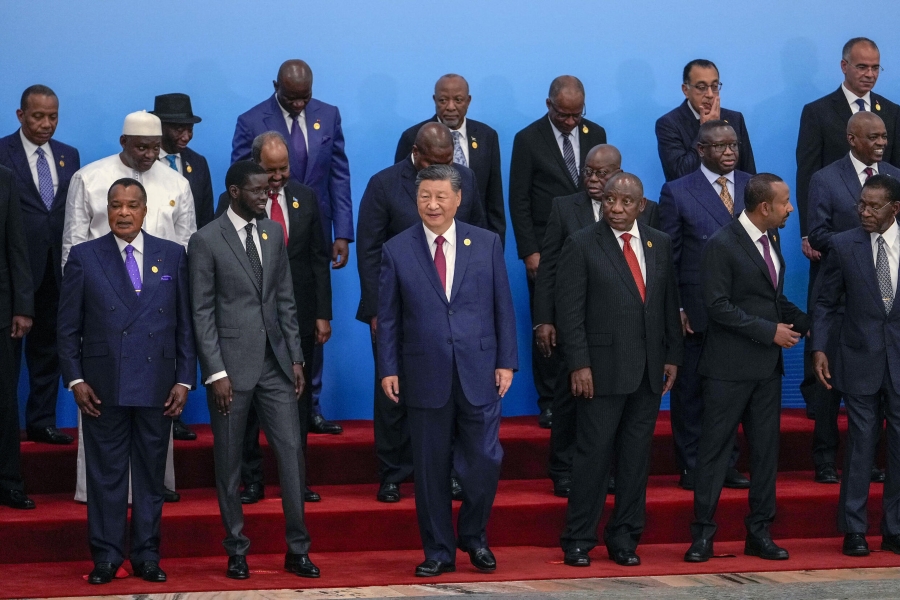
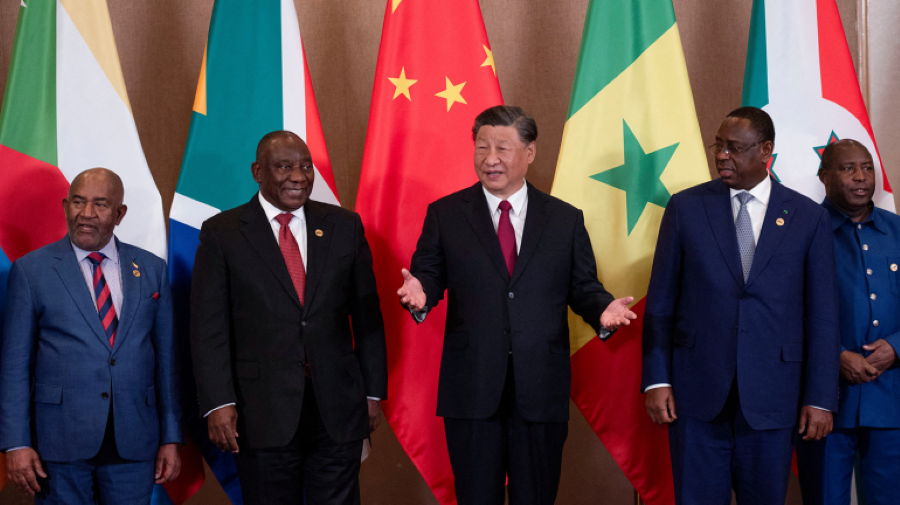
    The 9th Forum on China-Africa Cooperation (FOCAC), held from September 4 to 6, 2024, marked another chapter in China’s deepening relations with African nations. This summit, hosted in Beijing, was designed to strengthen cooperation across various sectors, but one area that has raised particular concerns is the intersection of digital governance, freedom of expression, and human rights in Africa. Despite China’s promotion of its growing investment in infrastructure and technology, critics are concerned about the implications for freedom of expression and privacy on the continent, given China’s track record in digital governance.

    China has long utilized FOCAC as a platform to showcase its influence in Africa, and this year’s summit was no different. Among the key areas of focus were cybersecurity, artificial intelligence (AI), and the development of digital norms, all tied to China’s broader efforts to establish itself as a leader in global digital governance. However, these efforts come with significant concerns about potential human rights violations, particularly in terms of freedom of expression and privacy.

    China’s Expanding Digital Influence in Africa

    China is already Sub-Saharan Africa’s largest bilateral trading partner, with a trade volume of $282 billion USD in 2023, according to the International Monetary Fund (IMF). Over the last decade, this partnership has expanded beyond traditional infrastructure projects to include digital development under the Belt and Road Initiative (BRI). China’s Digital Silk Road, a subset of the BRI, has further solidified its role in shaping Africa’s digital landscape.

    At the 2024 FOCAC, China pledged $51 billion USD in funding over the next three years, continuing its investment in Africa’s digital infrastructure. While this is an increase from 2021’s $40 billion USD, it remains lower than the $60 billion USD committed in 2018. In line with President Xi Jinping’s vision of focusing on “small but smart” projects, China has shifted its approach from large-scale infrastructure to smaller initiatives in areas like green technology and AI.

    While these developments may offer opportunities for technological advancement in Africa, they also carry risks. China’s model of digital governance is characterized by state control, surveillance, and censorship, raising concerns that African nations adopting Chinese technologies could inadvertently erode free speech and privacy rights.

    Digital Governance and Human Rights Concerns

    A key concern emerging from FOCAC 2024 is China’s influence on digital governance in Africa. Beijing’s emphasis on cybersecurity, AI, and data sovereignty reflects its broader goal of exporting an authoritarian model of internet governance, where state control supersedes individual rights. The term “digital sovereignty,” introduced by China over a decade ago, reflects a governance model that allows nations to control and regulate their internet spaces according to state interests. This model runs counter to global human rights norms, which prioritize multi-stakeholder internet governance and uphold freedom of expression.

    One of the documents guiding China-Africa digital cooperation is the “Initiative on Jointly Building a Community with a Shared Future in Cyberspace,” introduced by Xi Jinping in 2015. This framework promotes China’s version of internet governance, where the state has significant control over the digital space. Critics warn that this model undermines the universality of human rights in favor of a more authoritarian structure that stifles dissent and restricts free expression.

    The potential for mass surveillance is another significant concern. China has already deployed sophisticated AI-driven surveillance technologies domestically, particularly in Xinjiang and Tibet, where these systems are used to monitor and control minority populations. If these technologies are exported to African nations, they could be used to suppress political opposition and curtail civil liberties.

    Media and Information Control

    Another area of focus at the 2024 FOCAC summit was media cooperation. China has pledged to deepen its media partnerships with African nations, ostensibly to promote mutual understanding and strengthen the narrative of China-Africa cooperation. However, this move raises red flags about potential information manipulation and media control.

    China’s strategy of “telling China’s story well” – a directive given by Xi Jinping in 2013 – involves shaping international narratives in favor of the Chinese government’s policies and values. This propaganda effort extends to Africa, where China has invested in media training programs and encouraged African media outlets to join the Belt and Road News Network (BRNN), which is chaired by China’s Communist Party media outlet, the People’s Daily. By promoting pro-China narratives, these media initiatives could limit the space for critical journalism in Africa and contribute to the spread of state-controlled information.

    The Role of Cybersecurity in Expanding China’s Influence

    Cybersecurity cooperation between China and Africa is a critical area of concern. Under the 2024 FOCAC Action Plan, both parties agreed to enhance cybersecurity cooperation, including cross-border case studies, information sharing, and emergency response coordination. While cybersecurity is vital for protecting digital infrastructure, there are fears that China’s involvement may introduce surveillance backdoors, as seen in the African Union’s headquarters in Addis Ababa, which was built with Chinese support. In 2018, it was revealed that China had installed digital backdoors in the building, allowing sensitive data to be transferred to China for several years.

    Increased cooperation on cybersecurity also positions China to normalize its practices in Africa. The Chinese government’s National Computer Network Emergency Response Technical Team (CNCERT), which is responsible for enforcing the Great Firewall and other censorship mechanisms, could export these tools and strategies to African nations under the guise of cybersecurity collaboration. This raises the prospect of African nations adopting more restrictive internet governance models that undermine freedom of expression and personal privacy.

    The Future of China-Africa Cooperation

    Moving forward, it is clear that China’s vision for its partnership with Africa prioritizes its own strategic goals, particularly in the digital space. The 2024 FOCAC Action Plan reflects China’s expanding ambitions to lead global rule-making in digital governance, which could result in the spread of its censorship and surveillance practices across the African continent.

    While African nations stand to benefit from Chinese investments in infrastructure and technology, they must also be vigilant in safeguarding human rights. Independent monitoring and greater transparency are essential to ensuring that these partnerships do not come at the cost of freedom of expression and privacy. African nations must work to balance their digital development needs with their international human rights obligations, ensuring that cooperation with China does not lead to the erosion of democratic freedoms.

    Conclusion

    China’s growing influence in Africa, especially in the digital and media sectors, presents a complex challenge for the continent. While the cooperation outlined at FOCAC 2024 offers opportunities for technological advancement, it also carries significant risks. The adoption of China’s authoritarian digital governance model could undermine freedom of expression, stifle dissent, and restrict civil liberties across Africa. Therefore, it is crucial for African governments and civil society to engage in careful oversight, ensuring that human rights and transparency are not sacrificed in pursuit of development.

  • China’s Growing Influence in Africa: CCP’s Political Party Training and Its Impact on Governance

    China’s Growing Influence in Africa: CCP’s Political Party Training and Its Impact on Governance

    The article, “China Escalates Its Political Party Training in Africa” by Paul Nantulya, explores the increasing influence of the Chinese Communist Party (CCP) in shaping political and governance models in Africa. Despite China’s long-standing principle of non-interference in the internal affairs of other nations, recent developments indicate a shift in this approach, particularly concerning Africa. The CCP is actively promoting its dominant party model across the continent through various training programs designed for African party and government officials.

    China’s Evolving Strategy in Africa

    Historically, China has maintained that it does not export its governance model to other nations. However, the article highlights a significant change in this stance, especially under CCP General Secretary Xi Jinping’s leadership. Xi’s “new model of party-to-party relations” has led to an escalation in the CCP’s training initiatives across Africa, targeting ruling parties and government officials in various countries. This effort aligns with China’s broader strategy of deepening ties with the Global South, particularly Africa, where political party training has become a key tool of influence.

    Institutionalizing China’s Governance Model in Africa

    One of the most prominent examples of China’s influence is the Mwalimu Julius Nyerere Leadership School, established in 2022. This institution, modeled after the CCP Central Party School, serves as a training ground for members of the Former Liberation Movements of Southern Africa (FLMSA) coalition, which includes ruling parties from Angola, Mozambique, Namibia, South Africa, Tanzania, and Zimbabwe. The school represents a new level of engagement, as it is the first of its kind to cater to multiple African political parties simultaneously, marking a departure from China’s earlier, more localized efforts.

    China’s involvement in Africa’s political education is not limited to physical institutions. The CCP has also supported the refurbishment of the Herbert Chitepo School of Ideology in Zimbabwe, a ZANU-PF party school. Additionally, the CCP’s National Academy of Governance, which functions as the external arm of the CCP Central Party School, has established year-round training partnerships with governance academies in countries such as Algeria, Ethiopia, Kenya, and South Africa. These efforts underscore China’s growing role in shaping the governance structures of African nations, with a particular focus on entrenching single, dominant party models.

    The Appeal of China’s Political Model

    China’s governance model, characterized by party supremacy, fragmented authoritarianism, political meritocracy, and party-led economic governance, is particularly appealing to many African ruling parties. This model emphasizes the dominance of the ruling party over the state and government, a concept that resonates with the leadership of several African nations. The CCP’s training programs often stress the benefits of a strong, centralized party system, which some African leaders view as a means to maintain power and stability without the “messiness” of multiparty democracy.

    The article points out that China’s model is attractive to African elites because it offers a template for maintaining political control while pursuing economic development. However, this model is fundamentally at odds with the multiparty democratic systems that many African constitutions and the African Union (AU) conventions endorse. Despite this, the CCP’s governance and party training programs are gaining traction across the continent, with a growing number of African ruling parties seeking Chinese support to solidify their political dominance.

    Implications for African Democracy and Governance

    The expansion of CCP training in Africa raises significant concerns about the future of democracy on the continent. While China’s economic model has been admired for its success, its political model has not been as widely embraced by African citizens. According to polls, nearly 80 percent of Africans reject one-party rule, preferring instead the democratic systems that many countries adopted during the 1990s. However, the CCP’s influence threatens to undermine these democratic gains by promoting single-party systems that could entrench authoritarian rule.

    The article emphasizes the disconnect between the ruling elites in Africa and the democratic aspirations of their citizens. Many African ruling parties are eager to replicate China’s model, seeing it as a way to extend their rule indefinitely. However, this approach is at odds with the desires of the African populace, who overwhelmingly favor democracy. The entrenchment of single-party rule could lead to increased corruption, societal divisions, and instability, as history has shown that autocratic governance often exacerbates these issues.

    The Broader Context of China-Africa Relations

    China’s increasing involvement in Africa’s political and governance systems is part of a broader strategy to expand its influence on the continent. The CCP’s extensive network of over 3,000 political schools, many of which have established training programs in Africa, reflects the systematic and expansive nature of this effort. The CCP has ongoing relations with 110 African ruling and opposition parties, 35 parliaments, and 59 politically oriented organizations, underscoring the depth of its engagement.

    The CCP’s training programs are not just about spreading its governance model; they are also a means of shaping the future leadership of African nations. By targeting younger generations of party and government leaders through scholarships and training programs, China is positioning itself as a key player in the development of Africa’s political landscape. This long-term strategy is likely to have lasting implications for the continent, particularly if the trend towards single-party dominance continues.

    Conclusion

    China’s escalation of political party training in Africa represents a significant shift in its approach to the continent. By promoting its dominant party model, the CCP is influencing the governance structures of numerous African nations, potentially entrenching authoritarian rule and undermining democratic gains. While this model is appealing to some African ruling parties, it is at odds with the preferences of the majority of African citizens, who continue to favor democracy. As China’s influence in Africa grows, the future of governance on the continent remains uncertain, with significant implications for both political stability and economic development.