Tag: CGIAR

  • IITA Strengthens Nigeria’s Food Security with Research-Driven Agricultural Innovations

    IITA Strengthens Nigeria’s Food Security with Research-Driven Agricultural Innovations


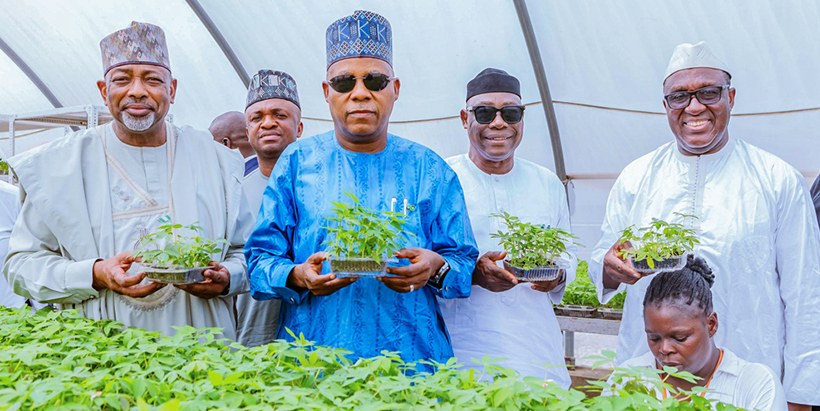
    Illustrative Image: IITA Strengthens Nigeria’s Food Security with Research-Driven Agricultural Innovations
    Image Source & Credit: IITA
    Ownership and Usage Policy

    The International Institute of Tropical Agriculture (IITA) has reiterated its unwavering commitment to driving agricultural transformation and enhancing food security across Nigeria through research-driven partnerships and coordinated, multi-stakeholder interventions.

    During a recent mission to Abuja, Dr. Simeon Ehui, IITA’s Director General and CGIAR Regional Director for Continental Africa, engaged in high-level discussions with Mr. Mohamed Malick Fall, the United Nations Resident and Humanitarian Coordinator for Nigeria. The dialogue focused on fostering collaboration to advance sustainable agriculture, youth-led agripreneurship, and resilient food systems across the nation.

    Dr. Ehui emphasized the institute’s key research milestones and its tangible impact in addressing critical challenges confronting Africa’s agrifood systems. He highlighted areas such as soil fertility management, robust seed systems, and plant health—essential components for increasing productivity and ensuring sustainable farming practices.

    Among IITA’s notable innovations is the award-winning Semi-Autotrophic Hydroponics (SAH) technology, which significantly enhances crop propagation and yields across diverse ecological zones. This technology has been instrumental in enabling farmers to increase production efficiently while conserving resources, marking a major step toward modernizing agriculture in the region.

    “Scaling proven technologies from laboratories to farms remains our greatest challenge,” Dr. Ehui noted. “Strategic partnerships are crucial. By collaborating closely with development organizations like the United Nations, we aim to ensure Africa achieves food self-sufficiency.”

    In his remarks, Mr. Fall reaffirmed the UN’s commitment to supporting Nigeria’s agricultural transformation, aligning these efforts with the broader goal of achieving the Sustainable Development Goals (SDGs). He stated, “This visit has been high on my agenda—not merely to connect with IITA, but to establish a strong bridge for cooperation. Agriculture holds immense potential for economic transformation in Nigeria, provided the right investments and interventions are made.”

    The meeting highlighted a shared vision between IITA, CGIAR, and the United Nations: to deliver science-based, inclusive, and sustainable solutions that strengthen food systems, improve livelihoods, and enhance economic opportunities across Africa. Through these strategic alliances, the partners aim to bridge research innovations with practical implementation, ensuring that cutting-edge agricultural solutions reach farmers and communities where they matter most.

    By focusing on technology deployment, youth engagement, and sustainable practices, IITA continues to position itself as a cornerstone in Africa’s journey toward agricultural resilience and food security.
  • University of Leeds and CGIAR Collaborate on Innovative Satellite Analysis Project to Boost Agricultural Resilience in Kenya and Combat Global Hunger

    University of Leeds and CGIAR Collaborate on Innovative Satellite Analysis Project to Boost Agricultural Resilience in Kenya and Combat Global Hunger

    Scientists at the University of Leeds are set to employ cutting-edge satellite analysis techniques to aid farmers in Kenya in addressing the challenges posed by global warming and environmental degradation. With approximately 4.4 million people in Kenya experiencing high levels of acute food insecurity, the impact of climate change on global hunger is a growing concern.

    The initiative is part of a broader UK government investment that leverages British science, technology, and innovation to combat global hunger. Prime Minister Rishi Sunak emphasized the need for a fundamental shift in approaching food security, with a focus on long-term solutions. He highlighted the importance of harnessing science and technology to build resilient food supplies against threats like conflict, drought, and floods.

    As part of this effort, the UK-CGIAR Science Centre was launched to drive research on flood-tolerant rice, disease-resistant wheat, and other innovations. One project receiving government funding through this initiative is iSPARK, a collaborative research project involving the University of Leeds and two African research institutes.

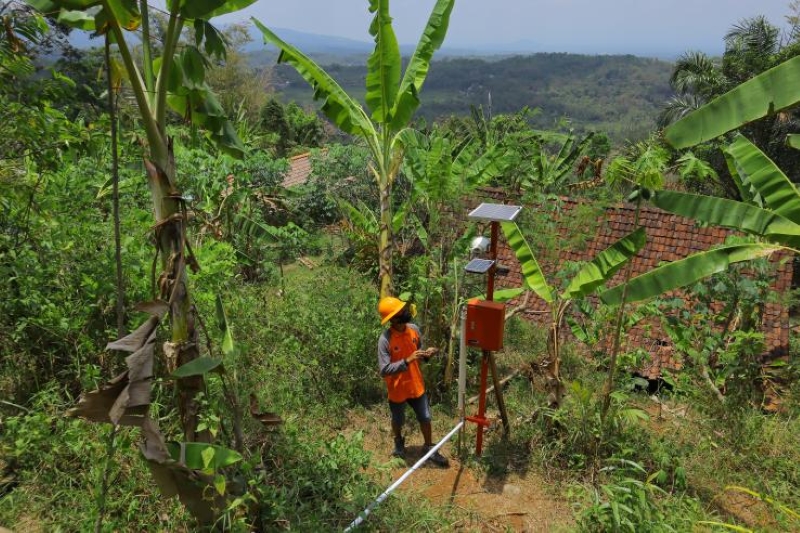
    The iSPARK project aims to enhance the resilience and productivity of agriculture in western Kenya. The researchers plan to analyze large datasets, combining on-the-ground intervention data from agricultural advisers with high-resolution satellite images of food-growing regions in Kenya. The integration of these datasets will enable scientists to assess the effectiveness of different interventions, identify correlations, and develop new analytic techniques using machine learning algorithms.

    The research will provide insights into sustainable agricultural practices and their resilience to changing environmental conditions. The scientists aim to develop new metrics for evaluating the success of interventions and plan to roll out three selected interventions based on the research findings.

    Dr. Aniruddha Ghosh, a Senior Scientist at Alliance Biodiversity-CIAT, emphasized the primary goal of significantly enhancing the resilience and productivity of Kenyan agriculture. By leveraging advanced satellite technology and machine learning, the researchers aim to provide actionable insights for small-scale producers to improve farming practices and enhance food security in the region.

    The University of Leeds has a history of collaboration with CGIAR on various food security projects, including iFEED and ClimBeR. CGIAR, with 50 years of global experience, has been instrumental in transforming food production and lifting millions out of hunger and poverty. The research and innovation initiatives, including a new 10-year strategy, aim to address the challenges of a sustainable, climate-resilient world free from hunger and malnutrition. The International Institute of Tropical Agriculture (IITA), a key partner, plays a crucial role in generating agricultural innovations to address Africa’s challenges of hunger, malnutrition, poverty, and natural resource degradation. Working collaboratively, these initiatives strive to achieve the Sustainable Development Goals by 2030.