Tag: Advocacy

  • Raising Sustainable Development Goal Awareness in Africa: Insights from Ghana’s Study on Communication Strategies and Public Perception

    Raising Sustainable Development Goal Awareness in Africa: Insights from Ghana’s Study on Communication Strategies and Public Perception

    A recent study by Odoom, et al., (2024) titled “Examining the Level of Public Awareness on the Sustainable Development Goals in Africa: An empirical evidence from Ghana” published in Environment, Development and Sustainability by Springer examines that the communication strategies used to raise SDG awareness were generally ineffective, with stakeholder engagement, radio, and TV programs being moderately effective, while community dialogue and social media were not.

    Ghana’s awareness of the Sustainable Development Goals is uneven, with low recognition of certain goals, necessitating improved communication and engagement strategies.– Odoom, et al., (2024)

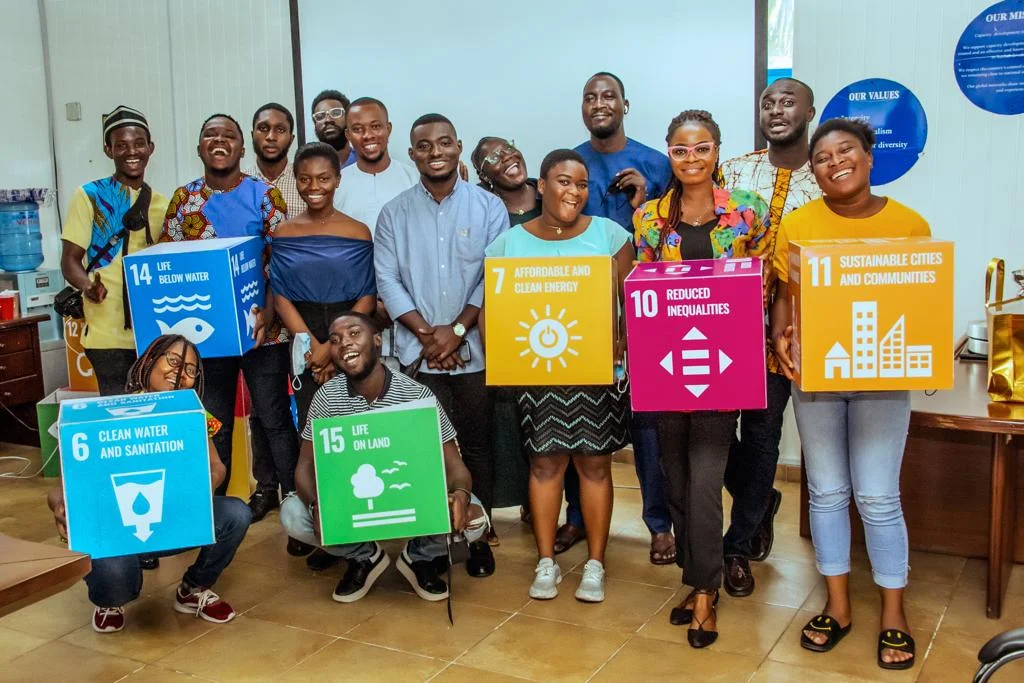
    The article “Examining the level of public awareness on the Sustainable Development Goals in Africa: An Empirical Evidence from Ghana,” investigates the awareness of Ghanaians regarding the United Nations’ Sustainable Development Goals (SDGs). The research assesses the awareness among Ghanaians about various SDGs, finding high awareness for goals related to poverty, hunger, health, gender equality, and clean water, but very low awareness for goals related to industry, life below water, and peace and justice. The study evaluates the effectiveness of communication strategies in raising SDG awareness and suggests that the government should re-examine its approach to involve grassroots populations more effectively. It reveals no significant difference in awareness between male and female respondents but shows that educational levels impact the overall awareness of the SDGs.

    How the Study was Conducted

    The authors employed a descriptive survey design within a quantitative research approach. The authors utilized convenience sampling to select 431 respondents. Data was collected through a questionnaire administered in two ways: as a Google Form distributed via social media and as a self-administered questionnaire by the research team. The data collection occurred over two months, from August to October 2021, and was analyzed using Means, standard deviation, Mann–Whitney U test, Kruskal Wallis, and Pearson Product-Moment Correlations. The study also ensured ethical considerations such as confidentiality, anonymity, and voluntary participation.

    What the Authors Found

    The authors of the study found high awareness among Ghanaians about SDGs related to poverty, hunger, health, gender equality, and clean water. However, awareness of SDGs concerning industry, life below water, and peace was very low. The authors also found that there is no significant difference in awareness levels between male and female Ghanaians. In addition, the authors found that the communication strategies used to raise SDG awareness were generally ineffective, with stakeholder engagement, radio, and TV programs being moderately effective, while community dialogue and social media were not.

    Why is this Important

    Policy Implications: The low awareness of certain SDGs highlights the need for targeted communication strategies. Policymakers can use this information to design more effective awareness campaigns and engage grassroots populations.
    Equity and Inclusivity: By understanding which goals have low awareness, efforts can be directed toward ensuring that all SDGs receive equal attention. This promotes inclusivity and ensures that no goal is left behind.
    Sustainable Development: The SDGs are critical for global development. Raising awareness about them is essential for achieving sustainable development, poverty reduction, and environmental protection. Without awareness, progress toward these goals may be hindered.
    Education and Advocacy: The study emphasizes the role of education in increasing awareness. Policymakers, educators, and civil society organizations can collaborate to educate citizens about the SDGs and encourage advocacy.
    Global Cooperation: The SDGs are a global agenda. When citizens are aware of them, they can actively participate in advocating for their implementation, fostering global cooperation.

    What the Authors Recommend

    • Given the low awareness of certain SDGs, the authors recommend developing targeted communication strategies. These strategies should focus on raising awareness for specific goals that currently lack public attention. For example, industry-related goals, life below water, and peace-related goals could benefit from tailored communication efforts.
    • The authors advocate that policymakers and organizations should actively engage grassroots populations. Community dialogues, workshops, and educational programs can help disseminate information about the SDGs. By involving local communities, awareness can be increased more effectively.
    • While radio and TV programs were moderately effective, social media and community dialogue were less so. The authors suggest exploring innovative ways to use social media platforms and community engagement to improve awareness. Collaborating with media outlets can also enhance communication efforts.
    • Educational institutions play a crucial role in raising awareness. The authors recommend integrating SDGs into school curricula. Educators can incorporate SDG-related content into lessons, promoting understanding and advocacy among students.
    • In addition, the authors emphasize that the government should allocate resources to SDG awareness campaigns. Public service announcements, billboards, and community events can be effective tools. Additionally, policymakers should collaborate with civil society organizations and private sector entities to amplify awareness efforts.
    • Regular monitoring and evaluation of awareness levels are essential. Policymakers should assess the impact of communication strategies and adjust them as needed. Data-driven decision-making will lead to more effective awareness campaigns.

    The study conducted by Odoom, et al., sheds light on the varying levels of awareness about the Sustainable Development Goals in Ghana and identifies critical gaps in communication strategies. With high awareness of goals relating to poverty, hunger, and health, but lower recognition of industry, life below water, and peace, the findings underscore the need for a strategic overhaul to ensure all SDGs are equally prioritized. The recommendations to engage grassroots populations, enhance community dialogue, and leverage educational institutions highlight practical pathways to boost public understanding and advocacy. These insights not only guide policymakers in Ghana but also serve as a blueprint for similar efforts across Africa and beyond. Ultimately, the success of the SDGs depends on informed and engaged citizens who are committed to driving sustainable development forward.
  • IDRC Launches CAD 1.2 Million Grants for SRHR Research in Sub-Saharan Africa: Empowering African Researchers and Communities

    IDRC Launches CAD 1.2 Million Grants for SRHR Research in Sub-Saharan Africa: Empowering African Researchers and Communities

    The International Development Research Centre (IDRC) has launched a funding initiative titled “Addressing Neglected Areas of Sexual and Reproductive Health and Rights in Sub-Saharan Africa” (ANSRHRA) for 2024. This initiative aims to improve sexual and reproductive health and rights (SRHR) for underserved populations, particularly women and girls, across sub-Saharan Africa by supporting transformative gender-based research projects.

    Award Overview

    • Application Deadline: May 13, 2024, by 23:59 ET.
    • Award Type: Grants
    • Grant Funding: Up to CAD 1.2 million per implementation research team, with a duration of up to 36 months.

    Eligibility and Priority Areas: The ANSRHRA Initiative is specifically focused on five key areas of SRHR:

    1. Improving access to family planning and contraceptive services.
    2. Expanding access to safe abortion where legally permitted and providing post-abortion care.
    3. Upholding SRHR rights and ensuring access to services for adolescents.
    4. Preventing and improving services for those experiencing sexual and gender-based violence.
    5. Strengthening advocacy for SRHR.

    Successful projects must address at least one of these focus areas and demonstrate a commitment to gender-transformative change and feminist research methodologies. This includes integrating health systems research perspectives, collaborative approaches, and working with local priorities and knowledge, especially from underserved populations.

    Project Team Requirements

    • A research team must include:
      • An African-based principal investigator from an eligible institution in the same country as the project.
      • A senior member of a civil society organization prioritizing or led by underserved populations, active in supporting priority SRHR areas, as a co-principal investigator.
      • An independent researcher based at a Canadian institution as a co-principal investigator.
      • At least one decision-maker at the local, district, or national level from the same country as the principal investigator.

    Application Process: The application process involves a two-stage approach:

    1. Letter of Interest (LOI): In the initial stage, applicants must submit a letter of interest, which includes completing an eligibility checklist and uploading supporting documents.
    2. Full Technical Proposal: Only successful applicants from the LOI stage will be invited to submit a detailed technical proposal.

    Important Dates and Resources:

    • Virtual Q&A Webinar: Scheduled for March 26, 2024, from 8:00-9:30 a.m. EDT/3:00-4:30 p.m. CAT, with simultaneous French interpretation.
    • Registration for Webinar: Closes on March 25, 2024, at 5:00 p.m. EDT/11:00 p.m. CAT.
    • Further Information and Resources: Applicants are encouraged to consult the call document and FAQs for detailed requirements and eligibility criteria.

    Empowering African Research and Innovation in Sexual and Reproductive Health and Rights

    The International Development Research Centre (IDRC) funding initiative “Addressing Neglected Areas of Sexual and Reproductive Health and Rights in Sub-Saharan Africa” (ANSRHRA) for 2024 presents a significant opportunity for research grants to Africans, particularly in the following ways:

    1. Local Empowerment and Ownership: By emphasizing the inclusion of African-based principal investigators and research teams, the initiative fosters local ownership and empowerment in tackling SRHR issues. This approach ensures that research is grounded in the local context and tailored to meet the specific needs of African communities.
    2. Capacity Building: The grants offer an avenue for African researchers and institutions to strengthen their research capacity in SRHR. This includes gaining access to international collaborations, methodologies, and best practices that can enhance local research expertise and contribute to sustainable development.
    3. Focus on Underserved Populations: By prioritizing research that addresses the SRHR needs of underserved populations such as women, girls, and adolescents, the grants empower local researchers to identify and address pressing issues within their communities. This targeted approach can lead to more effective and relevant interventions.
    4. Interdisciplinary and Collaborative Approaches: The initiative’s requirement for a collaborative team, including researchers from Canadian institutions and local decision-makers, promotes interdisciplinary and cross-cultural approaches to research. This collaboration can lead to innovative solutions and a more comprehensive understanding of SRHR challenges.
    5. Policy and Advocacy Impact: By including decision-makers as part of the research team, the grants facilitate the translation of research findings into actionable policy changes and advocacy efforts. This integration can lead to long-term improvements in SRHR services and rights for African populations.
    6. Fostering Gender-Transformative Change: The focus on gender-transformative change and feminist research methodologies emphasizes the importance of challenging traditional norms and power structures. This approach can contribute to greater gender equality and empowerment within African societies.
    7. Access to Funding and Resources: The grants provide substantial financial support (up to CAD 1.2 million per team) for research projects over an extended period (up to 36 months). This level of funding enables researchers to undertake comprehensive studies and implement transformative initiatives.
    8. Promoting Sustainable Change: By supporting projects that integrate local priorities and knowledge, the grants promote sustainable, community-driven change that aligns with the values and needs of African populations.

    Overall, the IDRC’s ANSRHRA Initiative offers African researchers and institutions a unique and impactful opportunity to contribute to the advancement of sexual and reproductive health and rights in the region, fostering sustainable and meaningful change for underserved populations.

    For the complete eligibility requirements, including a list of eligible countries and frequently asked questions (FAQs), please visit the links below:

    1. Call for letters of interest document
    2. FAQ document 

    Visit Award Webpage for Details

  • Advancing Public Health in Africa: CARTA’s Collaborative Impact on Research Excellence

    Advancing Public Health in Africa: CARTA’s Collaborative Impact on Research Excellence

    The Consortium for Advanced Research Training in Africa (CARTA) is pleased to announce the call for applications for its prestigious PhD Fellowships for the year 2025. CARTA, a collaborative initiative involving eight African universities, four African research institutes, and eight non-African partners, is committed to enhancing the capacity of African institutions to conduct globally competitive research, particularly in addressing health and development challenges in the region.

    CARTA PhD Fellowship Overview: CARTA offers a collaborative doctoral training program in public and population health, designed to address the challenges faced by African institutions in training and retaining the next generation of academics. The fellowship aims to fund candidates who demonstrate the potential to become future leaders in their institutions, fostering positive impacts on public and population health in Africa.

    Eligibility Criteria

    • Applicants must hold a master’s degree in a relevant field.
    • Prior admission to a PhD program is not required at the time of application.
    • Applicants must be full-time teaching or research staff at one of the participating African institutions, committed to capacity building.
    • Proposed PhD research must be related to public and population health.
    • Applicants must commit to participation in all four annual residential Joint Advanced Seminars (JASes).

    Application Procedure

    1. Interested candidates should contact the CARTA focal person at their institution to discuss their interest and obtain application materials. Application forms are also available for download.
    2. Submission of application forms and reference letters should be completed by April 15, 2024, to the Focal Persons at partner institutions WITH A COPY TO THE SECRETARIAT (carta@aphrc.org).
    3. CARTA partner institutions will nominate candidates for the full application process, which will take place between April 15 and May 15, 2024.
    4. Nominated candidates will be invited to submit a full application between June 1 and July 15, 2024, through the official portal.

    Important Dates

    • April 15, 2024: Deadline for submission of initial application materials
    • June 1 – July 15, 2024: Full application submission period
    • November 1, 2024: Announcement of final fellowship decisions

    Unlocking African Research Potential: The Collaborative Impact of CARTA on Public Health and Development

    The Consortium for Advanced Research Training in Africa (CARTA) represents a significant collaborative effort aimed at bolstering research capacity across the African continent. Here’s why this collaboration is crucial for Africans:

    1. Pooling Resources: By bringing together eight African universities, four African research institutes, and eight non-African partners, CARTA facilitates the pooling of resources, expertise, and networks. This pooling of resources enables African institutions to access a broader range of opportunities, including funding, mentorship, and research infrastructure, which might not be readily available individually.
    2. Enhancing Research Quality: Collaboration within CARTA ensures that African researchers have access to diverse perspectives and methodologies. This diversity enriches the research landscape and fosters the production of high-quality, globally competitive research outputs. Through collaboration, researchers can leverage each other’s strengths, address research gaps more effectively, and produce innovative solutions to complex health and development challenges in Africa.
    3. Capacity Building: CARTA’s collaborative doctoral training program plays a crucial role in building the capacity of African institutions to train and retain the next generation of academics. By providing PhD fellowships, CARTA not only supports individual researchers but also invests in institutional capacity building. Through collaboration, African institutions can enhance their teaching and research capabilities, leading to a sustainable improvement in the quality and quantity of research conducted in Africa.
    4. Knowledge Exchange: Collaboration within CARTA facilitates knowledge exchange both within Africa and with international partners. African researchers have the opportunity to learn from each other’s experiences and best practices, as well as from the expertise of non-African partners. This exchange of knowledge fosters a culture of learning and innovation, ultimately contributing to the development of evidence-based policies and interventions tailored to the African context.
    5. Networking and Advocacy: By working together, CARTA partners can collectively advocate for increased investment in research and higher education in Africa. Through networking events, joint seminars, and collaborative projects, CARTA strengthens ties within the research community and amplifies the collective voice of African researchers. This networking also opens doors to new collaborations, funding opportunities, and partnerships, further enhancing the impact of research in Africa.

    In summary, collaboration within CARTA is instrumental in advancing research excellence in Africa by pooling resources, enhancing research quality, building capacity, facilitating knowledge exchange, and strengthening advocacy efforts. By working together, African institutions and their partners can overcome common challenges, leverage opportunities, and drive positive change in public and population health across the continent.

    For detailed information on eligibility, benefits, and the application process, please visit CARTA’s website.

  • Uganda Advances Global Guidance Framework Implementation: A Strategic Roadmap for Responsible Life Sciences Use

    Uganda Advances Global Guidance Framework Implementation: A Strategic Roadmap for Responsible Life Sciences Use

    Uganda has taken a significant step towards implementing the Global Guidance Framework for the responsible use of life sciences, aimed at mitigating biorisks and governing dual-use research. This decision was a result of a regional workshop held in Nairobi, Kenya, from January 24 to 25, 2023, where Uganda committed to piloting the framework within its borders.

    To initiate the operationalization of the framework in Uganda, a 3-day national stakeholders’ workshop was conducted in Kampala from November 21 to 23, 2023. The event, coordinated by the Office of the Prime Minister and supported by the WHO Country Office for Uganda, the Regional Office for Africa, and WHO headquarters, gathered over 80 participants from various sectors, including human and nonhuman health, environment, defense, security, and relevant international organizations.

    The workshop focused on three main objectives: presenting an overview of the framework and the pilot project, fostering an in-depth understanding of Uganda’s current biosafety and biosecurity landscape, and identifying specific applications of the framework to the country’s unique situation. Throughout the event, participants engaged in sessions that included presentations, panel discussions, working group discussions, and plenary sessions, encouraging active participation and collaboration.

    Key presentations encompassed an introduction to the framework by WHO headquarters, regional strategies on biorisks and dual-use research by the WHO Regional Office for Africa, an overview of Uganda’s biosafety and biosecurity capacity and regulations, and an introduction to the pilot project by the WHO Country Office for Uganda.

    The workshop culminated in the crafting of a roadmap for the effective domestication and implementation of the framework in Uganda. This roadmap outlined key steps, including the establishment of a high-level multisectoral National Steering Committee and a Technical Working Group, crucial for guiding Uganda’s pilot project. Strategies also involved strengthening stakeholder engagement, international collaboration, capacity building, communication awareness, research oversight, advocacy for resources, and enhancement of monitoring and evaluation systems.

    Despite the stakeholders’ recognition of the framework’s relevance, challenges were identified, including the absence of legislation for biosafety and biosecurity in Uganda and limited resources. The workshop participants, however, demonstrated a commitment to overcoming these challenges through collaborative efforts, capacity building, and strategic planning.

    In conclusion, the workshop marked a significant milestone in Uganda’s journey to implement the Global Guidance Framework. The crafted roadmap provides a clear direction, ensuring the framework’s cost-effective and efficient integration into Uganda’s biosafety and biosecurity landscape. A detailed report of the workshop will be published, reflecting the commitment of Uganda to responsible life sciences use and the governance of dual-use research.